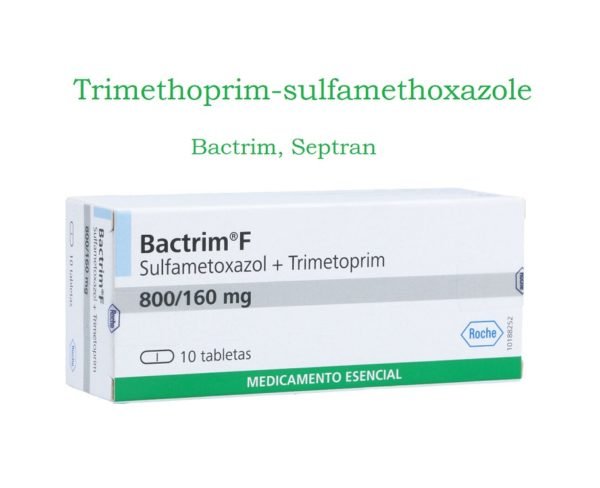
Trimethoprim-sulfamethoxazole (Co-trimoxazole, Bactrim, Septran) is a combination of two antibiotics that is used to treat a variety of bacterial infections as discussed here.
Trimethoprim-sulfamethoxazole (Septran, Bactrim, Co-trimoxazole) Uses:
-
Urinary tract infections:
- It is used for the treatment of urinary tract infections due to Escherichia coli, Klebsiella and Enterobacter spp, Morganella morganii, Proteus mirabilis, and Proteus vulgaris.
-
Acute exacerbation of COPD:
- It is indicated for acute exacerbations of COPD due to susceptible strains of Haemophilus influenzae or Streptococcus pneumoniae, and for the prophylaxis and treatment of Pneumocystis pneumonia (PCP)
-
Gastrointestinal infections:
- It is used for traveler's diarrhea due to enterotoxigenic E. coli and treatment of shigellosis caused by Shigella flexneri or Shigella sonnei
-
Acute otitis media:
- It is used for the treatment of acute otitis media.
-
Off Label Use of Trimethoprim-sulfamethoxazole in Adults:
- For the prophylaxis or treatment of bite wound infection (animal or human bite);
- Cyclosporiasis;
- Cystoisosporiasis (Isosporiasis);
- Diabetic foot infection;
- Epididymitis;
- Granuloma inguinale (Donovanosis);
- Head lice (Pediculosis capitis);
- Intracranial abscess (brain abscess, intracranial epidural abscess) and spinal epidural abscess (methicillin-resistant Staphylococcus aureus);
- Melioidosis (Burkholderia pseudomallei) infection;
- Meningitis, bacterial;
- Nocardiosis;
- Osteomyelitis;
- For the prevention of pontaneous bacterial Peritonitis;
- Prostatitis;
- Prosthetic joint infection;
- Q fever (Coxiella burnetii);
- Septic arthritis (methicillin-resistant Staphylococcus aureus);
- Skin and soft tissue infections;
- Stenotrophomonas maltophilia infections;
- For the prophylaxis/treatment/chronic maintenance of Toxoplasma gondii encephalitis in HIV-infected patients
Trimethoprim-sulfamethoxazole (Cotrimoxazole, Septran, Bactrim) dose in adults:
Note:
Weight-based dosing recommendations are based on the trimethoprim (TMP) component. Each double-strength tablet contains TMP 160 mg and sulfamethoxazole (SMX) 800 mg. Each single-strength tablet contains TMP 80 mg and SMX 400 mg. The undiluted IV solution contains TMP 16 mg per mL and SMX 80 mg per mL.
Trimethoprim-sulfamethoxazole General dosing guidelines:
- 1 to 2 double-strength tablets per oral every 12 to 24 hours.
Note:
Patients with high doses should be monitored for serum creatinine and potassium
- 8 to 20 mg/kg/day (TMP component) intravenous divided every 6 to 12 hours.
Trimethoprim-sulfamethoxazole Dose as an alternative agent in the prophylaxis/ treatment of Bite wound infection (animal/human bite):
- One double-strength tablet per oral b.i.d daily in combination with an appropriate agent for anaerobic coverage.
- The duration of therapy for prophylaxis is 3 to 5 days,
- The duration of therapy for established infection is typically 5 to 14 days.
Trimethoprim-sulfamethoxazole for the treatment of acute exacerbation of chronic obstructive pulmonary disease:
- One double-strength tablet per oral every 12 hours for 5 to 7 days.
Note:
Sulfamethoxazole/trimethoprim is usually given in moderate to severe exacerbations of uncomplicated COPD such as <65 years of age without significant comorbidities, FEV >50% predicted, and infrequent exacerbations.
Trimethoprim-sulfamethoxazole Dose in the treatment of Mild Diabetic foot infections (MRSA) (off label):
- Two double-strength tablets per oral b.i.d daily, usually for 7-14 days.
Trimethoprim-sulfamethoxazole dose in the treatment of infectious Diarrhea:
-
Cyclosporiasis (off-label use):
-
Immunocompromised (AIDS-associated):
- One double-strength tablet per oral b.i.d daily for 14 days, followed by secondary prophylaxis with one double-strength tablet 3 times weekly.
-
Immunocompetent:
- One double-strength tablet per oral b.i.d daily for 7 to 10 days.
-
-
Cystoisosporiasis(off-label use):
-
Immunocompromised (AIDS-associated):
- Oral, IV:
- 160 mg (TMP component) twice daily for 7 to 10 days;
- if symptoms worsen or persist, the dose may be increased to 160 mg (TMP component) 4 times daily and/or prolong duration to 21 to 28 days.
- In patients with CD4 <200 cells/mm³, follow treatment with secondary prophylaxis of one double-strength tablet orally 3 times weekly.
-
Immunocompetent (usually self-limited; treatment not always indicated):
- One double-strength tablet per oral b.i.d daily for 7 to 10 days.
-
-
Shigellosis if susceptibility is documented:
-
- One double-strength tablet per oral b.i.d daily for 5 to 7 days.
-
Trimethoprim-sulfamethoxazole (bactrim, septran) dose in the treatment of Intracranial abscess and spinal epidural abscess (as an alternative agent for MRSA) (off-label):
- 5 mg/kg/dose (TMP component) intravenous every 8 to 12 hours.
- The duration generally ranges from 4 to 8 weeks for brain abscess and spinal epidural abscess and 6 to 8 weeks for intracranial epidural abscess, but some patients require a longer course.
Trimethoprim-sulfamethoxazole dose in the treatment of Melioidosis (Burkholderia pseudomallei ) infection (off-label):
- Initial intensive therapy as add-on to primary therapy [ceftazidime or a carbapenem] in the focal disease of the CNS, prostate, bone, joint, skin, or soft tissue:
-
Oral, IV:
-
40 to 60 kg:
- 240 mg (TMP component) b.i.d daily.
-
>60 kg:
- 320 mg (TMP component) b.i.d daily.
-
-
Eradication therapy (begin after completion of initial intensive therapy)
-
40 to 60 kg:
- 240 mg (TMP component) per oral b.i.d daily.
-
>60 kg:
- 320 mg (TMP component) per oral b.i.d daily.
-
Trimethoprim-sulfamethoxazole dose in the treatment of Bacterial Meningitis (as an alternative agent for MRSA, L. monocytogenes, E. coli, and other Enterobacteriaceae) (off-label):
- 5 mg/kg/dose (TMP component) intravenous every 6 to 12 hours
- Note: Some experts prefer 5 mg/kg/dose (TMP component)intravenous every 8 hours
Trimethoprim-sulfamethoxazole dose for the treatment of Nocardiosis (off-label):
-
Cutaneous superficial infections (no other organ involvement):
- 5 to 10 mg/kg/day (TMP component) per oral in 2 divided doses.
-
Mild to moderate Pulmonary infection:
-
Immunocompetent patients:
- 5 to 10 mg/kg/day (TMP component) per oral in 2 divided doses.
-
Immunocompromised patients:
- 15 mg/kg/day (TMP component)intravenous in 3 to 4 divided doses.
-
-
Severe Pulmonary infection, CNS, disseminated, or multi-site infection:
- 15 mg/kg/day (TMP component) intravenous in 3 to 4 divided doses.
- Note: When used as empiric therapy, it must be used in combination with 1 to 2 additional agents.
-
Duration of treatment:
- Prolonged treatment is required (range: 3 months to ≥1 year [combined parenteral/oral therapy]).
Trimethoprim-sulfamethoxazole dose in the treatment of Osteomyelitis due to MRSA (off-label):
- Oral, IV: 4 mg/kg/dose (TMP component) every 12 hours with rifampin.
Trimethoprim-sulfamethoxazole dose in the prevention of spontaneous bacterial Peritonitis (off-label):
-
High-risk patients (eg, hospitalized patients with Child-Pugh class B or C cirrhosis and active GI bleeding):
- One double-strength tablet per oral b.i.d daily.
-
Long-term secondary SBP prophylaxis:
- One double-strength tablet per oral once daily.
Trimethoprim-sulfamethoxazole dose in the treatment of Pneumocystis pneumonia:
-
Primary and Secondary Prophylaxis (off-label dose):
-
HIV-infected:
- Oral: One double-strength tablet once daily or one single-strength tablet once daily (preferred regimens) or one double-strength tablet 3 times weekly (alternative regimen).
-
Note:
- In patients also requiring prophylaxis for toxoplasmosis, one double-strength tablet once daily should be used.
-
Duration in HIV-infected patients receiving ART:
- Continue until undetectable viral load and CD4 count >200 cells/mm for >3 months, some experts discontinue primary prophylaxis in patients with CD4 counts between 100 and 200 cells/mm who are receiving ART and have had an undetectable viral load for ≥3 to 6 months.
-
Immunocompromised host, HIV-uninfected (eg, transplant recipients, cancer-related, hematopoietic stem cell transplant (off-label dose):
- One double-strength tablet per oral once daily or one single-strength tablet once daily (preferred regimens);
- alternatively, one double-strength tablet 3 times weekly.
-
Duration after a solid organ transplant (except lung):
- ≥6 to 12 months and during periods of increased immunosuppression such as treatment for acute rejection.
-
Duration after lung transplant:
- Lifelong therapy should be considered.
-
Duration for cancer-related patients at high risk for PCP infection:
- Based on expert opinion, continue until risk factors for PCP infection are no longer present.
-
-
Treatment (off-label dose)
-
Note:
- Secondary prophylaxis should be initiated immediately upon completion of therapy.
-
Moderate to severe infection:
- 15 to 20 mg/kg/day (TMP component) intravenous in 3 or 4 divided doses for 21 days;
- IV treatment may be switched to oral therapy after clinical improvement.
- Note: Patients with moderate or severe infection (PaO2 <70 mm Hg at room air or alveolar-arterial oxygen gradient ≥35 mm Hg) should receive adjunctive glucocorticoids.
-
Mild to moderate infection:
- 15 to 20 mg/kg/day (TMP component)per oral in 3 divided doses for 21 days or two double-strength tablets 3 times daily.
-
Trimethoprim-sulfamethoxazole dose for the treatment of Prostatitis (off-label):
-
Acute bacterial prostatitis:
- One double-strength tablet per oral b.i.d daily for 6 weeks.
-
Chronic bacterial prostatitis (alternative agent):
- One double-strength tablet per oral b.i.d daily for ≥6 weeks.
Trimethoprim-sulfamethoxazole dose in the treatment of Prosthetic joint infection (off-label):
- Treatment (following pathogen-specific IV therapy in patients undergoing 1-stage exchange or debridement with retention of the prosthesis):
Note:
The duration of therapy ranges from a minimum of 3 months to indefinitely, depending on patient-specific factors.
-
Staphylococci (methicillin-resistant) and Enterobacteriaceae:
- One double-strength tablet per oral b.i.d daily. For the first 3 to 6 months of therapy for staphylococcal infections, combine with rifampin.
Trimethoprim-sulfamethoxazole dose in the treatment of Q fever (C. burnetii) (preferred agent for pregnant women ≤ 32 weeks of gestation; alternative agent for non-pregnant adults) (off-label):
-
Acute illness:
- One double-strength tablet per oral b.i.d daily during pregnancy but not beyond 32 weeks' gestation;
- administer with folic acid supplementation.
-
Note:
- Discontinue therapy for the final 8 weeks of pregnancy due to the risk of hyperbilirubinemia.
Trimethoprim-sulfamethoxazole dose in patients with Septic arthritis (without prosthetic material) due to MRSA (alternative agent following initial IV therapy with an appropriate antibiotic) (off-label):
- Two double-strength tablets per oral b.i.d daily or 4 mg/kg/dose (TMP component) twice daily
- maximum: 320 mg [TMP component]/dose for completion of 3- to 4-week total treatment course (IV and oral).
Trimethoprim-sulfamethoxazole Dose in the treatment of Sexually transmitted infections:
-
Epididymitis in patients ≥35 years of age and who are at low risk for sexually transmitted infections (alternative agent) (off-label use):
- One double-strength tablet per oral b.i.d daily for 10 days.
-
Granuloma inguinale (donovanosis) (alternative agent) (off-label use):
- One double-strength tablet per oral b.i.d for at least 3 weeks and until lesions have healed.
-
Note:
- If symptoms do not improve within the first few days of therapy, another agent (eg, aminoglycoside) can be added.
Trimethoprim-sulfamethoxazole dose in the treatment of mild to moderate skin/soft tissue infection (off-label):
- One to two double-strength tablets per oral b.i.d daily,treat for 5 to 14 days depending on severity and clinical response.
Note:
For empiric therapy of purulent cellulitis, monotherapy with co-trimoxazole is appropriate, however nonpurulent cellulitis requires an additional agent (eg, amoxicillin, cephalexin) for beta-hemolytic streptococci.
Trimethoprim-sulfamethoxazole dose in patients with Stenotrophomonas maltophilia infections (hospital-acquired pneumonia, ventilator-associated pneumonia, and bacteremia) (off-label):
- 15 mg/kg/day (TMP component) intravenous in 3 or 4 divided doses.
Trimethoprim-sulfamethoxazole dose in Toxoplasma gondii encephalitis (AIDS-associated) (off-label):
-
Primary prophylaxis:
- One double-strength tablet per oral once daily or one double strength tablet 3 times weekly or one single-strength tablet once daily;
- primary prophylaxis is indicated for T. gondii IgG-positive patients with CD4 count <100 cells/mm³.
- Continue primary prophylaxis following initiation of ART until CD4 count >200 cells/mm³ for >3 months;
- some experts discontinue primary prophylaxis in patients with a CD4 count between 100 to 200 cells/mm³ who are receiving ART and have had an undetectable viral load for ≥3 to 6 months.
-
Treatment (alternative agent):
- Oral, IV:
- 10 mg/kg/day (TMP component) in 2 divided doses for at least 6 weeks;
- longer duration may be needed if clinical or radiologic disease is extensive or response is incomplete at 6 weeks.
- Oral, IV:
-
Secondary prophylaxis (chronic maintenance therapy) (alternative agent):
- One double strength tablet per oral b.i.d daily or, alternatively, one double-strength tablet once daily.
- Continue following initiation of ART until CD4 count >200 cells/mm³ for >6 months.
Trimethoprim-sulfamethoxazole dose in the treatment of Urinary tract infection (off-label dose):
-
Acute uncomplicated or simple cystitis:
Note:
Avoid use if resistance prevalence is known to exceed 20% or if the patient has risk factors for multidrug resistant gram-negative infection.
One double-strength tablet b.i.d daily; treat females for 3 days.
-
Complicated Urinary tract infection (including pyelonephritis):
- One double-strength tablet per oral b.i.d daily for 2 weeks, for women who have a rapid response to treatment, some experts treat for 7 to 10 days.
Note:
Oral therapy should follow appropriate parenteral therapy. Single dose injectable is adequate for mild infection before oral treatment, parenteral therapy should be continues until culture and susceptibility results are available for severe infection.
Trimethoprim-sulfamethoxazole (Cotrimoxazole, Septran, Bactrim) dose in children:
Note: Dosage recommendations are based on the trimethoprim (TMP) component:
General dosing for susceptible infection:
-
Infants ≥2 months, Children, and Adolescents:
-
Oral, IV:
- 6 to 12 mg TMP/kg/day in divided doses every 12 hours
- maximum single dose: 160 mg TMP/dose
-
Trimethoprim-sulfamethoxazole dose for Catheter (peritoneal dialysis) and exit-site or tunnel infection:
- 5 to 10 mg TMP/kg/dose per oral once daily.
- maximum dose: 80 mg TMP/dose.
Trimethoprim-sulfamethoxazole dose for Cyclosporiasis:
- 8 to 10 mg TMP/kg per oral in divided doses twice daily for 7 to 10 days
- maximum single dose: 160 mg TMP.
Trimethoprim-sulfamethoxazole dose in Meningitis:
- 10 to 20 mg TMP/kg intravenous divided every 6 to 12 hours for 7 to 21 days;
- The duration is dependent on the pathogen and clinical course.
Mild to moderate skin/soft tissue infection caused by community-acquired MRSA:
- 8 to 12 mg TMP/kg per oral in divided doses every 12 hours,
- alternatively, use of 20 mg TMP/kg/day in divided doses every 6 hours has been reported.
- If using empirically, consider the addition of group A streptococcal coverage.
Trimethoprim-sulfamethoxazole dose in children with acute Otitis media:
- 6 to 10 mg TMP/kg per oral in divided doses every 12 hours for 10 days.
Note: Due to the resistance of S. pneumoniae, it should not be used in patients that fail first-line amoxicillin therapy.
Trimethoprim-sulfamethoxazole dose in Pneumocystis jirovecii pneumonia (PCP) (HIV-exposed/-positive):
-
Prophylaxis:
-
Infants (at least 4 weeks of age) and Children:
- 5 to 10 mg TMP/kg per oral or 150 mg TMP/m /day;
- The dose may be given as a single daily dose or in divided doses every 12 hours given 2 to 3 days per week on consecutive days or alternating days.
- maximum daily dose: TMP 320 mg/day .
-
Adolescents:
- 80 to 160 mg per oral TMP daily or alternatively, 160 mg TMP 3 times weekly.
-
-
Treatment:
-
Infants >2 months and Children:
- Initial: 15 to 20 mg TMP/kg intravenous in divided doses every 6 hours for 21 days; as acute pneumonitis subsides in patients with mild to moderate disease and no malabsorption issues nor diarrhea, may transition to oral therapy of same daily dose (15 to 20 mg/kg/day TMP) administered in divided doses 3 or 4 times daily.
-
Adolescents
-
Mild to moderate:
- 15 to 20 mg TMP/kg per oral in 3 divided doses for 21 days or alternatively, 320 mg TMP 3 times daily for 21 days
-
Moderate to severe:
- Initial: 15 to 20 mg TMP/kg intravenous in 3 to 4 divided doses for 21 days; may switch to oral after clinical improvement
-
-
Q-Fever ( Coxiella burnetii ); mild infection (doxycycline therapeutic failure):
-
Children <8 years: The dose should be based on the severity of illness:
- Usual dose range: 8 to 10 mg TMP/kg per oral in divided doses twice daily for 14 days;
- a wider dose range of 4 to 20 mg TMP/kg/day divided twice daily has been suggested to address varying degrees of severity;
- however, monitor patients for efficacy and possible adverse effects.
Trimethoprim-sulfamethoxazole dose for Shigellosis:
-
Note:
- Due to reported widespread resistance empiric therapy with sulfamethoxazole and trimethoprim is not recommended.
-
Manufacturer's labeling:
- 8 mg TMP/kg per oral in divided doses every 12 hours for 5 days
- maximum single dose: 160 mg TMP.
-
Alternate dosing:
- IDSA recommendations for infectious diarrhea: 10 mg TMP/kg per oral in divided doses every 12 hours for 3 days (for immunocompetent patients) or 7 to 10 days (for immunocompromised patients)
- maximum single dose: 160 mg TMP
- 8 to 10 mg TMP/kg intravenous in divided doses every 6, 8, or 12 hours for up to 5 days
Trimethoprim-sulfamethoxazole dose for Toxoplasmosis (HIV-exposed/infected):
-
Primary Prophylaxis:
-
Infants ≥2 months and Children:
- 150 mg TMP/m per oral;
- The dose may be administered as a single daily dose or in divided doses every 12 hours;
- alternatively, it may also be given 3 times weekly for 3 consecutive or alternating days.
-
Adolescents:
- 60 mg TMP daily per oral or 160 mg TMP 3 times weekly or 80 mg TMP daily.
-
-
Treatment of encephalitis:
-
Adolescents:
- Oral, IV: 10 mg/kg/day TMP in two divided doses for at least 6 weeks;
- A longer duration may be required in some patients;
- following the treatment, all patients should receive chronic maintenance therapy daily.
-
-
Secondary prophylaxis (chronic suppressive therapy, alternative regimen):
-
Note:
- Only use when pyrimethamine is unavailable or not tolerated:
-
Infants and Children:
- 50 mg TMP/m² per oral once daily.
-
Adolescents:
- Maintenance therapy; postencephalitis treatment:
- 60 mg TMP per oral once or twice daily.
- It may be discontinued when asymptomatic and CD4 count >200 cells/mm³ for >6 months in response to ART.
-
Note:
Once-daily dosing may be associated with an increased risk of relapse; if used, a gradual transition (eg, follow acute treatment with 4 to 6 weeks of 160 mg TMP twice daily before lowering to once-daily dosing) may be beneficial.
Trimethoprim-sulfamethoxazole dose in Urinary tract infection:
-
Treatment:
-
Infants and Children 2 to 24 months:
- 6 to 12 mg TMP/kg per oral in divided doses every 12 hours for 7 to 14 days.
-
Children >24 months and Adolescents:
- 8 mg TMP/kg per oral in divided doses every 12 hours for 3 days; longer duration may be required in some patients.
- maximum single dose: 160 mg TMP.
-
Infants ≥2 months, Children, and Adolescents:
- 8 to 10 mg TMP/kg intravenous in divided doses every 6, 8, or 12 hours for up to 14 days with serious infections.
-
-
Prophylaxis:
-
Infants ≥2 months, Children, and Adolescents:
- 2 mg TMP/kg per oral once daily.
-
Pregnancy Risk Factor D
- Trimethoprim and sulfamethoxazole can cross the placenta.
- There is a risk of congenital malformations like neural tube defects, cardiovascular malformations and oral clefts.
- Supplementation with Folic acid may reduce this risk.
- Cotrimoxazole is used to prophylaxis Pneumocystis jarovecii pneumonia and Toxoplasmic gondiiencephalitis.
- It can also be used in the acute and chronic treatment for Q fever during pregnancy.
Trimethoprim-sulfamethoxazole use during breastfeeding:
- Breast milk contains cotrimoxazole, which can cause bowel flora changes. Therefore, infants should be monitored for GI problems.
- According to the manufacturer, cotrimoxazole would be administered to a breastfeeding infant at a rate of 2% to 5% of the daily recommended dose for infants aged >2 months.
- When the relative infant dose of breastmilk is less than 10%, breastfeeding is permitted.
- Cotrimoxazole contraindicated for infants under 2 months old due to the possibility of hemolytic anemia and kernicterus.
- Women who breastfeed infants with G6PD deficiency/hyperbilirubinemia should not take it.
- Breastfeeding infants who are preterm, jaundiced, or at high risk for bilirubin displacement, kernicterus, and premature should be avoided.
Trimethoprim-sulfamethoxazole Dose adjustment in renal disease:
-
Manufacturer's labeling: Oral, IV:
-
CrCl >30 mL/minute:
- No dosage adjustment necessary.
-
CrCl 15 to 30 mL/minute:
- 50% dose reduction required
-
CrCl <15 mL/minute:
- It is contraindicated per the manufacturer's labeling in severe renal disease.
-
-
Alternative recommendations:
-
Oral:
- Note: The following dosage adjustments are based on a usual maintenance dose of 1 double-strength tablet every 12 hours.
-
GFR 10 to 50 mL/minute:
- One double-strength tablet once, followed by 1 single-strength tablet every 12 hours.
-
GFR <10 mL/minute:
- Avoid use; if necessary, 1 double-strength tablet once, followed by 1 single-strength tablet every 24 hours.
-
Hemodialysis:
- One double-strength tablet once, followed by 1 single-strength tablet every 24 hours (dose after hemodialysis on dialysis days).
-
-
IV Septran, Bactrim:
- Note: The following dosage adjustments are based on a usual maintenance dose of 4 to 5 mg/kg (TMP component) every 6 hours.
-
GFR 10 to 50 mL/minute:
- 4 to 5 mg/kg (TMP component) every 12 hours.
-
GFR <10 mL/minute:
- Avoid use; if necessary, 2.5 to 5 mg/kg (TMP component) every 24 hours.
-
Hemodialysis:
- 5 to 5 mg/kg (TMP component) every 24 hours (dose after hemodialysis on dialysis days).
-
-
-
Treatment of Pneumocystis pneumonia (PCP):
- Note: Renal function may be estimated using the Cockcroft-Gault formula for dosage adjustment purposes.
-
Oral Septran, bactrim:
- Note: The following dosage adjustments are based on a usual maintenance dose of 2 double-strength tablets every 8 hours.
-
CrCl 10 to 30 mL/minute:
- Two double-strength tablets every 12 hours.
-
CrCl <10 mL/minute:
- One double-strength tablet every 12 hours or 2 double-strength tablets every 24 hours.
-
Hemodialysis:
- Two double-strength tablets once daily (dose after hemodialysis on dialysis days); consider therapeutic drug monitoring to optimize therapy.
-
IV Septran, Bactrim:
- Note: The following dosage adjustments are based on a usual maintenance dose of 5 mg/kg (TMP component) every 8 hours.
-
CrCl 10 to 30 mL/minute:
- 5 mg/kg (TMP component) every 12 hours.
-
CrCl <10 mL/minute:
- 5 mg/kg (TMP component) every 24 hours.
-
Hemodialysis:
- 5 mg/kg (TMP component) once daily (dose after hemodialysis on dialysis days); consider therapeutic drug monitoring to optimize therapy.
-
-
CRRT:
- Drug clearance depends on the flow rate, filter type and on the method of renal replacement.
- Monitoring of pharmacologic response, side effects of drug accumulation is required.
- The following are general recommendations only (based on dialysate flow/ultrafiltration rates of 1 to 2 L/hour and minimal residual renal function) and should not supersede clinical judgment:
-
CVVH/CVVHD/CVVHDF:
- Oral, IV: 2.5 to 7.5 mg/kg (TMP component) every 12 hours.
- Note: Dosing regimen dependent on clinical indication. Critically ill patients with P. jirovecii pneumonia receiving CVVHDF may require up to 10 mg/kg (TMP component) every 12 hours.
-
Septran Dose adjustment in liver disease:
There are no dosage adjustments provided in the manufacturer's labeling, use is contraindicated in cases of marked hepatic damage.
Side effects of Trimethoprim-sulfamethoxazole (Septran, Bactrim):
-
Cardiovascular:
- Allergic Myocarditis
- Periarteritis Nodosa (Rare)
-
Central Nervous System:
- Apathy
- Aseptic Meningitis
- Ataxia
- Chills
- Depression
- Fatigue
- Hallucination
- Headache
- Insomnia
- Nervousness
- Peripheral Neuritis
- Seizure
- Vertigo
-
Dermatologic:
- Erythema Multiforme (Rare)
- Exfoliative Dermatitis (Rare)
- Pruritus
- Skin Photosensitivity
- Skin Rash
- Stevens-Johnson Syndrome (Rare)
- Toxic Epidermal Necrolysis (Rare)
- Urticaria
-
Endocrine & Metabolic:
- Hyperkalemia (Generally At High Dosages)
- Hypoglycemia (Rare)
- Hyponatremia
-
Gastrointestinal:
- Abdominal Pain
- Anorexia
- Diarrhea
- Glottis Edema
- Kernicterus (In Neonates)
- Nausea
- Pancreatitis
- Pseudomembranous Colitis
- Stomatitis
- Vomiting
-
Genitourinary:
- Crystalluria
- Diuresis (Rare)
- Nephrotoxicity (In Association With Cyclosporine)
- Toxic Nephrosis (With Anuria And Oliguria)
-
Hematologic & Oncologic:
- Agranulocytosis
- Anaphylactoid Purpura (Iga Vasculitis; Rare)
- Aplastic Anemia
- Eosinophilia
- Hemolysis (With G6PD Deficiency)
- Hemolytic Anemia
- Hypoprothrombinemia
- Leukopenia
- Megaloblastic Anemia
- Methemoglobinemia
- Neutropenia
- Thrombocytopenia
-
Hepatic:
- Cholestatic Jaundice
- Hepatotoxicity (Including Hepatitis
- Cholestasis
- And Hepatic Necrosis)
- Hyperbilirubinemia
- Increased Transaminases
-
Hypersensitivity:
- Anaphylaxis
- Angioedema
- Hypersensitivity Reaction
- Serum Sickness
-
Neuromuscular & Skeletal:
- Arthralgia
- Myalgia
- Rhabdomyolysis (Mainly In AIDS Patients)
- Systemic Lupus Erythematosus (Rare)
- Weakness
-
Ophthalmic:
- Conjunctival Injection
- Injected Sclera
- Uveitis
-
Otic:
- Tinnitus
-
Renal:
- Increased Blood Urea Nitrogen
- Increased Serum Creatinine
- Interstitial Nephritis
- Renal Failure
-
Respiratory:
- Cough
- Dyspnea
- Pulmonary Infiltrates
-
Miscellaneous:
- Fever
Contraindication to Trimethoprim-sulfamethoxazole (Septran, Bactrim):
- Hypersensitivity to trimethoprim, sulfa drugs, or any other component of the formulation
- Infants under 2 months (manufacturer’s labeling).
- Grave liver disease or renal disease
- History of drug-induced immune thrombocytopenia due to use of trimethoprim or sulfonamides
- megaloblastic anemia due to folate deficiency
- Combination therapy with dofetilide
- Pregnancy/breastfeeding
- Blood dyscrasias
Warnings and precautions
- Blood dyscrasias:
- The discontinuation of therapy is necessary for severe reactions, such as agranulocytosis or aplastic anemia.
- Dermatologic reactions
- Stop the drug immediately if Stevens-Johnson syndrome or toxic epidermal necrosis occurs
- Hepatic necrosis
- In the event of fatal liver necrosis, it is important to stop using the drug.
- Hyperkalemia:
- Hyperkalemia can be caused by the following risk factors: elderly, renal impairment, high dose (20 mg/kg/day trimethoprim), hypoaldosteronism and combination of medications.
- Hypoglycemia:
- Hypoglycemia can be caused by co-trimoxazole. Therefore, it is important to monitor your blood sugar carefully.
- Hyponatremia:
- It can increase the chance of hyponatremia, especially when there are infections with PCP.
- Allergy to sulfonamide ("sulfa")
- Cross-reactivity can be seen when compounds contain the sulfonamide structural (SO-NH).
- Sulfasalazine is an antibiotic sulfonamide that has the arylamine structure. It may cross-react to antibiotic sulfonamides.
- Mild reactions, such as T-cell-mediated type IV reactions that include maculopapular or severe Stevens-Johnson syndromes or toxic epidermal necrotic can occur.
- Superinfection
- Long-term therapy can be used to treat superinfections with C.difficile or pseudomembranous collitis.
- Thrombocytopenia:
- Immune-mediated hemoglobinopathy can be fatal, or it resolves in one week after discontinuation of therapy.
- Allergies/Asthma:
- Patients with asthma or allergies should be cautious.
- Hepatic impairment
- Patients with hepatic impairment should be cautious.
- Renal impairment
- Recommendations for dosage adjustment: To prevent crystalluria, it is important to hydrate properly.
- Thyroid dysfunction:
- Patients with thyroid dysfunction should be cautious.
Trimethoprim-sulfamethoxazole (co-trimoxazole): Drug Interaction
|
Ajmaline |
Sulfonamides may enhance the adverse/toxic effect of Ajmaline. Specifically, the risk for cholestasis may be increased. |
|
Amantadine |
Trimethoprim may enhance the adverse/toxic effect of Amantadine. Specifically, the risk of myoclonus and/or delirium may be increased. Amantadine may increase the serum concentration of Trimethoprim. Trimethoprim may increase the serum concentration of Amantadine. |
|
Aminolevulinic Acid (Topical) |
Photosensitizing Agents may enhance the photosensitizing effect of Aminolevulinic Acid (Topical). |
|
Androgens |
May enhance the hypoglycemic effect of Blood Glucose Lowering Agents. Exceptions: Danazol. |
|
Angiotensin II Receptor Blockers |
Trimethoprim may enhance the hyperkalemic effect of Angiotensin II Receptor Blockers. |
|
Angiotensin-Converting Enzyme Inhibitors |
Trimethoprim may enhance the hyperkalemic effect of Angiotensin-Converting Enzyme Inhibitors. |
|
Antidiabetic Agents |
May enhance the hypoglycemic effect of Hypoglycemia-Associated Agents. |
|
AzaTHIOprine |
Sulfamethoxazole may enhance the myelosuppressive effect of AzaTHIOprine. |
|
AzaTHIOprine |
Trimethoprim may enhance the myelosuppressive effect of AzaTHIOprine. |
|
BCG Vaccine (Immunization) |
Antibiotics may diminish the therapeutic effect of BCG Vaccine (Immunization). |
|
CycloSPORINE (Systemic) |
Sulfonamide Antibiotics may enhance the nephrotoxic effect of CycloSPORINE (Systemic). Sulfonamide Antibiotics may decrease the serum concentration of CycloSPORINE (Systemic). |
|
CYP2C9 Inhibitors (Moderate) |
May decrease the metabolism of CYP2C9 Substrates (High risk with Inhibitors). |
|
Dapsone (Systemic) |
Trimethoprim may increase the serum concentration of Dapsone (Systemic). Dapsone (Systemic) may increase the serum concentration of Trimethoprim. |
|
Dapsone (Topical) |
Trimethoprim may enhance the adverse/toxic effect of Dapsone (Topical). More specifically, trimethoprim may increase the risk for hemolysis |
|
Dexketoprofen |
May enhance the adverse/toxic effect of Sulfonamides. |
|
Digoxin |
Trimethoprim may increase the serum concentration of Digoxin. |
|
Eplerenone |
Trimethoprim may enhance the hyperkalemic effect of Eplerenone. |
|
Herbs (Hypoglycemic Properties) |
May enhance the hypoglycemic effect of HypoglycemiaAssociated Agents. |
|
Hypoglycemia-Associated Agents |
May enhance the hypoglycemic effect of other HypoglycemiaAssociated Agents. |
|
Lactobacillus and Estriol |
Antibiotics may diminish the therapeutic effect of Lactobacillus and Estriol. |
|
LamiVUDine |
Trimethoprim may increase the serum concentration of LamiVUDine. |
|
Local Anesthetics |
Methemoglobinemia Associated Agents may enhance the adverse/toxic effect of Local Anesthetics. Specifically, the risk for methemoglobinemia may be increased. |
|
Lumacaftor |
May decrease the serum concentration of CYP2C9 Substrates (High Risk with Inhibitors or Inducers). Lumacaftor may increase the serum concentration of CYP2C9 Substrates (High Risk with Inhibitors or Inducers). |
|
Maitake |
May enhance the hypoglycemic effect of Blood Glucose Lowering Agents. |
|
Memantine |
Trimethoprim may enhance the adverse/toxic effect of Memantine. Specifically, the risk of myoclonus and/or delirium may be increased. Trimethoprim may increase the serum concentration of Memantine. Memantine may increase the serum concentration of Trimethoprim. |
|
Mercaptopurine |
Sulfamethoxazole may enhance the myelosuppressive effect of Mercaptopurine. |
|
Mercaptopurine |
Trimethoprim may enhance the myelosuppressive effect of Mercaptopurine. |
|
MetFORMIN |
Trimethoprim may increase the serum concentration of MetFORMIN. |
|
Monoamine Oxidase Inhibitors |
May enhance the hypoglycemic effect of Blood Glucose Lowering Agents. |
|
Nitric Oxide |
May enhance the adverse/toxic effect of Methemoglobinemia Associated Agents. Combinations of these agents may increase the likelihood of significant methemoglobinemia. Management: Monitor patients for signs of methemoglobinemia (e.g., hypoxia, cyanosis) when nitric oxide is used in combination with other agents associated with development of methemoglobinemia. Avoid lidocaine/prilocaine. |
|
Pegvisomant |
May enhance the hypoglycemic effect of Blood Glucose Lowering Agents. |
|
Porfimer |
Photosensitizing Agents may enhance the photosensitizing effect of Porfimer. |
|
PRALAtrexate |
Trimethoprim may increase the serum concentration of PRALAtrexate. More specifically, trimethoprim may decrease excretion of pralatrexate. Management: Closely monitor for increased pralatrexate serum level and/or possible toxicity with concomitant use of trimethoprim. Monitor for decreased pralatrexate levels with discontinuation of trimethoprim. |
|
PRALAtrexate |
Sulfamethoxazole may increase the serum concentration of PRALAtrexate. More specifically, sulfamethoxazole may decrease excretion of pralatrexate. Management: Closely monitor for increased pralatrexate serum level and/or possible toxicity with concomitant use of sulfamethoxazole. Monitor for decreased pralatrexate levels with discontinuation of sulfamethoxazole. |
|
Prilocaine |
Methemoglobinemia Associated Agents may enhance the adverse/toxic effect of Prilocaine. Combinations of these agents may increase the likelihood of significant methemoglobinemia. Management: Monitor patients for signs of methemoglobinemia (e.g., hypoxia, cyanosis) when prilocaine is used in combination with other agents associated with development of methemoglobinemia. Avoid lidocaine/prilocaine in infants receiving such agents. |
|
Prothionamide |
May enhance the hypoglycemic effect of Blood Glucose Lowering Agents. |
|
Pyrimethamine |
May enhance the adverse/toxic effect of Trimethoprim. |
|
Quinolones |
May enhance the hypoglycemic effect of Blood Glucose Lowering Agents. Quinolones may diminish the therapeutic effect of Blood Glucose Lowering Agents. Specifically, if an agent is being used to treat diabetes, loss of blood sugar control may occur with quinolone use. |
|
Repaglinide |
Trimethoprim may decrease the metabolism of Repaglinide. |
|
RifAMPin |
May decrease the serum concentration of Trimethoprim. |
|
RifAMPin |
May decrease the serum concentration of Sulfamethoxazole. |
|
Rifapentine |
May decrease the serum concentration of CYP2C9 Substrates (High risk with Inducers). |
|
Salicylates |
May enhance the hypoglycemic effect of Blood Glucose Lowering Agents. |
|
Selective Serotonin Reuptake Inhibitors |
May enhance the hypoglycemic effect of Blood Glucose Lowering Agents. |
|
Sodium Nitrite |
Methemoglobinemia Associated Agents may enhance the adverse/toxic effect of Sodium Nitrite. Combinations of these agents may increase the likelihood of significant methemoglobinemia. |
|
Spironolactone |
Trimethoprim may enhance the hyperkalemic effect of Spironolactone. |
|
Sulfonylureas |
Sulfonamide Antibiotics may enhance the hypoglycemic effect of Sulfonylureas. |
|
Thiazolidinediones |
Trimethoprim may decrease the metabolism of Thiazolidinediones. |
|
Varenicline |
Trimethoprim may increase the serum concentration of Varenicline. Management: Monitor for increased varenicline adverse effects with concomitant use of trimethoprim, particularly in patients with severe renal impairment. International product labeling recommendations vary. Consult appropriate labeling. |
|
Verteporfin |
Photosensitizing Agents may enhance the photosensitizing effect of Verteporfin. |
|
Chloroprocaine |
May diminish the therapeutic effect of Sulfonamide Antibiotics. Management: Avoid concurrent use of chloroprocaine and systemic sulfonamide-based antimicrobials whenever possible. |
|
Dabrafenib |
May decrease the serum concentration of CYP2C9 Substrates (High risk with Inducers). Management: Seek alternatives to the CYP2C9 substrate when possible. If concomitant therapy cannot be avoided, monitor clinical effects of the substrate closely (particularly therapeutic effects). |
|
Enzalutamide |
|
|
Fosphenytoin |
May decrease the serum concentration of Trimethoprim. Trimethoprim may increase the serum concentration of Fosphenytoin. Management: Consider alternatives to this combination when possible, to avoid potential decreased trimethoprim efficacy and increased phenytoin concentrations/effects. Monitor patients receiving this combination closely for both of these possible effects. |
|
Methotrexate |
Trimethoprim may enhance the adverse/toxic effect of Methotrexate. Management: Consider avoiding concomitant use of methotrexate and either sulfamethoxazole or trimethoprim. If used concomitantly, monitor for the development of signs and symptoms of methotrexate toxicity (e.g., bone marrow suppression). |
|
MiFEPRIStone |
May increase the serum concentration of CYP2C9 Substrates (High risk with Inhibitors). Management: Use CYP2C9 substrates at the lowest recommended dose, and monitor closely for adverse effects, during and in the 2 weeks following mifepristone treatment. |
|
Phenytoin |
Trimethoprim may increase the serum concentration of Phenytoin. Phenytoin may decrease the serum concentration of Trimethoprim. Management: Consider alternatives to this combination when possible, to avoid potential decreased trimethoprim efficacy and increased phenytoin concentrations/effects. Monitor patients receiving this combination closely for both of these possible effects. |
|
Phenytoin |
Sulfamethoxazole may increase the serum concentration of Phenytoin. |
|
Procainamide |
Trimethoprim may increase serum concentrations of the active metabolite(s) of Procainamide. Trimethoprim may increase the serum concentration of Procainamide. |
|
Sodium Picosulfate |
Antibiotics may diminish the therapeutic effect of Sodium Picosulfate. Management: Consider using an alternative product for bowel cleansing prior to a colonoscopy in patients who have recently used or are concurrently using an antibiotic. |
|
Typhoid Vaccine |
Antibiotics may diminish the therapeutic effect of Typhoid Vaccine. Only the live attenuated Ty21a strain is affected. Management: Vaccination with live attenuated typhoid vaccine (Ty21a) should be avoided in patients being treated with systemic antibacterial agents. Use of this vaccine should be postponed until at least 3 days after cessation of antibacterial agents. |
|
Vitamin K Antagonists (eg, warfarin) |
Sulfonamide Antibiotics may enhance the anticoagulant effect of Vitamin K Antagonists. |
|
Risk Factor X (Avoid combination) |
|
|
Aminolevulinic Acid (Systemic) |
Photosensitizing Agents may enhance the photosensitizing effect of Aminolevulinic Acid (Systemic). |
|
Amodiaquine |
Trimethoprim may enhance the neutropenic effect of Amodiaquine. Trimethoprim may increase the serum concentration of Amodiaquine. |
|
BCG (Intravesical) |
Antibiotics may diminish the therapeutic effect of BCG (Intravesical). |
|
Benznidazole |
May enhance the adverse/toxic effect of Products Containing Propylene Glycol. |
|
Cholera Vaccine |
Antibiotics may diminish the therapeutic effect of Cholera Vaccine. Management: Avoid cholera vaccine in patients receiving systemic antibiotics, and within 14 days following the use of oral or parenteral antibiotics. |
|
Dofetilide |
Trimethoprim may increase the serum concentration of Dofetilide. |
|
Leucovorin Calcium-Levoleucovorin |
May diminish the therapeutic effect of Trimethoprim. Management: Avoid concurrent use of leucovorin or levoleucovorin with trimethoprim (plus sulfamethoxazole) for Pneumocystis jirovecii pneumonia. If trimethoprim is used for another indication, monitor closely for reduced efficacy. |
|
Mecamylamine |
Sulfonamides may enhance the adverse/toxic effect of Mecamylamine. |
|
Methenamine |
May enhance the adverse/toxic effect of Sulfonamide Antibiotics. Specifically, the combination may result in the formation of an insoluble precipitate in the urine. |
|
MetroNIDAZOLE (Systemic) |
May enhance the adverse/toxic effect of Products Containing Propylene Glycol. A disulfiram-like reaction may occur. |
|
Potassium P-Aminobenzoate |
May diminish the therapeutic effect of Sulfonamide Antibiotics. |
|
Procaine |
May diminish the therapeutic effect of Sulfonamide Antibiotics. |
Monitoring parameters:
- CBC
- serum electrolytes
- Renal function tests
- BUN
How to administer Trimethoprim-sulfamethoxazole (Septran)?
- It should be given as intravenous Infusion (diluted )over 60-90 minutes, not for IM injection
- It should be given orally with or without food with at least 8 ounces of water.
Mechanism of action of Trimethoprim-sulfamethoxazole (Septran):
- Sulfamethoxazole inhibits dihydrofolic acid formation from paraaminobenzoic acids, thereby interfering with bacterial growth and folic acid production.
- Trimethoprim inhibits the sequential inhibition of enzymes in the folic acids pathway by inhibiting the conversion of dihydrofolic acid to trihydrofolate.
Absorption:
- Oral: Rapid; almost completely (90% to 100%)
Distribution:
- Both SMX and TMP distribute to middle ear fluid, sputum, vaginal fluid; TMP also distributes into bronchial secretions
Protein binding:
- SMX: 70%, TMP: 44%
Metabolism:
- Occurs in the liver, both to multiple metabolites
- SMX to hydroxy (via CYP2C9) and acetyl derivatives, and also conjugated with glucuronide
- TMP to oxide and hydroxy derivatives; the free forms of both SMX and TMP are therapeutically active
Half-life elimination:
- TMP:
- Prolonged in renal failure Newborns: 19 hours
- range: 11 to 27 hours Infants 2 months to 1 year: 4.6 hours
- range: 3 to 6 hours Children 1 to 10 years: 3.7 to 5.5 hours
- Children and Adolescents >10 years: 8.19 hours
- Adults: 6 to 11 hours
- SMX: 9 to 12 hours, prolonged in renal failure
Time to reach peak serum concentration:
- Oral: 1 to 4 hours
Excretion:
- Both are excreted in urine as metabolites and unchanged drug
International Brands of Trimethoprim-sulfamethoxazole:
- Bactrim
- Bactrim DS
- Sulfatrim Pediatric
- APO-Sulfatrim
- Protrin DF
- Septra
- Sulfatrim
- Sulfatrim DS
- Sulfatrim Pediatric
- TEVA-Trimel
- TEVA-Trimel DS
- Abacin
- Acuco
- Alcorim-F
- Anitrim
- Avlotrin
- Bacdan
- Bacin
- Bactelan
- Bacteric
- Bacterol
- Bacterol Forte
- Bacticel
- Bactiver
- Bactoprim
- Bactramin
- Bactrim
- Bactrim DS
- Bactrim F
- Bactrim Forte
- Bactrimel
- Bactropin
- Biseptol
- Brogamax
- Chemotrim
- Co-Try
- Colizole
- Colizole DS
- Comazole
- Comex
- Cotriinol
- Cotrim
- Cotrim DS
- Cotrimel
- Cotrix
- Cotrizol
- Cotrizole
- Deprim
- Dhatrim
- Dibaprim
- Diseptyl
- Duocide
- Duratrimet
- Ectaprim
- Epitrim
- Escoprim
- Espectrin
- Eusaprim
- Eusaprim Forte
- Farcotrim
- Fectrim
- Gantaprim
- Gantrim
- Ikaprim
- Infectrim
- Introcin
- Isotrim
- Kepinol
- Lagatrim
- Lagatrim Forte
- Lidaprim
- Lidaprim Forte
- Mano-Trim
- Mano-Trim Forte
- Medixin
- Metoxiprim
- Metrim
- Mezenol
- Mezenol DS
- Microtrim
- Morbifurb
- Mortin
- Nopil
- Novabact
- Octex
- Omsat
- Oriprim
- Oriprim DS
- Oxaprim
- Politrim
- Primzole
- Purbal
- Resprim
- Resprim Forte
- Sanprima
- Sanprima Forte
- Septran
- Septran Forte
- Septrin
- Septrin D.S.
- Septrin DS
- Septrin Forte
- Servitrim
- Sevatrim
- Sigaprim
- Sinersul
- Soltrim
- Suftrex
- Sulfacet
- Sulfoid Trimetho
- Sulfotrimin
- Sulotrim
- Suntrim
- Suntrim Forte
- Suprim
- Suprin
- Tagremin
- Timexole
- TMS
- Trim
- Trimaxazole
- Trimetoger
- Trimexan
- Trimexazol
- Trimexazole
- Trimezol
- Trimol
- Trimol D.S.
- Trimoprim
- Trimox
- Trimoxis
- Triomax
- Trisolvat
- Trisul
- Trizole
- Tryseptol
- Umoxazole
- Xepaprim
- Xepaprim Forte
- Zoltrim
- Zultrop
- Zultrop Forte
Trimethoprim-sulfamethoxazole Brand Names in Pakistan:
Brands will be updated later. Septran and Septran DS is easily available
.png)


