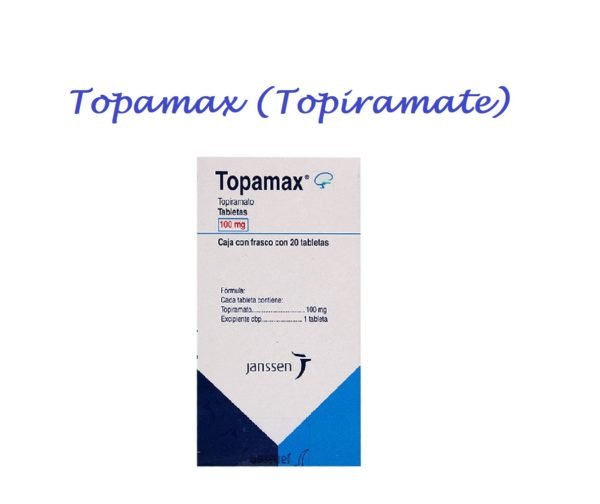
Topamax, a brand name for Topiramate, is also known as Topamax. It can be taken orally as an immediate-release or extended-release medicine.
Topiramate is used:
-
Migraine:
- It is used to prevent migraine headaches in patients aged 12 and over.
-
Seizures
- It can be used as a single or combination therapy to control seizures.
-
Adults can use topiramate off-label
- Weight gain induced by antipsychotics
- Binge eating disorder
- Cluster Headache Prevention
- Preventing short-term unilateral neuralgiform headache attacks
- Essential tremors
Topamax (Topiramate) Dose in Adults
Topamax dosage in the treatment of Binge-eating Disorder as an Alternative Agent (Off-label).
- Initial dose: 25 mg once daily. Gradually increase the dosage to 25-100 mg every other week. This will depend on your response and tolerance. You can take 400 mg/day.
Topamax (Topiramate), Dosage in the prevention or treatment of cluster headaches (alternative agent; adjunctive medicine):
- Initial dose: 25-50mg once daily. Gradually increase the dose in increments of 25-50mg every other week based on response. The recommended daily dose is 100-200mg/day.
- It can be combined with verapamil.
Topamax (topiramate), Dose to prevent short-lasting unilateral neuralgiform migraine attacks (alternative agent).
- Initial: 15-25 mg once daily. May increase the dose depending on response and tolerability.
Topamax (Topiramate), Dosage in Migraine Prevention
- Initial dose: 25 mg once daily. Increase the dose by 25 to 50 mg every other week based on your response and tolerance.
Topamax (Topiramate), Dosage in the Treatment of Seizures
-
Monotherapy
- Initial dose: 50 mg per hour; gradually increase the dose at weekly intervals of 50 mg based on response to and tolerance up to 200 mg/day. Then, you may increase by 100 mg increments every week up to 400 mg/day.
-
Adjunctive therapy:
- Initial: 25-50 mg per oral daily; increasing in 25-50 mg increments weekly based on response. The maximum daily intake is 400 mg.
Dosage of Topamax (topiramate), for essential tremors (alternate drug):
- Initial: 25 mg oral O.D. or b.i.d. daily; gradually increase the dose in increments of 25-50 mg at intervals >=1week based on response.
Dosage of Topamax (topiramate): Antipsychotic-induced weight gain (alternative agent).
- Initial: 50 mg per orally per day; gradually increase to 25 to 50 mg every other week based on response and tolerance, up to a maximum of 200 mg/day.
Topamax (topiramate). Dosing conversion
-
There are two types of immediate-release formulations:
- You can convert the same daily total dose, but change the frequency of immediate-release (2x daily) or extended (once daily).
-
Between ER formulations
- Trokendi XR has not shown bioequivalence with Qudexy XR.
-
Stopping therapy
- To prevent seizure potential or withdrawal symptoms, you should gradually withdraw topiramate over several weeks to several months if you are receiving long-term treatment.
Topamax (Topiramate) Dose in Childrens
Notice: To avoid rebound effects, the dosage should be slowly reduced.
Topamax (Topiramate), for infantile spasms treatment:
Infantile spasm newly-diagnosed:
-
Dosing per weight:
-
Children and infants 3-24 months
-
Release immediately:
- Initial: 1 to 2 mg/kg oral per day; continue to titrate every 3-7 days in 1 to 3-mg/kg/day increments until seizures are controlled
- Reported mean dose range: 9.1-14 mg/kg/day
- Reported range: 4 to 27 mg/kg/day
-
-
-
Refractory: Fixed dosing
-
Infants >=3 Months to Children =4 Years; Weight >=7 Kg:
-
Instant-release
- Initial: 25 mg once daily. Titrate in 25 mg/day increments every two to three days until seizures are controlled
- Maximum daily dose 24 mg/kg/day
-
-
Topamax (Topiramate) as an adjunctive treatment for seizures:
Children and adolescents 2-16 years old
-
Partial onset seizures, or Lennox–Gastaut syndrome
-
Release immediately:
- Initial: 1 to 3 mg/kg oral daily
- The maximum dose is 25 mg/dose, administered once a week in 1 to 2 weeks in increments of 1 or 3 mg/kg/day in two divided doses. Titrate according to response
- In 2 doses, the maintenance dose is usually 5 to 9 mg/kg/day
-
Extended-releaseQudexyXR:
- Initial: 25mg per oral once daily (approximately 1-to-3 mg/kg/day) taken once a night for one week. Then, increase in increments of 1-to-2 weeks at 1 to-3 mg/kg/day. Round to the closest appropriate capsule size and administered once daily.
- Response to Titrate Dosage
- The maintenance dose is usually 5 to 9mg/kg once daily. (range: 5-9 mg/kg/dose one time daily).
-
Extended-releaseTrokendi:
- Initial: 25 mg once daily, administered by mouth once daily for approximately 1 to 2 weeks. Then, increase in 1- to 2-week intervals at 1 to 3, mg/kg/day increments. Each day, take 1 to 3 mg/kg/day and round to the next appropriate capsule size.
- Maintenance: 5 to 9 mg/kg once daily
-
-
Primary generalized tonic-clonic seizures
-
Instant-release
- Initial: 1 to 3mg/kg per orally per day (maximum dosage: 25 mg/dose). Nightly for one week.
- In increments of 1 to 3, mg/kg/day, increase the dose to 6 mg/kg/day with 2 divided doses.
-
Extended-releaseQudexyXR:
- Initial: 25mg per oral once daily (approximately 1- to 3 mg/kg/day), taken once a night for one week. Then, increase in 8 weeks by increasing the dose by 1 to 3. mg/kg/day. Round to the closest capsule size and you will reach a target dose at 6 mg/kg/day.
-
Extended-releaseTrokendi:
- Initial: 25mg once daily (approximately 1 - 3 mg/kg/day) taken once daily for one week. Then, increase in 8 weeks by increasing the dose in increments (1 to 3 mg/kg/day). Round to the closest capsule size and you will reach a daily target of 6 mg/kg.
-
-
Adolescents >=17 Years
-
-
Partial onset seizures, or Lennox–Gastaut syndrome
-
Instant-release
- Initial: 25-50 mg daily taken orally for one week. Increase weekly by 25-50 mg/day. Take in 2 divided doses and adjust the dose according to your response.
- Maintenance doses: 100-200 mg twice daily
- Maximum daily intake: 1600 mg/day
- Notification: Adult dose-response trials have not shown that higher doses than 400 mg/day increase effectiveness.
-
Extended-releaseQuedexyXR, TrokendiXR:
- Initial: 25-50 mg once daily, once daily for one week. Increase weekly by 25-50 mg once daily. Titrate dosage to respond; longer intervals may be required between dose adjustments
- Maintenance doses: 200-400 mg once daily
- Maximum daily intake: 1600 mg/day
-
-
-
Primary generalized tonic-clonic seizures
-
-
Release immediately:
- Initial: 25-50 mg once daily in an oral dose for one week. Increase over 8 weeks in increments 25-50 mg/day in two divided doses. Titrate according to response
- The normal maintenance dose is 200 mg twice daily. Use a slower initial titration rate at >2-week intervals.
- Maximum daily intake: 1600 mg/day
- Notice: Adult doses above 400 mg/day are not shown to be more effective in dose-response trials.
-
Extended-releaseQudexy, Trokendi and Trokendi XR
- Initial dose: 25 mg to 50m once daily for one week. Increase weekly by 25 to 50mg/day increments once daily. Tirate according to response
- Normal maintenance dose: 400mg once daily
- Maximum daily intake: 1600 mg/day
-
-
-
Topiramate (Topamax), for seizures (Anticonvulsant monotherapy).
-
Partial onset seizures, primary generalized-tonic-clonic seizures
-
Instant-release
-
Children from 2-10 years old:
- 25 mg daily, once daily, in the evening. The dose can be increased to 25 mg daily if tolerated. After week 2, the dose may be increased to 25 mg twice daily in the morning. From there, the daily maintenance dose will be reduced by 25 to 50 mg/day over 5 to 7 weekly intervals.
- If additional seizure control is required and the therapy is acceptable, the dose may be increased by 25-50 mg/day at weekly intervals until the upper limit of the daily maintenance target dosing range.
-
Daily maintenance targets:
-
11kgs or less:
- 150-250 mg/day in two divided doses
-
12-22 kg
- 200-300 mg/day in 2 equal doses
-
23 to 31 Kilograms
- 200-350 mg/day in 2 equal doses
-
32-38 kg
- 250-350 mg/day in two divided doses
-
>38 kg
- 250-400 mg/day in 2 equal doses
-
Children >=10 Years and Adolescents
- 25 mg twice daily, once in the morning and again at night.
- Weekly intervals are increased by 50 mg/day increments to 100 mg twice daily (week four-dose); thereafter, the dose may be increased by 100 mg/day increments to reach 200 mg twice daily.
-
Extended-releaseQudexy, Trokendi, XR:
-
Adolescents and children >=10 years
- 50 mg daily, for a week.
- You can increase the weekly dose by 50 mg/day increments to 200 mg once daily (week four-dose); after that, you may increase the weekly dose by 100 mg/day increments to 400 mg once daily.
-
-
Topamax Dose for Migraine Prophylaxis:
-
Children aged 6-12 years, weight >=20 kg
-
Instant-release
- Initially, 15 mg per oral once daily for 1 Week. Then increase to 15 mg twice daily after 1 Week. Next, increase to 25 mg twice daily for 7 Days.
- Keep increasing the dose until you reach the target dose of 2-3 mg/kg/day, divided twice daily.
- The maximum daily intake is 200 mg/day
-
-
Adolescents and children >=12 years
- 25 mg/day taken orally once daily at night, for a period of 1 week. Then, increase in weekly increments of 25 mg/day as tolerated.
Topiramate pregnancy risk category: D
- Topiramate may cause harm to the foetus by crossing into other areas.
- Females should take topiramate to achieve effective contraception
- Metabolic acidosis can lead to fetal death and other adverse effects during pregnancy.
- Congenital malformations are more common in .
Breastfeeding
- Breastmilk contains topiramate.
- If the infant's dose of medication is less than 10%, breastfeeding is allowed. It should not exceed 25%.
- It can cause diarrhea and somnolence in infants who are breastfed.
- According the manufacturer of this product, it is important that you weigh the risks and benefits associated with breastfeeding therapy.
Topamax Dose Adjustment in Renal Disease:
-
Creatinine clearance >=70mL/minute/1.73m 2
- No dosage adjustments are included in the manufacturer's labeling
-
Creatinine clearance 70mL/minute/1.73m 2
- 50% dose reduction is required.
-
Hemodialysis
- 50 to 100mg twice daily. After dialysis, give a supplement of 50 to 100mg to the patient.
Topamax Dose Adjustment in Liver Disease:
- The manufacturer's labeling does not include any dosage adjustments.
- However, in severe hepatic impairment, topiramate clearance might be decreased.
Common Side Effects of Topamax (Topiramate):
-
Central Nervous System:
- Paresthesia
- Fatigue
- Drowsiness
- Dizziness
- Memory Impairment
-
Endocrine & Metabolic:
- Decreased Serum Bicarbonate
- Hyperammonemia
- Weight Loss
-
Gastrointestinal:
- Abdominal Pain
- Anorexia
- Dysgeusia
- Nausea
- Diarrhea
-
Respiratory:
- Upper Respiratory Tract Infection
-
Miscellaneous:
- Fever
Less Common Side Effects Of Topamax (Topiramate):
-
Cardiovascular:
- Flushing
- Chest Pain
-
Central Nervous System:
- Disturbance In Attention
- Lack Of Concentration
- Depression
- Insomnia
- Mood Disorder
- Hypoesthesia
- Anxiety
- Cognitive Dysfunction
- Psychomotor Impairment
- Headache
- Nervousness
- Ataxia
- Behavioral Problems
- Confusion
- Hypertonia
- Vertigo
- Agitation
- Exacerbation Of Depression
- Speech Disturbance
-
Dermatologic:
- Alopecia
- Pruritus
- Skin Rash
- Acne Vulgaris
-
Endocrine & Metabolic:
- Menstrual Disease
- Intermenstrual Bleeding
- Increased Gamma-Glutamyl Transferase
- Increased Thirst
-
Gastrointestinal:
- Dyspepsia
- Constipation
- Gastroenteritis
- Gastritis
- Xerostomia
- Gastroesophageal Reflux Disease
- Ageusia
-
Genitourinary:
- Urinary Tract Infection
- Premature Ejaculation
- Decreased Libido
- Urinary Frequency
- Vaginal Hemorrhage
- Cystitis
- Urinary Incontinence
- Dysuria
-
Hematologic & Oncologic:
- Hemorrhage
- Anemia
- Neoplasm
-
Hypersensitivity:
- Hypersensitivity Reaction
-
Infection:
- Viral Infection
- Infection
-
Neuromuscular & Skeletal:
- Arthralgia
- Asthenia
- Muscle Spasm
- Lower Extremity Pain
-
Ophthalmic:
- Conjunctivitis
- Blurred Vision
- Visual Disturbance
-
Otic:
- Otitis Media
-
Renal:
- Nephrolithiasis
-
Respiratory:
- Sinusitis
- Cough
- Rhinitis
- Pharyngitis
- Bronchitis
- Epistaxis
- Dyspnea
-
Miscellaneous:
- Accidental Injury
- Language Problems
Uncommon side effects of Topamax:
-
Cardiovascular:
- Hypotension
- Orthostatic Hypotension
- Syncope
-
Central Nervous System:
- Suicidal Ideation
- Suicidal Tendencies
-
Endocrine & Metabolic:
- Hyperchloremia
- Increased Serum Total Protein
- Increased Uric Acid
-
Gastrointestinal:
- Gingival Hemorrhage
- Hematuria
-
Hematologic & Oncologic:
- Abnormal Serum Phosphorus Level
- Decreased Neutrophils
- Decreased White Blood Cell Count
- Eosinophilia
- Quantitative Disorders Of Platelets
-
Hepatic:
- Increased Serum Alkaline Phosphatase
-
Neuromuscular & Skeletal:
- Myalgia
-
Ophthalmic:
- Myopia
- Scotoma
- Visual Field Defect
-
Renal:
- Increased Blood Urea Nitrogen
- Increased Serum Creatinine
Contraindications to Topamax, Topiramate
-
Extended-release
- Recent alcohol intake (i.e. within 6 hours prior and 6 hours following administration) (Trokendi extended release only)
- Metabolic acidosis with concurrent Metformin (Qudexy extended Delivery only).
-
Instant-release
- No contraindications are listed on the manufacturer's label
-
Canadian labeling
- Hypersensitivity of topiramate to any component of the formula/container
- Pregnancy
Warnings & Precautions
-
CNS results
- Use can cause cognitive dysfunction such as poor concentration, confusion and slowing down of the motor system.
- It is crucial to exercise caution when operating machinery or driving.
- It can also cause paraesthesia, dizziness, and ataxia.
-
Encephalopathy / Hyperammonemia
- Encephalopathy and hyperammonemia are possible causes of hyperammonemia.
- Inborn metabolic errors and reduced hepatic mitochondrial activity increase the risk of developing encephalopathy.
-
Metabolic acidosis
- This condition could be caused by decreased carbonic anhydrase activity and increased renal loss.
- Risk factors include diabetes, kidney failure, ketogenic eating and status epilepticus.
- Patients suffering from severe or persistent metabolic acidosis need to have their dosage reduced or stopped
-
Hyperthermia/Oligohidrosis:
- Exercise at high temperatures or strenuous activity is a dangerous way to increase your risk of hyperthermia and oligohidrosis.
-
Ophthalmic effects
- Children and adults should be treated for acute myopia.
-
Calculus renal
- Topiramate can have weak carbonic anhydrase inhibitory actions and increase your chance of developing kidney stones.
- Ketogenic diets increase the risk while adequate water intake reduces it.
-
Suicidal thoughts
- Suicidal thoughts can result.
-
Eating disorders
- Topiramate has been associated with bulimia, anorexia and nervosa.
- Compulsive exercising and over-exercising should be addressed.
Topiramate: Drug Interaction
|
Alizapride |
May enhance the CNS depressant effect of CNS Depressants. |
|
Alpha-/Beta-Agonists (Indirect-Acting) |
Carbonic Anhydrase Inhibitors may increase the serum concentration of Alpha-/Beta-Agonists (Indirect-Acting). |
|
Amantadine |
Carbonic Anhydrase Inhibitors may increase the serum concentration of Amantadine. |
|
Amitriptyline |
Topiramate may enhance the CNS depressant effect of Amitriptyline. Topiramate may increase serum concentrations of the active metabolite(s) of Amitriptyline. Topiramate may increase the serum concentration of Amitriptyline. |
|
Amphetamines |
Carbonic Anhydrase Inhibitors may decrease the excretion of Amphetamines. |
|
Anticholinergic Agents |
May enhance the adverse/toxic effect of Topiramate. |
|
Brexanolone |
CNS Depressants may enhance the CNS depressant effect of Brexanolone. |
|
Brimonidine (Topical) |
May enhance the CNS depressant effect of CNS Depressants. |
|
Bromopride |
May enhance the CNS depressant effect of CNS Depressants. |
|
Cannabidiol |
May enhance the CNS depressant effect of CNS Depressants. |
|
Cannabis |
May enhance the CNS depressant effect of CNS Depressants. |
|
Chlorphenesin Carbamate |
May enhance the adverse/toxic effect of CNS Depressants. |
|
CNS Depressants |
May enhance the adverse/toxic effect of other CNS Depressants. |
|
Dimethindene (Topical) |
May enhance the CNS depressant effect of CNS Depressants. |
|
Doxylamine |
May enhance the CNS depressant effect of CNS Depressants. Management: The manufacturer of Diclegis (doxylamine/pyridoxine), intended for use in pregnancy, specifically states that use with other CNS depressants is not recommended. |
|
Dronabinol |
May enhance the CNS depressant effect of CNS Depressants. |
|
Esketamine |
May enhance the CNS depressant effect of CNS Depressants. |
|
Flecainide |
Carbonic Anhydrase Inhibitors may increase the serum concentration of Flecainide. |
|
Fosphenytoin |
May decrease the serum concentration of Topiramate. Topiramate may increase the serum concentration of Fosphenytoin. |
|
HydrOXYzine |
May enhance the CNS depressant effect of CNS Depressants. |
|
Kava Kava |
May enhance the adverse/toxic effect of CNS Depressants. |
|
Lacosamide |
Antiepileptic Agents (Sodium Channel Blockers) may enhance the adverse/toxic effect of Lacosamide. Specifically the risk for bradycardia, ventricular tachyarrhythmias, or a prolonged PR interval may be increased. |
|
Lithium |
Topiramate may increase the serum concentration of Lithium. |
|
Lofexidine |
May enhance the CNS depressant effect of CNS Depressants. Management: Drugs listed as exceptions to this monograph are discussed in further detail in separate drug interaction monographs. |
|
Loop Diuretics |
May enhance the hypokalemic effect of Topiramate. |
|
Magnesium Sulfate |
May enhance the CNS depressant effect of CNS Depressants. |
|
Memantine |
Carbonic Anhydrase Inhibitors may increase the serum concentration of Memantine. |
|
MetFORMIN |
Topiramate may enhance the adverse/toxic effect of MetFORMIN. |
|
MetyroSINE |
CNS Depressants may enhance the sedative effect of MetyroSINE. |
|
Mianserin |
May diminish the therapeutic effect of Anticonvulsants. |
|
Minocycline |
May enhance the CNS depressant effect of CNS Depressants. |
|
Mirtazapine |
CNS Depressants may enhance the CNS depressant effect of Mirtazapine. |
|
Nabilone |
May enhance the CNS depressant effect of CNS Depressants. |
|
Orlistat |
May decrease the serum concentration of Anticonvulsants. |
|
Phenytoin |
Topiramate may increase the serum concentration of Phenytoin. Phenytoin may decrease the serum concentration of Topiramate. |
|
Pioglitazone |
Topiramate may decrease the serum concentration of Pioglitazone. |
|
Piribedil |
CNS Depressants may enhance the CNS depressant effect of Piribedil. |
|
Pramipexole |
CNS Depressants may enhance the sedative effect of Pramipexole. |
|
Primidone |
Carbonic Anhydrase Inhibitors may enhance the adverse/toxic effect of Primidone. Specifically, osteomalacia and rickets. Carbonic Anhydrase Inhibitors may decrease the serum concentration of Primidone. |
|
QuiNIDine |
Carbonic Anhydrase Inhibitors may decrease the excretion of QuiNIDine. |
|
ROPINIRole |
CNS Depressants may enhance the sedative effect of ROPINIRole. |
|
Rotigotine |
CNS Depressants may enhance the sedative effect of Rotigotine. |
|
Rufinamide |
May enhance the adverse/toxic effect of CNS Depressants. Specifically, sleepiness and dizziness may be enhanced. |
|
Selective Serotonin Reuptake Inhibitors |
CNS Depressants may enhance the adverse/toxic effect of Selective Serotonin Reuptake Inhibitors. Specifically, the risk of psychomotor impairment may be enhanced. |
|
Tetrahydrocannabinol |
May enhance the CNS depressant effect of CNS Depressants. |
|
Tetrahydrocannabinol and Cannabidiol |
May enhance the CNS depressant effect of CNS Depressants. |
|
Trimeprazine |
May enhance the CNS depressant effect of CNS Depressants. |
|
Valproate Products |
Topiramate may enhance the adverse/toxic effect of Valproate Products. |
|
Risk Factor D (Consider therapy modification) |
|
|
Blonanserin |
CNS Depressants may enhance the CNS depressant effect of Blonanserin. |
|
Buprenorphine |
|
|
CarBAMazepine |
May decrease the serum concentration of Topiramate. |
|
Chlormethiazole |
May enhance the CNS depressant effect of CNS Depressants. Management: Monitor closely for evidence of excessive CNS depression. The chlormethiazole labeling states that an appropriately reduced dose should be used if such a combination must be used. |
|
Droperidol |
May enhance the CNS depressant effect of CNS Depressants. Management: Consider dose reductions of droperidol or of other CNS agents (eg, opioids, barbiturates) with concomitant use. Exceptions to this monograph are discussed in further detail in separate drug interaction monographs. |
|
Estrogen Derivatives (Contraceptive) |
Topiramate may decrease the serum concentration of Estrogen Derivatives (Contraceptive). Contraceptive failure is possible. Management: Risk appears greatest for higher topiramate doses (200 mg/day or greater). Some have recommended using at least 50 mcg/day of ethinyl estradiol, but the effectiveness of this is unclear. Consider a nonhormonal form of contraception. |
|
Flunitrazepam |
CNS Depressants may enhance the CNS depressant effect of Flunitrazepam. |
|
HYDROcodone |
CNS Depressants may enhance the CNS depressant effect of HYDROcodone. Management: Avoid concomitant use of hydrocodone and benzodiazepines or other CNS depressants when possible. These agents should only be combined if alternative treatment options are inadequate. If combined, limit the dosages and duration of each drug. |
|
Mefloquine |
May diminish the therapeutic effect of Anticonvulsants. Mefloquine may decrease the serum concentration of Anticonvulsants. Management: Mefloquine is contraindicated for malaria prophylaxis in persons with a history of convulsions. Monitor anticonvulsant concentrations and treatment response closely with concurrent use. |
|
Methenamine |
Carbonic Anhydrase Inhibitors may diminish the therapeutic effect of Methenamine. Management: Consider avoiding this combination. Monitor for decreased therapeutic effects of methenamine if used concomitant with a carbonic anhydrase inhibitor. |
|
Methotrimeprazine |
CNS Depressants may enhance the CNS depressant effect of Methotrimeprazine. Methotrimeprazine may enhance the CNS depressant effect of CNS Depressants. Management: Reduce adult dose of CNS depressant agents by 50% with initiation of concomitant methotrimeprazine therapy. Further CNS depressant dosage adjustments should be initiated only after clinically effective methotrimeprazine dose is established. |
|
Opioid Agonists |
CNS Depressants may enhance the CNS depressant effect of Opioid Agonists. Management: Avoid concomitant use of opioid agonists and benzodiazepines or other CNS depressants when possible. These agents should only be combined if alternative treatment options are inadequate. If combined, limit the dosages and duration of each drug. |
|
OxyCODONE |
CNS Depressants may enhance the CNS depressant effect of OxyCODONE. Management: Avoid concomitant use of oxycodone and benzodiazepines or other CNS depressants when possible. These agents should only be combined if alternative treatment options are inadequate. If combined, limit the dosages and duration of each drug. |
|
Perampanel |
May enhance the CNS depressant effect of CNS Depressants. Management: Patients taking perampanel with any other drug that has CNS depressant activities should avoid complex and high-risk activities, particularly those such as driving that require alertness and coordination, until they have experience using the combination. |
|
Progestins (Contraceptive) |
Topiramate may decrease the serum concentration of Progestins (Contraceptive). Management: Caution patients that this combination may be associated with reduced contraceptive effectiveness. Consider adding an additional (non-hormonal) contraceptive method. |
|
Salicylates |
May enhance the adverse/toxic effect of Carbonic Anhydrase Inhibitors. Salicylate toxicity might be enhanced by this same combination. Management: Avoid these combinations when possible.Dichlorphenamide use with high-dose aspirin as contraindicated. If another combination is used, monitor patients closely for adverse effects. Tachypnea, anorexia, lethargy, and coma have been reported. |
|
Sodium Oxybate |
May enhance the CNS depressant effect of CNS Depressants. Management: Consider alternatives to combined use. When combined use is needed, consider minimizing doses of one or more drugs. Use of sodium oxybate with alcohol or sedative hypnotics is contraindicated. |
|
Suvorexant |
CNS Depressants may enhance the CNS depressant effect of Suvorexant. Management: Dose reduction of suvorexant and/or any other CNS depressant may be necessary. Use of suvorexant with alcohol is not recommended, and the use of suvorexant with any other drug to treat insomnia is not recommended. |
|
Tapentadol |
May enhance the CNS depressant effect of CNS Depressants. Management: Avoid concomitant use of tapentadol and benzodiazepines or other CNS depressants when possible. These agents should only be combined if alternative treatment options are inadequate. If combined, limit the dosages and duration of each drug. |
|
Thiazide and Thiazide-Like Diuretics |
May enhance the hypokalemic effect of Topiramate. Thiazide and Thiazide-Like Diuretics may increase the serum concentration of Topiramate. Management: Monitor for increased topiramate levels/adverse effects (e.g., hypokalemia) with initiation/dose increase of a thiazide diuretic. Closely monitor serum potassium concentrations with concomitant therapy. Topiramate dose reductions may be necessary. |
|
Zolpidem |
CNS Depressants may enhance the CNS depressant effect of Zolpidem. Management: Reduce the Intermezzo brand sublingual zolpidem adult dose to 1.75 mg for men who are also receiving other CNS depressants. No such dose change is recommended for women. Avoid use with other CNS depressants at bedtime; avoid use with alcohol. |
|
Risk Factor X (Avoid combination) |
|
|
Alcohol (Ethyl) |
May enhance the CNS depressant effect of Topiramate. Alcohol (Ethyl) may increase the serum concentration of Topiramate. This applies specifically to use with the extended-release topiramate capsules (Trokendi XR). Also, topiramate concentrations may be subtherapeutic in the later portion of the dosage interval. Management: Concurrent use of alcohol within 6 hours of ingestion of extended-release topiramate (Trokendi XR) is contraindicated. Any use of alcohol with topiramate should be avoided when possible and should only be undertaken with extreme caution. |
|
Azelastine (Nasal) |
CNS Depressants may enhance the CNS depressant effect of Azelastine (Nasal). |
|
Bromperidol |
May enhance the CNS depressant effect of CNS Depressants. |
|
Carbonic Anhydrase Inhibitors |
May enhance the adverse/toxic effect of other Carbonic Anhydrase Inhibitors. The development of acid-base disorders with concurrent use of ophthalmic and oral carbonic anhydrase inhibitors has been reported. Management: Avoid concurrent use of different carbonic anhydrase inhibitors if possible. Monitor patients closely for the occurrence of kidney stones and with regards to severity of metabolic acidosis. |
|
Orphenadrine |
CNS Depressants may enhance the CNS depressant effect of Orphenadrine. |
|
Oxomemazine |
May enhance the CNS depressant effect of CNS Depressants. |
|
Paraldehyde |
CNS Depressants may enhance the CNS depressant effect of Paraldehyde. |
|
Thalidomide |
CNS Depressants may enhance the CNS depressant effect of Thalidomide. |
|
Ulipristal |
Topiramate may decrease the serum concentration of Ulipristal. |
Monitoring parameters:
- Electrolytes in serum
- Ammonia levels
- Hydration status
- Seizure frequency
- Renal function tests
- Glaucoma symptoms/intraocular pressure
- Suicidal thoughts/behavioral and behavioral changes
- Weight and eating habits
How do you administer Topamax (Topiramate).
- It is best to take the medication orally without crushing or chewing.
- You can also open QudexyXR or Sprinkle capsules to sprinkle their entire contents onto a small amount of soft food.
- These capsules can be opened immediately and eaten whole, without needing to be chewed.
- Do not keep it. Stop drinking alcohol with Trokendi XR tablets within 6 hours after administration and 6 hours thereafter.
Mechanism of Topamax (Topiramate),:
- It increases gamma aminobutyric (GABA) activity and blocks neuronal voltage dependent sodium channels.
- It inhibits carbonic anhydrase and antagonizes AMPA/kainate glucose.
Notice:
- The capsule and the tablet are bioequivalents to immediate-release formulations. Extended-release capsules (Trokendi XR) are twice daily administered and are bioequivalent to immediate-release formulations.
Absorption:
- Fast and efficient. The immediate-release formulation is unaffected by food. A single TrokendiXR dose taken with high-fat meals reduced the T by around 8 hours and increased Cmax by 37% Repeated administrations of TrokendiXR reduce this effect significantly. After a single QudexyXR dosage, the Tmax was delayed 4 hours.
Protein binding:
- 15% to 41% (inversely proportional plasma concentrations).
Metabolism:
- The hepatic metabolism is restricted to hydrolysis, hydrogenation and glucuronidation.
- Patients receiving enzyme inducers (e.g.Carmazepine,Phenytoin. There is evidence of renal tubular absorption.
Bioavailability:
- 80% (immediate-release)
Eliminating half-life:
Release immediately:
If you are receiving any concomitant enzyme inducers or valproic acids.
- Hypothermia in neonates (full-term).: 43 hours
- Infants and children 9 months to 4 years10.4 hours (range: 8.5-8.3 hours).
- Children aged 4-7 yearsAverage range: 7.7 to 8.8 hours
- Children aged 8-11 yearsAverage range: 11.3 to 11 hours
- Children and adolescents 12-17 years oldAverage range: 12.3 to 12.8 Hours
Concomitant use of enzyme inducers (eg carbamazepine or phenytoin):
- Hypothermia in neonates (full-term).: 26.5 Hours
- Infants and children 9 months to 4 years6.5 hours (range 3.75-10.2 hours).
- Children and adolescents 4-17 years old7.5 hours
Receiving Valproic acid:
- Infants and children 9 months to 4 Years:9.2 hours (range 7.23 to 12.4 hours).
- Adults: 19-23 hours (mean: 21hrs)
- Adults with severe renal impairment: 59 +- 11 Hours
Extended-release
- QudexyXR:56 hours
- Trokendi:31 hours
Time until peak serum concentrations are reached:
Release immediately:
- Hypothermia in neonates (full-term), 3.8 hours
- Infants and children 9 months to 4 years: 3.7 Hours (range: 1.5-10.2 Hours).
- Children aged 4-17 years: Average range: 1 to 2 hours
- Adults: 2 Hours; range: 1.4-4.3 hours
Extended-release
- QudexyXR: 20 Hours
- TrokendiXR: 24 Hours
Excretion: Occurs in the urine (70% for unchanged drug); could undergo renal tubular absorption.
Topiramate Brand Names (International):
- Qudexy XR
- Topamax
- Topamax Sprinkle
- Trokendi XR
- Abbott-Topiramate
- ACCEL-Topiramate
- AG-Topiramate
- APO-Topiramate
- AuroTopiramate
- DOM-Topiramate
- GLN-Topiramate
- JAMP-Topiramate
- Mar-Topiramate
- MINTTopiramate
- MYLAN-Topiramate
- PHL-Topiramate
- PMS-Topiramate
- PRO-Topiramate
- RANTopiramate
- SANDOZ Topiramate
- TEVA-Topiramate
- Topamax
- Topamax Sprinkle
- Acomicil
- Conviban
- Epilramate
- Epimate
- Epiramat
- Epitomax
- Epitop
- Etopira
- Fagodol
- Gabatopa
- Ipramax
- Moramax
- Piramed
- Pradox
- Seziril
- Tamate
- Tiramate
- Topagan
- Topamac
- Topamax
- Topamax Sprinkle
- Topictal
- Topilepsin
- Topimax
- Topina
- Topinmate
- Topirol
- Topiromax
- Topiron
- Topirva
- Topitrim
- Topmate
- Topnotch
- Topomac
- Topvex
- Toramat
- Toramate
Topiramate Brand Names in Pakistan:
Topiramate 25 mg Tablets |
|
| Amtec | Shrooq Pharmaceuticals |
| Apimate | Tg Pharma |
| Brainamax | Friends Pharma (Pvt) Ltd |
| Epik | Pharmevo (Pvt) Ltd. |
| Epimate | Pharmevo (Pvt) Ltd. |
| Hitop | Hilton Pharma (Pvt) Limited |
| Legent | Amarant Pharmaceuticals (Pvt) |
| Seziril | Medizan Labs (Pvt) Ltd |
| Siezab | Macter International (Pvt) Ltd. |
| Tics | Genix Pharma (Pvt) Ltd |
| Tolymax | Medisure Laboratories Pakistan (Pvt.) Ltd. |
| Tomax | Schazoo Zaka |
| Tomigraine | Obs |
| Topagen | Genetics Pharmaceuticals |
| Topamax | Janssen-Cilag |
| Topamid | Avital Pharma |
| Toperatec 3h | Hamaz Pharmaceutical (Pvt) Ltd. |
| Topilep | Cellgene Pharmaceuticals International |
| Topirama | Platinum Pharmaceuticals (Pvt.) Ltd. |
| Topirat | Gray`S Pharmaceuticals |
| Topiro | Adamjee Pharmaceuticals (Pvt) Ltd. |
| Topmate | Efroze Chemical Industries (Pvt) Ltd. |
| Toprex | Hansel Pharmacueutical Pvt (Ltd) |
| Topte | S.J. & G. Fazul Ellahie (Pvt) Ltd. |
| Torate | Consolidated Chemical Laboratories (Pvt) Ltd. |
| Tritop | Semos Pharmaceuticals (Pvt) Ltd. |
| Zopir | Glitz Pharma |
| Zopiramate | Mass Pharma (Private) Limited |
Topiramate 50 mg Tablets |
|
| Amtec | Shrooq Pharmaceuticals |
| Apimate | Tg Pharma |
| Awapram | Usawa Pharmaceuticals |
| Awapram | Usawa Pharmaceuticals |
| C-Zar | Mass Pharma (Private) Limited |
| Epimax | Envoy Pharma |
| Hitop | Hilton Pharma (Pvt) Limited |
| Legent | Amarant Pharmaceuticals (Pvt) |
| Seziril | Medizan Labs (Pvt) Ltd |
| Siezab | Macter International (Pvt) Ltd. |
| Tics | Genix Pharma (Pvt) Ltd |
| Tolymax | Medisure Laboratories Pakistan (Pvt.) Ltd. |
| Tomax | Schazoo Zaka |
| Tomigraine | Obs |
| Topadix | Neo Medix |
| Topagen | Genetics Pharmaceuticals |
| Topamax | Janssen-Cilag |
| Topamid | Avital Pharma |
| Topawan | Swan Pharmaceuticals(Pvt) Ltd |
| Topcal | Caraway Pharmaceuticals |
| Toperatec 3h | Hamaz Pharmaceutical (Pvt) Ltd. |
| Topilep | Cellgene Pharmaceuticals International |
| Topirama | Platinum Pharmaceuticals (Pvt.) Ltd. |
| Topirat | Gray`S Pharmaceuticals |
| Topiro | Adamjee Pharmaceuticals (Pvt) Ltd. |
| Topmate | Efroze Chemical Industries (Pvt) Ltd. |
| Toprex | Hansel Pharmacueutical Pvt (Ltd) |
| Topte | S.J. & G. Fazul Ellahie (Pvt) Ltd. |
| Torate | Consolidated Chemical Laboratories (Pvt) Ltd. |
| Tritop | Semos Pharmaceuticals (Pvt) Ltd. |
| Zopir | Glitz Pharma |
Topiramate 100 mg Tablets |
|
| Amtec | Shrooq Pharmaceuticals |
| Engrax | English Pharmaceuticals Industries |
| Hitop | Hilton Pharma (Pvt) Limited |
| Legent | Amarant Pharmaceuticals (Pvt) |
| Mustop | Navegal Laboratories |
| Tics | Genix Pharma (Pvt) Ltd |
| Tics | Genix Pharma (Pvt) Ltd |
| Tomax | Schazoo Zaka |
| Tomigraine | Obs |
| Tomigraine | Obs |
| Topadix | Neo Medix |
| Topagen | Reko Pharmacal (Pvt) Ltd. |
| Topcal | Caraway Pharmaceuticals |
| Topcal | Caraway Pharmaceuticals |
| Topirama | Platinum Pharmaceuticals (Pvt.) Ltd. |
| Topirax | Ferroza International Pharmaceuticals (Pvt) Ltd. |
| Topirax | Ferroza International Pharmaceuticals (Pvt) Ltd. |
| Topiro | Adamjee Pharmaceuticals (Pvt) Ltd. |
| Topiro | Adamjee Pharmaceuticals (Pvt) Ltd. |
Topiramate 200 mg Tablets |
|
| Engrax | English Pharmaceuticals Industries |
| Tamat | Global Pharmaceuticals |
| Tics | Genix Pharma (Pvt) Ltd |
| Tomigraine | Obs |
| Topirax | Ferroza International Pharmaceuticals (Pvt) Ltd. |
.png)


