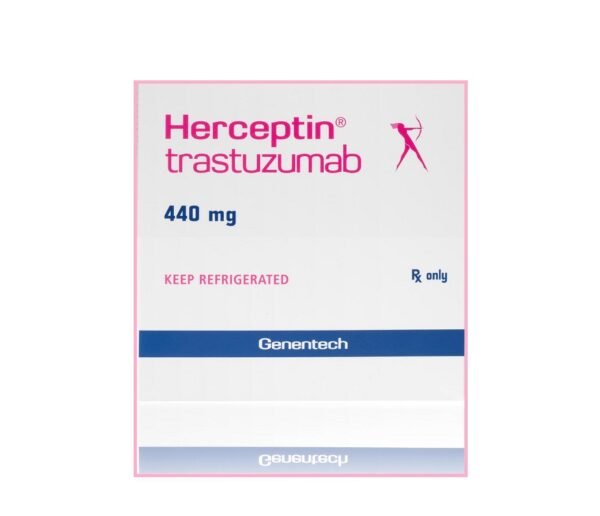
Trastuzumab (Herceptin) is a monoclonal antibody that targets cells that express HER-2 (human epidermal growth factor receptors 2 proteins) cells. It is used to treat breast and gastric cancers.
Trastuzumab Uses:
-
Breast cancer, adjuvant treatment:
- It is used as an adjunctive treatment)of human epidermal growth receptor 2 (HER2)-overexpressing node-positive or node-negative either estrogen receptor or progesterone receptor-negative or with 1 high-risk feature, breast cancer as part of a treatment regimen consisting of doxorubicin, cyclophosphamide, and either paclitaxel or docetaxel.
- It can also be used as part of a treatment regimen with docetaxel and carboplatin or as a single agent following multi-modality anthracycline-based therapy.
-
Breast cancer, metastatic:
- it is also used as a first-line treatment of HER2-overexpressing metastatic breast cancer in combination with paclitaxel or a single agent treatment of HER2-overexpressing breast cancer in patients who have received 1 or more chemotherapy regimens for metastatic disease.
-
Gastric cancer, metastatic:
- It is used in the management of HER2-overexpressing metastatic gastric or gastroesophageal junction adenocarcinoma in combination with cisplatin and either capecitabine or 5-fluorouracil in patients who have not received prior treatment for metastatic disease.
- Its limitations for use in patients depend upon selectivity for breast and gastric cancer therapy based on an approved companion diagnostic test for tumor specimen for HER2 overexpression or HER2 gene amplification.
Note: Kanjinti (trastuzumab-anns) and Ontruzant (trastuzumab-dttb) are approved as biosimilars to Herceptin (trastuzumab).
-
Off Label Use of Trastuzumab in Adults:
- It can be used for locally advanced breast cancer, inflammatory or early in nature, and in those for whom human epidermal growth receptor 2 (HER2) is positive, as neoadjuvant treatment.
- it is used in metastatic breast cancer, who are HER2-positive in combination with pertuzumab and docetaxel, in patients who have not received prior anti-HER2 therapy or chemotherapy to treat metastatic disease.
- In metastatic breast cancer which is HER2-positive in combination with pertuzumab and weekly paclitaxel.
- In metastatic breast cancer which is HER2-positive in combination with either docetaxel or vinorelbine.
- In metastatic breast cancer which is HER2-positive, hormone-receptor-positive in combination with an aromatase inhibitor.
- In metastatic breast cancer which is HER2-positive in combination with lapatinib which has progressed on prior trastuzumab containing therapy.
- It is used in Endometrial cancer which are advanced or recurrent, and HER2-positive
Trastuzumab (Herceptin) Dose in Adults
Note: Do NOT substitute conventional trastuzumab products for or with ado-trastuzumab emtansine or trastuzumab/hyaluronidase. These products are different and are NOT interchangeable. Kanjinti (trastuzumab-anns) and Ontruzant (trastuzumab-dttb) are approved as biosimilars to Herceptin.
Trastuzumab (Herceptin) Dose in the adjuvant treatment of human epidermal growth receptor 2-positive (HER2+) breast cancer: IV:
Note: Extending adjuvant treatment beyond 1 year is not recommended.
-
With concurrent paclitaxel or docetaxel:
- An initial loading dose is 4 mg/kg infused over 90 minutes, followed by
- Maintenance dose of 2 mg/kg infused over 30 minutes weekly for a total of 12 weeks, followed 1 week later when concurrent chemotherapy completed and by 6 mg/kg infused over 30 to 90 minutes every 3 weeks for total therapy duration of 52 weeks
-
With concurrent docetaxel/carboplatin:
- An initial loading dose is 4 mg/kg infused over 90 minutes, followed by
- Maintenance dose of 2 mg/kg infused over 30 minutes weekly for a total of 18 weeks, followed by 1 week later when concurrent chemotherapy completed, by 6 mg/kg infused over 30 to 90 minutes every 3 weeks for a total therapy duration of 52 weeks.
-
Following the completion of multimodality anthracycline-based chemotherapy:
- An initial loading dose is 8 mg/kg infused over 90 minutes, followed by
- Maintenance dose of 6 mg/kg infused over 30 to 90 minutes every 3 weeks for a total therapy duration of 52 weeks.
-
Duration of therapy:
- The standard duration of adjuvant trastuzumab therapy in early breast cancer is 1 year (52 weeks).
- However, for patients unable to tolerate 1 year of trastuzumab, a noninferiority study comparing 12 months versus 6 months of adjuvant trastuzumab therapy in early breast cancer suggests disease-free survival may not be inferior with a 6month duration.
Trastuzumab (Herceptin) Dose in the treatment of Breast cancer (early stage, locally advanced, or inflammatory), neoadjuvant treatment, HER2+ (off-label): IV:
- Trastuzumab, pertuzumab, and docetaxel in patients with the operable disease who had received no prior chemotherapy:
- Initially, it is given as 8 mg/kg (cycle 1) followed by 6 mg/kg every 3 weeks for a total of 4 neoadjuvant cycles.
- Postoperatively it is administered as 3 cycles of adjuvant FEC [fluorouracil, epirubicin, and cyclophosphamide] chemotherapy and trastuzumab continued to be completed 1 year of treatment.
Trastuzumab (Herceptin) Dose in the treatment of metastatic, HER2+ Breast cancer (either as a single agent or in combination with paclitaxel): IV:
- An initial loading dose of 4 mg/kg infused over 90 minutes, followed by
- Maintenance dose of 2 mg/kg infused over 30 minutes weekly until disease progression has stopped.
Trastuzumab (Herceptin) Dose in the treatment of metastatic, HER2+ breast cancer (off-label combinations): IV:
It should be noted that there are multiple trastuzumab-containing regimens for the treatment of HER2+ metastatic breast cancer and commonly used regimens are listed below:
-
Trastuzumab, pertuzumab, and docetaxel (in patients with no prior anti-HER2 therapy or chemotherapy to treat metastatic disease):
- Initially, it is given as 8 mg/kg followed by a maintenance dose of 6 mg/kg every 3 weeks until disease progression or unacceptable toxicity has occurred.
-
Trastuzumab, pertuzumab, and weekly paclitaxel:
- Initially, it is given as 8 mg/kg followed by a maintenance dose of 6 mg/kg every 3 weeks until disease progression has stopped.
-
Trastuzumab and lapatinib (in patients with progression on prior trastuzumab containing therapy):
- Initially, it is given as 4 mg/kg followed by a maintenance dose of 2 mg/kg every week.
-
Trastuzumab and an aromatase inhibitor:
- Initially, it is given as 4 mg/kg followed by a maintenance dose of 2 mg/kg every week in combination with anastrozole and continued until disease progression has stopped.
-
Other trastuzumab combinations:
- Initially, it is given as 8 mg/kg followed by a maintenance dose of 6 mg/kg every 3 weeks until disease progression or unacceptable toxicity in combination with docetaxel or vinorelbine OR
- 4 mg/kg loading dose followed by a maintenance dose of 2 mg/kg weekly until disease progression has stopped. It is usually given in combination with docetaxel.
Trastuzumab (Herceptin) Dose in the treatment of advanced or recurrent, HER2-positive endometrial cancer (uterine serous) (off-label): IV:
- Initially, it is given as 8 mg/kg (cycle 1) intravenously followed by a maintenance dose of 6 mg/kg every 3 weeks in combination with carboplatin and paclitaxel for approximately 6 cycles, followed by trastuzumab maintenance of 6 mg/kg every 3 weeks until disease progression or unacceptable toxicity.
Trastuzumab (Herceptin) Dose in the treatment of metastatic, HER2+ Gastric cancer:
(in combination with cisplatin and either capecitabine or fluorouracil for 6 cycles followed by trastuzumab monotherapy:
- An initial loading dose is 8 mg/kg infused intravenously over 90 minutes, followed by
- Maintenance dose of 6 mg/kg infused over 30 to 90 minutes every 3 weeks until disease progression has stopped.
Trastuzumab Missed doses:
- A dose delay of more than 1 week would require 6 weeks to return to the steady-state range. If a maintenance dose is missed by more than 1 week, a reloading dose is required.
- If a dose is missed by 1 week or less, the usual maintenance dose of 2 mg/kg weekly schedule or 6 mg/kg every 3-week schedule should be administered as soon as possible and do not wait until the next planned cycle, and subsequent maintenance doses should be administered 7 or 21 days later (based on patient's maintenance dose/schedule.
- If a dose is missed by more than 1 week, then a re-loading dose of 4 mg/kg is given, if the patient receives trastuzumab weekly or 8 mg/kg if on an every-3week schedule, should be administered (over 90 minutes) as soon as possible, followed by the usual maintenance dose administered 7 or 21 days later (based on patient's maintenance dose.
Use in Children:
Not indicated.
Trastuzumab (Herceptin) Pregnancy Category: D
- Studies on animal reproduction have shown that embryonic failures can occur in animals.
- Trastuzumab can cause oligohydramnios or oligohydramnios in pregnancy. This includes skeletal malformations and neonatal deaths.
- It is important to use effective contraception.
- In some cases, oligohydramnios can be reversed with trastuzumab alone or in combination chemotherapy.
- If trastuzumab is given to a woman during pregnancy, or within seven months of conception, it should be checked for oligohydramnios. If this happens, it is important to have a thorough and frequent assessment.
- Before starting treatment, it is important to get rid of any pregnant women.
- Effective contraception should be used by women of reproductive age during treatment, and at least seven months after the last trastuzumab dosage.
- Herceptin: Report exposure to Genentech Adverse Events at 1-888-835-2555 if Herceptin was administered during pregnancy or if the patient becomes pregnant within the first 7 months.
- The European Society for Medical Oncology Guidelines for Cancer During Pregnancy recommend delaying treatment of trastuzumab or other HER2-targeted drugs until after delivery for pregnant patients with HER2-positive diseases.
Trastuzumab is not recommended for use while breastfeeding
- It is unknown whether breast milk secretes it.
- There are many immunoglobulins in milk. Therefore, it is important to weigh the clinical benefits against the risk to the mother's health as well as the need to feed the infant.
- Consider the 7-month wait period for trastuzumab before you decide whether to breastfeed after treatment has been completed.
Trastuzumab (Herceptin) Dose in Kidney Disease:
-
CrCl 30 to 90 mL/minute:
- There are no dosage adjustments required, although no clinically significant pharmacokinetic differences have been reported.
-
CrCl <30 mL/minute:
- There are no specific dosage adjustments provided in the literature as it has not been studied.
-
End-stage renal disease (ESRD) (with or without hemodialysis):
- patients with ESRD have no specific dose adjustment guidelines as they are not yet studied.
Dose in Liver disease:
dose adjustment in liver disease has not yet been studied.
Trastuzumab Side effects (Common):
-
Cardiovascular:
- Decreased Left Ventricular Ejection Fraction
-
Central Nervous System:
- Pain
- Chills
- Headache
- Insomnia
- Dizziness
-
Dermatologic:
- Skin Rash
-
Gastrointestinal:
- Nausea
- Diarrhea
- Vomiting
- Abdominal Pain
- Anorexia
-
Infection:
- Infection
-
Neuromuscular & Skeletal:
- Weakness
- Back Pain
-
Respiratory:
- Cough
- Dyspnea
- Rhinitis
- Pharyngitis
-
Miscellaneous:
- Infusion Related Reaction
- Fever
Trastuzumab (Herceptin) Side effects (Less Common):
-
Cardiovascular:
- Peripheral Edema
- Edema
- Cardiac Failure
- Tachycardia
- Hypertension
- Arrhythmia
- Palpitations
-
Central Nervous System:
- Paresthesia
- Depression
- Peripheral Neuritis
- Neuropathy
-
Dermatologic:
- Acne Vulgaris
- Nail Disease
- Pruritus
-
Gastrointestinal:
- Constipation
- Dyspepsia
-
Genitourinary:
- Urinary Tract Infection
-
Hematologic & Oncologic:
- Anemia
- Leukopenia
-
Hypersensitivity:
- Hypersensitivity Reaction
-
Infection:
- Influenza
- Herpes Simplex Infection
-
Neuromuscular & Skeletal:
- Arthralgia
- Ostealgia
- Myalgia
- Muscle Spasm
-
Respiratory:
- Flu-Like Symptoms
- Sinusitis
- Nasopharyngitis
- Upper Respiratory Tract Infection
- Epistaxis
- Pharyngolaryngeal Pain
-
Miscellaneous:
- Accidental Injury
Contraindications to Trastuzumab (Herceptin):
- American labelling does not include any contraindications.
- According to Canadian labeling Hypersensitivity to trastuzumab and Chinese hamster egg ovary (CHO), cell proteins or any component of this formulation is an absolute contraindication
Warnings and precautions
-
Cardiomyopathy [US Boxed Warning]
- Trastuzumab products have been associated with both symptomatic and unsymptomatic reductions of left ventricular ejection fractions (LVEF) or heart failure (HF). Patients who receive trastuzumab in combination with anthracycline-containing chemotherapy are at higher risk.
- An echocardiogram should be used to evaluate LVEF and the drug should not be taken if there is any cardiomyopathy.
- Patients with a pre-existing condition of the heart should exercise caution
- Cardiomyopathy is more likely if you have been exposed to radiation therapy or anthracyclines before. Other risk factors include high or low body weight, smoking, diabetes and hypertension.
- Anthracyclines are more likely to cause cardiac dysfunction in patients who have received trastuzumab after it was stopped or completed. Avoid anthracyclines for at least seven months following the last trastuzumab treatment. Then, monitor cardiac function carefully if anthracyclines have been administered.
- Patients who experience a clinically significant decrease in LVEF should be discontinued. It is important to start treatment with HF medications, such as beta-blockers and ACE inhibitors.
- For a greater than 16% reduction in pretreatment levels, LVEF lower than normal limits or more than 10% decrease from baseline, you can withhold treatment.
- Trastuzumab-induced cardiomyopathy is usually reversible within 1 to 3 months.
- A long-term (8 year) follow-up of patients in adjuvant settings (trastuzumab administered for 1 or 2 consecutive years following radiation therapy and chemotherapy) showed a low rate of cardiac events. These events were usually reversible in most patients.
- Trastuzumab can also be associated with hypertension, arrhythmias and mural thrombus formation.
- ASCO has created guidelines to prevent and monitor cardiac dysfunction in adult cancer survivors.
- The following guidelines state that there is an increased risk of developing cardiac disease from trastuzumab:
- Trastuzumab by itself and any of the following risk factors
- Lower-dose anthracycline treatment (eg, epirubicin 600m/m2, doxorubicin 250 mg/m2, epirubicin) followed by trastuzumab.
- ASCO guidelines require that patients with cancer undergo a thorough assessment. This includes a history, physical examination, and screening for cardiovascular disease risk factors like hypertension, diabetes and dyslipidemia.
- Before you start potentially cardiotoxic therapies, it is important to obtain an echocardiogram.
- Before attempting to use potentially cardiotoxic therapies, it is important to manage modifiable risk factors such as smoking, hypertension and diabetes.
- An echocardiogram is recommended to diagnose patients with signs and symptoms of cardiac dysfunction. An echocardiogram may not be possible if an echocardiogram is unavailable. A cardiac MRI or a MUGA scan may also be used.
- It is recommended to have serum cardiac biomarkers and a referral for a cardiologist, if necessary.
- Patients with metastatic breast carcinoma receiving trastuzumab may benefit from routine echocardiographic surveillance.
-
Infusion reactions: [US Boxed Warning]
- Anaphylaxis and fatal infusion reactions have been reported.
- Most reactions occur within 24 hours or less of the initial infusion. If dyspnea occurs or hypotension is significant, the infusion should be stopped. The patient should be monitored until the condition improves.
- Infusion reactions can include fever, chills, nausea, vomiting, headache, dizziness and hypotension.
- Pre-medication can be used to treat severe hypersensitivity reactions.
- Some patients were able to tolerate re-treatment while others had severe reactions.
-
Pulmonary toxicities: [US Boxed Warning]
- It can lead to serious pulmonary toxicity such as dyspnea and hypoxia, interstitial pneumonia, pulmonary fibrosis, pleural effusion, pulmonary edema, pulmonary toxins, pulmonary edema, pleural effusion, pulmonary fibrosis, acute respiratory distress syndrome [ARDS], pulmonary infiltrates, pulmonary toxicity, pulmonary infiltrates, pulmonary edema, pulmonary fibrosis, pulmonary fibrosis. If interstitial pneumonitis or ARDS has occurred, you should not take any action.
- Patients with pre-existing pulmonary diseases or extensive pulmonary tumor involvement should be cautious. These patients may be at greater risk of severe toxicities.
- Delayed pulmonary events may occur within 24 hours or less of administration.
-
Toxicity in the renal system:
- Rare cases of glomerulopathy-related nephrotic syndrome have been reported. They usually appear between 4 and 18 months after trastuzumab is started. The complications include volume overload and hypertrophic encephalopathy.
- When trastuzumab was added to chemotherapy, the incidence of renal impairment increased in metastatic gastric carcinoma patients.
Trastuzumab (intravenous) including biosimilars of trastuzumab: Drug Interaction
|
Immunosuppressants |
Trastuzumab may enhance the neutropenic effect of Immunosuppressants. Exceptions: Cytarabine (Liposomal). |
|
PACLitaxel (Conventional) |
Trastuzumab may decrease the serum concentration of PACLitaxel (Conventional). PACLitaxel (Conventional) may increase the serum concentration of Trastuzumab. |
|
Anthracyclines |
Trastuzumab may enhance the cardiotoxic effect of Anthracyclines. Management: When possible, patients treated with trastuzumab should avoid anthracycline based therapy for up to 7 months after stopping trastuzumab. Monitor closely for cardiac dysfunction in patients receiving anthracyclines with trastuzumab. |
Monitoring parameters:
- Pretherapy: Validated immunohistochemistry (IHC), or fluorescence-in situ hybridization (FISH), assessment for human epidermal Growth Receptor 2 (HER2) gene overexpression.
- This test should specifically identify the type of cancer (breast or gastric cancer).
- Before treatment for women with reproductive potential, it is important to have a pregnancy test.
- During infusion, monitor vital signs.
- Signs and symptoms of cardiac dysfunction
- Baseline LVEF, after treatment is complete, every 3 months, and, if the component of adjuvant therapies, every 6 months for at most 2 years.
- Monitor LVEF every 4 weeks if treatment is not given for severe LVEF dysfunction.
- These are the signs and symptoms of an Infusion Reaction or Pulmonary Toxicity.
- Monitor amniotic fluid volume to determine if pregnancy occurs inadvertently during treatment.
Additional monitoring of the heart:
- A comprehensive assessment is required before treatment. This includes a history, physical exam, and screening for risk factors like hypertension, diabetes and dyslipidemia.
- An echocardiogram is recommended to diagnose patients with signs and symptoms of heart dysfunction after therapy.
- An echocardiogram may not be possible or available. A cardiac MRI or a MUGA scan may be used.
- Get serum cardiac biomarkers
- Patients with metastatic breast carcinoma receiving trastuzumab may benefit from routine echocardiographic surveillance.
How to administer Trastuzumab (Herceptin)?
IV:
- Make sure to read the label carefully.trastuzumab/hyaluronidase
- They are not interchangeable and come in different forms.
- Infused intravenously. Loading doses should be inhaled over 90 minutes.
- Maintenance doses may be inhaled for up to 30 minutes, if necessary.
- Do not use D5W. Don't give IV push or rapid bolus.
- Mix with other medications. Watch out for any symptoms related to fever, chills or infusions.
- Infusion-related symptoms can be managed with meperidine, diphenhydramine, acetaminophen and/or diphenhydramine.
Mechanism of action of Trastuzumab (Herceptin):
Trastuzumab, a monoclonal anti-body that binds to extracellular domains of the human epidermal Growth Factor Receptor 2 protein (HER-2), is a monoclonal. It mediates antibody-dependent cell cytotoxicity by inhibiting the proliferation of cells overexpressing HER-2 protein.
Excretion:
- Trastuzumab levels will drop to 3% in most patients (7 months after discontinuation)
International Brand Names of Trastuzumab:
- Herceptin
- Kanjinti
- Ogivri
- Herticad
- Hertraz
- Herzemab
- Kanjinti
- Ogivri
- Ontrozant
- Trastunix
- Trazimera
- Vivitra
Trastuzumab Brand Names in Pakistan:
Trastuzumab Injection IV 440 mg in Pakistan |
|
| HERCEPTIN | ROCHE PAKISTAN LTD. |
.png)