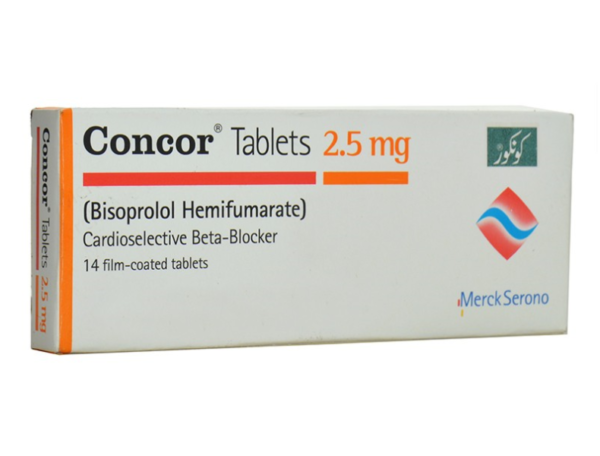
Bisoprolol (Concor, bisotrol) is a selective Beta-1 receptor inhibitor that selectively and competitively blocks the Beta-1 receptors without affecting the Beta-2 receptors especially at doses of less than 20 mg per day. It is one of the WHO's lists of essential medicine and is used to treat the following conditions:
-
Management of hypertension (Not recommended as first-line of therapy)
-
Off Label Use of Bisoprolol in Adults include:
-
Acute Myocardial infarction
-
For rate control in atrial fibrillation
-
Heart failure with a reduced ejection fraction
-
Ventricular arrhythmias
-
Chronic stable angina
-
Supraventricular arrhythmias.
-
Bisoprolol dose in adults:
-
Bisoprolol as off-label use in the treatment of Atrial fibrillation (for rate control):
- 2.5 - 10 mg once a day.
-
Off-label use in the treatment of Heart failure with a reduced ejection fraction:
- 1.25 mg orally once a day.
- The dose may be doubled every 2 weeks or more to the maximum tolerated dose (the maximum dose should not exceed 10 mg/day.
- Bisoprolol therapy should be initiated only once the patient is stable, the volume status is optimized, inotropes, vasopressors, and intravenous diuretics have been discontinued.
-
Use as an alternative agent in Hypertension:
- 2.5 - 5 mg orally once a day.
- The dose may be titrated to a maximum dose of 20 mg once a day.
- The usual dose ranges between 2.5 - 10 mg once a day.
-
Off label use in the treatment of Ventricular arrhythmias:
- 5 - 10 mg orally once a day.
Bisoprolol for anxiety:
- 2.5 - 5 mg once daily
Bisoprolol Dose in Childrens
- Not recommended for use in children.
Pregnancy Risk Factor C
- Bisoprolol has been linked to fetal bradycardia, hypoglycemia and a decreased birth weight.
- However, maternal hypertension can also lead to adverse maternal and fetal outcomes.
- Like other beta-blockers such as bisoprolol in pregnancy, it can be used to treat hypertension and heart failure. However, you should first consider other agents.
Bisoprolol use during breastfeeding:
- It is unknown if bisoprolol can be absorbed into breastmilk.
- You should be cautious when using it in nursing women.
- Patients with peripartum cardiomyopathy should not breastfeed.
Bisoprolol Dose in Renal Disease:
-
For the treatment of hypertension:
- CrCl of 40 mL/minute or more:
- No dose adjustment is required as per the manufacturer's labeling.
- CrCl of less than 40 mL/minute:
- 2.5 mg once a day.
- Increase the drug with caution.
- CrCl of 40 mL/minute or more:
-
For the treatment of Heart failure as off-label use:
- Data is limited. However, may initiate at a dose of 1.25 mg once a day to a maximum dose of 2.5 mg once a day.
-
Hemodialysis:
- It is not dialyzable.
Bisoprolol Dose in Liver Disease:
-
Bisoprolol Dose in Chronic liver disease:
- 2.5 mg once a day.
- The dose may be increased cautiously.
Common Bisoprolol Side Effects Include:
-
Cardiovascular:
- Chest Pain
-
Central Nervous System:
- Fatigue
- Hypoesthesia
-
Gastrointestinal:
- Diarrhea
- Vomiting
-
Hepatic:
- Increased Serum Alanine Aminotransferase
- Increased Serum Aspartate Aminotransferase
-
Respiratory:
- Upper Respiratory Tract Infection
- Dyspnea
Bisoprolol side effects (rare):
-
Cardiovascular:
- Cardiac Arrhythmia
- Cardiac Failure
- Claudication
- Cold Extremities
- Edema
- Flushing
- Hypersensitivity Angiitis
- Hypotension
- Orthostatic Hypotension
- Palpitations
-
Central Nervous System:
- Anxiety
- Depression
- Dizziness
- Drowsiness
- Headache
- Hyperesthesia
- Insomnia
- Lack Of Concentration
- Malaise
- Memory Impairment
- Paresthesia
- Restlessness
- Sensation Of Eye Pressure
- Twitching
- Vertigo
- Vivid Dream
-
Dermatologic:
- Acne Vulgaris
- Alopecia
- Diaphoresis
- Eczema
- Pruritus
- Skin Irritation
- Skin Rash
-
Endocrine & Metabolic:
- Decreased Libido
- Gout
- Increased Serum Glucose
- Increased Serum Phosphate
- Increased Serum Potassium
- Increased Serum Triglycerides
- Increased Uric Acid
- Weight Gain
-
Gastrointestinal:
- Abdominal Pain
- Constipation
- Dysgeusia
- Dyspepsia
- Epigastric Pain
- Gastric Pain
- Gastritis
- Nausea
- Peptic Ulcer
- Xerostomia
-
Genitourinary:
- Cystitis
- Impotence
-
Hematologic & Oncologic:
- Decreased White Blood Cell Count
- Positive ANA Titer
- Purpuric Rash
- Thrombocytopenia
-
Neuromuscular & Skeletal:
- Back Pain
- Muscle Cramps
- Myalgia
- Neck Pain
- Tremor
-
Ophthalmic:
- Abnormal Lacrimation
- Eye Pain
- Visual Disturbance
-
Otic:
- Otalgia
- Tinnitus
-
Renal:
- Increased Blood Urea Nitrogen
- Increased Serum Creatinine
- Polyuria
- Renal Colic
-
Respiratory:
- Asthma
- Bronchitis
- Bronchospasm
- Cough
- Dyspnea On Exertion
- Pharyngitis
- Rhinitis
- Sinusitis
Contraindication to Bisoprolol include:
- Cardiogenic shock
- Overt heart failure
- Sinus bradycardia marked
- Heart block of second or third degree
- Allergic reaction to the drug
Warnings and Precautions
- Anaphylactic reactions
- It has been associated with severe allergic reactions, including anaphylaxis.
- Patients being treated for anaphylaxis might not respond to epinephrine while on beta-blocker therapy.
- Bronchospastic disease
- Patients with an allergic airway disease should not use Beta-blockers.
- If used, the lowest possible dose should be advised and an inhaled Beta-1 agonist therapy should be available for immediate relief if the condition worsens.
- Asthmatics should not take more than 20 mg of bisoprolol daily.
- Conductive abnormality
- Patients suffering from sick sinus syndrome should not receive beta-blockers.
- Diabetes:
- It can increase hypoglycemia and mask hypoglycemia symptoms in diabetic patients.
- Heart failure:
- Patients with compensated cardiac failure should use it with caution.
- Low doses of therapy should be used and patients should be closely monitored.
- Hepatic impairment
- Patients with severe liver disease should be cautious.
- Patients with severe hepatic impairment may need to adjust their dose.
- Myasthenia gravis:
- Patients with myasthenia gravis should be careful when using bisoprolol.
- Raynaud and peripheral vascular disease (PVD).
- It can worsen the symptoms of arterial impairment in patients with Raynaud and peripheral vascular disease.
- Monitor your patient for any worsening symptoms while on beta-blocker therapy.
- Pheochromocytoma:
- A sufficient amount of alpha-blockade must be achieved before you can start therapy with a beta blocker.
- Angina Prinzmetal version:
- Patients with Prinzmetal variant Angina should not be treated with beta-blockers that do not block alpha1adrenergic receptor activity.
- This could cause coronary vasoconstriction, and worsen anginal symptoms.
- Psoriasis:
- Beta-blockers can cause psoriasis patients to experience worsening symptoms.
- Renal impairment
- Patients with impaired renal function should be cautious when taking the drug.
- If the CrCl level is below 40 ml/min, adjustments may be necessary in the dosage.
- Thyroid disease:
- It can mask hyperthyroidism symptoms.
- Patients with hyperthyroidism should not abruptly stop taking beta-blockers as this could lead to a thyroid storm.
Bisoprolol: Drug Interaction
|
Acetylcholinesterase Inhibitors |
May enhance the bradycardic effect of Beta-Blockers. |
|
Alfuzosin |
May enhance the hypotensive effect of Blood Pressure Lowering Agents. |
|
Alpha1-Blockers |
Beta-Blockers may enhance the orthostatic hypotensive effect of Alpha1Blockers. The risk associated with ophthalmic products is probably less than systemic products. |
|
Aminoquinolines (Antimalarial) |
May decrease the metabolism of Beta-Blockers. |
|
Amiodarone |
May enhance the bradycardic effect of Beta-Blockers. Possibly to the point of cardiac arrest. Amiodarone may increase the serum concentration of Beta-Blockers. |
|
Amphetamines |
May diminish the antihypertensive effect of Antihypertensive Agents. |
|
Antipsychotic Agents (Phenothiazines) |
May enhance the hypotensive effect of Beta-Blockers. Beta-Blockers may decrease the metabolism of Antipsychotic Agents (Phenothiazines). Antipsychotic Agents (Phenothiazines) may decrease the metabolism of Beta-Blockers. |
|
Antipsychotic Agents (Second Generation [Atypical]) |
Blood Pressure Lowering Agents may enhance the hypotensive effect of Antipsychotic Agents (Second Generation [Atypical]). |
|
Barbiturates |
May decrease the serum concentration of Beta-Blockers. |
|
Barbiturates |
May enhance the hypotensive effect of Blood Pressure Lowering Agents. |
|
Benperidol |
May enhance the hypotensive effect of Blood Pressure Lowering Agents. |
|
Beta2-Agonists |
Beta-Blockers (Beta1 Selective) may diminish the bronchodilatory effect of Beta2-Agonists. Of particular concern with nonselective beta-blockers or higher doses of the beta1 selective beta-blockers. |
|
Bosentan |
May decrease the serum concentration of CYP3A4 Substrates (High risk with Inducers). |
|
Bradycardia-Causing Agents |
May enhance the bradycardic effect of other Bradycardia-Causing Agents. |
|
Bretylium |
May enhance the bradycardic effect of Bradycardia-Causing Agents. Bretylium may also enhance atrioventricular (AV) blockade in patients receiving AV blocking agents. |
|
Brigatinib |
May diminish the antihypertensive effect of Antihypertensive Agents. Brigatinib may enhance the bradycardic effect of Antihypertensive Agents. |
|
Brimonidine (Topical) |
May enhance the hypotensive effect of Blood Pressure Lowering Agents. |
|
Bupivacaine |
Beta-Blockers may increase the serum concentration of Bupivacaine. |
|
Calcium Channel Blockers (Nondihydropyridine) |
May enhance the hypotensive effect of BetaBlockers. Bradycardia and signs of heart failure have also been reported. Calcium Channel Blockers (Nondihydropyridine) may increase the serum concentration of Beta-Blockers. Exceptions: Bepridil. |
|
Cardiac Glycosides |
Beta-Blockers may enhance the bradycardic effect of Cardiac Glycosides. |
|
Cholinergic Agonists |
Beta-Blockers may enhance the adverse/toxic effect of Cholinergic Agonists. Of particular concern are the potential for cardiac conduction abnormalities and bronchoconstriction. Management: Administer these agents in combination with caution, and monitor for conduction disturbances. Avoid methacholine with any beta blocker due to the potential for additive bronchoconstriction. |
|
CYP3A4 Inducers (Moderate) |
May decrease the serum concentration of CYP3A4 Substrates (High risk with Inducers). |
|
Deferasirox |
May decrease the serum concentration of CYP3A4 Substrates (High risk with Inducers). |
|
Dexmethylphenidate |
May diminish the therapeutic effect of Antihypertensive Agents. |
|
Diazoxide |
May enhance the hypotensive effect of Blood Pressure Lowering Agents. |
|
Dipyridamole |
May enhance the bradycardic effect of Beta-Blockers. |
|
Disopyramide |
May enhance the bradycardic effect of Beta-Blockers. Beta-Blockers may enhance the negative inotropic effect of Disopyramide. |
|
DULoxetine |
Blood Pressure Lowering Agents may enhance the hypotensive effect of DULoxetine. |
|
EPINEPHrine (Nasal) |
Beta-Blockers (Beta1 Selective) may diminish the therapeutic effect of EPINEPHrine (Nasal). |
|
EPINEPHrine (Oral Inhalation) |
Beta-Blockers (Beta1 Selective) may diminish the therapeutic effect of EPINEPHrine (Oral Inhalation). |
|
Epinephrine (Racemic) |
Beta-Blockers (Beta1 Selective) may diminish the therapeutic effect of Epinephrine (Racemic). |
|
EPINEPHrine (Systemic) |
Beta-Blockers (Beta1 Selective) may diminish the therapeutic effect of EPINEPHrine (Systemic). |
|
Herbs (Hypertensive Properties) |
May diminish the antihypertensive effect of Antihypertensive Agents. |
|
Herbs (Hypotensive Properties) |
May enhance the hypotensive effect of Blood Pressure Lowering Agents. |
|
Hypotension-Associated Agents |
Blood Pressure Lowering Agents may enhance the hypotensive effect of Hypotension-Associated Agents. |
|
Insulins |
Beta-Blockers may enhance the hypoglycemic effect of Insulins. |
|
Ivabradine |
Bradycardia-Causing Agents may enhance the bradycardic effect of Ivabradine. |
|
Ivosidenib |
May decrease the serum concentration of CYP3A4 Substrates (High risk with Inducers). |
|
Lacosamide |
Bradycardia-Causing Agents may enhance the AV-blocking effect of Lacosamide. |
|
Levodopa-Containing Products |
Blood Pressure Lowering Agents may enhance the hypotensive effect of Levodopa-Containing Products. |
|
Lidocaine (Systemic) |
Beta-Blockers may increase the serum concentration of Lidocaine (Systemic). |
|
Lidocaine (Topical) |
Beta-Blockers may increase the serum concentration of Lidocaine (Topical). |
|
Lormetazepam |
May enhance the hypotensive effect of Blood Pressure Lowering Agents. |
|
Mepivacaine |
Beta-Blockers may increase the serum concentration of Mepivacaine. |
|
Methoxyflurane |
May enhance the hypotensive effect of Beta-Blockers. |
|
Methylphenidate |
May diminish the antihypertensive effect of Antihypertensive Agents. |
|
Midodrine |
May enhance the bradycardic effect of Bradycardia-Causing Agents. |
|
Molsidomine |
May enhance the hypotensive effect of Blood Pressure Lowering Agents. |
|
Naftopidil |
May enhance the hypotensive effect of Blood Pressure Lowering Agents. |
|
Nicergoline |
May enhance the hypotensive effect of Blood Pressure Lowering Agents. |
|
Nicorandil |
May enhance the hypotensive effect of Blood Pressure Lowering Agents. |
|
NIFEdipine |
May enhance the hypotensive effect of Beta-Blockers. NIFEdipine may enhance the negative inotropic effect of Beta-Blockers. |
|
Nitroprusside |
Blood Pressure Lowering Agents may enhance the hypotensive effect of Nitroprusside. |
|
Nonsteroidal Anti-Inflammatory Agents |
May diminish the antihypertensive effect of BetaBlockers. |
|
Opioids (Anilidopiperidine) |
May enhance the bradycardic effect of Beta-Blockers. Opioids (Anilidopiperidine) may enhance the hypotensive effect of Beta-Blockers. |
|
Pentoxifylline |
May enhance the hypotensive effect of Blood Pressure Lowering Agents. |
|
Pholcodine |
Blood Pressure Lowering Agents may enhance the hypotensive effect of Pholcodine. |
|
Phosphodiesterase 5 Inhibitors |
May enhance the hypotensive effect of Blood Pressure Lowering Agents. |
|
Propafenone |
May increase the serum concentration of Beta-Blockers. Propafenone possesses some independent beta blocking activity. |
|
Prostacyclin Analogues |
May enhance the hypotensive effect of Blood Pressure Lowering Agents. |
|
Quinagolide |
May enhance the hypotensive effect of Blood Pressure Lowering Agents. |
|
Regorafenib |
May enhance the bradycardic effect of Beta-Blockers. |
|
Reserpine |
May enhance the hypotensive effect of Beta-Blockers. |
|
Rifamycin Derivatives |
May decrease the serum concentration of Beta-Blockers. Exceptions: Rifabutin. |
|
Ruxolitinib |
May enhance the bradycardic effect of Bradycardia-Causing Agents. Management: Ruxolitinib Canadian product labeling recommends avoiding use with bradycardia-causing agents to the extent possible. |
|
Sarilumab |
May decrease the serum concentration of CYP3A4 Substrates (High risk with Inducers). |
|
Siltuximab |
May decrease the serum concentration of CYP3A4 Substrates (High risk with Inducers). |
|
Sulfonylureas |
Beta-Blockers may enhance the hypoglycemic effect of Sulfonylureas. Cardioselective beta-blockers (eg, acebutolol, atenolol, metoprolol, and penbutolol) may be safer than nonselective beta-blockers. All beta-blockers appear to mask tachycardia as an initial symptom of hypoglycemia. Ophthalmic beta-blockers are probably associated with lower risk than systemic agents. |
|
Terlipressin |
May enhance the bradycardic effect of Bradycardia-Causing Agents. |
|
Theophylline Derivatives |
Beta-Blockers (Beta1 Selective) may diminish the bronchodilatory effect of Theophylline Derivatives. Management: Monitor for reduced theophylline efficacy during concomitant use with any beta-blocker. Beta-1 selective agents are less likely to antagonize theophylline than nonselective agents, but selectivity may be lost at higher doses. |
|
Tocilizumab |
May decrease the serum concentration of CYP3A4 Substrates (High risk with Inducers). |
|
Tofacitinib |
May enhance the bradycardic effect of Bradycardia-Causing Agents. |
|
Yohimbine |
May diminish the antihypertensive effect of Antihypertensive Agents. |
|
Risk Factor D (Consider therapy modification) |
|
|
Alpha2-Agonists |
May enhance the AV-blocking effect of Beta-Blockers. Sinus node dysfunction may also be enhanced. Beta-Blockers may enhance the rebound hypertensive effect of Alpha2Agonists. This effect can occur when the Alpha2-Agonist is abruptly withdrawn. Management: Closely monitor heart rate during treatment with a beta blocker and clonidine. Withdraw beta blockers several days before clonidine withdrawal when possible, and monitor blood pressure closely. Recommendations for other alpha2-agonists are unavailable. Exceptions: Apraclonidine. |
|
Amifostine |
Blood Pressure Lowering Agents may enhance the hypotensive effect of Amifostine. Management: When amifostine is used at chemotherapy doses, blood pressure lowering medications should be withheld for 24 hours prior to amifostine administration. If blood pressure lowering therapy cannot be withheld, amifostine should not be administered. |
|
Ceritinib |
|
|
CYP3A4 Inducers (Strong) |
May increase the metabolism of CYP3A4 Substrates (High risk with Inducers). Management: Consider an alternative for one of the interacting drugs. Some combinations may be specifically contraindicated. Consult appropriate manufacturer labeling. |
|
Dabrafenib |
May decrease the serum concentration of CYP3A4 Substrates (High risk with Inducers). Management: Seek alternatives to the CYP3A4 substrate when possible. If concomitant therapy cannot be avoided, monitor clinical effects of the substrate closely (particularly therapeutic effects). |
|
Dronedarone |
May enhance the bradycardic effect of Beta-Blockers. Dronedarone may increase the serum concentration of Beta-Blockers. This likely applies only to those agents that are metabolized by CYP2D6. Management: Use lower initial beta-blocker doses; adequate tolerance of the combination, based on ECG findings, should be confirmed prior to any increase in betablocker dose. |
|
Enzalutamide |
May decrease the serum concentration of CYP3A4 Substrates (High risk with Inducers). Management: Concurrent use of enzalutamide with CYP3A4 substrates that have a narrow therapeutic index should be avoided. Use of enzalutamide and any other CYP3A4 substrate should be performed with caution and close monitoring. |
|
Ergot Derivatives |
Beta-Blockers may enhance the vasoconstricting effect of Ergot Derivatives. Exceptions: Nicergoline. |
|
Fingolimod |
Beta-Blockers may enhance the bradycardic effect of Fingolimod. Management: Avoid the concomitant use of fingolimod and beta-blockers if possible. If coadministration is necessary, patients should have overnight continuous ECG monitoring conducted after the first dose of fingolimod. Monitor patients for bradycardia. |
|
Grass Pollen Allergen Extract (5 Grass Extract) |
Beta-Blockers may enhance the adverse/toxic effect of Grass Pollen Allergen Extract (5 Grass Extract). More specifically, Beta-Blockers may inhibit the ability to effectively treat severe allergic reactions to Grass Pollen Allergen Extract (5 Grass Extract) with epinephrine. Some other effects of epinephrine may be unaffected or even enhanced (e.g., vasoconstriction) during treatment with Beta-Blockers. |
|
Lorlatinib |
May decrease the serum concentration of CYP3A4 Substrates (High risk with Inducers). Management: Avoid concurrent use of lorlatinib with any CYP3A4 substrates for which a minimal decrease in serum concentrations of the CYP3A4 substrate could lead to therapeutic failure and serious clinical consequences. |
|
Mitotane |
May decrease the serum concentration of CYP3A4 Substrates (High risk with Inducers). Management: Doses of CYP3A4 substrates may need to be adjusted substantially when used in patients being treated with mitotane. |
|
Obinutuzumab |
May enhance the hypotensive effect of Blood Pressure Lowering Agents. Management: Consider temporarily withholding blood pressure lowering medications beginning 12 hours prior to obinutuzumab infusion and continuing until 1 hour after the end of the infusion. |
|
Pitolisant |
May decrease the serum concentration of CYP3A4 Substrates (High risk with Inducers). Management: Combined use of pitolisant with a CYP3A4 substrate that has a narrow therapeutic index should be avoided. Other CYP3A4 substrates should be monitored more closely when used with pitolisant. |
|
Siponimod |
Bradycardia-Causing Agents may enhance the bradycardic effect of Siponimod. Management: Avoid coadministration of siponimod with drugs that may cause bradycardia. |
|
St John's Wort |
May decrease the serum concentration of CYP3A4 Substrates (High risk with Inducers). Management: Consider an alternative for one of the interacting drugs. Some combinations may be specifically contraindicated. Consult appropriate manufacturer labeling. |
|
Risk Factor X (Avoid combination) |
|
|
Bromperidol |
Blood Pressure Lowering Agents may enhance the hypotensive effect of Bromperidol. Bromperidol may diminish the hypotensive effect of Blood Pressure Lowering Agents. |
|
Floctafenine |
May enhance the adverse/toxic effect of Beta-Blockers. |
|
Methacholine |
Beta-Blockers may enhance the adverse/toxic effect of Methacholine. |
|
Rivastigmine |
May enhance the bradycardic effect of Beta-Blockers. |
Monitor:
- Blood pressure
- Heart rate
- ECG
- Serum glucose in patients with diabetes.
Target Blood pressure:
- Target blood pressure of less than 130/80 mmHg in patients with hypertension and known cardiovascular disease or the 10-year ASCVD risk is greater than 10%.
- The target blood pressure of less than 130/80 mmHg may be reasonable in patients with ASCVD risk.
- Target blood pressure of less than 140/90 mmHg in patients aged 18 – 65 years with Diabetes and hypertension without cardiovascular disease and the 10-year ASCVD risk is less than 15%.
- Target blood pressure of less than 130/80 mmHg in patients aged 18 – 65 years with Diabetes, hypertension, cardiovascular disease, or the 10-year ASCVD risk is greater than 15%.
- Target blood pressure of less than 140/90 mmHg in patients aged more than 65 years and without major comorbid conditions.
- Target blood pressure of less than 150/90 mmHg in patients aged more than 65 years and poor health or comorbid conditions.
How to take Bisoprolol (Bisotrol)?
- It may be taken orally with or without regard to meals.
Mechanism of action of Bisoprolol (Bisotrol):
- It selectively inhibits Beta-1 receptors.
- It blocks Beta-1 receptors competitively, but has little to no effect on Beta-2 receptors when taken less than 20mg/day.
It is capable of initiating action at the rate ofIt takes between 1 and 2 hours. It is quickly absorbed completely and widely distributed throughout the body.
Concentrations higher than that are found in the liver, heart, lungs, saliva, and saliva. It crosses theBlood-brain barrierProtein-bound drugs account for 30% of drug's total weight. It is widely used.
Metabolized20% of the drug is first passed through the liver. It has been abioavailabilityOf 80%.
Bisoprololhalf-life eliminationPatients with normal renal function have a waiting time of 9-12 hours, patients with CrCl less than 40ml/min and patients with cirrhosis 8-22 hours.
TheTime to achieve peak effectIt can be seen in between 2 and 4 hours.excretedPrimarily in the urine
Bisoprolol brand names (International):
- APO-Bisoprolol
- MINT-Bisoprolol
- MYLAN-Bisoprolol
- PHL-Bisoprolol
- PMS-Bisoprolol
- PRO-Bisoprolol-10
- PRO-Bisoprolol-5
- RIntravenousA-Bisoprolol
- SANDOZ Bisoprolol
- TEVA-Bisoprolol
- Adroten
- Ancor
- B-Beta
- B-Cor
- Beprol
- Beta-One
- Betabis
- Betapro
- Bicard
- Bicor
- Bilocor
- Biol
- Bipro
- Biprolol
- Biscor
- Bisloc
- Biso
- Biso 5
- Bisoblock
- Bisocard
- Bisocor
- Bisohexal
- Bisol
- Bisolock
- Bisomerck
- Bisono Tape
- Bisop
- Bisopine
- Bisostad
- Bisosten
- Bisoten
- Bisotrol
- Bispro
- Biteven
- Bosvate
- Caprol
- Carbisol
- Cardensiel
- Cardex
- Cardiloc
- Cardiosafe
- Cobis
- Colber
- Concor
- Concor COR
- Concor-Cor
- Concore
- Corbis
- Corbloc
- Cordinorm
- Corentel
- Emconcor
- Euradal
- Hapsen
- Hypercor
- Isoten
- Jutabis
- Kenco
- Maintate
- Monocor
- Novacor
- Pactens
- Probis
- Sopalol
- Soprol
- Soprol-5
- Vasoten
- Zabesta
Bisoprolol Brand Names in Pakistan:
|
Bisoprolol (Fumarate) [Tabs 5 mg] |
|
| Actintramuscular | SAMI PHARMACEUTICALS (PVT) LTD. |
| Barilol | Barrett Hodgson Pakistan (Pvt) Ltd. |
| Biscord | Selmore Agencies |
| Biscot | Scotmann Pharmaceuticals |
| Bison | Siza International (Pvt) Ltd. |
| Bisprol | Kuratintravenouse Pak (Pvt) Ltd |
| Byso | Medizan Labs (Pvt) Ltd |
| Concor | Merck Printravenousate Ltd. |
| Corbis | Efroze Chemical Industries (Pvt) Ltd. |
| Monitor | Werrick Pharmaceuticals |
| Monocor | Standpharm Pakistan (Pvt) Ltd. |
| Probase | Mass Pharma (Printravenousate) Lintramuscularited |
| Safcor | Saffron Pharmaceutical Company |
| Sopral | Bryon Pharmaceuticals (Pvt) Ltd. |
| Valvozid | Pacific Pharmaceuticals Ltd. |
|
Bisoprolol (Fumarate) [Tabs 10 mg] |
|
| Actintramuscular | SAMI PHARMACEUTICALS (PVT) LTD. |
| Barilol | Barrett Hodgson Pakistan (Pvt) Ltd. |
| Biscord | Selmore Agencies |
| Biscot | Scotmann Pharmaceuticals |
| Bisprol | Kuratintravenouse Pak (Pvt) Ltd |
| Byso | Medizan Labs (Pvt) Ltd |
| Concor | Merck Printravenousate Ltd. |
| Corbis | Efroze Chemical Industries (Pvt) Ltd. |
| Monitor | Werrick Pharmaceuticals |
| Monocor | Standpharm Pakistan (Pvt) Ltd. |
| Probase | Mass Pharma (Printravenousate) Lintramuscularited |
| Safcor | Saffron Pharmaceutical Company |
| Sopral | Bryon Pharmaceuticals (Pvt) Ltd. |
| Valvozid | Pacific Pharmaceuticals Ltd. |
|
Bisoprolol (Fumarate) [Tabs 2.5 mg] |
|
| Actintramuscular | SAMI PHARMACEUTICALS (PVT) LTD. |
| Barilol | Barrett Hodgson Pakistan (Pvt) Ltd. |
| Concor | Merck Printravenousate Ltd. |
| Corbis | Efroze Chemical Industries (Pvt) Ltd. |
| Corbis | Efroze Chemical Industries (Pvt) Ltd. |
| Monitor | Werrick Pharmaceuticals |
| Safcor | Saffron Pharmaceutical Company |
| Sopral | Bryon Pharmaceuticals (Pvt) Ltd. |
.png)


