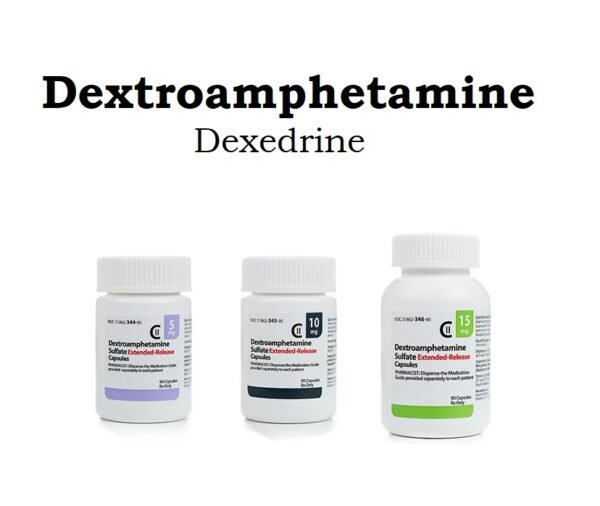
Dextroamphetamine (Dexedrine) is a central nervous system stimulant with sympathomimetic properties. Apart from its medical uses, it is used recreationally as an aphrodisiac and enhances athletes' performance.
Indications of Dextroamphetamine (Dexedrine):
- Attention-deficit/ hyperactivity disorder:
- It is recommended for the treatment of attention-deficit/hyperactivity disorder (ADHD) in children aged 3 to 16 as part of a comprehensive treatment plan that typically also includes other corrective interventions (psychological, educational, and social).
- Narcolepsy:
- It is effective in the treatment of narcolepsy.
Dextroamphetamine (Dexedrine) dose in adults:
Dextroamphetamine (Dexedrine) dose in the treatment of Narcolepsy:
- Initial: 10 mg per oral once daily; may increase in increments of 10 mg at weekly intervals until optimal response is obtained.
- usual dosage: 5 to 60 mg daily in divided doses.
Dextroamphetamine (Dexedrine) dose in children:
Note: The lowest effective individualized dose should be given.
Dextroamphetamine (Dexedrine) dose in the treatment of Attention-deficit/ hyperactivity disorder:
- Immediate-release tablets and oral solution:
- Children 3-5 years:
- Initial: 2.5 mg per oral once daily in the morning;
- Weekly intervals of 2.5 mg dose increases should be made until the desired response is attained.
- Maximum daily dose: 40 mg/day, divided into 2-3 doses, spaced 4-6 hours apart.
- Note: Despite being FDA-approved, current recommendations do not support use in children under the age of five due to a lack of data.
- Children ≥6 years and Adolescents:
- Initial: 5 mg orally, once or twice daily, with the morning dosage;
- Up until an adequate response is attained, the daily dose should be increased by 5 mg increments every week. The normal dosing range is 5-20 mg/day.
- The maximum daily dose is 40 mg/day, divided into 2-3 doses, with 4-6 hour intervals between each dose.
- Children 3-5 years:
- Extended and sustained-release capsules:
- Children ≥6 years and Adolescents:
- Initial: 5 mg per mouth once or twice day, with the initial dose taken in the morning. After achieving the desired reaction, gradually raise the daily dose by 5 mg at weekly intervals.
- The usual range: 5-20 mg/day.
- The maximum daily dose is 40 mg/day, divided into 1-2 doses, with a 6- to 8-hour gap between each treatment.
- A maximum daily dose of 60 mg/day in divided doses has been utilised in patients over 50 kg.
- Children ≥6 years and Adolescents:
Dextroamphetamine (Dexedrine) dose in the treatment of Narcolepsy:
- Immediate-release tablets and oral solution:
- Children 6-12 years:
- Initial: Until the best response is attained, a dose of 5 mg per mouth daily may be increased by 5 mg increments every other week.
- The maximum daily dose is 60 mg/day, divided into 1-3 doses, with 4-6 hour intervals between each dose.
- Adolescents:
- Initial: 10 mg per mouth daily, may increase at weekly intervals in increments of 10 mg until the best result is attained.
- The maximum daily dose is 60 mg/day, divided into 1-3 doses, with 4-6 hour intervals between each dose.
- Children 6-12 years:
- Extended and sustained-release capsules:
- Children 6-12 years:
- Initial: Until the best response is attained, a dose of 5 mg per mouth daily may be increased by 5 mg increments every other week.
- Maximum daily dose: 60 mg/day, divided into 1-2 doses, spaced 6–8 hours apart.
- Adolescents:
- Initial: 10 mg per mouth daily, may increase at weekly intervals in increments of 10 mg until the best result is attained.
- The maximum daily dose is 60 mg/day, divided into 1-2 doses, with a 6- to 8-hour interval between each dose.
- Children 6-12 years:
Dextroamphetamine (Dexedrine) dose in the treatment of Obesity secondary to hypothalamic-pituitary dysfunction:
- Immediate-release tablets and oral solution:
- Children ≥6 years and Adolescents:
- Initial: A daily dose of 5 mg taken orally once daily in the morning may be increased in 2.5 mg increments at weekly intervals until the best response is attained. If further daily doses are required, they may be administered between lunch and supper.
- The maximum single dose reported: 7.5 mg/dose.
- The maximum daily dose is divided into two doses of 20 mg.
Dextroamphetamine (Dexedrine) pregnancy Risk Category: C
- Some adverse outcomes were found in animal reproduction studies.
- Most human data are based on illicit methamphetamine/amphetamine exposure, and not therapeutic maternal use.
- Amphetamine use during pregnancy increases the risk of low birth weight and premature birth.
- The newborn infant may experience withdrawal symptoms.
- Sometimes children may experience behavioral issues.
Breastfeeding:
- Breast milk contains Dextroamphetamine.
- When compared to a maternal dose of 15 to 45mg/day, the relative infant dose (RID), of dextroamphetamine ranged between 3.9% and 13.8% in a study.
- When the RID of the medication is less than 10%, breastfeeding is generally acceptable.
- According to some sources, breastfeeding is only acceptable if the RID of psychotropic agents is less than 5%.
- The RID of dextroamphetamine is calculated using average milk levels of 0.066 to 0.3313 mcg/mL.
- This gives an absolute infant dose via breastmilk of 10 to 47 mg/kg/day (median 21 mg/kg/day).
- This milk concentration was achieved after maternal administration of dextroamphetamine 15-45 mg/day (average:18 mg/day) in divided doses, to four women.
- Two of the three infants were found to have Dextroamphetamine in their plasma.
- Breastfed infants showed no adverse effects.
- Most human data are based on illicit methamphetamine/amphetamine exposure, and not therapeutic maternal use.
- Breastfeeding infants is known to cause increased crying, agitation, and irritability.
- Amphetamines can cause a decrease in milk supply.
- Amphétamines are not recommended for breastfeeding.
Dextroamphetamine (Dexedrine) Dose adjustment in renal disease:
There are no dosage adjustments on labeling.
Dextroamphetamine (Dexedrine) Dose adjustment in liver disease:
There are no dosage adjustments on labeling.
Side effects of Dextroamphetamine (Dexedrine):
- Cardiovascular:
- Cardiomyopathy
- Hypertension
- Palpitations
- Tachycardia
- Central Nervous System:
- Headache
- Aggressive Behavior
- Dizziness
- Mania
- Dysphoria
- Psychosis
- Euphoria
- Exacerbation Of Tics
- Gilles De La Tourette Syndrome
- Insomnia
- Overstimulation
- Restlessness
- Dermatologic:
- Urticaria
- Alopecia
- Endocrine & Metabolic:
- Weight Loss
- Change In Libido
- Gastrointestinal:
- Constipation
- Unpleasant Taste
- Diarrhea
- Xerostomia
- Anorexia
- Genitourinary:
- Impotence
- Prolonged Erection
- Frequent Erections
- Neuromuscular & Skeletal:
- Rhabdomyolysis
- Tremor
- Dyskinesia
- Ophthalmic:
- Blurred Vision
- Accommodation Disturbances
Contraindications to Dextroamphetamine (Dexedrine):
- Hypersensitivity (eg angioedema or anaphylaxis to angioedema or dextroamphetamine or other sympathomimetic drugs, or any component in the formulation)
- Moderate to severe hypertension
- Hyperthyroidism
- Advanced arteriosclerosis
- Glaucoma
- Cardiovascular disease symptoms
- Agitated behavior
- Histories of drug abuse
- Within 14 days or less of stopping monoamine-oxidase inhibitor therapy (MAOI) (including MAOIs like linezolid and intravenous Methylene Blue).
- There is not much evidence of an allergenic cross-reactivity between amphetamines and other substances.
- Cross-sensitivity is possible due to similarities in chemical structure or pharmacologic effects.
Warnings and precautions
- Cardiovascular events: [US Boxed Warn]
- Use of amphetamines can lead to fatal cardiovascular events, including sudden death in patients suffering from preexisting structural heart abnormalities or other serious health problems.
- Patients with serious structural heart abnormalities, cardiomyopathy, or serious rhythm abnormalities are at greater risk of sudden death. It is best to avoid their use.
- A complete assessment of the patient is necessary before starting therapy.
- Patients with symptoms such as exertional pain or unexplained syncope should have their cardiac health checked immediately.
- CNS effects
- Amphetamines can cause impairment in cognitive function, such as driving and operating machinery.
- Peripheral vasculopathy
- Peripheral vasculopathy can be caused by amphetamines, such as Raynaud phenomenon. This can appear as mild or intermittent.
- To treat the condition, you can reduce or withdraw your medication.
- It is rare to cause soft tissue or digital ulceration.
- Regular monitoring of digital changes and evaluation of other features during treatment is necessary.
- Visual disturbance
- The effects of amphetamines may cause blurred vision and difficulty with accommodation.
- Potential abuse: [US Boxed Warning]
- Long-term treatment may lead to drug dependence.
- Patients with a history or abuse of ethanol are not advised to use it.
- Prescriptions for small amounts should only be given if the patient is receiving good care. This will reduce the chance of an overdose.
- Hypertension
- Patients with severe hypertension or moderate to severe hypertension should not use this medication.
- Patients with hypertension or other cardiovascular conditions should be cautious.
- Psychiatric disorders
- Therapy can be used to treat symptoms such as behavior disorder and thought disorder, or mixed/manic episodes.
- It can cause mania and new-onset psychosis.
- You should look out for signs of aggression or hostility.
- It should not be used in patients suffering from pre-existing bipolar disorder or psychosis.
- Seizure disorder
- On the usage of stimulants in seizure disorders, little information is known.
- Seizure activity is more likely to occur in ADHD patients than in the general population. Patients who used stimulant medication had a decreased risk, according to a retrospective research utilising information from drug claims.
- If seizures occur, the manufacturer recommends that therapy be stopped
- Tourette syndrome and tics
- Stimulant therapy can cause Tourette syndrome and exacerbation (motor and phonic) of tics. However, there is not much evidence to support this.
- Before beginning therapy, it is important to assess patients for Tourette syndrome and tics.
- Therapy should not be given to patients who have tic disorders or Tourette syndrome history.
Dextroamphetamine: Drug Interaction
Note: Drug Interaction Categories:
- Risk Factor C: Monitor When Using Combination
- Risk Factor D: Consider Treatment Modification
- Risk Factor X: Avoid Concomitant Use
Risk Factor C (Monitor therapy). |
|
|
Amifampridine |
Amifampridine can have stronger neuroexcitatory or seizure-potentiating effects when combined with substances having lower seizure threshold potential. |
|
May result in a drop in serum amphetamine levels. |
|
|
Antacids |
May reduce the excretion rate of Amphetamines. |
|
Antihistamines |
Antihistamines can be less sedative if they contain Amphetamines. |
|
Antihypertensive Agents |
Antihypertensive Agents can be affected by the effects of amphetamines. |
|
Antipsychotic Agents |
May decrease the stimulatory effects of Amphetamines. |
|
Ascorbic Acid |
May lower serum levels of Amphetamines. |
|
The increased excretion of amphetamines from the urine is most likely to blame for this. |
|
|
BuPROPion |
May intensify Sympathomimetics' hypertensive effects. |
|
Cannabinoid-Containing Product |
Sympathomimetics may increase the tachycardic effects of Sympathomimetics. Cannabidiol is an exception. Sympathomimetics' tachycardic effects may be exacerbated by apoMOXetine. |
|
Inhibitors of carbonic anhydrase |
May reduce the excretion Amphetamines. Brinzolamide and Dorzolamide are exceptions. |
|
Moderate CYP2D6 inhibitors |
Serum amphetamine levels may rise. |
|
Strong CYP2D6 inhibitors |
Serum amphetamine levels may rise. |
|
Doxofylline |
Doxofylline may be more toxic or harmful if taken with Sympathomimetics. |
|
CNS stimulants may increase hypertensive effects. |
|
|
Ethosuximide's therapeutic effects may be diminished by the use of amphetamines. The serum concentration of Ethosuximide may be decreased by taking Amphetamines. |
|
|
Gastrointestinal Acidifying agents |
May lower serum levels of Amphetamines. |
|
Guanethidine |
Sympathomimetics may have an arrhythmogenic effect. The hypertensive effects of Sympathomimetics may be enhanced by Guanethidine. |
|
Ioflupane I, 123 |
Ioflupane I123 may be less effective in diagnosing a condition known as Amphetamine dependence. |
|
Lithium |
May decrease the stimulatory effects of Amphetamines. |
|
May result in a drop in serum amphetamine levels. The increased excretion of amphetamines from the urine is most likely to blame for this. |
|
|
Multivitamins/Fluoride (with AD) |
May lower serum levels of Amphetamines. Particularly, ascorbic acid (vitamin A) found in multivitamins can decrease amphetamine levels. |
|
Multivitamins/Minerals with ADEK Folate Iron |
May reduce amphetamine levels in the blood. |
|
Multivitamins/Minerals (with or without AE, no Iron) |
Could reduce amphetamine levels in serum. |
|
Opioid Agonists |
Opioid Agonists may experience an increase in the analgesic effects of amphetamines. |
|
PHENobarbital |
PHENobarbital serum concentrations could be decreased by taking amphetamines. |
|
The serum level of Phenytoin may be decreased by taking Amphetamines. |
|
|
Inhibitors of the proton pump |
Increased absorption of Dextroamphetamine. In particular, dextroamphetamine absorption rates from mixed amphetamine sodium extended release (XR capsules) may increase within the first hour after dosing. |
|
Solriamfetol |
Sympathomimetics could increase the hypertensive effects of Solriamfetol. |
|
Solriamfetol |
Amphetamine absorption may be hampered by certain vitamins, particularly vitamin C. |
|
Sympathomimetics |
CNS stimulants may increase Solriamfetol's hypertensive effects. |
|
Other Sympathomimetics' toxic/unfavorable effects might be amplified.May intensify Sympathomimetics' hypertensive effects. |
|
|
Tricyclic Antidepressants |
May increase the stimulatory effects of Amphetamines. Tricyclic Antidepressants can also increase the cardiovascular effects of Amphetamines. |
|
Urinary acidifying agents |
May lower serum levels of Amphetamines. |
Risk Factor D (Regard therapy modification) |
|
|
Agents for Alkalinizing |
May reduce the excretion rate of Amphetamines. Management: There are alternatives to the combination of amphetamines with alkalinizing agents. Patients should be closely monitored for excess amphetamine effects if these agents are used together. |
|
Topical Cocaine |
Sympathomimetics may increase hypertensive effects. Management: If possible, consider other options to this combination. Concurrent use of this combination can cause significant elevations in blood pressure and heart rate. You should also be aware of any signs of myocardial injury. |
|
Agents with Seizure Threshold Lowering Potential can increase the toxic/adverse effects of Iohexol. The risk of seizures could be elevated. Management: Stop using agents that lower the seizure threshold 48 hrs before you start intrathecal iohexol. To resume these agents, wait at least 24 hours following the procedure. Consider using prophylactic anticonvulsants in non-elective procedures. |
|
|
Iomeprol |
Agents with Seizure Threshold Lowering Potential can increase the toxic/adverse effects of Iomeprol. The risk of seizures could be elevated. Management: Stop using agents that lower the seizure threshold 48 hrs before you start intrathecal iomeprol. To resume these agents, wait at least 24 hours following the procedure. Consider using prophylactic anticonvulsants in non-elective procedures. |
|
Iopamidol |
Agents with Seizure Threshold Lowering Potential can increase the toxic/adverse effects of Iopamidol. The risk of seizures could be elevated. Management: Stop using agents that lower the seizure threshold 48 hrs before you start intrathecal iopamidol. To resume these agents, wait at least 24 hours following the procedure. Consider using prophylactic anticonvulsants in non-elective procedures. |
|
Linezolid |
Sympathomimetics may increase hypertensive effects. Patients receiving linezolid should be reduced in initial doses and closely monitored for an increased pressor response. There are no recommendations for dose adjustments. |
Risk Factor X (Avoid Combination) |
|
|
Acebrophylline |
CNS stimulants may have a stronger stimulatory effect. |
|
Iobenguane Radiopharmaceutical Products |
Iobenguane Radiopharmaceutical Products may be affected by amphetamines. Management: Stop using any drugs that could inhibit or interfere catecholamine transport and uptake for at most 5 biological half-lives prior to iobenguane Administration. These drugs should not be administered until 7 days following each iobenguane dosage. |
|
Iobenguane Radiopharmaceutical Products |
CNS stimulants can decrease the therapeutic effects of Iobenguane Radiopharmaceutical Products. Management: Stop using any drugs that could inhibit or interfere catecholamine transport and uptake for at most 5 biological half-lives prior to iobenguane Administration. These drugs should not be administered until 7 days following each iobenguane dosage. |
|
Monoamine Oxidase inhibitors |
May increase the hypertensive effects of Amphetamines. Although linezolid may interact with tedizolid via this mechanism of action, management recommendations are different from those for other monoamine oxidase inhibitors. For more information, refer to monographs pertaining to these agents. Linezolid and Tedizolid are exceptions. |
Monitoring parameters:
- CNS activity in all patients
- Growth and weight in children
- Behavioral changes
- Signs of peripheral vasculopathy (eg, digital changes)
- Signs of misuse, abuse, or addiction.
- Patients who experience exertional chest discomfort, unexplained syncope, or any other sign of cardiac illness while taking stimulants should have their hearts examined.
- Treatment of ADHD:
- Thoroughly evaluate for cardiovascular risk.
- Pulse, BP, and ECG before therapy
How to administer Dextroamphetamine (Dexedrine)?
The initial dose should be given upon awakening. Late doses in the evening should be avoided due to the potential for insomnia.
Immediate-release tablets and oral solution:
- If needed, 1 to 2 additional doses may be administered at intervals of 4 to 6 hours.
Extended-release and sustained release capsules:
- Sustained-release drug products should not be crushed.
- Formulations may be used for once-daily administration, if appropriate.
Mechanism of action of Dextroamphetamine (Dexedrine):
- Amphetamines, which are non-catecholamine sympathomimetic amines, encourage the release of catecholamines from their storage sites in presynaptic nerve terminals, particularly dopamine and norepinephrine.
- Another mechanism that may be less important is competitive inhibition, which blocks the reuptake catecholamines.
Duration of action:
- Immediate-release: 4 to 6 hours;
- Extended-release: 8 hours.
Metabolism:
- Hepatic via CYP monooxygenase and glucuronidation.
Half-life elimination in adults:
- 10 to 12 hours.
Time to peak serum concentration:
- Immediate release: 3 hours
- Sustained-release: 8 hours
Excretion:
- It is excreted in Urine;
- Urinary excretion is pH-dependent and is increased with acid urine (low pH).
International Brands of Dextroamphetamine:
- Dexedrine
- ProCentra
- Zenzedi
- ACT Dextroamphetamine SR
- Attent
- Dexamphetamini Sulfas
Dextroamphetamine brands in Pakistan:
No Brands Available in Pakistan.
.png)


