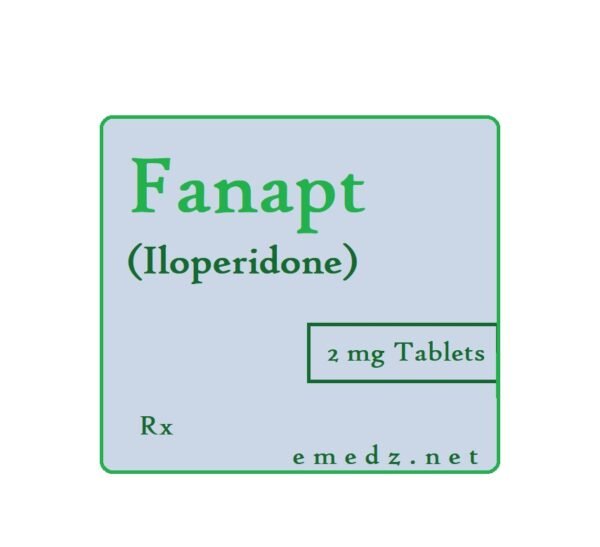
An atypical antipsychotic called iloperidone (Fanapt) is used to treat schizophrenia patients. It can also be used to treat dementia patients who are experiencing psychosis and agitation.
Iloperidone Uses:
-
Schizophrenia:
- The treatment of adults with schizophrenia is recommended
-
Off Label Use of Iloperidone in Adults:
- Psychosis and agitation linked with dementia
Iloperidone (Fanapt) Dose in Adults:
Iloperidone (Fanapt) Dose in the treatment of Schizophrenia:
- Oral: Preliminary: 1 mg two times every day;
- Titrate the dose to the recommended dosage range with dosage modifications not exceeding 2 mg two times each day (4 mg daily) every 24 hours;
- The suggested dosage range: 6 to 12 mg two times every day.
- The maximum dose is 24 mg/day)
Note: Titrate dose to effect (to avoid orthostatic hypotensive effects); when restarting treatment after discontinuation (>3 days), follow earlier titration schedule.
-
Dosage adjustment in patients receiving strong CYP2D6 inhibitors (eg, paroxetine, fluoxetine, quinidine) or strong CYP3A4 inhibitors (eg, ketoconazole, clarithromycin):
- Decrease iloperidone dose by 50%; when CYP2D6 inhibitor or CYP3A4 inhibitor is stopped, return to the previous dose.
-
Dosage adjustment in poor metabolizers of CYP2D6:
- Reduce the dose by half.
-
Discontinuation of therapy:
- The World Federation of Societies of Biological Psychiatry (WFSBP), Canadian Psychiatric Association (CPA), and American Psychiatric Association (APA) recommend decreasing antipsychotics gradually to prevent withdrawal symptoms and lower the chance of recurrence.
- With high anti-cholinergic or dopaminergic antipsychotic doses, the risk of withdrawal symptoms may be greatest.
- The CPA guidelines advise a gradual taper over six months to two years for stopping antipsychotic medication for schizophrenic patients, and the APA guidelines recommend a monthly dose reduction of 10%.
- Anti-parkinsonism medication should be continued for a little period after stopping to avoid withdrawal symptoms.
- Three techniques have been suggested for switching antipsychotics:
- cross-titration (smoking stopping the first antipsychotic while increasing gradually the new antipsychotic)
- cross over and taper (sustaining the dose of the first antipsychotic while steadily increasing the new antipsychotic, then tapering the first antipsychotic)
- place a change (suddenly stopping the first antipsychotic or increasing the new antipsychotic gradually or initiating it at a treatment dose).
- There is little evidence in support of ideal shift tactics and taper rates, and the outcomes are inconsistent.
Use in Children:
Not indicated.
Pregnancy Risk Category: N
- Neonatal withdrawal symptoms and aberrant muscular movements can result from antipsychotic usage in the final trimester of pregnancy.
- In babies, signs like irritability, feeding issues, and hypotonia are possible.
- They could also have respiratory issues, fatigue, tremor, and hypertonia. These side effects may subside on their own or necessitate hospitalisation.
- Iloperidone, which can impair both male and female reproductive function, may be the cause of hyperprolactinemia.
- The American College of Obstetricians and Gynecologists (ACOG) advocates for individualised prenatal care; therapy with psychiatric medications should draw on the clinical knowledge of the mental healthcare professional, primary care physician, and paediatrician.
- The safety information for atypical antipsychotics during pregnancy is limited. It's not advised to use frequently.
- It may be wise to continue therapy if a woman unintentionally takes an antipsychotic while expecting.
- The Atypical Antipsychotics Pregnancy Registry needs pregnant people aged 18 to 45 who were exposed to iloperidone during pregnancy to be listed.
Use while breastfeeding
- It isn't known if breast milk contains iloperidone.
- The manufacturer does not recommend breastfeeding.
Dose in Kidney Disease:
No dosage modifications given on labeling; however, kidney damage alone is not likely to have a noteworthy impact on the pharmacokinetics of iloperidone.
Dose in Liver disease:
- Mild impairment:
- Dosage adjustment is not required.
- Moderate impairment:
- The manufacturer's labelling does not provide any precise dosage modifications; however, it may be necessary; proceed with caution.
- Severe hepatic impairment:
- Use is not advised.
Common Side Effects of Iloperidone (Fanapt):
-
Cardiovascular:
- Tachycardia
-
Central nervous system:
- Drowsiness
- Dizziness
-
Endocrine & metabolic:
- Weight gain
- Increased serum prolactin
Less Common Side Effects of Iloperidone (Fanapt):
-
Cardiovascular:
- Orthostatic Hypotension
- Hypotension
- Palpitations
-
Central Nervous System:
- Fatigue
- Extrapyramidal Reaction
- Lethargy
- Aggressive Behavior
- Delusions
- Restlessness
- Dystonia
-
Dermatologic:
- Skin Rash
-
Endocrine & Metabolic:
- Increased Serum Cholesterol
- Weight Loss
- Increased Serum Triglycerides
-
Gastrointestinal:
- Nausea
- Xerostomia
- Diarrhea
- Abdominal Distress
-
Genitourinary:
- Ejaculation Failure
- Erectile Dysfunction
- Urinary Incontinence
- Priapism
-
Hematologic & Oncologic:
- Decreased Hematocrit
-
Neuromuscular & Skeletal:
- Arthralgia
- Muscle Rigidity
- Tremor
- Muscle Spasm
- Myalgia
-
Ophthalmic:
- Blurred Vision
- Conjunctivitis
-
Respiratory:
- Nasal Congestion
- Nasopharyngitis
- Upper Respiratory Tract Infection
- Dyspnea
Contraindications to Iloperidone (Fanapt):
- Allergic reaction to iloperidone or any of the formulation's ingredients, such as anaphylaxis or gioedema.
Warnings and precautions
-
Modified cardiac conduction
- Hot conduction may be altered and the QTc interval prolonged; life-threatening arrhythmias can occur with therapeutic doses antipsychotics.
- Conditions or medicines that cause hypokalemia, bradycardia, and/or hypomagnesemia may increase your risk.
- Use with QTc-prolonging medications only.
- Patients with uncompensated heart disease, inherited long QT syndrome, or a history of cardiac arrhythmias shouldn't be used.
- Use caution when you combine with drugs that inhibit the metabolism of iloperidone.
- Patients with persistent QTc intervals greater than 500 msec should be stopped using this medication
- Patients who experience symptoms such as syncope, tremors, dizziness or tremors should have a second cardiac evaluation.
-
Blood dyscrasias
- Leukopenia and neutropenia are possible. Life-threatening cytopenias were reported in clinical trials.
- Regular blood counts should be performed if there are any risk factors, such as leukopenia that is already present or a history of drug-induced neutropenia.
- Stop treatment immediately if blood dyscrasias are present or the absolute neutrophil count drops below 1,000/mm3.
-
Effects on the cerebrovascular system:
- Studies using antipsychotics not authorised for use in patients with dementia-related psychosis found an increase in cerebrovascular effects (such as stroke, transient ischemic attacks, and stroke) as well as mortality.
-
Depression in the CNS:
- CNS depression can be triggered, which could cause damage to physical or mental abilities.
- Patients should be aware that driving or using machines requires mental attention.
-
Dyslipidemia
- Atypical antipsychotics have been linked to unwelcome changes in lipids.
- Patients with an abnormal lipid profile should be subject to exercise restraint
-
Esophageal dysmotility/aspiration
- Aspiration and oesophageal dysmotility are linked to antipsychotic use. As you get older, the risk of developing this condition increases.
- Patients at high risk of aspiration pneumonia (e.g. Alzheimer's disease) should be restrained, especially if they are older than 75 years.
-
Extrapyramidal symptoms
- Extrapyramidal symptoms (EPS) may occur, including pseudo parkinsonism and severe dystonic reactions.
- These reactions are generally less common than those caused by conventional antipsychotics. The frequency reported is similar to a placebo.
- Higher doses of antipsychotics, common antipsychotics and male patients may increase the risk of dystonia.
- Older people are more vulnerable to tardive dyskinesia than those who are older, especially if they are female and postmenopausal.
- You might consider quitting treatment if you experience tardive dyskinesia symptoms.
-
Falls
- Somniolence, orthostatic hypotension and motor or sensor instability may increase the risk of falling.
- Patients taking medication or suffering from conditions may undergo baseline and ongoing fall risk assessment.
-
Hyperglycemia
- Hyperglycemia can be caused by atypical antipsychotics. In some cases blood sugars can be extremely high, which may lead to hyperosmolar or ketoacidosis.
- Patients with diabetes or any other glucose regulation disorder should use caution and be vigilant.
-
Hyperprolactinemia
- Higher levels of prolactin are associated with use
- It is unknown if hyperprolactinemia affects individuals with breast cancer and other prolactin-dependent tumours clinically.
-
Hypersensitivity
- Anaphylaxis and angioedema, tightening the throat, oropharyngeal swelling and face swelling, lips and mouth swelling, anaphylaxis and pruritus are all possible allergic reactions.
-
Neuroleptic malignant Syndrome (NMS).
- It's probable that usage and neuroleptic malignant syndrome are related.
- Watch out for changes in mental status, fever, rigidity of the muscles, and/or neuroleptic malignant syndrome.
- Patients with Parkinson's disease and Lewy body dementia may be at greater risk.
-
Orthostatic hypotension
-
- Orthostatic hypotension may be associated with syncope, faintness, and tachycardia.
- Avoid administering to those who have confirmed heart disease (heart failure, a history of myocardial damage or ischemia), cerebrovascular disease, or illnesses that increase a person's risk of hypotension (dehydration and hypovolemia and treatment with antihypertensive medication).
-
-
Priapism
- Reports of rare cases of priapism are not common.
-
Suicidal thoughts:
- Psychotic illness can lead to suicide attempts. It is important to be aware of the possibility and keep high-risk patients informed at all times.
- With good patient care, prescribe the lowest possible dose.
-
Temperature regulation
-
- It is possible to have a reduced core body temperature regulation.
- Be careful of exhausting workouts, heat exposure, dehydration and any concomitant anticholinergic medicine.
-
-
Weight loss
- Antipsychotic treatments have been associated with significant weight gain; the exact occurrence will vary depending on the product.
- Check your waist circumference and your BMI.
-
Dementia: [US Boxed Warning]
- Antipsychotic medication-treated elderly patients with dementia-related psychosis are more likely to pass away.
- Heart failure and sudden death were the two leading causes of death, followed by infectious disorders (e.g. pneumonia).
- Due to the increased risk of side effects and greater sensitivity for extrapyramidal symptoms, patients with Parkinson disease dementia or Lewy body dementia should proceed with caution.
- There is also a higher chance of death or irreversible cognitive impairment.
- For the treatment or prevention of dementia-related psychosis, iloperidone is not licenced.
-
Hepatic impairment
- It should not be used by people who have severe liver illness. For patients who have moderate to severe hepatic impairment, you might want to reduce the dosage.
-
Seizures
- Patients at high risk of seizures should be monitored closely, especially those who have had seizures in the past, brain damage, head injury, or alcoholism.
- Due to the increased prevalence of influencing factors, elderly patients could be at greater risk of having seizures.
|
Acetylcholinesterase Inhibitors (Central) |
Antipsychotic Agents' neurotoxic (central) effects might be amplified. In some cases, severe extrapyramidal symptoms have manifested. |
|
Ajmaline |
May elevate CYP2D6 Substrates' serum concentration (High risk with Inhibitors). |
|
Alcohol (Ethyl) |
Alcohol's CNS depressing effect may be amplified by CNS depressants (Ethyl). |
|
Alizapride |
CNS depressants may have an enhanced CNS depressant impact. |
|
Amifampridine |
Amifampridine may have a stronger neuroexcitatory and/or seizure-potentiating impact when combined with substances with seizure threshold lowering potential. |
|
Amphetamines |
Antipsychotic drugs may lessen amphetamines' stimulating effects. |
|
Antidiabetic Agents |
The therapeutic benefit of anti-diabetic agents may be reduced by hyperglycemia-associated agents. |
|
ARIPiprazole |
ARIPiprazole's serum levels may rise in response to CYP3A4 Inhibitors (Weak). Management: Keep an eye out for enhanced pharmacologic effects of aripiprazole. Depending on the concurrent therapy and/or the indication, aripiprazole dosage modifications may or may not be necessary. For detailed advice, refer to the complete interaction monograph. |
|
Blood Pressure Lowering Agents |
Could make antipsychotic drugs' hypotensive effects stronger (Second Generation [Atypical]). |
|
Brexanolone |
CNS Depressants may enhance the CNS depressant effect of Brexanolone. |
|
Brimonidine (Topical) |
May enhance the CNS depressant effect of CNS Depressants. |
|
Cannabidiol |
May enhance the CNS depressant effect of CNS Depressants. |
|
Cannabis |
May enhance the CNS depressant effect of CNS Depressants. |
|
Chlorphenesin Carbamate |
May enhance the adverse/toxic effect of CNS Depressants. |
|
CloBAZam |
May increase the serum concentration of CYP2D6 Substrates (High risk with Inhibitors). |
|
CNS Depressants |
Other CNS depressants' harmful or toxic effects might be exacerbated. |
|
CYP2D6 Inhibitors (Moderate) |
CYP2D6 substrate metabolism may be decreased (High risk with Inhibitors). |
|
Deutetrabenazine |
Could intensify the negative or hazardous effects of antipsychotic drugs. |
|
Dimethindene (Topical) |
CNS depressants may have an enhanced CNS depressant impact. |
|
Dofetilide |
Dofetilide's serum levels may rise in the presence of CYP3A4 Inhibitors (Weak). |
|
Doxylamine |
CNS depressants may have an enhanced CNS depressant impact. Management: The producer of the pregnancy-safe drug Diclegis (doxylamine/pyridoxine) particularly advises against combining it with other CNS depressants. |
|
Dronabinol |
CNS depressants may have an enhanced CNS depressant impact. |
|
Esketamine |
CNS depressants may have an enhanced CNS depressant impact. |
|
Flibanserin |
The serum concentration of Flibanserin may rise in response to CYP3A4 Inhibitors (Weak). |
|
Guanethidine |
Guanethidine's therapeutic impact may be diminished by antipsychotic medications. |
|
Haloperidol |
The QTcprolonging action of haloperidol may be enhanced by QT-prolonging agents (Indeterminate Risk - Avoid). |
|
HydrOXYzine |
CNS depressants may have an enhanced CNS depressant impact.. |
|
Imatinib |
May elevate CYP2D6 Substrates' serum concentration (High risk with Inhibitors). |
|
Kava Kava |
CNS depressants may have an enhanced CNS depressant impact. |
|
Lithium |
Antipsychotic Agents' neurotoxic effects might be amplified. Lithium may lower the level of antipsychotic agents in the blood. Particularly relevant with chlorpromazine. |
|
Lofexidine |
CNS depressants may have an enhanced CNS depressant impact. Management: Separate drug interaction monographs go into further detail about the medications indicated as exceptions to this book. |
|
Lumefantrine |
May elevate CYP2D6 Substrates' serum concentration (High risk with Inhibitors). |
|
Magnesium Sulfate |
CNS depressants may have an enhanced CNS depressant impact. |
|
Methylphenidate |
Antipsychotic drugs may intensify methylphenidate's harmful or toxic effects. Methylphenidate may make antipsychotic agents more harmful or poisonous. |
|
MetyroSINE |
CNS Depressants may enhance the sedative effect of MetyroSINE. |
|
MetyroSINE |
May enhance the adverse/toxic effect of Antipsychotic Agents. |
|
Minocycline (Systemic) |
May enhance the CNS depressant effect of CNS Depressants. |
|
Nabilone |
May enhance the CNS depressant effect of CNS Depressants. |
|
NiMODipine |
CYP3A4 Inhibitors (Weak) may increase the serum concentration of NiMODipine. |
|
Panobinostat |
May increase the serum concentration of CYP2D6 Substrates (High risk with Inhibitors). |
|
Peginterferon Alfa-2b |
May decrease the serum concentration of CYP2D6 Substrates (High risk with Inhibitors). Peginterferon Alfa-2b may increase the serum concentration of CYP2D6 Substrates (High risk with Inhibitors). |
|
Perhexiline |
CYP2D6 Substrates (High risk with Inhibitors) may increase the serum concentration of Perhexiline. Perhexiline may increase the serum concentration of CYP2D6 Substrates (High risk with Inhibitors). |
|
QT-prolonging Agents (Highest Risk |
The QTc-prolonging action of QT-prolonging Agents may be enhanced by QT-prolonging Agents (Indeterminate Risk - Avoid) (Highest Risk). Management: When these medications are combined, keep an eye out for QTc interval prolongation and cardiac arrhythmias. Patients may be considerably more at risk for QTc prolongation if they have additional risk factors. |
|
Quinagolide |
Quinagolide's therapeutic effects may be diminished by antipsychotic drugs. |
|
QuiNINE |
May elevate CYP2D6 Substrates' serum concentration (High risk with Inhibitors). |
|
Rufinamide |
CNS depressants' harmful or toxic effects could be increased. Particularly, drowsiness and lightheadedness could be worsened. |
|
Selective Serotonin Reuptake Inhibitors |
Selective serotonin reuptake inhibitors may have a worsened or more hazardous effect when taken with CNS depressants. Particularly, there may be an increased risk of psychomotor impairment. |
|
Serotonergic Agents (High Risk) |
Could intensify the negative or hazardous effects of antipsychotic drugs. Particularly, serotonergic drugs may intensify the effects of dopamine blocking, thus raising the danger of neuroleptic malignant syndrome. Serotonergic agents' serotonergic action may be enhanced by antipsychotic drugs (High Risk). Serotonin syndrome might occur from this. |
|
Tetrabenazine |
Could intensify the negative or hazardous effects of antipsychotic drugs. |
|
Tetrahydrocannabinol |
CNS depressants may have an enhanced CNS depressant impact. |
|
Tetrahydrocannabinol and Cannabidiol |
CNS depressants may have an enhanced CNS depressant impact. |
|
Trimeprazine |
CNS depressants may have an enhanced CNS depressant impact. |
|
Risk Factor D (Consider therapy modification) |
|
|
Abiraterone Acetate |
May increase the serum concentration of CYP2D6 Substrates (High risk with Inhibitors). Management: Avoid concurrent use of abiraterone with CYP2D6 substrates that have a narrow therapeutic index whenever possible. When concurrent use is not avoidable, monitor patients closely for signs/symptoms of toxicity. |
|
Anti-Parkinson Agents (Dopamine Agonist) |
The therapeutic benefit of second-generation [atypical] antipsychotic agents may be reduced (Dopamine Agonist). When possible, alternative antipsychotic medications should be used with Parkinson disease patients. If an atypical antipsychotic is required, clozapine or quetiapine may provide the lowest risk of interactions. |
|
Asunaprevir |
May elevate CYP2D6 Substrates' serum concentration (High risk with Inhibitors). |
|
Blonanserin |
CNS Depressants may enhance the CNS depressant effect of Blonanserin. |
|
Buprenorphine |
CNS Depressants may enhance the CNS depressant effect of Buprenorphine. Management: Consider reduced doses of other CNS depressants, and avoiding such drugs in patients at high risk of buprenorphine overuse/self-injection. Initiate buprenorphine at lower doses in patients already receiving CNS depressants. |
|
Chlormethiazole |
May enhance the CNS depressant effect of CNS Depressants. Management: Monitor closely for evidence of excessive CNS depression. The chlormethiazole labeling states that an appropriately reduced dose should be used if such a combination must be used. |
|
CYP2D6 Inhibitors (Strong) |
May elevate serum levels of Iloperidone's active metabolite(s). More specifically, levels of the metabolite P88 may rise. The active metabolite(s) of iloperidone's serum concentrations may be lowered by CYP2D6 Inhibitors (Strong). More specifically, levels of the metabolite P95 may drop. Iloperidone's serum levels may rise in response to strong CYP2D6 inhibitors. If you're using iloperidone together with a potent CYP2D6 inhibitor, cut the dose in half. |
|
CYP3A4 Inhibitors (Strong) |
May elevate serum levels of Iloperidone's active metabolite(s). In particular, levels of the metabolites P88 and P95 may rise. Iloperidone's serum levels may rise in response to strong CYP3A4 inhibitors. Treatment: When given with a potent CYP3A4 inhibitor, cut the dose of iloperidone in half. |
|
Dacomitinib |
May increase the serum concentration of CYP2D6 Substrates (High risk with Inhibitors). Management: Avoid concurrent use of dacomitinib with CYP2D6 subtrates that have a narrow therapeutic index. |
|
Droperidol |
May enhance the CNS depressant effect of CNS Depressants. Management: Consider dose reductions of droperidol or of other CNS agents (eg, opioids, barbiturates) with concomitant use. Exceptions to this monograph are discussed in further detail in separate drug interaction monographs. |
|
Flunitrazepam |
CNS Depressants may enhance the CNS depressant effect of Flunitrazepam. |
|
HYDROcodone |
CNS Depressants may enhance the CNS depressant effect of HYDROcodone. Management: Avoid concomitant use of hydrocodone and benzodiazepines or other CNS depressants when possible. These agents should only be combined if alternative treatment options are inadequate. If combined, limit the dosages and duration of each drug. |
|
Iohexol |
Agents With Seizure Threshold Lowering Potential may enhance the adverse/toxic effect of Iohexol. Specifically, the risk for seizures may be increased. Management: Discontinue agents that may lower the seizure threshold 48 hours prior to intrathecal use of iohexol. Wait at least 24 hours after the procedure to resume such agents. In nonelective procedures, consider use of prophylactic anticonvulsants. |
|
Iomeprol |
Agents With Seizure Threshold Lowering Potential may enhance the adverse/toxic effect of Iomeprol. Specifically, the risk for seizures may be increased. Management: Discontinue agents that may lower the seizure threshold 48 hours prior to intrathecal use of iomeprol. Wait at least 24 hours after the procedure to resume such agents. In nonelective procedures, consider use of prophylactic anticonvulsants. |
|
Iopamidol |
Agents With Seizure Threshold Lowering Potential may enhance the adverse/toxic effect of Iopamidol. Specifically, the risk for seizures may be increased. Management: Discontinue agents that may lower the seizure threshold 48 hours prior to intrathecal use of iopamidol. Wait at least 24 hours after the procedure to resume such agents. In nonelective procedures, consider use of prophylactic anticonvulsants. |
|
Lemborexant |
Lemborexant's serum levels may rise in the presence of CYP3A4 Inhibitors (Weak). Management: When used in conjunction with weak CYP3A4 inhibitors, a maximum daily dose of 5 mg of lemborexant is advised. |
|
Lemborexant |
May enhance the CNS depressant effect of CNS Depressants. Management: Due to the possibility of additive CNS depressant effects when lemborexant and concurrent CNS depressants are administered concurrently, dosage modifications may be required. Effects of CNS depressants must be closely monitored. |
|
Lomitapide |
The blood levels of lomitapide may rise in the presence of CYP3A4 Inhibitors (Weak). Treatment: Patients taking 5 mg/day of lomitapide may continue doing so. Patients taking 10 mg or more of lomitapide per day should cut their dosage in half. A maximum adult dose of 30 mg/day may then be reached by titrating the lomitapide dose. |
|
Mequitazine |
Mequitazine's arrhythmogenic action may be enhanced by antipsychotic medications. Management: When possible, look into alternatives to one of these agents. Despite the fact that this combination is not clearly contraindicated, mequitazine labelling states that it should be avoided. |
|
Methotrimeprazine |
The CNS depressing action of methotrimeprazine may be enhanced by CNS depressants. The CNS depressant action of CNS Depressants may be strengthened by methotrimeprazine. Management: Start concurrent methotrimeprazine therapy while reducing the adult dose of CNS depressants by 50%. Only once a clinically effective dose of methotrimeprazine has been established should additional CNS depressant dosage modifications be made. |
|
Opioid Agonists |
CNS Depressants may enhance the CNS depressant effect of Opioid Agonists. Management: Avoid concomitant use of opioid agonists and benzodiazepines or other CNS depressants when possible. These agents should only be combined if alternative treatment options are inadequate. If combined, limit the dosages and duration of each drug. |
|
OxyCODONE |
CNS Depressants may enhance the CNS depressant effect of OxyCODONE. Management: Avoid concomitant use of oxycodone and benzodiazepines or other CNS depressants when possible. These agents should only be combined if alternative treatment options are inadequate. If combined, limit the dosages and duration of each drug. |
|
Perampanel |
May enhance the CNS depressant effect of CNS Depressants. Management: Patients taking perampanel with any other drug that has CNS depressant activities should avoid complex and high-risk activities, particularly those such as driving that require alertness and coordination, until they have experience using the combination. |
|
Sodium Oxybate |
May enhance the CNS depressant effect of CNS Depressants. Management: Consider alternatives to combined use. When combined use is needed, consider minimizing doses of one or more drugs. Use of sodium oxybate with alcohol or sedative hypnotics is contraindicated. |
|
Suvorexant |
CNS Depressants may enhance the CNS depressant effect of Suvorexant. Management: Dose reduction of suvorexant and/or any other CNS depressant may be necessary. Use of suvorexant with alcohol is not recommended, and the use of suvorexant with any other drug to treat insomnia is not recommended. |
|
Tapentadol |
May enhance the CNS depressant effect of CNS Depressants. Management: Avoid concomitant use of tapentadol and benzodiazepines or other CNS depressants when possible. These agents should only be combined if alternative treatment options are inadequate. If combined, limit the dosages and duration of each drug. |
|
Triazolam |
Triazolam's serum levels may rise in the presence of CYP3A4 Inhibitors (Weak). Management: If a patient is using a concurrent mild CYP3A4 inhibitor, consider reducing the dose of triazolam. |
|
Ubrogepant |
It's possible that CYP3A4 Inhibitors (Weak) will raise the level of ubrogepant in the blood. Treatment: The initial and second doses of ubrogepant in patients using mild CYP3A4 inhibitors should be no more than 50 mg each. |
|
Zolpidem |
The CNS depressing action of zolpidem may be enhanced by CNS depressants. Men with additional CNS depressants should lower their sublingual zolpidem dose to 1.75 mg under the Intermezzo brand. For women, there should be no such dose adjustment. Avoid using other CNS depressants or alcohol right before bed. |
|
Risk Factor X (Avoid combination) |
|
|
Amisulpride |
Antipsychotic Agents may enhance the adverse/toxic effect of Amisulpride. Management: Drugs listed as exceptions to this monograph are discussed in further detail in separate drug interaction monographs. |
|
Azelastine (Nasal) |
CNS Depressants may enhance the CNS depressant effect of Azelastine (Nasal). |
|
Bromopride |
Could intensify the negative or hazardous effects of antipsychotic drugs. |
|
Bromperidol |
CNS depressants may have an enhanced CNS depressant impact. |
|
Metoclopramide |
Could intensify the negative or hazardous effects of antipsychotic drugs. |
|
Orphenadrine |
The CNS depressing action of orphenadrine may be enhanced by CNS depressants. |
|
Oxomemazine |
CNS depressants may have an enhanced CNS depressant impact. |
|
Paraldehyde |
The CNS depressing effects of paraldehyde may be enhanced by CNS depressants. |
|
Pimozide |
Pimozide's serum levels may rise in response to CYP3A4 Inhibitors (Weak). |
|
Piribedil |
Piribedil's therapeutic effects may be diminished by antipsychotic drugs. Piribedil may lessen an antipsychotic agent's therapeutic impact. Treatment: Piribedil should not be used in combination with antiemetic neuroleptics and is not advised to be used with antipsychotic neuroleptics, with the exception of clozapine. |
|
Sulpiride |
Antipsychotic drugs may intensify the hazardous or harmful effects of sulpiride. |
|
Thalidomide |
The CNS depressing effect of thalidomide may be enhanced by CNS depressants. |
Monitoring parameters:
- Monitor mentation
- Clinically indicated vital signs
- Monitor blood pressure at baseline. Repeat this after 3 months. Then monitor annually.
- ECG is clinically indicated
- At baseline, monitor weight, height, waist circumference, and BMI.
- Then, do it again at 4, 8 and 12 weeks. Repeat this process every three months. (If you gain more than 5%, another antipsychotic medication may need to be prescribed.
- As directed by the doctor, patients with pre-existing low WBCs or a history of drug-induced cytopenias should have their blood counts taken.
- Monitoring electrolytes should be done annually and as directed clinically.
- Baseline potassium and magnesium levels in patients need to be examined and monitored on a regular basis if they are at high risk for electrolyte disorders.
- Annual liver function tests and any other indicated testing are done
- Family and personal history of diabetes, obesity, dyslipidemia, high cholesterol, high blood pressure or other cardiovascular diseases
- At baseline, the fasting plasma glucose level/HbA should have been measured 3 months after treatment initiation and every year thereafter.
- At baseline and three months after antipsychotic treatment, the fasting lipid profile should also be taken. If LDL levels are normal, you can repeat the test at intervals of 2 to 5 years or more frequently if needed.
- At each visit for the first 12 weeks after the antipsychotic's administration or until the dose becomes stable, changes in the menstrual cycle and libido, the development of galactorrhea, and erectile function. then once a year
- Following the introduction of the dose for at least two weeks, and for no more than two weeks after any large dose increases, patients are observed weekly for atypical involuntary movements and parkinsonian symptoms until the dose stabilises.
- Annual Tardive dyskinesia (may be monitored at 6-months intervals in high-risk patients).
- Patients over 40 years old should have their eyes examined every year, and younger patients should have them checked every 2 years.
How to administer Iloperidone?
Administer with or without food.
Mechanism of action of Iloperidone (Fanapt):
- Iloperidone is a piperidinyl-benzisoxazole atypical antipsychotic with mixed D-2/5-HT-2 antagonist activity.
- It has a strong affinity for the receptors 5-HT-2A, NE-1, D2, and D3, a low to moderate affinity for the receptors D-1, D-4, H-1, 5-HT-1A, 5-HT-6, and 5-HT-7, and no affinity for the muscarinic receptors.
- Serotonin antagonism is added to dopamine antagonism (a traditional neuroleptic mechanism), which likely lowers the likelihood of extrapyramidal side effects and may alleviate psychotic symptoms.
- Sice the drug has a low affinity for histamine H-1 receptors, it might decrease the risk of somnolence and weight gain while its affinity for NEα1/α2c may improve cognitive function but increase the risk for orthostasis.
Absorption:
- Well absorbed
Protein binding:
- About 97% of the drug is protein-bound; ~92% active metabolites (P88 and P95)
Metabolism:
- Hepatic via carbonyl reduction, hydroxylation (CYP2D6), and O-demethylation (CYP3A4);
- It forms active metabolites (P88 and P95)
Half-life elimination:
- Extensive metabolizers:
- Iloperidone: 18 hours;
- P88: 26 hours;
- P95: 23 hours
- Poor metabolizers:
- Iloperidone: 33 hours;
- P88: 37 hours;
- P95: 31 hours
Time to peak plasma concentration:
- 2 to 4 hours
Excretion:
- Active metabolites (P88 and P95):
- Urine (58% extensive metabolizers, 45% poor metabolizers);
- faeces (20% extensive metabolizers, 22% poor metabolizers).
- Iloperidone: <1% recovered unchanged in urine and faeces.
International Brand Names of Iloperidone:
- Fanapt
- Fanapt Titration Pack
- Napoperidone
- Psychoperidone
Iloperidone Brand Names in Pakistan:
Iloperidone Tablets 2 Mg in Pakistan |
|
| Ilodon | Genix Pharma (Pvt) Ltd |
Iloperidone Tablets 4 Mg in Pakistan |
|
| Ilodon | Genix Pharma (Pvt) Ltd |
Iloperidone Tablets 6 Mg in Pakistan |
|
| Ilodon | Genix Pharma (Pvt) Ltd |
Iloperidone Tablets 12 Mg in Pakistan |
|
| Ilodon | Genix Pharma (Pvt) Ltd |
.png)