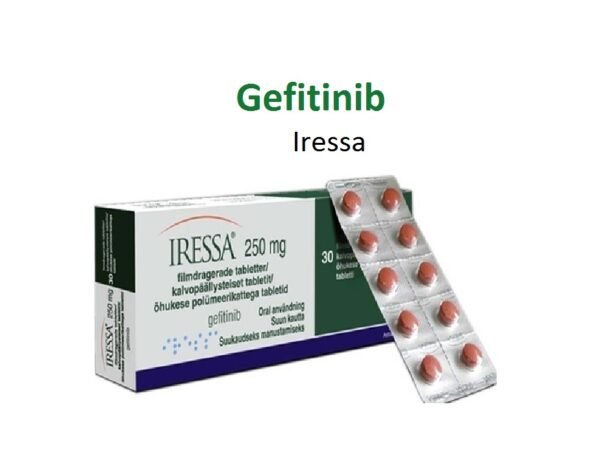
Gefitinib (Iressa) is a Tyrosine kinase inhibitor that is used to treat non-small cell lung cancer with mutated or overactive EGFR receptors.
Gefitinib (Iressa) Uses:
-
Non-small cell lung cancer:
- First-line treatment of metastatic non-small cell lung cancer (NSCLC) in tumors with epidermal growth factor receptor (EGFR) exon 19 deletions or exon 21 (L858R) substitution mutations as detected in tumor or plasma specimen by an approved test.
- Limitation of use:
- Safety and efficacy have not been established for patients with metastatic NSCLC whose tumors have EGFR mutations other than exon 19 deletions or exon 21 (L858R) substitution mutations.
Gefitinib (Iressa) Dose in Adults
Gefitinib (Iressa) Dose in the treatment of metastatic non-small cell lung cancer (NSCLC), with EGFR exon 19 deletions or exon 21 (L858R) substitution mutations:
- Oral: 250 mg once daily until disease progression or unacceptable toxicity.
-
Missed doses:
- Do not take a missed dose if it is within 12 hours of the next scheduled dose.
-
Dosage adjustment for concomitant therapy:
- Strong CYP3A4 inducers:
- Increase gefitinib to 500 mg once daily (in the absence of severe adverse drug reactions);
- reduce gefitinib dose back to 250 mg once daily 1 week after discontinuing the strong CYP3A4 inducer.
- Strong CYP3A4 inducers:
Use in Children:
Not indicated.
Gefitinib (Iressa) Pregnancy Risk Category: D
- Animal reproduction studies have shown that adverse events can be observed.
- Gefitinib can cause harm to the fetus if given during pregnancy.
- Effective contraception should be used by females with reproductive potential during and for at most 2 weeks after gefitinib treatment.
Use of Gefitinib while breastfeeding
- It is not known if breast milk contains gefitinib.
- The manufacturer does not recommend breastfeeding due to the risk of serious adverse reactions in breastfed babies.
Gefitinib (Iressa) Dose in Kidney disease:
- No dosage adjustments provided in the manufacturer’s labeling; however, due to minimal renal excretion (<4% of gefitinib and metabolites) the need for dosage adjustment is unlikely.
- Use has not been studied in patients with CrCl ≤20 mL/minute.
Gefitinib (Iressa) Dose in Liver disease:
-
Dosage adjustment for hepatic impairment at treatment initiation:
- No dosage adjustments provided in the manufacturer’s labeling; systemic exposure is increased in hepatic impairment.
-
Dosage adjustment for hepatotoxicity during treatment:
- ALT and/or AST elevations (grade 2 or higher):
- Withhold treatment for up to 2 weeks; may resume treatment when resolved completely or improved to grade 1.
- Severe hepatic impairment:
- Permanently discontinue.
- ALT and/or AST elevations (grade 2 or higher):
Common Side Effects of Gefitinib (Iressa):
-
Central Nervous System:
- Insomnia
- Fatigue
-
Dermatologic:
- Dermatological Reaction
- Skin Rash
- Xeroderma
- Pruritus
- Paronychia
- Acne Vulgaris
- Alopecia
-
Gastrointestinal:
- Diarrhea
- Anorexia
- Nausea
- Decreased Appetite
- Vomiting
- Stomatitis
- Constipation
-
Genitourinary:
- Proteinuria
-
Hepatic:
- Increased Serum AST
- Increased Serum ALT
-
Neuromuscular & Skeletal:
- Weakness
Less Common Side Effects Of Gefitinib (Iressa):
-
Central Nervous System:
- Hypoesthesia
- Peripheral Sensory Neuropathy
- Peripheral Neuropathy
-
Dermatologic:
- Nail Disease
- Acneiform Eruption
-
Endocrine & Metabolic:
- Dehydration
-
Gastrointestinal:
- Xerostomia
-
Genitourinary:
- Cystitis
-
Hematologic & Oncologic:
- Anemia
- Pulmonary Hemorrhage
- Hemorrhage
- Neutropenia
- Leukopenia
- Thrombocytopenia
-
Hepatic:
- Increased Serum Bilirubin
-
Neuromuscular & Skeletal:
- Myalgia
- Arthralgia
-
Ophthalmic:
- Eye Disease
-
Renal:
- Increased Serum Creatinine
-
Respiratory:
- Cough
- Interstitial Pulmonary Disease
-
Miscellaneous:
- Fever
Contraindications to Gefitinib (Iressa):
- The US labeling of the manufacturer does not list any contraindications.
- Canadian labeling: Hypersensitivity of any drug or component of the formulation.
Warnings and precautions
-
Dermatologic toxicities:
- Nearly half of patients who have taken gefitinib experience skin reactions.
- Bullous skin conditions, such as toxic epidermal necrolysis, Stevens Johnson syndrome, erythema multife and dermatitisbullous, have been reported.
- In severe cases of blistering, bullous, or exfoliating dermatologic conditions, discontinue or interrupt gefitinib.
-
Gastrointestinal effects
- Nearly one-third (grades 3 and 4) of patients experience diarrhea as a side effect.
- As long as you are clinically fit, manage diarrhea.
- For severe or persistent (upto 14 days) diarrhea, you should not take gefitinib.
- Rarely, gastrointestinal perforation is reported. If gastrointestinal perforation occurs, discontinue use immediately.
- Also, stomatitis, nausea, vomiting and decreased appetite have been reported.
-
Hepatotoxicity
- There have been increases in ALT, AST and bilirubin including grades 3 or higher toxicities.
- Rare cases of fatal liver toxicities are also reported.
- Regularly monitor liver function tests.
- Patients with a worsening liver function should be given gefitinib; discontinue if severe hepatic impairment is present.
-
Ocular toxicities:
- Ocular disorders such as keratitis and corneal erosion, abnormal eyelash development, conjunctivitis and dry eyes have been reported. Some events were grade 3.
- Contact lens wear and recent corneal surgery may increase the likelihood of ocular toxicities.
- Patients should promptly report any eye problems and immediately consult an ophthalmologist if they are diagnosed with keratitis.
- For severe or worsening ocular conditions, discontinue gefitinib therapy.
-
Toxicity in the lungs:
- Gefitinib has been associated with interstitial lung disease (ILD), or ILD-like reactions, such as acute respiratory distress syndrome (ARDS), lung infiltration or pneumonitis, and some cases were of grade 3 or higher. Some were even fatal.
- If you notice any worsening symptoms, discontinue gefitinib immediately.
-
Hepatic impairment
- Patients with mild, moderate, or severe hepatic impairment due to cirrhosis are more likely to be exposed to Gefitinib.
- In a study on patients with liver metastases, however, patients with moderate impairment and metastases had similar systemic exposure to patients with metastases. Patients with normal hepatic function also had the same results.
- Patients with severe or moderate hepatic impairment should be monitored for adverse reactions.
Gefitinib: Drug Interaction
|
Risk Factor C (Monitor therapy) |
|
|
Ajmaline |
May increase the serum concentration of CYP2D6 Substrates (High risk with Inhibitors). |
|
Aprepitant |
May increase the serum concentration of CYP3A4 Substrates (High risk with Inhibitors). |
|
Bosentan |
May decrease the serum concentration of CYP3A4 Substrates (High risk with Inducers). |
|
CloBAZam |
May increase the serum concentration of CYP2D6 Substrates (High risk with Inhibitors). |
|
Clofazimine |
May increase the serum concentration of CYP3A4 Substrates (High risk with Inhibitors). |
|
Cobicistat |
May increase the serum concentration of CYP2D6 Substrates (High risk with Inhibitors). |
|
CYP2D6 Inhibitors (Moderate) |
May decrease the metabolism of CYP2D6 Substrates (High risk with Inhibitors). |
|
CYP3A4 Inducers (Moderate) |
May decrease the serum concentration of CYP3A4 Substrates (High risk with Inducers). |
|
CYP3A4 Inhibitors (Moderate) |
May decrease the metabolism of CYP3A4 Substrates (High risk with Inhibitors). |
|
CYP3A4 Inhibitors (Strong) |
May increase the serum concentration of Gefitinib. |
|
Darunavir |
May increase the serum concentration of CYP2D6 Substrates (High risk with Inhibitors). |
|
Deferasirox |
May decrease the serum concentration of CYP3A4 Substrates (High risk with Inducers). |
|
Duvelisib |
May increase the serum concentration of CYP3A4 Substrates (High risk with Inhibitors). |
|
Erdafitinib |
May decrease the serum concentration of CYP3A4 Substrates (High risk with Inducers). |
|
Erdafitinib |
May increase the serum concentration of CYP3A4 Substrates (High risk with Inhibitors). |
|
Fosaprepitant |
May increase the serum concentration of CYP3A4 Substrates (High risk with Inhibitors). |
|
Fosnetupitant |
May increase the serum concentration of CYP3A4 Substrates (High risk with Inhibitors). |
|
Imatinib |
May increase the serum concentration of CYP2D6 Substrates (High risk with Inhibitors). |
|
Ivosidenib |
May decrease the serum concentration of CYP3A4 Substrates (High risk with Inducers). |
|
Larotrectinib |
May increase the serum concentration of CYP3A4 Substrates (High risk with Inhibitors). |
|
Lumefantrine |
May increase the serum concentration of CYP2D6 Substrates (High risk with Inhibitors). |
|
Netupitant |
May increase the serum concentration of CYP3A4 Substrates (High risk with Inhibitors). |
|
Palbociclib |
May increase the serum concentration of CYP3A4 Substrates (High risk with Inhibitors). |
|
Panobinostat |
May increase the serum concentration of CYP2D6 Substrates (High risk with Inhibitors). |
|
Peginterferon Alfa-2b |
May decrease the serum concentration of CYP2D6 Substrates (High risk with Inhibitors). Peginterferon Alfa-2b may increase the serum concentration of CYP2D6 Substrates (High risk with Inhibitors). |
|
Perhexiline |
CYP2D6 Substrates (High risk with Inhibitors) may increase the serum concentration of Perhexiline. Perhexiline may increase the serum concentration of CYP2D6 Substrates (High risk with Inhibitors). |
|
QuiNINE |
May increase the serum concentration of CYP2D6 Substrates (High risk with Inhibitors). |
|
Sarilumab |
May decrease the serum concentration of CYP3A4 Substrates (High risk with Inducers). |
|
Siltuximab |
May decrease the serum concentration of CYP3A4 Substrates (High risk with Inducers). |
|
Simeprevir |
May increase the serum concentration of CYP3A4 Substrates (High risk with Inhibitors). |
|
Tocilizumab |
May decrease the serum concentration of CYP3A4 Substrates (High risk with Inducers). |
|
Vinorelbine |
Gefitinib may enhance the neutropenic effect of Vinorelbine. |
|
Vitamin K Antagonists (eg, warfarin) |
Gefitinib may enhance the anticoagulant effect of Vitamin K Antagonists. |
|
Risk Factor D (Consider therapy modification) |
|
|
Abiraterone Acetate |
May increase the serum concentration of CYP2D6 Substrates (High risk with Inhibitors). Management: Avoid concurrent use of abiraterone with CYP2D6 substrates that have a narrow therapeutic index whenever possible. When concurrent use is not avoidable, monitor patients closely for signs/symptoms of toxicity. |
|
Antacids |
May decrease the serum concentration of Gefitinib. Management: Administer gefitinib at least 6 hours before or after administration of an antacid, and closely monitor clinical response to gefitinib. |
|
Asunaprevir |
May increase the serum concentration of CYP2D6 Substrates (High risk with Inhibitors). |
|
CYP2D6 Inhibitors (Strong) |
May decrease the metabolism of CYP2D6 Substrates (High risk with Inhibitors). |
|
CYP3A4 Inducers (Strong) |
May decrease the serum concentration of Gefitinib. Management: In the absence of severe adverse reactions, increase gefitinib dose to 500 mg daily in patients receiving strong CYP3A4 inducers; resume 250 mg dose 7 days after discontinuation of the strong inducer. Carefully monitor clinical response. |
|
Dabrafenib |
May decrease the serum concentration of CYP3A4 Substrates (High risk with Inducers). Management: Seek alternatives to the CYP3A4 substrate when possible. If concomitant therapy cannot be avoided, monitor clinical effects of the substrate closely (particularly therapeutic effects). |
|
Dacomitinib |
May increase the serum concentration of CYP2D6 Substrates (High risk with Inhibitors). Management: Avoid concurrent use of dacomitinib with CYP2D6 subtrates that have a narrow therapeutic index. |
|
Enzalutamide |
May decrease the serum concentration of CYP3A4 Substrates (High risk with Inducers). Management: Concurrent use of enzalutamide with CYP3A4 substrates that have a narrow therapeutic index should be avoided. Use of enzalutamide and any other CYP3A4 substrate should be performed with caution and close monitoring. |
|
Histamine H2 Receptor Antagonists |
May decrease the serum concentration of Gefitinib. Management: Administer gefitinib at least 6 hours before or after administration of a histamine H2-antagonist, and closely monitor clinical response to gefitinib. |
|
Lorlatinib |
May decrease the serum concentration of CYP3A4 Substrates (High risk with Inducers). Management: Avoid concurrent use of lorlatinib with any CYP3A4 substrates for which a minimal decrease in serum concentrations of the CYP3A4 substrate could lead to therapeutic failure and serious clinical consequences. |
|
MiFEPRIStone |
May increase the serum concentration of CYP3A4 Substrates (High risk with Inhibitors). Management: Minimize doses of CYP3A4 substrates, and monitor for increased concentrations/toxicity, during and 2 weeks following treatment with mifepristone. Avoid cyclosporine, dihydroergotamine, ergotamine, fentanyl, pimozide, quinidine, sirolimus, and tacrolimus. |
|
Mitotane |
May decrease the serum concentration of CYP3A4 Substrates (High risk with Inducers). Management: Doses of CYP3A4 substrates may need to be adjusted substantially when used in patients being treated with mitotane. |
|
Pitolisant |
May decrease the serum concentration of CYP3A4 Substrates (High risk with Inducers). Management: Combined use of pitolisant with a CYP3A4 substrate that has a narrow therapeutic index should be avoided. Other CYP3A4 substrates should be monitored more closely when used with pitolisant. |
|
Proton Pump Inhibitors |
May decrease the serum concentration of Gefitinib. Management: Avoid use of proton pump inhibitors (PPIs) with gefitinib when possible. If required, administer gefitinib 12 hours after administration of the PPI or 12 hours before the next dose of the PPI. |
|
St John's Wort |
May decrease the serum concentration of CYP3A4 Substrates (High risk with Inducers). Management: Consider an alternative for one of the interacting drugs. Some combinations may be specifically contraindicated. Consult appropriate manufacturer labeling. |
|
Stiripentol |
May increase the serum concentration of CYP3A4 Substrates (High risk with Inhibitors). Management: Use of stiripentol with CYP3A4 substrates that are considered to have a narrow therapeutic index should be avoided due to the increased risk for adverse effects and toxicity. Any CYP3A4 substrate used with stiripentol requires closer monitoring. |
|
Risk Factor X (Avoid combination) |
|
|
Conivaptan |
May increase the serum concentration of CYP3A4 Substrates (High risk with Inhibitors). |
|
Fusidic Acid (Systemic) |
May increase the serum concentration of CYP3A4 Substrates (High risk with Inhibitors). |
|
Idelalisib |
May increase the serum concentration of CYP3A4 Substrates (High risk with Inhibitors). |
Monitoring parameters:
- EGFR mutation status (prior to treatment initiation) in tumor or plasma specimen.
- liver function tests (ALT, AST, bilirubin at baseline and periodically thereafter).
- INR or prothrombin time (with concurrent warfarin treatment).
- Observe for signs/symptoms of dermatologic toxicity, gastrointestinal perforation, ocular toxicity, and pulmonary toxicity.
- Look closely for adverse reactions in CYP2D6 poor metabolizers and patients with hepatic impairment.
- Monitor adherence.
How to administer Gefitinib (Iressa)?
- Take orally with or without food.
- For patients unable to swallow the tablet whole, put the tablet in 120 to 240 mL water, and stir for~15 minutes; immediately drink the liquid or administer it through a nasogastric tube.
- Rinse the container with 120 to 240 mL water and immediately drink or administer through a nasogastric tube.
Mechanism of action of Gefitinib (Iressa):
- Gefitinib (a tyrosine kinase inhibitor (TKI), reverses the kinase activities of select activation mutations and wild-type epidermal growth factor receptors (EGFR)).
- EGFR can be found on the cell surfaces of both cancerous and normal cells.
- It is involved in cell proliferation and growth.
- Gefitinib inhibits autophosphorylation tyrosine residues that are associated with the EGFR receiver, which blocks downstream signaling as well as EGFR-dependent proliferation.
- Gefitinib exhibits a higher binding affinity for EGFR exon 19, deletion, and exon 21 (L858R), substitution mutations than wild-type EGFR.
Protein binding:
- 90%, albumin and alpha -acid glycoprotein
Metabolism:
- Hepatic (extensive), primarily via CYP3A4, as well as CYP2D6; forms metabolites
Bioavailability:
- 60%
Half-life elimination: Oral:
- 48 hours
Time to peak, plasma: Oral:
- 3 to 7 hours
Excretion:
- Feces (86%);
- urine (<4%)
International Brands of Gefitinib:
- Iressa
- APO-Gefitinib
- Gefticip
- Geftilon
Gefitinib Brands Names in Pakistan:
No Brands Available in Pakistan.
.png)


