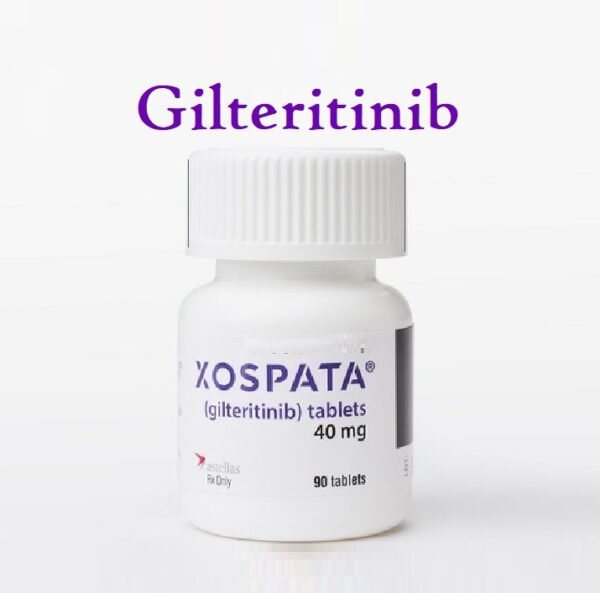
Gilteritinib (Xospata) is an FMS-like tyrosine kinase 3 inhibitor that is used to treat patients with relapsed or refractory acute myeloid leukemia (in patients with positive mutations for FMS-like tyrosine kinase 3.
Gilteritinib Uses:
-
Acute myeloid leukemia, relapsed or refractory to first-line of treatment:
- Used for treating the relapsed or refractory cases of acute myeloid leukemia (AML) in adult patients with an FMS-like tyrosine kinase 3 (FLT3) mutation as detected by an approved test.
Gilteritinib (Xospata) Dose in Adults
Gilteritinib (Xospata) Dose in the treatment of FLT3-positive relapsed or refractory acute myeloid leukemia:
- Oral: 120 mg OD given for a minimum period of 6 months (to allow time for a clinical response) or until progression of the disease or unacceptable toxicity.
-
Missed doses:
- Administer the missed dose as soon as possible on the same day and at least 12 hours prior to the next scheduled dose, in case of a missed dose.
- The normal dosing schedule should be resumed the following day; 2 doses within 12 hours should not be administered.
Use in Children:
Not indicated.
Pregnancy Risk Category: Not assigned (AU: D)
- Folate harm can result from maternal exposure to gilteritinib in pregnancy, based on its mechanism of action and evidence from animal reproduction studies.
- Females with reproductive potential should be evaluated for pregnancy within seven days of initiation of therapy.
- Females with reproductive potential should use effective contraceptives during treatment. This includes for at least six months after the last dose.
- Effective contraceptives should be used by males who have female partners with reproductive potential, during treatment, and at least for 4 months after the last dose.
Use of Gilteritinib while breastfeeding
- It is not known if breast milk contains gilteritinib.
- Due to the risk of serious adverse reactions in breastfed babies, the manufacturer doesn't recommend breastfeeding during therapy or for more than 2 months after the last dose.
Dose in Kidney Disease:
-
CrCl ≥30 mL/minute:
- No dosage adjustments are provided in the manufacturer's labeling; however, there are no clinically meaningful effects on gilteritinib pharmacokinetics in case of mild or moderate renal impairment.
-
CrCl <30 mL/minute:
- No dosage adjustments provided in the manufacturer's labeling (has not been studied).
Dose in Liver Disease:
-
Mild or moderate impairment (Child-Pugh class A or B):
- No dosage adjustments are provided in the manufacturer's labeling; however, there are no clinically meaningful effects on gilteritinib pharmacokinetics in case of mild or moderate hepatic impairment.
- Severe impairment (Child-Pugh class C):
- No dosage adjustments provided in the manufacturer's labeling (has not been studied).
Common Side Effects of Gilteritinib (Xospata):
-
Cardiovascular:
- Edema
- Hypotension
- Hypertension
-
Central Nervous System:
- Fatigue
- Malaise
- Headache
- Dizziness
- Insomnia
-
Dermatologic:
- Skin Rash
-
Endocrine & Metabolic:
- Hyperglycemia
- Hypertriglyceridemia
- Hypocalcemia
- Hypoalbuminemia
- Hypophosphatemia
- Hypokalemia Hyponatremia
-
Gastrointestinal:
- Diarrhea
- Constipation
- Nausea
- Stomatitis
- Vomiting
- Abdominal Pain
- Decreased Appetite
- Dysgeusia
-
Hepatic:
- Increased Serum Alanine Aminotransferase
- Increased Serum Aspartate Aminotransferase
- Increased Serum Alkaline Phosphatase
- Increased Serum Transaminases
-
Infection:
- Sepsis
-
Neuromuscular & Skeletal:
- Arthralgia
- Myalgia
- Increased Creatine Phosphokinase
-
Renal:
- Increased Serum Creatinine
- Renal Insufficiency
-
Respiratory:
- Dyspnea
- Pneumonia
- Cough
-
Miscellaneous:
- Fever
Less Common Side Effects Of Gilteritinib (Xospata):
-
Cardiovascular:
- Prolonged QT Interval On ECG
- Cardiac Failure
- Pericardial Effusion
- Pericarditis
-
Central Nervous System:
- Reversible Posterior Leukoencephalopathy Syndrome
-
Hematologic & Oncologic:
- APL Differentiation Syndrome
-
Hypersensitivity:
- Anaphylaxis
Frequency of side effects not defined:
-
Central Nervous System:
- Altered Mental Status
- Seizure
-
Gastrointestinal:
- Pancreatitis
Contraindications to Gilteritinib (Xospata):
- Hypersensitivity to gilteritinib and any component of the formulation
Warnings and precautions
-
Gastrointestinal toxicities:
- Diarrhea (non infectious)
- Constipation
- Nausea
- Vomiting
- Stomatitis (usually mild).
-
Hypersensitivity
- There have been hypersensitivity reactions (including anaphylactic reactions) observed.
-
Pancreatitis
- Reports of rare cases of pancreatitis are rare. It is important to get prompt evaluation for symptoms and signs of pancreatitis.
- It is possible to interrupt therapy or reduce dosage.
-
The posterior reversible syndrome of encephalopathy:
- Rare cases of posterior-reversible encephalopathy syndrome have been reported.
- The most common symptoms are seizures and altered mental state. These usually disappear after the drug is stopped.
- The preferred diagnostic brain imaging MRI is recommended; for confirmed PRES the treatment should be stopped.
-
Extendation of the QTc interval:
- It has been shown that prolonged cardiac ventricular depolarization (QT interval), can be achieved with the use of gilteritinib.
- In a clinical study, a small number of patients experienced a QTc interval greater than 500 msec. Some patients also saw an increase of QTc by >60 msec.
- Before starting therapy, it is important to have an ECG done on days 8-15 of cycle 1 and before beginning the 2 following treatment cycles.
- Hypokalemia and/or hypermagnesemia may increase the risk of QTc interval extension.
- Therefore, electrolyte abnormalities should not be ignored before (or during) gilteritinib treatment.
- Due to QTc interval extension, therapy interruption or dosage reduction may be necessary.
Gilteritinib: Drug Interaction
|
Risk Factor C (Monitor therapy) |
|
|
Aprepitant |
May increase the serum concentration of CYP3A4 Substrates (High risk with Inhibitors). |
|
Bosentan |
May decrease the serum concentration of CYP3A4 Substrates (High risk with Inducers). |
|
Clofazimine |
May increase the serum concentration of CYP3A4 Substrates (High risk with Inhibitors). |
|
CYP3A4 Inducers (Moderate) |
May decrease the serum concentration of CYP3A4 Substrates (High risk with Inducers). |
|
CYP3A4 Inhibitors (Moderate) |
May decrease the metabolism of CYP3A4 Substrates (High risk with Inhibitors). |
|
Deferasirox |
May decrease the serum concentration of CYP3A4 Substrates (High risk with Inducers). |
|
Doxepin-Containing Products |
May enhance the QTc-prolonging effect of Gilteritinib. Management: Patients with other risk factors (eg, older age, female sex, bradycardia, hypokalemia, hypomagnesemia, heart disease, and higher drug concentrations) are likely at greater risk for these potentially life-threatening toxicities. |
|
Duvelisib |
May increase the serum concentration of CYP3A4 Substrates (High risk with Inhibitors). |
|
Erdafitinib |
May decrease the serum concentration of CYP3A4 Substrates (High risk with Inducers). |
|
Erdafitinib |
May increase the serum concentration of CYP3A4 Substrates (High risk with Inhibitors). |
|
Erdafitinib |
May increase the serum concentration of P-glycoprotein/ABCB1 Substrates. |
|
Fosaprepitant |
May increase the serum concentration of CYP3A4 Substrates (High risk with Inhibitors). |
|
Fosnetupitant |
May increase the serum concentration of CYP3A4 Substrates (High risk with Inhibitors). |
|
Haloperidol |
QT-prolonging Kinase Inhibitors (Moderate Risk) may enhance the QTc-prolonging effect of Haloperidol. Management: Monitor for QTc interval prolongation and ventricular arrhythmias when these agents are combined. Patients with additional risk factors for QTc prolongation may be at even higher risk. |
|
Larotrectinib |
May increase the serum concentration of CYP3A4 Substrates (High risk with Inhibitors). |
|
Netupitant |
May increase the serum concentration of CYP3A4 Substrates (High risk with Inhibitors). |
|
Ondansetron |
May enhance the QTc-prolonging effect of QT-prolonging Kinase Inhibitors (Moderate Risk). Management: Monitor for QTc interval prolongation and ventricular arrhythmias when these agents are combined. Patients with additional risk factors for QTc prolongation may be at even higher risk. |
|
Palbociclib |
May increase the serum concentration of CYP3A4 Substrates (High risk with Inhibitors). |
|
Pentamidine (Systemic) |
May enhance the QTc-prolonging effect of QT-prolonging Kinase Inhibitors (Moderate Risk). Management: Monitor for QTc interval prolongation and ventricular arrhythmias when these agents are combined. Patients with additional risk factors for QTc prolongation may be at even higher risk. |
|
P-glycoprotein/ABCB1 Inhibitors |
May increase the serum concentration of Pglycoprotein/ABCB1 Substrates. P-glycoprotein inhibitors may also enhance the distribution of pglycoprotein substrates to specific cells/tissues/organs where p-glycoprotein is present in large amounts (e.g., brain, T-lymphocytes, testes, etc.). |
|
QT-prolonging Antipsychotics (Moderate Risk) |
May enhance the QTc-prolonging effect of QTprolonging Kinase Inhibitors (Moderate Risk). Management: Monitor for QTc interval prolongation and ventricular arrhythmias when these agents are combined. Patients with additional risk factors for QTc prolongation may be at even higher risk. Exceptions: Pimozide. |
|
QT-prolonging Class IC Antiarrhythmics (Moderate Risk) |
May enhance the QTc-prolonging effect of QT-prolonging Kinase Inhibitors (Moderate Risk). Management: Monitor for QTc interval prolongation and ventricular arrhythmias when these agents are combined. Patients with additional risk factors for QTc prolongation may be at even higher risk. |
|
QT-prolonging Kinase Inhibitors (Moderate Risk) |
May enhance the QTc-prolonging effect of other QT-prolonging Kinase Inhibitors (Moderate Risk). Management: Monitor for QTc interval prolongation and ventricular arrhythmias when these agents are combined. Patients with additional risk factors for QTc prolongation may be at even higher risk. |
|
QT-prolonging Miscellaneous Agents (Moderate Risk) |
QT-prolonging Kinase Inhibitors (Moderate Risk) may enhance the QTc-prolonging effect of QT-prolonging Miscellaneous Agents (Moderate Risk). Management: Monitor for QTc interval prolongation and ventricular arrhythmias when these agents are combined. Patients with additional risk factors for QTc prolongation may be at even higher risk. Exceptions: Domperidone. |
|
QT-prolonging Moderate CYP3A4 Inhibitors (Moderate Risk) |
May enhance the QTc-prolonging effect of QT-prolonging Kinase Inhibitors (Moderate Risk). QT-prolonging Moderate CYP3A4 Inhibitors (Moderate Risk) may increase the serum concentration of QT-prolonging Kinase Inhibitors (Moderate Risk). |
|
QT-prolonging Quinolone Antibiotics (Moderate Risk) |
May enhance the QTc-prolonging effect of QT-prolonging Kinase Inhibitors (Moderate Risk). Management: Monitor for QTc interval prolongation and ventricular arrhythmias when these agents are combined. Patients with additional risk factors for QTc prolongation may be at even higher risk. |
|
Ranolazine |
May increase the serum concentration of P-glycoprotein/ABCB1 Substrates. |
|
Sarilumab |
May decrease the serum concentration of CYP3A4 Substrates (High risk with Inducers). |
|
Siltuximab |
May decrease the serum concentration of CYP3A4 Substrates (High risk with Inducers). |
|
Simeprevir |
May increase the serum concentration of CYP3A4 Substrates (High risk with Inhibitors). |
|
Tocilizumab |
May decrease the serum concentration of CYP3A4 Substrates (High risk with Inducers). |
|
Risk Factor D (Consider therapy modification) |
|
|
Citalopram |
May enhance the QTc-prolonging effect of Gilteritinib. Gilteritinib may diminish the therapeutic effect of Citalopram. Management: Avoid use of this combination if possible. If use is necessary, monitor for reduced response to citalopram and for QTc prolongation and arrhythmias. Patients with other risk factors may be at greater risk for these serious toxicities. |
|
CYP3A4 Inducers (Strong) |
May increase the metabolism of CYP3A4 Substrates (High risk with Inducers). Management: Consider an alternative for one of the interacting drugs. Some combinations may be specifically contraindicated. Consult appropriate manufacturer labeling. |
|
CYP3A4 Inhibitors (Strong) |
May increase the serum concentration of Gilteritinib. Management: Consider alternatives to the use of a strong CYP3A4 inhibitor with gilteritinib. If the combination cannot be avoided, monitor more closely for evidence of gilteritinib toxicities. |
|
Dabrafenib |
May decrease the serum concentration of CYP3A4 Substrates (High risk with Inducers). Management: Seek alternatives to the CYP3A4 substrate when possible. If concomitant therapy cannot be avoided, monitor clinical effects of the substrate closely (particularly therapeutic effects). |
|
Domperidone |
QT-prolonging Agents (Moderate Risk) may enhance the QTc-prolonging effect of Domperidone. Management: Consider alternatives to this drug combination. If combined, monitor for QTc interval prolongation and ventricular arrhythmias. Patients with additional risk factors for QTc prolongation may be at even higher risk. |
|
Enzalutamide |
May decrease the serum concentration of CYP3A4 Substrates (High risk with Inducers). Management: Concurrent use of enzalutamide with CYP3A4 substrates that have a narrow therapeutic index should be avoided. Use of enzalutamide and any other CYP3A4 substrate should be performed with caution and close monitoring. |
|
Escitalopram: |
May enhance the QTc-prolonging effect of Gilteritinib. Gilteritinib may diminish the therapeutic effect of Escitalopram. Management: Avoid use of this combination if possible. If use is necessary, monitor for reduced response to escitalopram and for QTc prolongation and arrhythmias. Patients with other risk factors may be at greater risk for these serious toxicities. |
|
Lorlatinib |
May decrease the serum concentration of CYP3A4 Substrates (High risk with Inducers). Management: Avoid concurrent use of lorlatinib with any CYP3A4 substrates for which a minimal decrease in serum concentrations of the CYP3A4 substrate could lead to therapeutic failure and serious clinical consequences. |
|
MiFEPRIStone |
May increase the serum concentration of CYP3A4 Substrates (High risk with Inhibitors). Management: Minimize doses of CYP3A4 substrates, and monitor for increased concentrations/toxicity, during and 2 weeks following treatment with mifepristone. Avoid cyclosporine, dihydroergotamine, ergotamine, fentanyl, pimozide, quinidine, sirolimus, and tacrolimus. |
|
Mitotane |
May decrease the serum concentration of CYP3A4 Substrates (High risk with Inducers). Management: Doses of CYP3A4 substrates may need to be adjusted substantially when used in patients being treated with mitotane. |
|
Pitolisant |
May decrease the serum concentration of CYP3A4 Substrates (High risk with Inducers). Management: Combined use of pitolisant with a CYP3A4 substrate that has a narrow therapeutic index should be avoided. Other CYP3A4 substrates should be monitored more closely when used with pitolisant. |
|
QT-prolonging Agents (Highest Risk) |
Gilteritinib may enhance the QTc-prolonging effect of QTprolonging Agents (Highest Risk). Management: Consider alternatives to this combination. If use is necessary, monitor for QTc interval prolongation and arrhythmias. |
|
QT-prolonging Strong CYP3A4 Inhibitors (Moderate Risk) |
May enhance the QTc-prolonging effect of Gilteritinib. QT-prolonging Strong CYP3A4 Inhibitors (Moderate Risk) may increase the serum concentration of Gilteritinib. Management: Consider alternatives to the use of gilteritinib with strong CYP3A4 inhibitors that prolong the QTc interval whenever possible |
|
Selective Serotonin Reuptake Inhibitors |
Gilteritinib may diminish the therapeutic effect of Selective Serotonin Reuptake Inhibitors. Management: Avoid use of this combination if possible. If the combination cannot be avoided, monitor closely for evidence of reduced response to the selective serotonin reuptake inhibitor. |
|
Stiripentol |
May increase the serum concentration of CYP3A4 Substrates (High risk with Inhibitors). Management: Use of stiripentol with CYP3A4 substrates that are considered to have a narrow therapeutic index should be avoided due to the increased risk for adverse effects and toxicity. Any CYP3A4 substrate used with stiripentol requires closer monitoring. |
|
Risk Factor X (Avoid combination) |
|
|
Combined Inducers of CYP3A4 and P-glycoprotein |
May decrease the serum concentration of Gilteritinib. |
|
Conivaptan |
May increase the serum concentration of CYP3A4 Substrates (High risk with Inhibitors). |
|
Fusidic Acid (Systemic) |
May increase the serum concentration of CYP3A4 Substrates (High risk with Inhibitors). |
|
Idelalisib |
May increase the serum concentration of CYP3A4 Substrates (High risk with Inhibitors). |
|
Pimozide |
May enhance the QTc-prolonging effect of QT-prolonging Agents (Moderate Risk). |
Monitoring parameters:
- Before starting therapy, CBC and serum chemistries (including creatine phosphokinase), should be done at least once a week. Then, every other week thereafter.
- Before starting therapy, it is important to have an ECG done on days 8-15 of cycle 1 and before beginning the 2 following treatment cycles.
- Before starting treatment, a pregnancy test should be performed on any females with reproductive potential within seven days.
- Monitor for symptoms and signs of pancreatitis.
- It is important to monitor adhesion.
How to administer Gilteritinib (Xospata)?
Oral: Administer without relation to food at approximately the same time each day. Avoid breaking or crushing the tablets.
Mechanism of action of Gilteritinib (Xospata):
- Gilteritinib, a tyrosine-kinase inhibitor, causes inhibition of multiple Tyrosine Kinases such as FMS-like Tyrosine Kinase 3 (FLT3).
- Gilteritinib inhibits FLT3 receptor signaling in cells that express FLT3 (including FLT3 -ITD, tyrosine-kinase domain mutations(TKD), FLT3 -D835Y and FLT3 -ITD -D835Y).
- It induces apoptosis of FLT3-ITD-expressing cells.
Onset:
- Inhibits phosphorylation of FLT3: Rapid onset (within 24 hours after the initial dose)
Protein binding:
- Highly human plasma proteins (~94% )
Metabolism:
- Primarily in the liver via CYP3A4; primary human metabolites include M17 (formed via N-dealkylation and oxidation), M16, and M10 (both formed via N-dealkylation).
Half-life elimination:
- 113 hours
Time to peak:
- Almost 4 to 6 hours
Excretion:
- 64.5% in feces & 16.4% as unchanged drug and metabolites in urine.
International Brand Names of Gilteritinib:
- Xospata
Gilteritinib Brand Names in Pakistan:
No Brands Available in Pakistan.
.png)


