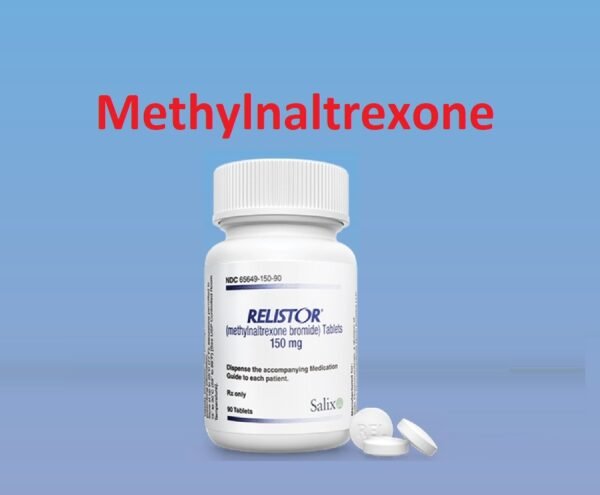
Methylnaltrexone (Relistor), an opioid-receptor antagonist with peripheral action, is used to treat persistent constipation (in cancer patients and those with a terminal illness).
Methylnaltrexone (Relistor) Uses:
-
Advanced sickness and opioid-induced constipation (injection only):
- Used to treat opioid-induced constipation in individuals who need opioid dose escalation for palliative care due to advanced illness or pain from aggressive cancer.
-
Constipation brought on by opiate use (from pills and injections) and ongoing non-cancer pain:
- Used to treat patients with chronic non-cancer pain, including those who continue to have pain after receiving therapy for cancer in the past and do not require frequent (weekly, for example) opioid dosage escalation.
Read: Naltrexone (Revia, Vivitrol); Uses, Dose, Side effects Read: Naloxone (Narcan); Uses, Dose, Side effects, Indication
Methylnaltrexone (Relistor) Dose in Adults:
Methylnaltrexone (Relistor) Dose in the treatment of Opioid-induced constipation with advanced illness:
- SubQ: The dosage is determined by body weight: As needed, take 1 dosage every other day; at most, take 1 dose every 24 hours.
- >114 kg:
- 0.15 mg per kg (round dose up to closest 0.1 mL of volume)
- 38 to <62 kg:
- 8 mg
- <38 kg:
- 0.15 mg per kg (round dose up to closest 0.1 mL of volume)
- 62 to 114 kg:
- 12 mg
- >114 kg:
Methylnaltrexone (Relistor) Dose for Chronic Non-Cancer Pain with Opioid-Induced Constipation:
Note: Stop using all laxatives for maintenance before beginning therapy; if the reaction is not ideal after three days, laxative therapy may be started again.
- 450 mg orally, one day.
- 12 mg SubQ once a day.
Use in Children:
Not indicated.
Methylnaltrexone (Relistor) Pregnancy Risk Category: B1
- Animal reproduction studies have not allowed for adverse events to be monitored.
- Pregnancy and maternal use of methylnaltrexone may lead to opioid withdrawal symptoms in newborns.
Methylnaltrexone use during breastfeeding:
- It is unknown if breast milk contains methylnaltrexone.
- The manufacturer does not recommend breastfeeding because of the risk of serious adverse reactions.
Methylnaltrexone (Relistor) Dose in Kidney Disease:
- CrCl ≥60 mL/minute:
- No dosage adjustment is required.
- CrCl <60 mL/minute:
-
Constipation brought on by opioids and a serious illness: SubQ:
- >114 kg:
- 0.075 mg per kg every other day (round dose up to nearest 0.1 mL of volume)
- 38 to <62 kg:
- 4 mg every other day
- <38 kg:
- 075 mg per kg every other day (round dose up to nearest 0.1 mL of volume)
- 62 to 114 kg:
- 6 mg every other day
- >114 kg:
-
Constipation brought on by opioids and ongoing non-cancer pain:
- 150 mg orally, once daily
- 6 mg once a day in SubQ
-
- End-stage renal impairment (dialysis-dependent):
- The manufacturer’s labeling doesn't provide any dosage adjustments (has not been studied).
Methylnaltrexone (Relistor) Dose in Liver disease:
-
Constipation brought on by opioids and a serious illness:
- The manufacturer's labeling doesn't provide any dosage adjustments.
- If a patient has a significant impairment and continuous non-cancer pain, consider providing the injection in accordance with the recommendations for subcutaneous dosage for opioid-induced constipation (Child-Pugh class C).
- The manufacturer's labeling doesn't provide any dosage adjustments.
-
Constipation brought on by opioids and ongoing non-cancer pain:
- Oral:
- Mild impairment (Child-Pugh class A):
- No dosage adjustment is required.
- Moderate or severe impairment (Child-Pugh class B and C):
- 150 mg once a day.
- Mild impairment (Child-Pugh class A):
- SubQ:
- In cases of mild or moderate impairment (Child-Pugh class A or B), there is no need to change the dose.
- Extreme impairment (Child-Pugh class C):
- 38 to <62 kg:
- 4 mg once a day.
- >114 kg:
- 0.075 mg/kg once a day (round dose up to nearest 0.1 mL of volume)
- 62 to 114 kg:
- 6 mg once a day
- <38 kg:
- 0.075 mg per kg once a day (round dose up to nearest 0.1 mL of volume)
- 38 to <62 kg:
- Oral:
Typical Side Impacts of Methylnaltrexone (Relistor):
-
Gastrointestinal:
- Abdominal pain
- Flatulence
- Nausea
Less Common Side Effects of Methylnaltrexone (Relistor):
-
Dermatologic:
- Hyperhidrosis
-
Neuromuscular & skeletal:
- Muscle spasm
- Tremor
-
Endocrine & metabolic:
- Hot flash
-
Central nervous system:
- Dizziness
- Headache
- Anxiety
- Chills
-
Respiratory:
- Rhinorrhea
-
Gastrointestinal:
- Diarrhea
- Abdominal distension
- Vomiting
Contraindications to Methylnaltrexone (Relistor):
- Obstructive GI (known or suspected);
- Patients are at higher risk for recurrent GI obstruction.
Canadian labeling: US labeling omits further contraindications.
- Hypersensitivity to any ingredient in the formulation, including methylnaltrexone
Warnings and precautions
-
Diarrhea:
- Stop treating severe or persistent diarrhea.
-
Gastrointestinal perforation:
- Gastrointestinal perforations have occurred in patients with severe disorders such as Ogilvie's syndrome, diverticular disease, peptic ulcer, Ogilvie's syndrome, infiltrative conditions, GI tract cancers, or peritoneal metastases.
- Take care when treating these patients, or patients suffering from other conditions that could compromise the integrity of their GI walls (eg Crohn's disease).
- If severe symptoms develop, discontinue therapy immediately.
- It is not recommended for individuals with known or suspected GI blockage or those who are more susceptible to recurrent GI dysfunction to take this product.
-
Withdrawal of Opioids:
- This may lead to symptoms such as nausea, vomiting, stomach pain, hyperhidrosis, and anxiety.
- Patients with blood-brain barrier disruptions should be treated with caution. This could increase withdrawal risk and/or reduce analgesia.
- If you notice signs of withdrawal, be sure to monitor.
-
Hepatic impairment
- Patients with severe or moderate hepatic impairment should be cautious when using it.
-
Renal impairment
- Patients with severe renal impairment took it with caution.
- Dosage adjustment is necessary for patients with moderate to severe renal impairment (CrCl lower than 60 mL/minute).
Methylnaltrexone: Drug Interaction
|
Risk Factor X (Avoid combination) |
|
|
Naldemedine |
Opioid antagonists may intensify Naldemedine's harmful or hazardous effects. Particularly, there may be an increased risk of opioid withdrawal. |
|
Naloxegol |
Opioid antagonists may intensify Naloxegol's harmful or hazardous effects. Particularly, there may be an increased risk of opioid withdrawal. |
|
Opioid Antagonists |
Methylnaltrexone may make opioid antagonists more harmful or poisonous. Particularly, there may be an increased risk of opioid withdrawal. |
Monitoring parameters:
Abdominal pain that is severe, ongoing, or getting worse; signs of opiate withdrawal; and sufficient analgesia.
How to administer Methylnaltrexone (Relistor)?
SubQ:
- Subcutaneous injections into the upper arm, belly, or thigh should be used to administer.
- With each dose, switch up the injection sites.
Tablet: Oral:
- Take with water on an empty stomach at least 30 minutes before the first meal of the day.
Mechanism of action of Methylnaltrexone (Relistor):
- Additionally to inhibiting opioid-induced reduced intestinal motility and prolonged gastrointestinal transit time, it functions as a peripheral opioid antagonist.
- It is an opioid receptor antagonist.
- This decreases opioid-induced constipation. It doesn't affect the opioid analgesic effects.
- Methylnaltrexone, a quaternary derivative, prevents opioids from attaching to mu receptors and is an antagonist of this process.
Half-life elimination:
- Terminal: ~15 hours (oral)
Protein binding:
- 11 percent to 15 percent
Time to peak, plasma:
- SubQ: 30 minutes;
- Oral: ~1.5 hours (postponed by 2 hours with a fat-rich meal)
Metabolism:
- Metabolized into methyl-6-naltrexol isomers, methylnaltrexone sulphate, and other insignificant metabolites
Excretion:
- Urine (~44 percent to 54 percent, primarily as an unchanged drug);
- feces (~17%, primarily as unchanged drug)
International Brand Names of Methylnaltrexone:
- Relistor
Methylnaltrexone Brand Names in Pakistan:
There is no brand available in Pakistan
.png)