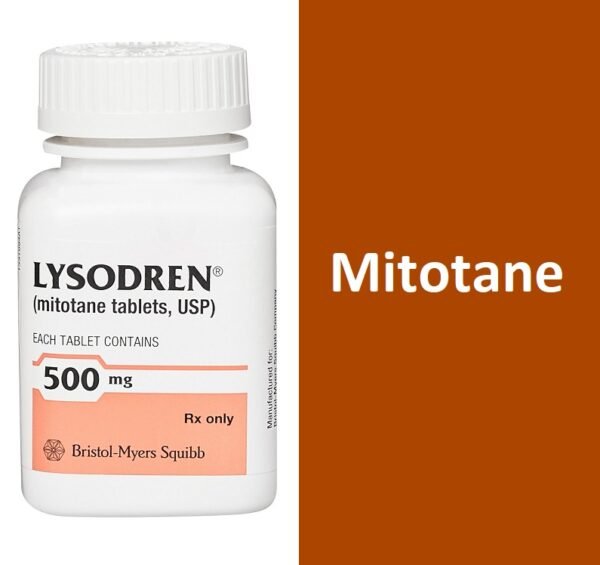
Mitotane (Lysodren) inhibits the production of adrenal steroids and has adrenolytic properties. It is used in the treatment of adrenal carcinoma that can be resected.
Mitotane Uses:
-
Adrenocortical carcinoma:
- It is indicated to treat inoperable adrenocortical carcinoma
-
Off Label Use of Mitotane in Adults:
- Cushing syndrome
Mitotane Dose in Adults:
Note: Mitotane has a moderate potential for emesis; antiemetics may be required for the prevention of nausea and vomiting.
Mitotane (Lysodren) Dose in the treatment of Adrenocortical carcinoma:
- Oral: Initial: 2 - 6 g daily in 3 - 4 divided doses, then increase incrementally until blood concentration of 14 -20 mcg/mL or as tolerated.
-
Off-label dosing:
- Initial 1 - 2 g in a day; increase by 1 - 2 g per day at 1- to 2-week intervals as tolerated; usual dose 4 - 6 g per day
- Maximum of 6 - 10 g daily.
Mitotane (Lysodren) Dose in the treatment of Cushing syndrome (off-label):
- Oral: Initial: 500 mg 3 times a day, can be increased rapidly during the first 4 -6 weeks up to a maximum of 4,000 mg - 8,000 mg per day in 3 divided doses
- The largest dose should be given in the evening to minimize discomfort.
- Gradually taper the dose to a minimum for maintenance of remission, once cortisol secretion is controlled.
Mitotane Dose in Childrens:
Mitotane (Lysodren) Dose in the treatment of Adrenocortical carcinoma (stage III or IV):
-
Children and Adolescents:
- Oral: Initial: 0.5 - 1 g/day in 3 divided doses, titrate dose to target serum concentration range of 14 - 20 mcg/mL
Mitotane (Lysodren) Dosing adjustment for toxicity:
- The mentioned dosing adjustments are based on experience in adult patients
- Adult:
- Adrenal crisis in the setting of shock or severe trauma:
- Discontinued till recovery occurs.
- CNS toxicity:
- Discontinue and restart 7 -10 days after symptoms resolve, at lower dose e.g. decrease dose by 0.5 to 1 g.
- Significant neuropsychiatric adverse effects:
- Withhold treatment for at least 1 week and restart with a lower dose
- Adrenal crisis in the setting of shock or severe trauma:
Mitotane Pregnancy Risk Category: D
- It can cross the placenta and cause harm to the fetus.
- Effective contraception is possible during and after treatment, until plasma levels stop being detected.
- Cushing syndrome:
- Avoiding pregnancy for many years after discontinuing mitotane therapy
Use of mitotane while breastfeeding
- Breast milk contains mitotane.
- Stop breastfeeding until plasma levels are normal.
- Breastfed infants could experience serious side effects from mitotane.
Dose in Kidney Disease:
The manufacturer has not recommended any dose adjustment
Dose in Liver disease:
The manufacturer has not recommended any dose adjustment. However, use carefully in hepatic impairment
Common Side Effects of Mitotane (Lysodren):
-
Central Nervous System:
- Depression
- Dizziness
- Vertigo
-
Dermatologic:
- Skin Rash
-
Gastrointestinal:
- Anorexia
- Diarrhea
- Nausea
- Vomiting
Less common side effects of Mitotane (Lysodren):
-
Cardiovascular:
- Flushing
- Hypertension
- Orthostatic Hypotension
-
Central Nervous System:
- Ataxia
- Central Nervous System Toxicity
- Confusion
- Dysarthria
- Generalized Ache
- Headache
- Mental Deficiency
-
Endocrine & Metabolic:
- Adrenocortical Insufficiency
- Albuminuria
- Altered Hormone Level
- Decreased Plasma Testosterone
- Growth Suppression
- Gynecomastia
- Hypercholesterolemia
- Hypertriglyceridemia
- Hypothyroidism
- Increased Sex Hormone Binding Globulin
- Ovarian Cyst
-
Genitourinary:
- Hematuria
- Hemorrhagic Cystitis
-
Hematologic & Oncologic:
- Neutropenia
- Prolonged Bleeding Time
-
Hepatic:
- Hepatitis
- Increased Liver Enzymes
-
Neuromuscular & Skeletal:
- Weakness
-
Ophthalmic:
- Blurred Vision
- Cataract
- Diplopia
- Maculopathy
- Retinopathy
-
Miscellaneous:
- Fever
Contraindications to Mitotane (Lysodren):
Hypersensitivity
Warnings and precautions
-
Adrenal crisis: [US Boxed Warning]
- An adrenal crisis may occur when there is severe trauma or shock. There can also be impaired shock response.
- Hydrocortisone should be administered and mitotane must be stopped until adrenal crisis is resolved.
-
Insufficiency of the adrenals:
- Use of mitotane may lead to adrenal insufficiency. Steroid replacements may be necessary.
- To ensure optimal steroid replacement, monitor cortisol (ACTH) and corticotropin levels.
-
Toxicity to the CNS:
- CNS adverse reactions may occur, plasma levels greater than 20 have a higher chance of toxicity
- Lethargy, sedation and vertigo are some of the symptoms.
- It is important to warn patients about tasks that require mental alertness, such as driving or operating machinery.
-
Gastrointestinal toxicities:
- It can cause mild emesis. Antiemetics may be necessary.
-
Ovarian macrocysts
- Ovarian cysts can be caused by mitotane therapy. Other complications include adnexal and cyst rupture (hemorrhagic).
- Patients who experience vaginal bleeding or pain in the pelvis due to mitotane use should seek medical attention.
-
Extended bleeding time
- It is rare to cause prolonged bleeding. Use it before any surgical intervention and with anticoagulants.
-
Hepatic impairment
- Hepatic impairment may alter the metabolism of mitotane, causing accumulation. Use caution.
Mitotane: Drug Interaction
|
Apalutamide |
CYP3A4 Inducers (Strong) may decrease the serum concentration of Apalutamide. |
|
Benperidol |
CYP3A4 Inducers (Strong) may decrease the serum concentration of Benperidol. |
|
Bictegravir |
CYP3A4 Inducers (Strong) may decrease the serum concentration of Bictegravir. Management: Rifampin is specifically contraindicated, and the use of carbamazepine, phenytoin, or phenobarbital is not recommended when alternatives are acceptable |
|
Brentuximab Vedotin |
CYP3A4 Inducers (Strong) may decrease the serum concentration of Brentuximab Vedotin. Specifically, concentrations of the active monomethyl auristatin E (MMAE) component may be decreased. |
|
Calcifediol |
CYP3A4 Inducers (Strong) may decrease the serum concentration of Calcifediol. |
|
Cannabidiol |
CYP3A4 Inducers (Strong) may decrease the serum concentration of Cannabidiol. |
|
Cannabis |
CYP3A4 Inducers (Strong) may decrease the serum concentration of Cannabis. More specifically, tetrahydrocannabinol and cannabidiol serum concentrations may be decreased. |
|
ChlorproPAMIDE |
CYP3A4 Inducers (Strong) may decrease the serum concentration of ChlorproPAMIDE. |
|
Clindamycin (Systemic) |
CYP3A4 Inducers (Strong) may decrease the serum concentration of Clindamycin (Systemic). Refer to the specific clindamycin (systemic) - rifampin drug interaction monograph for information concerning that combination. |
|
Codeine |
CYP3A4 Inducers (Strong) may decrease serum concentrations of the active metabolite(s) of Codeine. |
|
Dabrafenib |
CYP3A4 Inducers (Strong) may decrease the serum concentration of Dabrafenib. |
|
Diethylstilbestrol |
CYP3A4 Inducers (Strong) may decrease the serum concentration of Diethylstilbestrol. |
|
Doxercalciferol |
CYP3A4 Inducers (Strong) may increase serum concentrations of the active metabolite(s) of Doxercalciferol. |
|
Dronabinol |
CYP3A4 Inducers (Strong) may decrease the serum concentration of Dronabinol. |
|
Elagolix |
CYP3A4 Inducers (Strong) may decrease the serum concentration of Elagolix. |
|
Enfortumab Vedotin |
CYP3A4 Inducers (Strong) may decrease the serum concentration of Enfortumab Vedotin. Specifically, concentrations of the active monomethyl auristatin E (MMAE) component may be decreased. |
|
Estriol (Systemic) |
CYP3A4 Inducers (Strong) may decrease the serum concentration of Estriol (Systemic). |
|
Estriol (Topical) |
CYP3A4 Inducers (Strong) may decrease the serum concentration of Estriol (Topical). |
|
Evogliptin |
CYP3A4 Inducers (Strong) may decrease the serum concentration of Evogliptin. |
|
FentaNYL |
CYP3A4 Inducers (Strong) may decrease the serum concentration of FentaNYL. |
|
Glecaprevir and Pibrentasvir |
CYP3A4 Inducers (Strong) may decrease the serum concentration of Glecaprevir and Pibrentasvir. |
|
Ifosfamide |
CYP3A4 Inducers (Strong) may increase serum concentrations of the active metabolite(s) of Ifosfamide. CYP3A4 Inducers (Strong) may decrease serum concentrations of the active metabolite(s) of Ifosfamide. |
|
Meperidine |
CYP3A4 Inducers (Strong) may decrease the serum concentration of Meperidine. |
|
Oxcarbazepine |
CYP3A4 Inducers (Strong) may decrease the serum concentration of OXcarbazepine. Specifically, the concentrations of the 10-monohydroxy active metabolite of oxcarbazepine may be decreased. |
|
Polatuzumab Vedotin |
CYP3A4 Inducers (Strong) may decrease the serum concentration of Polatuzumab Vedotin. Exposure to unconjugated MMAE, the cytotoxic small molecule component of polatuzumab vedotin, may be decreased. |
|
Propafenone |
CYP3A4 Inducers (Strong) may decrease the serum concentration of Propafenone. |
|
Ramelteon |
CYP3A4 Inducers (Strong) may decrease the serum concentration of Ramelteon. |
|
Reboxetine |
CYP3A4 Inducers (Strong) may decrease the serum concentration of Reboxetine. |
|
Ruxolitinib |
CYP3A4 Inducers (Strong) may decrease the serum concentration of Ruxolitinib. |
|
SAXagliptin |
CYP3A4 Inducers (Strong) may decrease the serum concentration of SAXagliptin. |
|
Sertraline |
CYP3A4 Inducers (Strong) may decrease the serum concentration of Sertraline. |
|
SUFentanil |
CYP3A4 Inducers (Strong) may decrease the serum concentration of SUFentanil. |
|
Tetrahydrocannabinol |
CYP3A4 Inducers (Strong) may decrease the serum concentration of Tetrahydrocannabinol. |
|
Tetrahydrocannabinol and Cannabidiol |
CYP3A4 Inducers (Strong) may decrease the serum concentration of Tetrahydrocannabinol and Cannabidiol. |
|
Tropisetron |
CYP3A4 Inducers (Strong) may decrease the serum concentration of Tropisetron. |
|
Udenafil |
CYP3A4 Inducers (Strong) may decrease the serum concentration of Udenafil. |
|
Zuclopenthixol |
CYP3A4 Inducers (Strong) may decrease the serum concentration of Zuclopenthixol. |
|
Risk Factor D (Consider therapy modification) |
|
|
Abiraterone Acetate |
CYP3A4 Inducers (Strong) may decrease the serum concentration of Abiraterone Acetate. Management: Avoid whenever possible. If such a combination cannot be avoided, increase abiraterone acetate dosing frequency from once daily to twice daily during concomitant use. |
|
Acalabrutinib |
CYP3A4 Inducers (Strong) may decrease the serum concentration of Acalabrutinib. Management: Avoid co-administration of strong CYP3A inducers in patients taking acalabrutinib. If strong CYP3A inducers cannot be avoided, increase the dose of acalabrutinib to 200 mg twice daily. |
|
Apixaban |
|
|
ARIPiprazole |
CYP3A4 Inducers (Strong) may decrease the serum concentration of ARIPiprazole. Management: Double the oral aripiprazole dose and closely monitor. Reduce oral aripiprazole dose to 10-15 mg/day (for adults) if the inducer is discontinued. Avoid use of strong CYP3A4 inducers for more than 14 days with extended-release injectable aripiprazole. |
|
ARIPiprazole Lauroxil |
CYP3A4 Inducers (Strong) may decrease serum concentrations of the active metabolite(s) of ARIPiprazole Lauroxil. Management: Patients taking the 441 mg dose of aripiprazole lauroxil increase their dose to 662 mg if used with a strong CYP3A4 inducer for more than 14 days. No dose adjustment is necessary for patients using the higher doses of aripiprazole lauroxil. |
|
Brexpiprazole |
CYP3A4 Inducers (Strong) may decrease the serum concentration of Brexpiprazole. Management: If brexpiprazole is used together with a strong CYP3A4 inducer, the brexpiprazole dose should gradually be doubled over the course of 1 to 2 weeks. |
|
BusPIRone |
CYP3A4 Inducers (Strong) may decrease the serum concentration of BusPIRone. Management: Consider alternatives to this combination. If coadministration of these agents is deemed necessary, monitor patients for reduced buspirone effects and increase buspirone doses as needed. |
|
Cabozantinib |
CYP3A4 Inducers (Strong) may decrease the serum concentration of Cabozantinib. Management: Avoid use of strong CYP3A4 inducers with cabozantinib if possible. If combined, cabozantinib dose adjustments are recommended and vary based on the cabozantinib product used and the indication for use. See monograph for details. |
|
Clarithromycin |
CYP3A4 Inducers (Strong) may increase serum concentrations of the active metabolite(s) of Clarithromycin. Clarithromycin may increase the serum concentration of CYP3A4 Inducers (Strong). CYP3A4 Inducers (Strong) may decrease the serum concentration of Clarithromycin. Management: Consider alternative antimicrobial therapy for patients receiving a CYP3A inducer. Drugs that enhance the metabolism of clarithromycin into 14hydroxyclarithromycin may alter the clinical activity of clarithromycin and may impair clarithromycin efficacy. |
|
Corticosteroids (Systemic) |
Mitotane may decrease the serum concentration of Corticosteroids (Systemic). |
|
CYP3A4 Substrates (High risk with Inducers) |
Mitotane may decrease the serum concentration of CYP3A4 Substrates (High risk with Inducers). Management: Doses of CYP3A4 substrates may need to be adjusted substantially when used in patients being treated with mitotane. |
|
Dasatinib |
CYP3A4 Inducers (Strong) may decrease the serum concentration of Dasatinib. Management: Avoid when possible. If such a combination cannot be avoided, consider increasing dasatinib dose and monitor clinical response and toxicity closely. |
|
DexAMETHasone (Systemic) |
CYP3A4 Inducers (Strong) may decrease the serum concentration of DexAMETHasone (Systemic). Management: Consider dexamethasone dose increases in patients receiving strong CYP3A4 inducers and monitor closely for reduced dexamethasone efficacy. Consider avoiding this combination when treating life threatening conditions (ie, multiple myeloma). |
|
DOXOrubicin (Conventional) |
CYP3A4 Inducers (Strong) may decrease the serum concentration of DOXOrubicin (Conventional). Management: Seek alternatives to strong CYP3A4 inducers in patients treated with doxorubicin. One U.S. manufacturer (Pfizer Inc.) recommends that these combinations be avoided. |
|
Enzalutamide |
CYP3A4 Inducers (Strong) may decrease the serum concentration of Enzalutamide. Management: Consider using an alternative agent that has no or minimal CYP3A4 induction potential when possible. If this combination cannot be avoided, increase the dose of enzalutamide from 160 mg daily to 240 mg daily. |
|
Eravacycline |
CYP3A4 Inducers (Strong) may decrease the serum concentration of Eravacycline. Management: Increase the eravacycline dose to 1.5 mg/kg every 12 hours when combined with strong CYP3A4 inducers. |
|
Erlotinib |
CYP3A4 Inducers (Strong) may decrease the serum concentration of Erlotinib. Management: Avoid combination if possible. If combination must be used, increase erlotinib dose by 50 mg increments every 2 weeks as tolerated, to a maximum of 450 mg/day. |
|
Etoposide |
CYP3A4 Inducers (Strong) may decrease the serum concentration of Etoposide. Management: When possible, seek alternatives to strong CYP3A4-inducing medications in patients receiving etoposide. If combined, monitor patients closely for diminished etoposide response and need for etoposide dose increases. |
|
Etoposide Phosphate |
CYP3A4 Inducers (Strong) may decrease the serum concentration of Etoposide Phosphate. Management: When possible, seek alternatives to strong CYP3A4inducing medications in patients receiving etoposide phosphate. If these combinations cannot be avoided, monitor patients closely for diminished etoposide phosphate response. |
|
Everolimus |
CYP3A4 Inducers (Strong) may decrease the serum concentration of Everolimus. Management: Avoid concurrent use of strong CYP3A4 inducers if possible. If coadministration cannot be avoided, double the daily dose of everolimus using increments of 5 mg or less. Monitor everolimus serum concentrations closely when indicated. |
|
Exemestane |
CYP3A4 Inducers (Strong) may decrease the serum concentration of Exemestane. Management: Exemestane U.S. product labeling recommends using an increased dose (50 mg/day) in patients receiving concurrent strong CYP3A4 inducers. The Canadian product labeling does not recommend a dose adjustment with concurrent use of strong CYP3A4 inducers. |
|
Gefitinib |
CYP3A4 Inducers (Strong) may decrease the serum concentration of Gefitinib. Management: In the absence of severe adverse reactions, increase gefitinib dose to 500 mg daily in patients receiving strong CYP3A4 inducers; resume 250 mg dose 7 days after discontinuation of the strong inducer. Carefully monitor clinical response. |
|
GuanFACINE |
CYP3A4 Inducers (Strong) may decrease the serum concentration of GuanFACINE. Management: Increase the guanfacine dose by up to double when initiating guanfacine in a patient taking a strong CYP3A4 inducer. Increase guanfacine dose gradually over 1 to 2 weeks if initiating strong CYP3A4 inducer therapy in a patient already taking guanfacine. |
|
Imatinib |
CYP3A4 Inducers (Strong) may decrease the serum concentration of Imatinib. Management: Avoid concurrent use of imatinib with strong CYP3A4 inducers when possible. If such a combination must be used, increase imatinib dose by at least 50% and monitor the patient's clinical response closely. |
|
Ixabepilone |
CYP3A4 Inducers (Strong) may decrease the serum concentration of Ixabepilone. Management: Avoid this combination whenever possible. If this combination must be used, a gradual increase in ixabepilone dose from 40 mg/m to 60 mg/m (given as a 4-hour infusion), as tolerated, should be considered. |
|
Larotrectinib |
CYP3A4 Inducers (Strong) may decrease the serum concentration of Larotrectinib. Management: Avoid use of strong CYP3A4 inducers with larotrectinib. If this combination cannot be avoided, double the larotrectinib dose. Reduced to previous dose after stopping the inducer after a period of 3 to 5 times the inducer half-life. |
|
Lefamulin |
CYP3A4 Inducers (Strong) may decrease the serum concentration of Lefamulin. Management: Avoid concomitant use of lefamulin with strong CYP3A4 inducers unless the benefits outweigh the risks. |
|
Lefamulin (Intravenous) |
CYP3A4 Inducers (Strong) may decrease the serum concentration of Lefamulin (Intravenous). Management: Avoid concomitant use of lefamulin intravenous infusion with strong CYP3A4 inducers unless the benefits outweigh the risks. |
|
LinaGLIPtin |
CYP3A4 Inducers (Strong) may decrease the serum concentration of LinaGLIPtin. Management: Strongly consider using an alternative to any strong CYP3A4 inducer in patients who are being treated with linagliptin. If this combination is used, monitor patients closely for evidence of reduced linagliptin effectiveness. |
|
Manidipine |
CYP3A4 Inducers (Strong) may decrease the serum concentration of Manidipine. Management: Consider avoiding concomitant use of manidipine and strong CYP3A4 inducers. If combined, monitor closely for decreased manidipine effects and loss of efficacy. Increased manidipine doses may be required. |
|
Maraviroc |
CYP3A4 Inducers (Strong) may decrease the serum concentration of Maraviroc. Management: Increase maraviroc adult dose to 600 mg twice daily when used with strong CYP3A4 inducers. This does not apply to patients also receiving strong CYP3A4 inhibitors. Do not use maraviroc with strong CYP3A4 inducers in patients with CrCl less than 30 mL/min. |
|
MethylPREDNISolone |
CYP3A4 Inducers (Strong) may decrease the serum concentration of MethylPREDNISolone. Management: Consider methylprednisolone dose increases in patients receiving strong CYP3A4 inducers and monitor closely for reduced steroid efficacy. |
|
Mirodenafil |
CYP3A4 Inducers (Strong) may decrease the serum concentration of Mirodenafil. Management: Consider avoiding the concomitant use of mirodenafil and strong CYP3A4 inducers. If combined, monitor for decreased mirodenafil effects. Mirodenafil dose increases may be required to achieve desired effects. |
|
Osimertinib |
CYP3A4 Inducers (Strong) may decrease the serum concentration of Osimertinib. |
|
Perampanel |
CYP3A4 Inducers (Strong) may decrease the serum concentration of Perampanel. Management: Increase the perampanel starting dose to 4 mg/day when perampanel is used concurrently with moderate and strong CYP3A4 inducers. |
|
Pitolisant |
CYP3A4 Inducers (Strong) may decrease the serum concentration of Pitolisant. Management: For patients who are stable on pitolisant doses of 8.9 mg or 17.8 mg/day and who are also taking a strong CYP3A4 inducer, increase the pitolisant dose over 7 days to double the original dose (ie, to either 17.8 mg/day or 35.6 mg/day, respectively). |
|
QUEtiapine |
CYP3A4 Inducers (Strong) may decrease the serum concentration of QUEtiapine. Management: An increase in quetiapine dose (as much as 5 times the regular dose) may be required to maintain therapeutic benefit. Reduce the quetiapine dose back to the previous/regular dose within 7-14 days of discontinuing the inducer. |
|
Radotinib |
CYP3A4 Inducers (Strong) may decrease the serum concentration of Radotinib. Management: Consider alternatives to this combination when possible as the risk of radotinib treatment failure may be increased. |
|
RisperiDONE |
CYP3A4 Inducers (Strong) may decrease the serum concentration of RisperiDONE. Management: Consider increasing the dose of oral risperidone (to no more than double the original dose) if a strong CYP3A4 inducer is initiated. For patients on IM risperidone, consider an increased IM dose or supplemental doses of oral risperidone. |
|
Rolapitant |
CYP3A4 Inducers (Strong) may decrease the serum concentration of Rolapitant. Management: Avoid rolapitant use in patients requiring chronic administration of strong CYP3A4 inducers. Monitor for reduced rolapitant response and the need for alternative or additional antiemetic therapy even with shorter-term use of such inducers. |
|
Sirolimus |
CYP3A4 Inducers (Strong) may decrease the serum concentration of Sirolimus. Management: Avoid concomitant use of strong CYP3A4 inducers and sirolimus if possible. If combined, monitor for reduced serum sirolimus concentrations. Sirolimus dose increases will likely be necessary to prevent subtherapeutic sirolimus levels. |
|
Spironolactone |
May diminish the therapeutic effect of Mitotane. Management: Consideration should be given to discontinuing spironolactone prior to initiating mitotane in order to eliminate the risk of therapeutic failure of the mitotane. |
|
SUNItinib |
CYP3A4 Inducers (Strong) may decrease the serum concentration of SUNItinib. Management: Avoid when possible. If such a combination cannot be avoided, sunitinib dose increases are recommended, and vary by indication. See full monograph for details. |
|
Tadalafil |
CYP3A4 Inducers (Strong) may decrease the serum concentration of Tadalafil. Management: Erectile dysfunction: monitor for decreased effectiveness - no standard dose adjustments recommended. Avoid use of tadalafil for pulmonary arterial hypertension in patients receiving a strong CYP3A4 inducer. |
|
Tamoxifen |
CYP3A4 Inducers (Strong) may decrease serum concentrations of the active metabolite(s) of Tamoxifen. CYP3A4 Inducers (Strong) may decrease the serum concentration of Tamoxifen. Management: Consider alternatives to concomitant use of strong CYP3A4 inducers and tamoxifen. If the combination cannot be avoided, monitor for reduced therapeutic effects of tamoxifen. |
|
Temsirolimus |
CYP3A4 Inducers (Strong) may decrease the serum concentration of Temsirolimus. Management: Consider increasing the dose of temsirolimus to 50 mg IV/week (from 25 mg IV/week) if a concomitant CYP3A4 strong inducer is necessary. |
|
Thiotepa |
CYP3A4 Inducers (Strong) may increase serum concentrations of the active metabolite(s) of Thiotepa. CYP3A4 Inducers (Strong) may decrease the serum concentration of Thiotepa. Management: Thiotepa prescribing information recommends avoiding concomitant use of thiotepa and strong CYP3A4 inducers. If concomitant use is unavoidable, monitor for adverse effects. |
|
TiaGABine |
CYP3A4 Inducers (Strong) may decrease the serum concentration of TiaGABine. Management: Approximately 2-fold higher tiagabine doses and a more rapid dose titration will likely be required in patients concomitantly taking a strong CYP3A4 inducer. |
|
Vemurafenib |
CYP3A4 Inducers (Strong) may decrease the serum concentration of Vemurafenib. Management: Avoid concurrent use of vemurafenib with a strong CYP3A4 inducer and replace with another agent when possible. If a strong CYP3A4 inducer is indicated and unavoidable, the dose of vemurafenib may be increased by 240 mg (1 tablet) as tolerated. |
|
Vilazodone |
CYP3A4 Inducers (Strong) may decrease the serum concentration of Vilazodone. Management: Consider increasing vilazodone dose by as much as 2-fold (do not exceed 80 mg/day), based on response, in patients receiving strong CYP3A4 inducers for > 14 days. Reduce to the original vilazodone dose over 1-2 weeks after inducer discontinuation. |
|
Vortioxetine |
CYP3A4 Inducers (Strong) may decrease the serum concentration of Vortioxetine. Management: Consider increasing the vortioxetine dose to no more than 3 times the original dose when used with a strong drug metabolism inducer for more than 14 days. The vortioxetine dose should be returned to normal within 14 days of stopping the strong inducer. |
|
Voxelotor |
CYP3A4 Inducers (Strong) may decrease the serum concentration of Voxelotor. Management: Avoid concomitant use of voxelotor and strong CYP3A4 inducers. If concomitant use is unavoidable, increase the voxelotor dose to 2,500 mg once daily. |
|
Zaleplon |
CYP3A4 Inducers (Strong) may decrease the serum concentration of Zaleplon. Management: Consider the use of an alternative hypnotic that is not metabolized by CYP3A4 in patients receiving strong CYP3A4 inducers. If zalephon is combined with a strong CYP3A4 inducer, monitor for decreased effectiveness of zaleplon. |
|
Risk Factor X (Avoid combination) |
|
|
Abemaciclib |
CYP3A4 Inducers (Strong) may decrease the serum concentration of Abemaciclib. |
|
Alpelisib |
CYP3A4 Inducers (Strong) may decrease the serum concentration of Alpelisib. |
|
Antihepaciviral Combination Products |
CYP3A4 Inducers (Strong) may decrease the serum concentration of Antihepaciviral Combination Products. |
|
Apremilast |
CYP3A4 Inducers (Strong) may decrease the serum concentration of Apremilast. |
|
Aprepitant |
CYP3A4 Inducers (Strong) may decrease the serum concentration of Aprepitant. |
|
Artemether |
CYP3A4 Inducers (Strong) may decrease serum concentrations of the active metabolite(s) of Artemether. Specifically, dihydroartemisinin concentrations may be reduced. CYP3A4 Inducers (Strong) may decrease the serum concentration of Artemether. |
|
Asunaprevir |
CYP3A4 Inducers (Strong) may decrease the serum concentration of Asunaprevir. |
|
Avapritinib |
CYP3A4 Inducers (Strong) may decrease the serum concentration of Avapritinib. |
|
Axitinib |
CYP3A4 Inducers (Strong) may decrease the serum concentration of Axitinib. |
|
Bedaquiline |
CYP3A4 Inducers (Strong) may decrease the serum concentration of Bedaquiline. |
|
Bortezomib |
CYP3A4 Inducers (Strong) may decrease the serum concentration of Bortezomib. |
|
Bosutinib |
CYP3A4 Inducers (Strong) may decrease the serum concentration of Bosutinib. |
|
Brigatinib |
CYP3A4 Inducers (Strong) may decrease the serum concentration of Brigatinib. |
|
Cariprazine |
CYP3A4 Inducers (Strong) may decrease the serum concentration of Cariprazine. |
|
Ceritinib |
CYP3A4 Inducers (Strong) may decrease the serum concentration of Ceritinib. |
|
CloZAPine |
CYP3A4 Inducers (Strong) may decrease the serum concentration of CloZAPine. |
|
Cobimetinib |
CYP3A4 Inducers (Strong) may decrease the serum concentration of Cobimetinib. |
|
Copanlisib |
CYP3A4 Inducers (Strong) may decrease the serum concentration of Copanlisib. |
|
Crizotinib |
CYP3A4 Inducers (Strong) may decrease the serum concentration of Crizotinib. |
|
Daclatasvir |
CYP3A4 Inducers (Strong) may decrease the serum concentration of Daclatasvir. |
|
Dasabuvir |
CYP3A4 Inducers (Strong) may decrease the serum concentration of Dasabuvir. |
|
Deflazacort |
CYP3A4 Inducers (Strong) may decrease serum concentrations of the active metabolite(s) of Deflazacort. |
|
Delamanid |
CYP3A4 Inducers (Strong) may decrease the serum concentration of Delamanid. |
|
Dienogest |
CYP3A4 Inducers (Strong) may decrease the serum concentration of Dienogest. Management: Avoid use of dienogest for contraception when using medications that induce CYP3A4 and for at least 28 days after discontinuation of a CYP3A4 inducer. An alternative form of contraception should be used during this time. |
|
Doravirine |
CYP3A4 Inducers (Strong) may decrease the serum concentration of Doravirine. |
|
Dronedarone |
CYP3A4 Inducers (Strong) may decrease the serum concentration of Dronedarone. |
|
Duvelisib |
CYP3A4 Inducers (Strong) may decrease the serum concentration of Duvelisib. |
|
Elbasvir |
CYP3A4 Inducers (Strong) may decrease the serum concentration of Elbasvir. |
|
Eliglustat |
CYP3A4 Inducers (Strong) may decrease the serum concentration of Eliglustat. |
|
Encorafenib |
CYP3A4 Inducers (Strong) may decrease the serum concentration of Encorafenib. |
|
Entrectinib |
CYP3A4 Inducers (Strong) may decrease the serum concentration of Entrectinib. |
|
Erdafitinib |
CYP3A4 Inducers (Strong) may decrease the serum concentration of Erdafitinib. |
|
Etravirine |
CYP3A4 Inducers (Strong) may decrease the serum concentration of Etravirine. |
|
Fedratinib |
CYP3A4 Inducers (Strong) may decrease the serum concentration of Fedratinib. |
|
Flibanserin |
CYP3A4 Inducers (Strong) may decrease the serum concentration of Flibanserin. |
|
Fosaprepitant |
CYP3A4 Inducers (Strong) may decrease the serum concentration of Fosaprepitant. Specifically, CYP3A4 Inducers (Strong) may decrease serum concentrations of the active metabolite aprepitant. |
|
Fosnetupitant |
CYP3A4 Inducers (Strong) may decrease serum concentrations of the active metabolite(s) of Fosnetupitant. |
|
Fostamatinib |
CYP3A4 Inducers (Strong) may decrease serum concentrations of the active metabolite(s) of Fostamatinib. |
|
Gemigliptin |
CYP3A4 Inducers (Strong) may decrease serum concentrations of the active metabolite(s) of Gemigliptin. CYP3A4 Inducers (Strong) may decrease the serum concentration of Gemigliptin. |
|
Glasdegib |
CYP3A4 Inducers (Strong) may decrease the serum concentration of Glasdegib. |
|
Grazoprevir |
CYP3A4 Inducers (Strong) may decrease the serum concentration of Grazoprevir. |
|
Ibrutinib |
CYP3A4 Inducers (Strong) may decrease the serum concentration of Ibrutinib. |
|
Idelalisib |
CYP3A4 Inducers (Strong) may decrease the serum concentration of Idelalisib. |
|
Irinotecan Products |
CYP3A4 Inducers (Strong) may decrease serum concentrations of the active metabolite(s) of Irinotecan Products. Specifically, serum concentrations of SN-38 may be reduced. CYP3A4 Inducers (Strong) may decrease the serum concentration of Irinotecan Products. |
|
Isavuconazonium Sulfate |
CYP3A4 Inducers (Strong) may decrease serum concentrations of the active metabolite(s) of Isavuconazonium Sulfate. Specifically, CYP3A4 Inducers (Strong) may decrease isavuconazole serum concentrations. |
|
Istradefylline |
CYP3A4 Inducers (Strong) may decrease the serum concentration of Istradefylline. |
|
Itraconazole |
CYP3A4 Inducers (Strong) may decrease the serum concentration of Itraconazole. |
|
Ivabradine |
CYP3A4 Inducers (Strong) may decrease the serum concentration of Ivabradine. |
|
Ivacaftor |
CYP3A4 Inducers (Strong) may decrease the serum concentration of Ivacaftor. |
|
Ivosidenib |
CYP3A4 Inducers (Strong) may decrease the serum concentration of Ivosidenib. |
|
Ixazomib |
CYP3A4 Inducers (Strong) may decrease the serum concentration of Ixazomib. |
|
Lapatinib |
CYP3A4 Inducers (Strong) may decrease the serum concentration of Lapatinib. Management: If therapy overlap cannot be avoided, consider titrating lapatinib gradually from 1,250 mg/day up to 4,500 mg/day (HER2 positive metastatic breast cancer) or 1,500 mg/day up to 5,500 mg/day (hormone receptor/HER2 positive breast cancer) as tolerated. |
|
Lemborexant |
CYP3A4 Inducers (Strong) may decrease the serum concentration of Lemborexant. |
|
Lorlatinib |
CYP3A4 Inducers (Strong) may decrease the serum concentration of Lorlatinib. |
|
Lumateperone |
CYP3A4 Inducers (Strong) may decrease the serum concentration of Lumateperone. |
|
Lumefantrine |
CYP3A4 Inducers (Strong) may decrease the serum concentration of Lumefantrine. |
|
Lurasidone |
CYP3A4 Inducers (Strong) may decrease the serum concentration of Lurasidone. |
|
Macimorelin |
CYP3A4 Inducers (Strong) may decrease the serum concentration of Macimorelin. |
|
Macitentan |
CYP3A4 Inducers (Strong) may decrease the serum concentration of Macitentan. |
|
Midostaurin |
CYP3A4 Inducers (Strong) may decrease the serum concentration of Midostaurin. |
|
MiFEPRIStone |
CYP3A4 Inducers (Strong) may decrease the serum concentration of MiFEPRIStone. |
|
Naldemedine |
CYP3A4 Inducers (Strong) may decrease the serum concentration of Naldemedine. |
|
Naloxegol |
CYP3A4 Inducers (Strong) may decrease the serum concentration of Naloxegol. |
|
Neratinib |
CYP3A4 Inducers (Strong) may decrease the serum concentration of Neratinib. |
|
Netupitant |
CYP3A4 Inducers (Strong) may decrease the serum concentration of Netupitant. |
|
NIFEdipine |
CYP3A4 Inducers (Strong) may decrease the serum concentration of NIFEdipine. |
|
Nilotinib |
CYP3A4 Inducers (Strong) may decrease the serum concentration of Nilotinib. |
|
NiMODipine |
CYP3A4 Inducers (Strong) may decrease the serum concentration of NiMODipine. |
|
Nisoldipine |
CYP3A4 Inducers (Strong) may decrease the serum concentration of Nisoldipine. |
|
Olaparib |
CYP3A4 Inducers (Strong) may decrease the serum concentration of Olaparib. |
|
Palbociclib |
CYP3A4 Inducers (Strong) may decrease the serum concentration of Palbociclib. |
|
Panobinostat |
CYP3A4 Inducers (Strong) may decrease the serum concentration of Panobinostat. |
|
PAZOPanib |
CYP3A4 Inducers (Strong) may decrease the serum concentration of PAZOPanib. |
|
Pexidartinib |
CYP3A4 Inducers (Strong) may decrease the serum concentration of Pexidartinib. |
|
Pimavanserin |
CYP3A4 Inducers (Strong) may decrease the serum concentration of Pimavanserin. |
|
Piperaquine |
CYP3A4 Inducers (Strong) may decrease the serum concentration of Piperaquine. |
|
PONATinib |
CYP3A4 Inducers (Strong) may decrease the serum concentration of PONATinib. |
|
Praziquantel |
CYP3A4 Inducers (Strong) may decrease the serum concentration of Praziquantel. Management: Use of praziquantel with strong CYP3A4 inducers is contraindicated. Discontinue rifampin 4 weeks prior to initiation of praziquantel therapy. Rifampin may be resumed the day following praziquantel completion. |
|
Pretomanid |
CYP3A4 Inducers (Strong) may decrease the serum concentration of Pretomanid. |
|
Ranolazine |
CYP3A4 Inducers (Strong) may decrease the serum concentration of Ranolazine. |
|
Regorafenib |
CYP3A4 Inducers (Strong) may decrease the serum concentration of Regorafenib. |
|
Ribociclib |
CYP3A4 Inducers (Strong) may decrease the serum concentration of Ribociclib. |
|
Rivaroxaban |
CYP3A4 Inducers (Strong) may decrease the serum concentration of Rivaroxaban. |
|
Roflumilast |
CYP3A4 Inducers (Strong) may decrease the serum concentration of Roflumilast. Management: Roflumilast U.S. prescribing information recommends against combining strong CYP3A4 inducers with roflumilast. The Canadian product monograph makes no such recommendation but notes that such agents may reduce roflumilast therapeutic effects. |
|
RomiDEPsin |
CYP3A4 Inducers (Strong) may decrease the serum concentration of RomiDEPsin. |
|
Simeprevir |
CYP3A4 Inducers (Strong) may decrease the serum concentration of Simeprevir. |
|
Sonidegib |
CYP3A4 Inducers (Strong) may decrease the serum concentration of Sonidegib. |
|
SORAfenib |
CYP3A4 Inducers (Strong) may decrease the serum concentration of SORAfenib. |
|
Tasimelteon |
CYP3A4 Inducers (Strong) may decrease the serum concentration of Tasimelteon. |
|
Ticagrelor |
CYP3A4 Inducers (Strong) may decrease serum concentrations of the active metabolite(s) of Ticagrelor. CYP3A4 Inducers (Strong) may decrease the serum concentration of Ticagrelor. |
|
Tofacitinib |
CYP3A4 Inducers (Strong) may decrease the serum concentration of Tofacitinib. |
|
Tolvaptan |
CYP3A4 Inducers (Strong) may decrease the serum concentration of Tolvaptan. Management: If concurrent use is necessary, increased doses of tolvaptan (with close monitoring for toxicity and clinical response) may be needed. |
|
Toremifene |
CYP3A4 Inducers (Strong) may decrease the serum concentration of Toremifene. |
|
Trabectedin |
CYP3A4 Inducers (Strong) may decrease the serum concentration of Trabectedin. |
|
Ubrogepant |
CYP3A4 Inducers (Strong) may decrease the serum concentration of Ubrogepant. |
|
Ulipristal |
CYP3A4 Inducers (Strong) may decrease the serum concentration of Ulipristal. |
|
Upadacitinib |
CYP3A4 Inducers (Strong) may decrease the serum concentration of Upadacitinib. |
|
Valbenazine |
CYP3A4 Inducers (Strong) may decrease the serum concentration of Valbenazine. |
|
Vandetanib |
CYP3A4 Inducers (Strong) may decrease the serum concentration of Vandetanib. |
|
Velpatasvir |
CYP3A4 Inducers (Strong) may decrease the serum concentration of Velpatasvir. |
|
Venetoclax |
CYP3A4 Inducers (Strong) may decrease the serum concentration of Venetoclax. |
|
VinCRIStine (Liposomal) |
CYP3A4 Inducers (Strong) may decrease the serum concentration of VinCRIStine (Liposomal). |
|
Vinflunine |
CYP3A4 Inducers (Strong) may decrease the serum concentration of Vinflunine. |
|
Vorapaxar |
CYP3A4 Inducers (Strong) may decrease the serum concentration of Vorapaxar. |
|
Voxilaprevir |
CYP3A4 Inducers (Strong) may decrease the serum concentration of Voxilaprevir. |
|
Zanubrutinib |
CYP3A4 Inducers (Strong) may decrease the serum concentration of Zanubrutinib. |
Monitoring parameters:
- Monitor for therapeutic levels:
- Adults:
- Every 4 - 8 weeks till achievement of target levels, then 3 monthly
- Adults:
- Monitor free cortisol and corticotropin levels
- Features of CNS toxicity
- Signs and symptoms of ovarian macrocysts e.g. vaginal bleeding or pelvic pain.
- Monitor adherence.
- urinary free cortisol levels
- TSH and free thyroxine every few months
Pediatrics :
- Adrenocortical carcinoma:
- Monitor serum levels initially every 2 - 4 weeks until serum concentration of 10 mcg/mL is achieved, then every 1 - 2 weeks (even after target concentration of 14 - 20 mcg/mL is reached)
How to administer Mitotane (Lysodren)?
Note: It has a moderate potential of emesis; antiemetics may be given Take the drug in 3 - 4 divided doses in a day.
Mechanism of action of Mitotane (Lysodren):
It acts as an adrenolytic and suppresses the adrenal cortex. This causes altered peripheral metabolism of steroids.
The beginning of action:
- Antitumor Response: At serum concentrations greater than 14 mcg/mL
- Children: Patients with adenocarcinoma may take between 1.5 and 12.5 months to reach 10 mg/mL. However, if the patient is a child, a clinical response can be seen sooner.
Duration:
- After discontinuation of mitotane, detectable serum levels may persist for months
Absorption:
- Oral: ~40%
Distribution:
- Stored mainly in fat tissue but can be found in all body tissues
Metabolism:
- Mainly Hepatic and other tissues
Half-life elimination:
- 18 -159 days
Excretion:
- Urine (~10%, as metabolites)
- Feces (1% -17%, as metabolites)
International Brand Names of Mitotane:
- Lysodren
- Lisodren
- Opeprim
Mitotane Brand Names in Pakistan:
No Brands Available in Pakistan.
.png)


