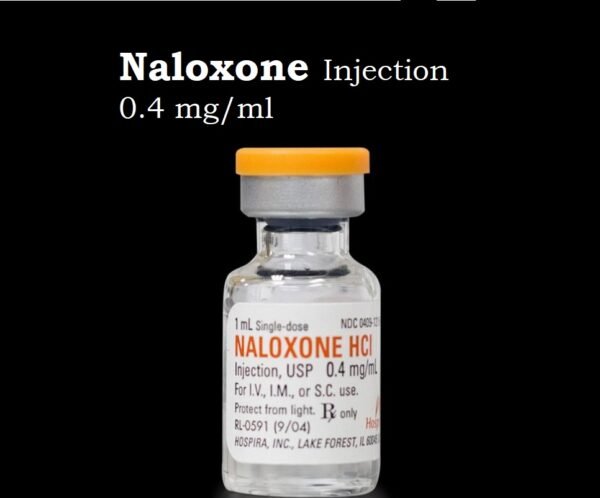
Naloxone (Narcan) is a pure opioid receptor antagonist that is used to treat opioid overdose. It is also combined with opioids to reduce the risks of opioid misuse.
Naloxone (Narcan) Uses:
-
Opioid overdose:
- Used for the complete or partial reversal of opioid depression (including respiratory depression) induced by natural and synthetic opioids (eg, propoxyphene, methadone, nalbuphine, butorphanol, pentazocine).
- Naloxone is also indicated for the diagnosis of suspected or known acute opioid overdosage.
-
Evzio (IM, SubQ) intranasal:
- Used for the emergency treatment of known or suspected opioid overdose as manifested by respiratory and/or CNS depression.
- Intended for immediate administration as emergency therapy in settings where opioids may be present.
- Not a Substitute for emergency medical care.
-
Off Label Use of Naloxone in Adults:
- Opioid-induced pruritus
Naloxone (Narcan) Dose in Adults
- Available routes of administration include IV (preferred), IM, SubQ, and intranasal
- other available routes (off-label) include inhalation via nebulization (adults only), and intraosseous (IO).
- Endotracheal administration is the least desirable and is supported by only anecdotal evidence (case report).
Naloxone Dose in the treatment of Opioid overdose:
Note:
- For the initial treatment of an opioid-associated life-threatening emergency, the American Heart Association recommends, after initiation of CPR, the use of intranasal or IM naloxone with a repeat dose as needed.
- If there is an initial patient response (ie, purposeful movement, regular breathing, moan or other response) but the patient then stops responding, begin CPR, and repeat naloxone dose.
- If no initial response, continue CPR and use AED as appropriate.
-
IV, IM, SubQ:
- Initial: 0.4 to 2 mg; may need to repeat doses every 2 to 3 minutes.
- A lower initial dose (0.1 to 0.2 mg) should be considered for patients with opioid dependence to avoid acute withdrawal or if there are concerns regarding concurrent stimulant overdose (Mokhlesi 2003).
- After the reversal, may need to readminister dose(s) at a later interval (ie, 20 to 60 minutes) depending on type/duration of opioid.
- If no response is observed after 10 milligrams total, consider other causes of respiratory depression.
-
Note:
- May be given endotracheally (off-label route) as 2 to 2.5 times the initial IV dose (ie, 0.8 to 5 mg).
-
IM, SubQ: Evzio:
- 0.4 mg or 2 mg (contents of 1 auto-injector) as a single dose; may repeat every 2 to 3 minutes until emergency medical assistance becomes available.
-
Continuous IV infusion (off-label dosing):
Note: For use with exposures to long-acting opioids (eg, methadone), sustained-release product, and symptomatic body packers after initial naloxone response.
- Calculate dosage/hour based on the effective intermittent dose used and duration of adequate response seen (Tenenbein 1984) or use two-thirds ( 2/3 ) of the initial effective naloxone bolus on an hourly basis (typically 0.25 to 6.25 mg/hour)
- one-half ( 1/2 ) of the initial bolus dose should be readministered 15 minutes after initiation of the continuous infusion to prevent a drop in naloxone levels
- Adjust infusion rate as needed to assure adequate ventilation and prevent withdrawal symptoms.
-
Inhalation via nebulization (off-label route):
- 2 mg; may repeat.
- Switch to IV or IM administration when possible (Weber 2012).
Note: This administration method is not included in the AHA recommendations for the initial management of opioid-associated life-threatening emergencies.
Intranasal Naloxone:
- Note: Onset of action is slightly delayed compared to IM or IV routes:
- 4 mg (contents of 1 nasal spray) as a single dose in one nostril
- may repeat every 2 to 3 minutes in alternating nostrils until medical assistance becomes available or 2 mg (1 mg per nostril) using injectable solution (delivered with a mucosal atomization device)
- may repeat in 3 to 5 minutes if respiratory depression persists.
Naloxone Dose in the treatment of Reversal of respiratory depression with therapeutic opioid doses:
Intravenous:
- Initial:
- 0.02 to 0.2 mg; titrate to avoid profound withdrawal, seizures, arrhythmias, or severe pain.
Note: May be given endotracheally (off-label route) as 2 to 2.5 times the initial recommended IV dose (ie, 0.04 to 0.5 mg).
-
Continuous IV infusion (off-label dosing):
Note: For use with exposures to long-acting opioids (eg, methadone) or sustained-release products.
-
- Calculate dosage/hour based on effective intermittent dose used and duration of adequate response seen or
- use two-thirds ( 2/3 ) of the initial effective naloxone bolus on an hourly basis (typically 0.2 to 0.6 mg/hour)
- one-half ( 1/2 ) of the initial bolus dose should be readministered 15 minutes after initiation of the continuous infusion to prevent a drop in naloxone levels
- adjust the infusion rate as required to assure adequate ventilation and prevent withdrawal symptoms (Goldfrank 1986).
Naloxone Dose in the treatment of Opioid-dependent patients being treated for cancer pain (off-label dosing):
Note: May dilute 0.4 mg/mL (1 mL) ampule into 9 mL of normal saline for a total volume of 10 mL to achieve a 0.04 mg/mL (40 mcg/mL) concentration.
- 02 mg (20 mcg) IV push; administer every 2 minutes until improvement in symptoms or
- 04 to 0.08 mg (40 to 80 mcg) slow IV push;
- administer every 30 to 60 seconds until improvement in symptoms;
- if no response is observed after total naloxone dose 1 mg, consider other causes of respiratory depression.
- If respiratory depression is due to long-acting opioids, may consider administering naloxone as a continuous infusion starting at 66% of the total bolus dose (or 0.2 mg per hour) to reverse the opioid toxicity.
- Postoperative reversal: IV: 0.1 to 0.2 mg every 2 to 3 minutes until the desired response (adequate ventilation and alertness without significant pain).
Note: Repeat doses may be needed within 1 to 2-hour intervals depending on the type, dose, and timing of the last dose of opioid administered.
Naloxone Dose in the treatment of Opioid-induced pruritus (off-label):
IV infusion:
- 0.25 mcg/kg/hour.
- Doses up to ~3 mcg/kg/hour have been employed.
- However, doses >2 mcg/kg/hour are more likely to lead to a reversal of analgesia and are not recommended.
Note Monitor pain control; verify that the naloxone is not reversing analgesia.
Naloxone (Narcan) Dose in Childrens
Naloxone Dose in the treatment of Opioid intoxication and overdose (full reversal):
IV (preferred), Intraosseous:
Note:
- May be administered IM, SubQ, or E.T., but the onset of action may be delayed, especially if the patient has poor perfusion
- E.T. preferred if IV/Intraosseous route not available doses may need to be repeated (Hegenbarth 2008; PALS [Kleinman 2010]).
-
Infants and Children <5 years or ≤20 kg:
- 1 mg/kg/dose; repeat every 2 to 3 minutes if needed
- Monitor closely
- May need to repeat doses (eg, every 20 to 60 minutes) if the duration of action of opioid is longer than naloxone
-
Children ≥5 years or >20 kg and Adolescents:
- 2 mg/dose
- if no response, repeat every 2 to 3 minutes
- monitor closely
- may need to repeat doses (eg, every 20 to 60 minutes) if the duration of action of opioid is longer than naloxone
Naloxone Endotracheal dose:
-
Infants, Children, and Adolescents:
- Optimal endotracheal dose unknown
- Current expert recommendations are 2 to 3 times the IV dose.
Note: IM or SubQ absorption may be delayed or erratic.
Naloxone Auto-injector: Evzio:
-
Infants, Children, and Adolescents:
- 4 mg or 2 mg (contents of 1 auto-injector) as a single dose.
- May repeat every 2 to 3 minutes if needed until emergency medical assistance becomes available.
Parenteral formulation of Naloxone: IM, SubQ:
-
Infants and Children <5 years or <20 kg:
- 1 mg/kg/dose
- Repeat every 2 to 3 minutes if needed
- Monitor closely
- May need to repeat doses (eg, every 20 to 60 minutes) if the duration of action of opioid is longer than naloxone
-
Children ≥5 years or ≥20 kg and Adolescents:
- 2 mg/dose
- If no response, repeat every 2 to 3 minutes
- Monitor closely
- May need to repeat doses (eg, every 20 to 60 minutes) if the duration of action of opioid is longer than naloxone
Intranasal Naloxone:
Note: Onset of action is slightly delayed compared to IM or IV routes (Barton 2005; Kelly 2005).
Narcan Nasal Spray:
-
Infants, Children, and Adolescents:
- 4 mg (contents of 1 nasal spray) as a single dose
- May repeat every 2 to 3 minutes in alternating nostrils if needed until medical assistance becomes available
Alternate dosing: Parenteral formulation (1 mg/mL injection) for intranasal administration:
-
Adolescents ≥13 years:
- 2 mg (1 mg per nostril).
Continuous IV infusion:
-
Infants, Children, and Adolescents:
- 24 to 40 mcg/kg/hour has been reported.
- Doses as low as 2.5 mcg/kg/hour have been reported in adults and a dose of 160 mcg/kg/hour was reported in one neonate.
- If a continuous infusion is required, calculate the initial dosage/hour based on the effective intermittent dose used and duration of adequate response seen or use two-thirds (2/3rd ) of the initial effective naloxone bolus given as the hourly infusion.
- Titrate dose
Note:
- The infusion should be discontinued by reducing the infusion rate in decrements of 25%
- Closely monitor the patient (eg, pulse oximetry and respiratory rate) after each adjustment and after discontinuation of the infusion for recurrence of opioid-induced respiratory depression.
Naloxone Dose in the treatment of Reversal of respiratory depression from therapeutic opioid dosing:
- IV:
- 0.001 to 0.005 mg/kg/dose; titrate to effect,
- AAP recommends a wider dosage range of 0.001 to 0.015 mg/kg/dose.
- manufacturer's labeling suggests repeat doses may be given every 2 to 3 minutes as needed based on the response
Naloxone Dose in the Opioid-induced pruritus:
-
Prevention:
-
Children ≥6 years and Adolescents ≤17 years:
-
Continuous IV infusion:
- 0.25 mcg/kg/hour was used in a double-blind, prospective, randomized, placebo-controlled study (n=20) which showed lower incidence and severity of opioid-induced side effects (ie, pruritus, nausea) without a loss of pain control (Maxwell 2005)
-
-
-
Treatment:
-
Children ≥3 years and Adolescents:
-
Continuous IV infusion:
- Initial: 2 mcg/kg/hour; if pruritus continues, may titrate by 0.5 mcg/kg/hour every few hours.
- Monitor closely
- Doses ≥3 mcg/kg/hour may increase the risk for loss of pain control and patients may require an increase in the opioid dose.
-
-
Naloxone Pregnancy Risk Category: C
- Naloxone crosses into the placenta, and can cause opioid withdrawal in the fetus.
- Naloxone should not be used in pregnant women suffering from opioid abuse disorder, except in cases of life-threatening overdose.
- It is not recommended to use opioid dependence in pregnancy.
- Antidotes that are prescribed for mothers should be considered in the context of their mother's health and prognosis.
- Pregnant women should only be given antidotes if they have a clear indication. They should not be withheld due to fears of teratogenicity.
- Precautions should be taken when pregnant women have mild to moderate hypertension. Severe hypertension can occur.
Naloxone use during breastfeeding:
- It is unknown if breast milk secretes naloxone.
- However, the systemic absorption after oral administration is low (Smith 2012).
- Therefore, any exposure to naloxone while breastfeeding would be minimal.
- Naloxone is used to reverse opioid withdrawal. It should be taken into consideration the potential for opioid transfer to infants and the opioid concentrations in breast milk.
- According to the manufacturer of the product, when deciding whether to continue or stop breastfeeding during therapy, it should consider the risks to infant exposure, the benefits to the infant and the benefits to the mother.
Naloxone Dose in Kidney Disease:
- No dosage adjustments provided in the manufacturer’s labeling.
Naloxone Dose in Liver disease:
- No dosage adjustments provided in the manufacturer’s labeling.
Side effects of Naloxone (Narcan)
-
Cardiovascular:
- Flushing (Parenteral)
- Hypertension
- Hypotension
- Tachycardia
- Ventricular Fibrillation
- Ventricular Tachycardia
-
Central Nervous System:
- Agitation
- Body Pain
- Brain Disease
- Coma
- Confusion (Parenteral)
- Disorientation (Parenteral)
- Dizziness (Parenteral)
- Excessive Crying (Neonates)
- Hallucination (Parenteral)
- Headache (Nasal)
- Hyperreflexia (Neonates)
- Irritability
- Nervousness
- Outbursts Of Anger (Parenteral)
- Paresthesia (Parenteral)
- Restlessness
- Seizure (Neonates)
- Shivering
- Tonicclonic Seizures (Parenteral)
- Withdrawal Syndrome
- Yawning
-
Dermatologic:
- Diaphoresis
- Piloerection
- Xeroderma (Nasal)
-
Endocrine & Metabolic:
- Hot Flash (Parenteral)
-
Gastrointestinal:
- Abdominal Cramps
- Constipation (Nasal)
- Diarrhea
- Nausea
- Toothache (Nasal)
- Vomiting
-
Local:
- Erythema At Injection Site (Parenteral)
- Injection Site Reaction
-
Neuromuscular & Skeletal:
- Muscle Spasm (Nasal)
- Musculoskeletal Pain (Nasal)
- Tremor
- Weakness
-
Respiratory:
- Dry Nose (Nasal)
- Dyspnea
- Hypoxia (Parenteral)
- Nasal Congestion (Nasal)
- Nasal Discomfort (Pain; Nasal)
- Nasal Mucosa Swelling (Nasal)
- Pulmonary Edema
- Respiratory Depression (Parenteral)
- Rhinitis (Nasal)
- Rhinorrhea
- Sneezing
-
Miscellaneous:
- Fever
Contraindications to Naloxone (Narcan):
- Hypersensitivity to naloxone and any component of the formulation
Warnings and precautions
-
Acute opioid withdrawal
- Naloxone can cause the release of catecholamines. This may lead to unmasking pain or acute withdrawal in people who take opioids regularly.
- Acute withdrawal symptoms in opioid-dependent patients include pain, fever, sweating and nausea.
- Opioid withdrawal can be fatal in neonates born to mothers who have suffered from opioid dependence.
- Symptoms include extreme crying, shrieking, failure to feed, seizures and hyperactive reflexes.
- If you are treating patients with acute opioid overdose, such as post-operative patients, adjust the dose carefully to reverse hypoventilation. Do not awaken the patient or reverse analgesic effects.
- The 2 mg nasal dose (off label) is less likely than the 4 mg to cause severe opioid withdrawal.
- However, patients who have taken a very high or potent dose of opioids may not be able to receive a timely and adequate dose of 2 mg.
-
Cardiovascular disease
- Patients with heart disease and patients taking medications that may have adverse cardiovascular effects (eg hypotension, pulmonary embolism, arrhythmias) should be cautious.
- In association with opioid antagonist abrupt reversal, pulmonary edema, and cardiovascular instability (including ventricular fibrillation) have been reported.
-
Seizures:
- Patients with seizures history should be cautious
- Meperidine-induced seizures should not be treated with meperidine.
Naloxone: Drug Interaction
|
Risk Factor X (Avoid combination) |
|
|
Methylnaltrexone |
May enhance the adverse/toxic effect of Opioid Antagonists. Specifically, the risk for opioid withdrawal may be increased. |
|
Naldemedine |
Opioid Antagonists may enhance the adverse/toxic effect of Naldemedine. Specifically, the risk for opioid withdrawal may be increased. |
|
Naloxegol |
Opioid Antagonists may enhance the adverse/toxic effect of Naloxegol. Specifically, the risk for opioid withdrawal may be increased. |
Monitoring parameters:
- Respiratory rate
- Heart rate
- Blood pressure
- Temperature
- Level of consciousness
- ABGs or pulse oximetry
How to administer Naloxone/ Narcan?
IV push:
- Administer over 30 seconds as undiluted preparation or administer as diluted preparation slow IV push by diluting 0.4 mg (1 mL) ampul with 9 mL of normal saline for a total volume of 10 mL to achieve a concentration of 0.04 mg/mL.
IV continuous infusion:
- Dilute to 4 mcg/mL in D W or normal saline
IM, SubQ:
- May administer IM or SubQ if unable to obtain IV access
Auto-injector:
- For IM or SubQ use only.
- Intended for buddy administration
- The person administering the medication should follow the printed instructions on the device or the electronic voice instructions coming from the speaker on the device.
- If the voice instruction system does not operate properly, the device will still deliver the intended dose of naloxone when properly administered.
- Administer IM or SubQ into the anterolateral aspect of the thigh; it may be injected through clothing.
- When being administered to infants <1 year of age, the thigh muscle should be pinched during administration.
- Following proper administration, a red indicator appears in the viewing window; the needle is not visible before, during, or after the injection.
- Patients who received naloxone in the out-of-hospital setting should seek immediate emergency medical assistance after the first dose due to the likelihood that respiratory and/or central nervous system depression will return.
- Repeat doses may be required until emergency medical assistance becomes available; a new device must be used as each device contains a single dose of naloxone.
Endotracheal (off-label route):
- There is only anecdotal support for this route of administration.
- May require a slightly higher dose than used in other routes.
- Dilute to 1 to 2 mL with normal saline; flush with 5 mL of saline and then administer 5 ventilations.
Inhalation via nebulization (off-label route):
- Dilute 2 mg of naloxone with 3 mL of normal saline and administer via nebulizer face mask.
Intranasal:
- Administer initial dose as soon as possible. Do not prime or test the device prior to administration.
- Administer in alternating nostrils with each dose.
- Place the patient in the supine position and provide support to the back of the neck to allow the head to tilt back.
- Following administration, turn the patient on their side.
- Each container contains a single intranasal spray, don't reuse it; if repeat administration is necessary to use a new container.
Alternate intranasal administration instructions using the generic injectable solution:
- Administer the total dose equally divided into each nostril using a mucosal atomization device (MAD).
- If a MAD is not available, the solution may be sprayed into the nares without a MAD; however, a significant amount of drug may be lost, likely due to swallowing and subsequent first-pass metabolism.
Mechanism of action of Naloxone (Narcan):
- A pure opioid antagonist that competes and displaces opioids at opioid receptor sites
The onset of action:
- Endotracheal, IM, SubQ: 2 to 5 minutes
- Inhalation via nebulization: ~5 minutes.
- Intranasal: ~8 to 13 minutes
- IV: ~2 minutes
Duration:
- ~30 to 120 minutes depending on the route of administration
- IV has a shorter duration of action than IM administration
- Since naloxone's action is shorter than that of most opioids, repeated doses are usually needed
Absorption:
- Intranasal, IM, SubQ: Pediatric patients: Maybe erratic or delayed
Protein binding:
- Relatively weak (to albumin [major] and other plasma constituents)
Metabolism:
- Primarily hepatic via glucuronidation
Bioavailability:
- 43% to 54% (nasal compared to 0.4 mg IM dose)
Time to peak:
- IM, SubQ: 15 minutes
- Intranasal: 19.8 to 30 minutes
Half-life elimination:
- Neonates: Mean 3.1 ± 0.5 hours
- Adults:
- IM, IV, or SubQ: 0.5 to 1.5 hours
- Intranasal: ~2 hours
Excretion:
- Urine (as metabolites)
International Brands of Naloxone:
- Evzio
- Narcan
- O.S. Naloxone Hydrochloride
- Feng Du
- Intrenon
- Jin Er Lun
- Mapin
- Min-I-Jet Naloxone
- N-Xone
- Nalone
- Naloxon
- Naloxone Hydrochlorid
- Naloxonum Hydrochloricum
- Naloxonum Prolongatum
- Narcan
- Narcanti
- Narcotan
- Narlox
- Narxona
- Naxone
- Nex
- Nexodal
- Opaxon
- Oxogina
- Prenoxad
- Resuerix
- Xeropium
- Zynox
Naloxone Brand Names in Pakistan:
Naloxone Injection 0.4 mg/ml |
|
| Nalox | Haji Medicine Co. |
| Naloxone Hcl | Rehman Medicine Co. |
.png)


