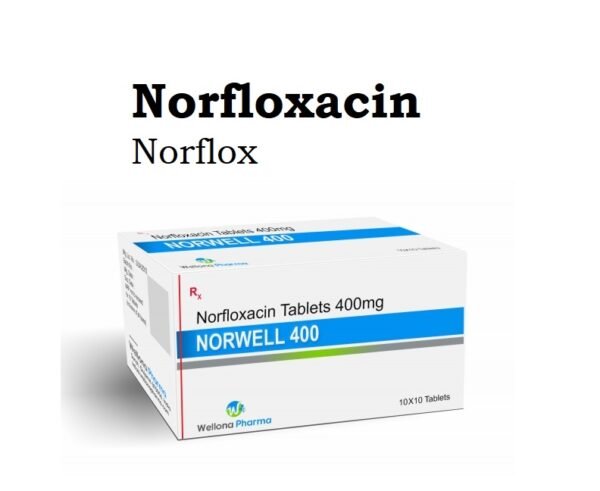
Norfloxacin (Norflox) is an orally available antibiotic that belongs to the class of medicines called fluoroquinolones. It is used to treat urinary tract infections and diarrhea.
Norfloxacin (Norflox) Uses:
- Susceptible gram-negative and gram-positive bacteria cause uncomplicated and complicated urinary tract infections.
- Sexually transmitted disease (eg, uncomplicated urethral & cervical gonorrhea) caused by N. gonorrhoeae.
- Prostatitis due to E. coli
Note:
- As of April 2007, for the treatment of gonococcal disease, the CDC no longer recommends the use of fluoroquinolones.
-
Limitations of use:
- Reserve norfloxacin for use in patients who have no alternative treatment options for acute uncomplicated urinary tract infections, because fluoroquinolones have been associated with disabling and potentially irreversible serious adverse reactions (eg, tendinitis and tendon rupture, peripheral neuropathy, CNS effects).
-
Off Label Use of Norfloxacin in Adults:
- Infectious Diarrhea
- Prevention of spontaneous bacterial peritonitis
Norfloxacin (Norflox) Dose in Adults
Note:
- In US, Noroxin is no longer available.
Norfloxacin (Norflox) Dose in the treatment of Prostatitis:
- P/O:
- 400 mg every 12 hours for 4-6 weeks
Norfloxacin (Norflox) Dose in the treatment of Uncomplicated gonorrhea:
- P/O:
- 800 mg as a single dose.
Note:
- The CDC no longer recommends the use of fluoroquinolones for the treatment of uncomplicated gonococcal disease as of April 2007.
Norfloxacin (Norflox) Dose in the treatment of Urinary tract infections: Oral:
-
Uncomplicated due to E. coli, K. pneumoniae, P. mirabilis:
- 400 mg twice daily for 3 days
-
Uncomplicated UTI due to other organisms:
- 400 mg twice daily for 7-10 days,
-
Complicated UTI:
- 400 mg twice daily for 10-21 days,
Norfloxacin (Norflox) Dose in the treatment of Dysenteric enterocolitis (Shigella) (off-label):
- 400 mg twice daily for three days
Norfloxacin (Norflox) Dose in the prevention of spontaneous bacterial peritonitis (SBP) (off-label):
-
Prior SBP or low protein ascites:
- Long-term prophylaxis:
- 400 mg once daily.
Norfloxacin (Norflox) Dose in the treatment of Variceal hemorrhage:
-
Short-term prophylaxis:
- 400 mg every 12 hours for 7 days.
- During active GI bleed, may also administer norfloxacin 400 mg every 12 hours for 7 days after a course of IV ceftriaxone.
Norfloxacin (Norflox) Dose in the treatment of Traveler's diarrhea (off-label):
- 400 mg twice daily for three days, a single dose may also be effective.
Use in Children:
Not indicated
Pregnancy Risk Factor C
- Some adverse events were observed in animal reproduction studies.
- Norfloxacin is used to distribute amniotic fluid and cord blood.
- According to available data, norfloxacin has not been shown to increase the risk of teratogenic side effects in pregnancy.
Norfloxacin use during breastfeeding:
- Norfloxacin wasn't detected in the milk of nursing mothers who were given an oral 200mg dose.
- It is unknown if concentrations will be detectable at higher doses or after multiple doses.
- A manufacturer recommends that the mother decide whether to stop nursing her infant or discontinue using the drug. This is in consideration of the possibility of serious adverse reactions.
Dose in Kidney Disease:
- CrCl ≤30 mL/min/1.73 m²:
- 400 mg once daily
Dose in Liver Disease:
- In the manufacturer’s labeling, no dosage adjustment provided.
Common Side Effects of Norfloxacin (Norflox):
-
Central Nervous System:
- Dizziness
- Headache
-
Gastrointestinal:
- Nausea
- Abdominal Cramping
-
Hematologic & Oncologic:
- Eosinophilia
-
Hepatic:
- Liver Enzymes Increased
Less Common Side Effects Of Norfloxacin (Norflox):
-
Central Nervous System:
- Drowsiness
-
Dermatologic:
- Hyperhidrosis
- Pruritus
- Rash
-
Endocrine & Metabolic:
- Decreased WBC Count
- Increased Serum Alkaline Phosphatase
-
Gastrointestinal:
- Abdominal Pain
- Anorectal Pain
- Anorexia
- Constipation
- Diarrhea
- Dyspepsia
- Flatulence
- Loose Stools
- Vomiting
- Xerostomia
-
Genitourinary:
- Proteinuria
-
Hematologic And Oncologic:
- Decreased Platelet Count
- Leukopenia
- Thrombocytopenia
- Decreased Hematocrit
- Decreased Hemoglobin
-
Neuromuscular & Skeletal:
- Weakness
- Back Pain
-
Miscellaneous:
- Fever
Contraindications to Norfloxacin (Norflox):
- Hypersensitivity to norfloxacin or quinolones or any other component of the formulation
- Associated with quinolone usage, tendinitis history or tendon rupture.
Warnings and precautions
-
Modified cardiac conduction
- Fluoroquinolones can extend the QTc interval.
- Avoid use in patients with a history of QTc prolongation, uncorrected hypokalemia, hypomagnesemia, or concurrent administration of other medications known to extend the QT interval (including Class Ia and Class III antiarrhythmics, cisapride, erythromycin, antipsychotics, and tricyclic antidepressants).
-
Aneurysm of the aorta and dissection
- Fluoroquinolones are associated with ruptures of the aorta or dissections within 2 months, especially in elderly patients.
- Patients with a history of aneurysm should not use fluoroquinolones, or those at higher risk.
- This includes patients with hypertension, peripheral atherosclerotic diseases, hypertension, and genetic disorders involving blood vessel change (eg, Marfan, Ehlers Danlos syndrome), as well as elderly patients.
- Risk may be increased by prolonged treatment (e.g., >14 days).
-
Regulation of Glucose
- Fluoroquinolones are often associated with the development of severe, sometimes fatal hypoglycemia.
- These events are most common in diabetics, but they have also been reported in those without diabetes.
- It is important to promptly identify and treat hypoglycemia.
- This effect may be caused by a variety of quinolones.
- This was evident most with gatifloxacin, which is no longer being marketed as a systemic formulation.
- The use of fluoroquinolones has been linked to hyperglycemia.
- Disordered glucose regulation should be checked out by a physician.
-
Hypersensitivity reactions
- Severe hypersensitivity reactions have been reported with quinolone therapy.
- These reactions can have a wide spectrum.
- You may experience typical allergic reactions (eg itching, urticaria and rash), or severe idiosyncratic dermatologic symptoms (eg Stevens-Johnson or toxic epidermal Necrolysis), usually following multiple doses.
- You should immediately stop taking any drugs if you experience a skin rash, or any other symptoms.
-
Phototoxicity:
- Avoid too much sun and take precautions to reduce exposure (e.g., loose-fitting clothes, sunscreen).
- Phototoxicity reactions may be moderate to severe.
- If you develop photosensitivity, discontinue using the product.
-
Warning: Serious adverse reactions
- Fluoroquinolones can cause severe and potentially irreversible adverse reactions, such as tendinitis, tendon rupture, peripheral neuropathy, CNS effects, and CNS effects.
- If you experience any of these severe adverse reactions, stop taking norfloxacin immediately and discontinue using fluoroquinolones.
- These reactions have been reported by patients of all ages and without any pre-existing risk factors.
- Initiation can occur in as little as a few hours or even weeks.
-
CNS effects
- Fluoroquinolones are associated with increased CNS risk, including seizures, elevated intracranial pressure (including pseudotumor cebri), and toxic psychosis.
- It can also lead to anxiety, nervousness, panic, anxiety, nightmares and paranoia.
- It may occur after the first dose.
- Fluoroquinolones should be stopped immediately and avoided by patients with these reactions.
- Patients with a CNS disorder or other risk factors, such as a known or suspected CNS disorder or a seizure threshold lower or predisposing factors, should be cautious.
-
Peripheral neuropathy:
- Fluoroquinolones have been linked to an increased risk for peripheral neuropathy.
- It may happen soon after the therapy has been initiated.
- If you experience symptoms of sensorimotor or sensory neuropathy, discontinue use.
- Patients who have had peripheral neuropathy in the past should not be used.
-
Tendinitis/tendon rupture:
- Fluoroquinolones have been linked to tendinitis and tendon rupture at all ages.
- Patients over 60 years old, recipients of solid organ transplants, and patients who are concurrently taking corticosteroids may be at greater risk.
- However, this has also been observed in patients with no risk factors.
- Most often, ruptures of the Achilles tendon have been reported.
- However, there have been reports of tendon injuries at other sites, such as the rotator cuff and biceps.
- Both bilateral inflammation and rupture can occur.
- Patients have reported cases within hours or days of therapy being initiated, and for several months afterwards.
- Strenuous physical activity, kidney failure, and previous tendon disorders could all be risk factors for tendon rupture.
- Do not continue if you feel any tendon pain, swelling or inflammation.
- Patients with tendon disorders, tendinitis, or tendon rupture should not use this product.
-
Superinfection
- Extended use can lead to fungal and bacterial superinfections, such as C. Difficile -associated diarrhea (CDAD), and pseudomembranous collitis.
- CDAD was observed for >2 months after antibiotic treatment.
-
Myasthenia gravis: [US Boxed Warning]:
- Might exacerbate muscle weakness due to myasthenia Gravis.
- Patients with a history of myasthenia gravis should not be given this medication.
- There have been cases of severe exacerbations, including deaths and ventilatory support.
-
Renal impairment
- Careful when you have a renal impairment
- Adjustment is required.
- Increased risk of tendon rupture.
-
Rheumatoid arthritis:
- Patients with rheumatoid arthritis should be cautious.
- Increased risk of tendon rupture.
-
Syphilis:
- Norfloxacin is not effective in treating syphilis and may mask symptoms. All patients should be tested for it at the time they are diagnosed with gonorrhea.
Norfloxacin (United States: not available): Drug Interaction
|
Risk Factor C (Monitor therapy) |
|
|
Aminolevulinic Acid (Topical) |
Photosensitizing Agents may enhance the photosensitizing effect of Aminolevulinic Acid (Topical). |
|
BCG Vaccine (Immunization) |
Antibiotics may diminish the therapeutic effect of BCG Vaccine (Immunization). |
|
Blood Glucose Lowering Agents |
Quinolones may enhance the hypoglycemic effect of Blood Glucose Lowering Agents. Quinolones may diminish the therapeutic effect of Blood Glucose Lowering Agents. Specifically, if an agent is being used to treat diabetes, loss of blood sugar control may occur with quinolone use. |
|
Caffeine and Caffeine Containing Products |
Norfloxacin may increase the serum concentration of Caffeine and Caffeine Containing Products. |
|
Corticosteroids (Systemic) |
May enhance the adverse/toxic effect of Quinolones. Specifically, the risk of tendonitis and tendon rupture may be increased. |
|
CycloSPORINE (Systemic) |
Norfloxacin may decrease the metabolism of CycloSPORINE (Systemic). |
|
Haloperidol |
QT-prolonging Agents (Indeterminate Risk - Avoid) may enhance the QTcprolonging effect of Haloperidol. |
|
Heroin |
Quinolones may enhance the adverse/toxic effect of Heroin. |
|
Lactobacillus and Estriol |
Antibiotics may diminish the therapeutic effect of Lactobacillus and Estriol. |
|
Mycophenolate |
Quinolones may decrease the serum concentration of Mycophenolate. Specifically, quinolones may decrease concentrations of the active metabolite of mycophenolate. |
|
Nonsteroidal Anti-Inflammatory Agents |
May enhance the neuroexcitatory and/or seizurepotentiating effect of Quinolones. Nonsteroidal Anti-Inflammatory Agents may increase the serum concentration of Quinolones. |
|
Porfimer |
Photosensitizing Agents may enhance the photosensitizing effect of Porfimer. |
|
Probenecid |
May decrease the excretion of Quinolones. Specifically, probenecid may decreased the renal excretion of quinolone antibiotics. Probenecid may increase the serum concentration of Quinolones. |
|
QT-prolonging Agents (Highest Risk) |
QT-prolonging Agents (Indeterminate Risk - Avoid) may enhance the QTc-prolonging effect of QT-prolonging Agents (Highest Risk). Management: Monitor for QTc interval prolongation and ventricular arrhythmias when these agents are combined. Patients with additional risk factors for QTc prolongation may be at even higher risk. |
|
Varenicline |
Quinolones may increase the serum concentration of Varenicline. Management: Monitor for increased varenicline adverse effects with concurrent use of levofloxacin or other quinolone antibiotics, particularly in patients with severe renal impairment. International product labeling recommendations vary. Consult appropriate labeling. |
|
Verteporfin |
Photosensitizing Agents may enhance the photosensitizing effect of Verteporfin. |
|
Vitamin K Antagonists (eg, warfarin) |
Quinolones may enhance the anticoagulant effect of Vitamin K Antagonists. |
|
Risk Factor D (Consider therapy modification) |
|
|
Antacids |
May decrease the absorption of Quinolones. Of concern only with oral administration of quinolones. Management: Avoid concurrent administration of quinolones and antacids to minimize the impact of this interaction. Recommendations for optimal dose separation vary by specific quinolone. Exceptions: Sodium Bicarbonate. |
|
Calcium Salts |
May decrease the absorption of Quinolones. Of concern only with oral administration of both agents. Exceptions: Calcium Chloride. |
|
Delamanid |
Quinolones may enhance the QTc-prolonging effect of Delamanid. Management: Avoid concomitant use if possible. If coadministration is unavoidable, frequent monitoring of electrocardiograms (ECGs) throughout the full delamanid treatment period should occur. Exceptions are discussed in separate monographs. |
|
Didanosine |
Quinolones may decrease the serum concentration of Didanosine. Didanosine may decrease the serum concentration of Quinolones. Management: Administer oral quinolones at least 2 hours before or 6 hours after didanosine. Monitor for decreased therapeutic effects of quinolones, particularly if doses cannot be separated as recommended. This does not apply to unbuffered enteric coated didanosine. |
|
Iron Salts |
May decrease the serum concentration of Quinolones. Management: Give oral quinolones at least several hours before (4 h for moxi- and sparfloxacin, 2 h for others) or after (8 h for moxi-, 6 h for cipro/dela-, 4 h for lome-, 3 h for gemi-, and 2 h for levo-, nor-, oflox-, pefloxacin, or nalidixic acid) oral iron salts Exceptions: Ferric Carboxymaltose; Ferric Gluconate; Ferric Hydroxide Polymaltose Complex; Ferric Pyrophosphate Citrate; Ferumoxytol; Iron Dextran Complex; Iron Isomaltoside; Iron Sucrose. |
|
Lanthanum |
May decrease the serum concentration of Quinolones. Management: Administer oral quinolone antibiotics at least one hour before or four hours after lanthanum. |
|
Magnesium Salts |
May decrease the serum concentration of Quinolones. Management: Administer oral quinolones several hours before (4 h for moxi/pe/spar-, 2 h for others) or after (8 h for moxi-, 6 h for cipro/dela-, 4 h for lome/pe-, 3 h for gemi-, and 2 h for levo-, nor-, or ofloxacin or nalidixic acid) oral magnesium salts. |
|
Multivitamins/Minerals (with ADEK, Folate, Iron) |
May decrease the serum concentration of Quinolones. Specifically, polyvalent cations in multivitamin products may decrease the absorption of orally administered quinolone antibiotics. Management: Interactions can be minimized by administering the oral quinolone at least 2 hours before, or 6 hours after, the dose of a multivitamin that contains polyvalent cations (i.e., calcium, iron, magnesium, selenium, zinc). |
|
Multivitamins/Minerals (with AE, No Iron) |
May decrease the serum concentration of Quinolones. Specifically, minerals in the multivitamin/mineral product may impair absorption of quinolone antibiotics. Management: Interactions can be minimized by administering the oral quinolone at least 2 hours before, or 6 hours after, the dose of a multivitamin that contains polyvalent cations (i.e., calcium, iron, magnesium, selenium, zinc). |
|
Quinapril |
May decrease the serum concentration of Quinolones. Management: Separate doses of quinapril and oral quinolones by at least 2 hours in order to reduce the risk of interaction. Monitor for reduced efficacy of the quinolone if these products are used concomitantly. |
|
Sevelamer |
May decrease the absorption of Quinolones. Management: Administer oral quinolones at least 2 hours before or 6 hours after sevelamer. |
|
Sodium Picosulfate |
Antibiotics may diminish the therapeutic effect of Sodium Picosulfate. Management: Consider using an alternative product for bowel cleansing prior to a colonoscopy in patients who have recently used or are concurrently using an antibiotic. |
|
Sucralfate |
May decrease the serum concentration of Quinolones. Management: Administer oral quinolones at least 2 hours before or 6 hours after the sucralfate dose. Greater separation of doses may further lessen the risk for a significant interaction. |
|
Theophylline Derivatives |
Quinolones may decrease the metabolism of Theophylline Derivatives. Ciprofloxacin and enoxacin are of greatest concern. Theophylline/quinolone therapy might augment the seizure-producing potential of each of the individual agents. Exceptions: Dyphylline. |
|
Typhoid Vaccine |
Antibiotics may diminish the therapeutic effect of Typhoid Vaccine. Only the live attenuated Ty21a strain is affected. Management: Vaccination with live attenuated typhoid vaccine (Ty21a) should be avoided in patients being treated with systemic antibacterial agents. Use of this vaccine should be postponed until at least 3 days after cessation of antibacterial agents. |
|
Zinc Salts |
May decrease the serum concentration of Quinolones. Management: Give oral quinolones at least several hours before (4 h for moxi- and sparfloxacin, 2 h for others) or after (8 h for moxi-, 6 h for cipro/dela-, 4 h for lome-, 3 h for gemi-, and 2 h for levo-, nor-, pe- or ofloxacin or nalidixic acid) oral zinc salts. Exceptions: Zinc Chloride. |
|
Risk Factor X (Avoid combination) |
|
|
Aminolevulinic Acid (Systemic) |
Photosensitizing Agents may enhance the photosensitizing effect of Aminolevulinic Acid (Systemic). |
|
BCG (Intravesical) |
Antibiotics may diminish the therapeutic effect of BCG (Intravesical). |
|
Cholera Vaccine |
Antibiotics may diminish the therapeutic effect of Cholera Vaccine. Management: Avoid cholera vaccine in patients receiving systemic antibiotics, and within 14 days following the use of oral or parenteral antibiotics. |
|
Nadifloxacin |
May enhance the adverse/toxic effect of Quinolones. |
|
Nitrofurantoin |
May diminish the therapeutic effect of Norfloxacin. |
|
Strontium Ranelate |
May decrease the serum concentration of Quinolones. Management: In order to minimize any potential impact of strontium ranelate on quinolone antibiotic concentrations, it is recommended that strontium ranelate treatment be interrupted during quinolone therapy. |
Monitoring Parameters:
- If therapy is prolonged, monitor CBC, renal, and hepatic function periodically.
How to administer Norfloxacin (Norflox)?
P/O:
- Hold antacids, sucralfate, or multivitamins/supplements containing iron, zinc, magnesium, or aluminum for at least 2 hours before or after giving norfloxacin.
- Do not administer together.
- On an empty stomach, administer with water (at least 1 hour before or 2 hours after meals, milk, or other dairy products).
Mechanism of action of Norfloxacin (Norflox):
- Norfloxacin acts as a DNA gyrase inhibitor.
- DNA gyrase, an essential bacterial enzyme, is responsible for maintaining the DNA's superhelical structure.
- DNA gyrase is essential for DNA repair and replication, transcription, transposition, and recombination.
- Bactericidal
Absorption:
- P/O:
- Rapid, up to 40%
Protein binding:
- 10%-15%
Metabolism:
- Hepatic
Half-life elimination:
- 3-4 hours.
- Renal impairment (CrCl ≤30 mL/min):
- 6.5 hours.
- Elderly:
- 4 hours
- Time to peak serum concentration:
- 1-2 hours
Excretion:
- Urine (26% to 32% as unchanged drug; 5% to 8% as metabolites).
- Feces (30%)
International Brands of Norfloxacin:
- ALTI-Norfloxacin
- APO-Norfloxacin
- CO Norfloxacin
- PMS-Norfloxacin
- TEVANorfloxacin
- Ambigram
- Anquin
- Ansor
- Apiflox
- Baccidal
- Barazan
- Bexinor
- Biofloxin
- Chibroxin
- Chibroxine
- Chibroxol
- Ectalin
- Epinor
- Euroflox
- Flox
- Floxacin
- Fluseminal
- Fulgram
- Gonorcin
- Gyrablock
- Janacin
- Laxifloxin
- Lexinor
- M-Flox
- Manoflox
- Microxin
- Mitatonin
- Myfloxin
- Naflox
- Negaflox
- Nolicin
- Noracin
- Norax
- Norbactin
- Norbactin Eye Drops
- Norf
- Norflohexal
- Norflox
- Norflox Eye
- Norflox-N
- Norfloxacine
- Norfloxin
- Norfloxin-400
- Norlox
- Normac
- Normax
- Normax Eye Ear Drops
- Noroxin
- Noroxin Oftalmico
- Noroxine
- Norsol
- Nufloxib
- Oprelex
- Oranor
- Orsanac
- Quinox
- Roxin
- Sefnor
- Sofasin
- Uridon
- Uriflox
- Urigen
- Urobacid
- Uroctal
- Uroflox
- Uronor
- Uroxacin
- Uroxin
- UT-in
- Winaflox
- Xacin
- Xasmun
- Zoroxin
Norfloxacin Brand Names in Pakistan:
Norfloxacin Eye Drops 0.3 % W/V |
|
| Bactinor | Remington Pharmaceutical Industries (Pvt) Ltd. |
| Flonox | Innvotek Pharmaceuticals |
Norfloxacin 200 mg Tablets |
|
| Albact | Nabiqasim Industries (Pvt) Ltd. |
Norfloxacin 400 mg Tablets |
|
| Al Flox | Alina Combine Pharmaceuticals (Pvt) Ltd. |
| Al Flox | Alina Combine Pharmaceuticals (Pvt) Ltd. |
| Alenbit | Meezab International |
| Axonor | Zinta Pharmaceuticals Industries |
| Baccidal | Gray`S Pharmaceuticals |
| Bactinor | Remington Pharmaceutical Industries (Pvt) Ltd. |
| Ecoflaxin | Hygeia Pharmaceuticals |
| Floxanor | Geofman Pharmaceuticals |
| Floxanor | Geofman Pharmaceuticals |
| Floxin | Hilton Pharma (Pvt) Limited |
| Fynklocin | Fynk Pharmaceuticals |
| Glosiflox | Siza International (Pvt) Ltd. |
| Helinox | Helicon Pharmaceutek Pakistan (Pvt) Ltd. |
| Jnor | Jawa Pharmaceuticals(Pvt) Ltd. |
| Lonar | Lowitt Pharmaceuticals (Pvt) Ltd |
| Medi-Nor | Medicon Pharmaceuticals Industries (Pvt) Ltd |
| Nefrolon | Shaheen Pharmaceuticals |
| Nefrox | Aries Pharmaceuticals (Pvt) Ltd |
| Newsedal | Neutro Pharma (Pvt) Ltd. |
| Nf-400 | Fozan Pharmaceuticals Industriers (Pvt) Ltd |
| Noacin | Valor Pharmaceuticals |
| Nocin | Miracle Pharmaceuticals(Pvt) Ltd |
| Nolicin | Novartis Pharma (Pak) Ltd |
| Norasia | Ambrosia Pharmaceuticals |
| Norflomed | Mediate Pharmaceuticals (Pvt) Ltd |
| Norflosaf | Saaaf Pharmaceuticals |
| Norish | Epharm Laboratories |
| Norocin | Bosch Pharmaceuticals (Pvt) Ltd. |
| Noroquine | Multinational Buisness Link |
| Noroxin | Obs |
| Noroxo | Alliance Pharmaceuticals (Pvt) Ltd. |
| Nortec | Panacea Pharmaceuticals |
| Noryan | Roryan Pharmaceutical Industries (Pvt) Ltd |
| Noxacin | Medicraft Pharmaceuticals (Pvt) Ltd. |
| Olonaf | Zanctok Pharmaceuticals |
| Qunor | Askari Pharmaceuticals. |
| Renor | Genome Pharmaceuticals (Pvt) Ltd |
| Robinex | Alkemy Pharmaceutical Laboratories (Private) Ltd. |
| Robnex | Alkemy Pharmaceutical Laboratories (Private) Ltd. |
| Silnor | Silver Oak Corporation. |
| Trizolin | Medisure Laboratories Pakistan (Pvt.) Ltd. |
| Unique | Dr. Raza Pharma (Private) Limited |
| Ura | Rasco Pharma |
| Urac | Rock Pharmaceuticals |
| Uracin | Siza International (Pvt) Ltd. |
| Urid | Bloom Pharmaceuticals (Pvt) Ltd. |
| Uriflox | Werrick Pharmaceuticals |
| Uritac | Wilsons Pharmaceuticals |
| Uroquin | Platinum Pharmaceuticals (Pvt.) Ltd. |
| Utibex | Cibex (Private) Limited |
| Webnor | Webros Pharmaceuticals |
| Zoroxin | Hizat Pharmaceutical Industries (Pvt) Ltd. |
.png)


