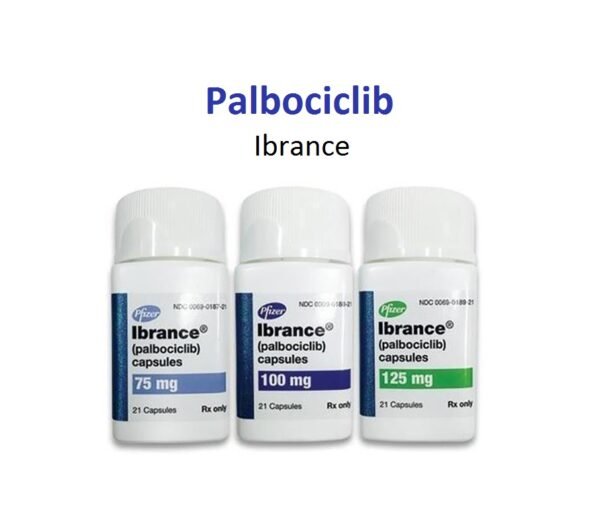
Palbociclib (Ibrance) is a reversible CDK (Cycline dependent Kinase) inhibitor that is specific for CDK 4 and 6. It is indicated for the treatment of Hormone receptor Positive HER receptor-negative advanced breast cancer.
Palbociclib (Ibrance) Uses:
-
Advanced Breast Cancer (initial endocrine-based therapy):
- Treatment of hormone receptor (HR)-positive, human epidermal growth factor receptor 2 (HER2)-negative advanced or metastatic breast cancer (in combination with an aromatase inhibitor) in postmenopausal females or in adult males as initial endocrine-based therapy.
-
Advanced Breast Cancer (with disease progression following endocrine therapy):
- Treatment of HR-positive, HER2-negative advanced or metastatic breast cancer (in combination with fulvestrant) in adult patients with disease progression after endocrine therapy.
Palbociclib (Ibrance) Dose in Adults
Palbociclib (Ibrance) Dose in the treatment of Advanced Breast cancer, initial endocrine-based therapy:
- HER-2 negative:
- Oral: 125 mg once daily for 21 days, followed by 7 days off, repeat every 28 days (in combination with continuous aromatase inhibitor therapy);
- Continue until disease progression or unacceptable toxicity.
- For males receiving palbociclib in combination with an aromatase inhibitor, also consider treatment with an LHRH agonist.
Palbociclib (Ibrance) Dose in the treatment of Advanced Breast cancer (with disease progression following endocrine therapy):
- HER-2 negative:
- Oral: 125 mg once daily for 21 days, followed by 7 days off, repeat every 28 days (in combination with fulvestrant [and an LHRH/GnRH agonist (eg, goserelin) if pre- or perimenopausal female]);
- continue until disease progression or unacceptable toxicity.
-
Missed/vomited doses:
- If a dose is vomited or missed, an additional dose should not be taken on the same day. Resume dosing with the next scheduled daily dose.
-
Dosage adjustment for concomitant therapy:
- Strong CYP3A inhibitors:
- Avoid concomitant use with strong CYP3A inhibitors; however, if coadministration is unavoidable, reduce palbociclib dose to 75 mg once daily.
- If the strong inhibitor is discontinued, increase palbociclib dose (after 3 to 5 inhibitor half-lives have elapsed) to the dose used before starting the strong CYP3A inhibitor.
- CYP3A inducers:
- Avoid concomitant use with strong CYP3A inducers.
- Strong CYP3A inhibitors:
Use in Children:
Not indicated
Palbociclib (Ibrance) Pregnancy Risk Category: N (not assigned)
- Based on data from animal reproduction studies and the mechanism of action, palbociclib could cause fetal harm during pregnancy.
- Before starting treatment for females with reproductive potential, check your pregnancy status.
- Effective contraception should be used by females with reproductive potential and males who have female partners of reproductive capacity during treatment, and at least for 3 weeks after the last dose.
- Animal toxicology studies have shown that sperm preservation can reduce fertility and male reproductive function.
- Males with reproductive potential might want to consider palbociclib therapy before sperm preservation.
Use of palbociclib during breastfeeding
- It is not known if breast milk contains palbociclib.
- The manufacturer does not recommend breastfeeding during treatment or for more than 3 weeks after the last dose.
Palbociclib (Ibrance) Dose in Kidney Disease:
-
CrCl >15 mL/minute:
- No dosage adjustment is necessary.
-
CrCl ≤15 mL/minute:
- No dosage adjustments provided in the manufacturer's labeling (has not been studied).
-
Hemodialysis:
- Has not been studied.
Palbociclib (Ibrance) Dose in Liver disease:
-
Mild or moderate impairment (Child-Pugh classes A and B):
- No dosage adjustment is necessary.
-
Severe impairment (Child-Pugh class C):
- Reduce dose to 75 mg once daily for 21 days, followed by 7 days no dose; repeat every 28 days.
Common Side Effects of Palbociclib (Ibrance):
-
Central Nervous System:
- Fatigue
-
Dermatologic:
- Alopecia
- Skin Rash
- Xeroderma
-
Gastrointestinal:
- Nausea
- Stomatitis
- Diarrhea
- Vomiting
- Decreased Appetite
-
Hematologic & Oncologic:
- Neutropenia
- Anemia
- Leukopenia
- Thrombocytopenia
-
Hepatic:
- Increased Serum Aspartate Aminotransferase
- Increased Serum Alanine Aminotransferase
-
Infection:
- Infection
-
Neuromuscular & Skeletal:
- Asthenia
-
Miscellaneous:
- Fever
Less Common Side Effects Of Palbociclib (Ibrance):
-
Gastrointestinal:
- Dysgeusia
-
Hematologic & Oncologic:
- Febrile Neutropenia
-
Ophthalmic:
- Blurred Vision
- Increased Lacrimation
- Dry Eye Syndrome
-
Respiratory:
- Epistaxis
Contraindications to Palbociclib (Ibrance):
The US manufacturer's labeling does not list any contraindications.
Canadian labeling: Hypersensitivity of palbociclib and any component
Warnings and precautions
-
Suppression of bone marrow
- It was common to observe neutropenia in grades 3 and 4.
- The median time it took to get the first episode of neutropenia (any grade) was 2 week; grade 3 and higher neutropenia episodes lasted 7 days.
- Anemia, leukopenia and lymphocytopenia have all been reported.
- Before starting therapy, monitor blood counts at the beginning and end of each cycle as well as when clinically indicated.
- Grade 3 and 4 neutropenia are treated with treatment interruption, delay, and dose reduction.
-
Toxicity to the GI:
- Clinical studies have shown that patients with stomatitis, nausea, vomiting, diarrhea and dizziness (generally grade 1 and 2), were frequently diagnosed.
-
Infection
- Patients who received palbociclib with an antiestrogen reported more infections (including grades 3 and 4) than those who received only antiestrogen.
-
Hepatic impairment
- Patients with severe hepatic impairment should be advised to take a lower dose.
Palbociclib: Drug Interaction
|
Risk Factor C (Monitor therapy) |
|
|
Aprepitant |
May increase the serum concentration of CYP3A4 Substrates (High risk with Inhibitors). |
|
ARIPiprazole |
CYP3A4 Inhibitors (Weak) may increase the serum concentration of ARIPiprazole. Management: Monitor for increased aripiprazole pharmacologic effects. Aripiprazole dose adjustments may or may not be required based on concomitant therapy and/or indication. Consult full interaction monograph for specific recommendations. |
|
Chloramphenicol (Ophthalmic) |
May enhance the adverse/toxic effect of Myelosuppressive Agents. |
|
Clofazimine |
May increase the serum concentration of CYP3A4 Substrates (High risk with Inhibitors). |
|
CloZAPine |
Myelosuppressive Agents may enhance the adverse/toxic effect of CloZAPine. Specifically, the risk for neutropenia may be increased. |
|
Coccidioides immitis Skin Test |
Immunosuppressants may diminish the diagnostic effect of Coccidioides immitis Skin Test. |
|
CYP3A4 Inhibitors (Moderate) |
May decrease the metabolism of CYP3A4 Substrates (High risk with Inhibitors). |
|
CYP3A4 Substrates (High risk with Inhibitors) |
Palbociclib may increase the serum concentration of CYP3A4 Substrates (High risk with Inhibitors). |
|
Deferasirox |
May decrease the serum concentration of CYP3A4 Substrates (High risk with Inducers). |
|
Denosumab |
May enhance the adverse/toxic effect of Immunosuppressants. Specifically, the risk for serious infections may be increased. |
|
Dofetilide |
CYP3A4 Inhibitors (Weak) may increase the serum concentration of Dofetilide. |
|
Duvelisib |
May increase the serum concentration of CYP3A4 Substrates (High risk with Inhibitors). |
|
Erdafitinib |
May decrease the serum concentration of CYP3A4 Substrates (High risk with Inducers). |
|
Erdafitinib |
May increase the serum concentration of CYP3A4 Substrates (High risk with Inhibitors). |
|
Flibanserin |
CYP3A4 Inhibitors (Weak) may increase the serum concentration of Flibanserin. |
|
Fosaprepitant |
May increase the serum concentration of CYP3A4 Substrates (High risk with Inhibitors). |
|
Fosnetupitant |
May increase the serum concentration of CYP3A4 Substrates (High risk with Inhibitors). |
|
Ivosidenib |
May decrease the serum concentration of CYP3A4 Substrates (High risk with Inducers). |
|
Larotrectinib |
May increase the serum concentration of CYP3A4 Substrates (High risk with Inhibitors). |
|
Mesalamine |
May enhance the myelosuppressive effect of Myelosuppressive Agents. |
|
Netupitant |
May increase the serum concentration of CYP3A4 Substrates (High risk with Inhibitors). |
|
NiMODipine |
CYP3A4 Inhibitors (Weak) may increase the serum concentration of NiMODipine. |
|
Ocrelizumab |
May enhance the immunosuppressive effect of Immunosuppressants. |
|
Pidotimod |
Immunosuppressants may diminish the therapeutic effect of Pidotimod. |
|
Promazine |
May enhance the myelosuppressive effect of Myelosuppressive Agents. |
|
Sarilumab |
May decrease the serum concentration of CYP3A4 Substrates (High risk with Inducers). |
|
Siltuximab |
May decrease the serum concentration of CYP3A4 Substrates (High risk with Inducers). |
|
Simeprevir |
May increase the serum concentration of CYP3A4 Substrates (High risk with Inhibitors). |
|
Siponimod |
Immunosuppressants may enhance the immunosuppressive effect of Siponimod. |
|
Tertomotide |
Immunosuppressants may diminish the therapeutic effect of Tertomotide. |
|
Tocilizumab |
May decrease the serum concentration of CYP3A4 Substrates (High risk with Inducers). |
|
Trastuzumab |
May enhance the neutropenic effect of Immunosuppressants. |
|
Risk Factor D (Consider therapy modification) |
|
|
Baricitinib |
Immunosuppressants may enhance the immunosuppressive effect of Baricitinib. Management: Use of baricitinib in combination with potent immunosuppressants such as azathioprine or cyclosporine is not recommended. Concurrent use with antirheumatic doses of methotrexate or nonbiologic disease modifying antirheumatic drugs (DMARDs) is permitted. |
|
CYP3A4 Inducers (Moderate) |
May decrease the serum concentration of Palbociclib. Management: The US label does not provide specific recommendations concerning use with moderate CYP3A4 inducers, but the Canadian label recommends avoiding use of moderate CYP3A4 inducers. |
|
Dabrafenib |
May decrease the serum concentration of CYP3A4 Substrates (High risk with Inducers). Management: Seek alternatives to the CYP3A4 substrate when possible. If concomitant therapy cannot be avoided, monitor clinical effects of the substrate closely (particularly therapeutic effects). |
|
Deferiprone |
Myelosuppressive Agents may enhance the neutropenic effect of Deferiprone. Management: Avoid the concomitant use of deferiprone and myelosuppressive agents whenever possible. If this combination cannot be avoided, monitor the absolute neutrophil count more closely. |
|
Echinacea |
May diminish the therapeutic effect of Immunosuppressants. |
|
Fingolimod |
Immunosuppressants may enhance the immunosuppressive effect of Fingolimod. Management: Avoid the concomitant use of fingolimod and other immunosuppressants when possible. If combined, monitor patients closely for additive immunosuppressant effects (eg, infections). |
|
Leflunomide |
Immunosuppressants may enhance the adverse/toxic effect of Leflunomide. Specifically, the risk for hematologic toxicity such as pancytopenia, agranulocytosis, and/or thrombocytopenia may be increased. Management: Consider not using a leflunomide loading dose in patients receiving other immunosuppressants. Patients receiving both leflunomide and another immunosuppressant should be monitored for bone marrow suppression at least monthly. |
|
Lomitapide |
CYP3A4 Inhibitors (Weak) may increase the serum concentration of Lomitapide. Management: Patients on lomitapide 5 mg/day may continue that dose. Patients taking lomitapide 10 mg/day or more should decrease the lomitapide dose by half. The lomitapide dose may then be titrated up to a max adult dose of 30 mg/day. |
|
Lorlatinib |
May decrease the serum concentration of CYP3A4 Substrates (High risk with Inducers). Management: Avoid concurrent use of lorlatinib with any CYP3A4 substrates for which a minimal decrease in serum concentrations of the CYP3A4 substrate could lead to therapeutic failure and serious clinical consequences. |
|
Nivolumab |
Immunosuppressants may diminish the therapeutic effect of Nivolumab. |
|
Roflumilast |
May enhance the immunosuppressive effect of Immunosuppressants. |
|
Sipuleucel-T |
Immunosuppressants may diminish the therapeutic effect of Sipuleucel-T. Management: Evaluate patients to see if it is medically appropriate to reduce or discontinue therapy with immunosuppressants prior to initiating sipuleucel-T therapy. |
|
Stiripentol |
May increase the serum concentration of CYP3A4 Substrates (High risk with Inhibitors). Management: Use of stiripentol with CYP3A4 substrates that are considered to have a narrow therapeutic index should be avoided due to the increased risk for adverse effects and toxicity. Any CYP3A4 substrate used with stiripentol requires closer monitoring. |
|
Tofacitinib |
Immunosuppressants may enhance the immunosuppressive effect of Tofacitinib. Management: Concurrent use with antirheumatic doses of methotrexate or nonbiologic disease modifying antirheumatic drugs (DMARDs) is permitted, and this warning seems particularly focused on more potent immunosuppressants. |
|
Vaccines (Inactivated) |
Immunosuppressants may diminish the therapeutic effect of Vaccines (Inactivated). Management: Vaccine efficacy may be reduced. Complete all age-appropriate vaccinations at least 2 weeks prior to starting an immunosuppressant. If vaccinated during immunosuppressant therapy, revaccinate at least 3 months after immunosuppressant discontinuation. |
|
Risk Factor X (Avoid combination) |
|
|
BCG (Intravesical) |
Immunosuppressants may diminish the therapeutic effect of BCG (Intravesical). |
|
BCG (Intravesical) |
Myelosuppressive Agents may diminish the therapeutic effect of BCG (Intravesical). |
|
Cladribine |
May enhance the immunosuppressive effect of Immunosuppressants. |
|
Cladribine |
May enhance the myelosuppressive effect of Myelosuppressive Agents. |
|
Conivaptan |
May increase the serum concentration of CYP3A4 Substrates (High risk with Inhibitors). |
|
CYP3A4 Inducers (Strong) |
May decrease the serum concentration of Palbociclib. |
|
CYP3A4 Inhibitors (Strong) |
May increase the serum concentration of Palbociclib. |
|
Dipyrone |
May enhance the adverse/toxic effect of Myelosuppressive Agents. Specifically, the risk for agranulocytosis and pancytopenia may be increased |
|
Fusidic Acid (Systemic) |
May increase the serum concentration of CYP3A4 Substrates (High risk with Inhibitors). |
|
Grapefruit Juice |
May increase the serum concentration of Palbociclib. |
|
Idelalisib |
May increase the serum concentration of CYP3A4 Substrates (High risk with Inhibitors). |
|
Natalizumab |
Immunosuppressants may enhance the adverse/toxic effect of Natalizumab. Specifically, the risk of concurrent infection may be increased. |
|
Pimecrolimus |
May enhance the adverse/toxic effect of Immunosuppressants. |
|
Pimozide |
CYP3A4 Inhibitors (Weak) may increase the serum concentration of Pimozide. |
|
St John's Wort |
May decrease the serum concentration of Palbociclib. |
|
Tacrolimus (Topical) |
May enhance the adverse/toxic effect of Immunosuppressants. |
|
Vaccines (Live) |
Immunosuppressants may enhance the adverse/toxic effect of Vaccines (Live). Immunosuppressants may diminish the therapeutic effect of Vaccines (Live). Management: Avoid use of live organism vaccines with immunosuppressants; live-attenuated vaccines should not be given for at least 3 months after immunosuppressants. |
Monitoring parameters:
- Before beginning treatment, CBC with differential every 2 weeks, then every 6 cycles and as clinically necessary.
- If neutropenia is not limited to grade 1 or 2, monitor every 3 months [before a cycle begins] and as clinically required for the next cycle.
- Treatment initiation (for females with reproductive potential) requires a pregnancy test.
- Be on the lookout for symptoms and signs of infection.
- You must ensure that you adhere to the rules.
How to administer Palbociclib (Ibrance)?
- Oral: Take with food, approximately at the same time every day.
- Swallow whole, don't crush, chew, or open capsules.
- Do not ingest if capsules are broken, cracked, or not fully intact.
Mechanism of action of Palbociclib (Ibrance):
- Palbociclib, a small-molecule inhibitor of cyclin-dependentkinase (CDK), is reversible and selective for CDK 4/6.
- CDKs aid cell cycle progression at the G1/S stage by inhibiting retinoblastoma hyperphosphorylation (Finn2015).
- Palbociclib prevents breast cancer cell proliferation by stopping progression from the G1 phase to the S cycle phase.
- Combining palbociclib and an antiestrogen results in increased inhibition of Rb-phosphorylation, downstream signaling and tumor growth compared to either agent alone.
Absorption:
- Increased with high-fat, high-calorie food
Protein binding:
- ~85%
Metabolism:
- Extensively hepatic;
- Major pathways: Oxidation and sulfonation, primarily by CYP3A and sulfotransferase (SULT) enzyme SULT2A1;
- Minor pathways: Acylation and glucuronidation
Bioavailability:
- Mean absolute bioavailability: 46%
Half-life elimination:
- 29 ± 5 hours
Time to peak:
- 6 to 12 hours
Excretion:
- Feces (~74%, primarily as metabolites);
- Urine (~18%; primarily as metabolites)
International Brand Names of Palbociclib:
- Ibrance
Palbociclib Brands Names in Pakistan:
No Brands Available in Pakistan.
.png)


