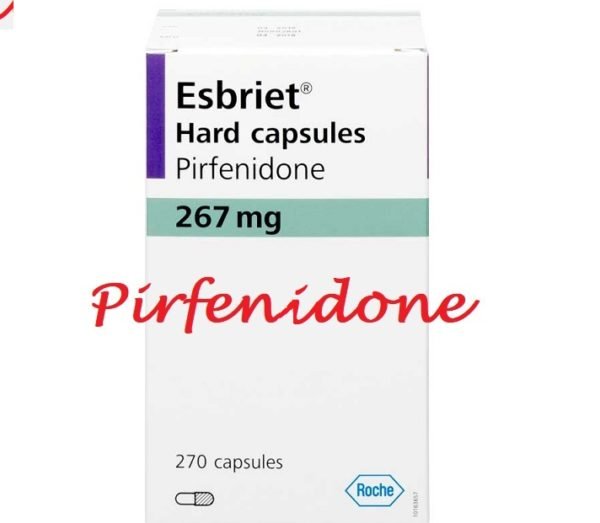
Pirfenidone and nintedanib are the two currently FDA-approved drugs for the treatment of IPF (Idiopathic pulmonary fibrosis). Pirfenidone is an orally available antifibrotic drug that has been evaluated in multiple clinical trials. It is used to inhibit fibrosis in multiple conditions, including lung and liver fibrosis.
Pirfenidone Indications:
Pirfenidone in idiopathic pulmonary fibrosis:
Taniguchi et al studied pirfenidone in more than 200 Japanese patients with idiopathic pulmonary fibrosis. The study concluded that pirfenidone was well tolerated and effective in reducing the decline in the vital capacity and progression-free survival after 52 weeks. In the CAPACITY trial, the investigators found that pirfenidone was effective at weeks 24 and 48 in reducing the decline in vital capacity with the favorable benefit-risk profile. Another study " A Phase 3 Trial of Pirfenidone in Patients with Idiopathic Pulmonary Fibrosis" enrolled more than 500 patients with IPF. The investigators concluded that Pirfenidone reduced disease-free progression compared to placebo. It also resulted in a reduction in the decline of FVC (functional vital capacity) and improvement in the 6-minute walking distance. Pirfenidone is also studied in animals with bleomycin-induced fibrosis and has been found beneficial in these cases.
Pirfenidone and nintedanib in IPF:
In October 2014, two drugs became available in the United States for patients with IPF when the Food and Drug Administration (FDA) approved pirfenidone (Esbriet, InterMune) and nintedanib (Ofev, Boehringer Ingelheim). Pirfenidone is an antiinflammatory and antifibrotic drug while nintedanib is a tyrosine kinase inhibitor. Nintedanib and pirfenidone both have resulted in a reduction in the decline in FVC, however, nintedanib also protects against acute exacerbations and mortality in IPF. Pirfenidone and nintedanib have been given in combination as well. Studies have not resulted in an increase in adverse outcomes. Nintedanib did not affect pirfenidone levels, however, the nintedanib levels were lower when given in combination. When given in combination in patients with IPF, the results are slightly better than when each drug is given as monotherapy.
Pirfenidone in ILD (Interstitial lung disease) associated with systemic sclerosis:
A case series of five patients with scleroderma-associated interstitial lung disease has been published. All patients treated with pirfenidone resulted in an improvement in the vital capacity. Another patient with progressive pulmonary fibrosis associated with scleroderma was given pirfenidone 200 mg three times a day (a lower dose compared to that published in the major clinical trials) showed a reversal in lung function deterioration.
Pirfenidone in diabetic nephropathy:
It has also been studied in patients with diabetic nephropathy. Sharma et al studied the drug in 77 patients and did not find any improvement in the eGFR. However, in the placebo arm, 4 patients initiated hemodialysis, 1 patient initiated hemodialysis in the pirfenidone group receiving 2400 mg/day, and none in the pirfenidone group who received 1200 mg/day. Authors of another study " Pirefenidone is renoprotective in diabetic kidney disease" concluded, "PFD is renoprotective in diabetic kidney disease". The anti-fibrotic effects may in part be secondary to its effects on inhibiting RNA processing. It has also been found to reduce interstitial fibrosis and improves the decline in renal functions in animal models.
Pirfenidone in the liver and cardiac fibrosis:
Studies conducted on animals have resulted in a 50% reduction in liver fibrosis. Similarly, it has been found useful in experimental animal studies that had sclerosing peritonitis. Pirfenidone and spironolactone have been studied in diabetic kidney disease and diabetic cardiomyopathy in animal models. The authors conclude that the two drugs reverse fibrosis and improve the impairment in the functional status associated with the increased collagen deposition in these conditions.
Pirfenidone (Esbriet) dose in Adults
Pirfenidone (Esbriet) dosage in the treatment of Idiopathic pulmonary fibrosis (IPF):
-
Days 1 - 7:
- 267 mg thrice daily (Total dose of 801 mg/day)
-
Days 8 - 14:
- 534 mg thrice daily (total dose of 1,602 mg/day)
-
Day 15 and onwards:
- 801 mg thrice daily (total dose of 2,403 mg/day).
Maximum dose of Pirfenidone: 2,403 mg/day.
-
Reinitiation of the treatment after drug interruption:
- If treatment has been interrupted for less than 2 weeks, reinitiate therapy at the same dose.
- The dose should be titrated gradually to the recommended dose starting from the lowest dose if treatment interruption has been for more than 14 days.
-
Pirfenidone dose adjustment for concomitant therapy:
-
Strong CYP1A2 inhibitors like fluvoxamine:
- Reduce the dose to 267 mg thrice daily (total dose: 801 mg/day).
-
Moderate CYP1A2 inhibitors like ciprofloxacin:
- Reduce the dose to 534 mg thrice daily (total dose: 1,602 mg/day).
-
Pirfenidone 200 mg:
A lower dose i.e. 200 mg three times a day has been found useful in interstitial lung disease associated with scleroderma.
Pirfenidone (Esbriet) dose in Childrens
It is not recommended for use in children.
Pregnancy Risk Category C
- Studies on animal reproduction have been linked to adverse fetal outcomes.
Use during breastfeeding:
- It is unknown if the drug will be excreted into breastmilk.
- Manufacturer suggests weighing the benefits for the breastfeeding mother against the risks for the child.
Pirfenidone dosage in kidney disease:
-
Mild to severe impairment:
- The manufacturer has not recommended any adjustment in the dose, however, use the drug with caution.
- Adjustment in the dose may be required.
-
ESRD requiring dialysis:
- Avoid using it in patients with kidney disease.
- It has not been studied in patients with ESRD.
Pirfenidone dose in liver disease:
-
Liver disease before treatment initiation:
-
Mild to moderate impairment (Child-Pugh class A and B):
- The manufacturer has not recommended any dose adjustment in patients with mild to moderate liver disease.
- It should be used with
- There are no dosage recommendations advised by the manufacturer, however, dose reduction may be required.
-
Severe impairment (Child-Pugh class C):
- It has not been studied in severe liver disease and is not recommended.
-
-
Hepatotoxicity during treatment:
-
ALT/AST greater than 3 to less than 5 times the ULN (without hyperbilirubinemia):
- The current dose may be continued while simultaneously investigating for other causes and confounding medications.
- If appropriate, reduce the dose or withhold the treatment for some time.
- Once the liver functions improve, reinitiate the treatment and titrate the dose.
- Monitor liver functions closely.
-
ALT/AST greater than 3 to less than 5 times the ULN with hyperbilirubinemia or symptoms:
- Immediately discontinue treatment and do not reinitiate therapy.
-
ALT/AST greater than 5 times the ULN (regardless of serum bilirubin concentrations):
- Promptly discontinue the treatment and do not reinitiate.
-
Side Effects of Pirfenidone (Common side effects):
-
Central Nervous System:
- Fatigue
- Headache
- Dizziness
-
Dermatologic:
- Skin Rash
- Skin Photosensitivity
-
Gastrointestinal:
- Nausea
- Diarrhea
- Abdominal Pain
- Dyspepsia
- Anorexia
- Vomiting
- Gastroesophageal Reflux Disease
-
Respiratory:
- Upper Respiratory Tract Infection
- Sinusitis
Pirfenidone Side Effects (Less Common):
-
Central Nervous System:
- Insomnia
- Noncardiac Chest Pain
- Drowsiness
-
Dermatologic:
- Pruritus
- Macular Eruption
- Sunburn
- Erythema
-
Endocrine & Metabolic:
- Weight Loss
- Increased Gamma-Glutamyl Transferase
- Hot Flash
-
Gastrointestinal:
- Abdominal Distension
- Decreased Appetite
- Abdominal Distress
- Dysgeusia
- Flatulence
-
Hepatic:
- Increased Serum ALT
- Increased Serum Transaminases
-
Neuromuscular & Skeletal:
- Arthralgia
- Weakness
-
Respiratory:
- Dyspnea
Pirfenidone Side Effects (Uncommon):
-
Central Nervous System:
- Lethargy
- Malaise
- Paresthesia
-
Cardiovascular:
- Angina Pectoris
-
Dermatologic:
- Desquamation
- Erythematous Rash
- Hyperhidrosis
- Maculopapular Rash
- Urticaria
- Xeroderma
-
Endocrine & Metabolic:
- Dyslipidemia
- Fluid Retention
- Gout
- Hyperglycemia
- Hyperlipidemia
- Hypertriglyceridemia
- Hypoglycemia
- Hypokalemia
- Hyponatremia
- Increased Lactate Dehydrogenase
- Vitamin D Deficiency
-
Gastrointestinal:
- Frequent Bowel Movements
- Gastritis
- Increased Appetite
-
Genitourinary:
- Urinary Tract Infection
- Vaginal Infection
-
Hepatic:
- Abnormal Hepatic Function Tests
-
Infection:
- Influenza
-
Neuromuscular & Skeletal:
- Increased Creatine Phosphokinase
- Myalgia
- Tremor
-
Respiratory:
- Cough
- Throat Irritation
-
Miscellaneous:
- Fever
Contraindication to Pirfenidone Include:
- Allergy reactions to any component of the drug or the drug itself
- Angioedema following the use of the drug.
- End-stage liver disease and severe hepatic impairment
- End-stage renal disease and severe renal impairment.
- Fluvoxamine can be used in conjunction with fluvoxamine.
Warnings and precautions
-
Neurological effects
- Increased risk of neurological side effects can be seen with the drug.
- It can cause dizziness, fatigue, or impair mental alertness.
- Patients who are required to be alert for driving or other tasks should be advised of the dangers.
- In some cases, it may be possible to avoid neurological effects by taking the drug with food.
- Some patients may need to reduce or stop their therapy.
-
GI effects
- Side effects of gastro-intestinal tract disease are very common within three months after the treatment was recommenced.
- These include nausea, vomiting and diarrhea, as well as gastroesophageal disease.
- Patients with persistent gastrointestinal upset might need to be given a lower dose or interrupted treatment.
-
Hepatic effects
- It has been reported that drug-induced liver injury and fatal hepatic dysfunction have been caused by its use.
- Before starting therapy, it is important to measure liver function. The LFTs should be performed monthly for the first six month, and then every other month as needed.
- Usually, liver functions are improved by reducing, modifying, or stopping medication.
-
Photosensitivity
- Recommend to the patient that they use sunscreens (SPF 50 or higher), not use photosensitive agents in conjunction with them, limit sun exposure, use sun lamps as little as possible, and wear protective clothing.
- Photosensitivity and photosensitive drug eruptions can occur during the first six-months of therapy.
- In mild reactions, reduce the dose and stop therapy for severe photosensitive reactions.
- Once the patient is fully recovered, treatment may be re-initiated and the dose adjusted.
-
Weight loss:
-
- Be sure to monitor your weight as you may experience weight loss or anorexia.
-
-
Hepatic impairment
-
- It should not be used if you have severe hepatic impairment.
- Systemic exposure to the drug can increase by 60% in mild to moderate impairment. In mild to moderate hepatic dysfunction, it should be avoided.
-
-
Renal impairment
- Patients with end-stage renal disease that requires dialysis should be avoided
- Patients with mild or moderate renal dysfunction should be cautious and adjust the dosage according to the CrCl.
Pirfenidone: Drug Interaction
Note: Drug Interaction Categories:
- Risk Factor C: Monitor When Using Combination
- Risk Factor D: Consider Treatment Modification
- Risk Factor X: Avoid Concomitant Use
Risk Factor C (Monitor therapy) |
|
| Abiraterone Acetate | May increase the serum concentration of CYP1A2 Substrates (High risk with Inhibitors). |
| Aminolevulinic Acid (Topical) | Photosensitizing Agents may enhance the photosensitizing effect of Aminolevulinic Acid (Topical). |
| Broccoli | May decrease the serum concentration of CYP1A2 Substrates (High risk with Inducers). |
| Cannabis | May decrease the serum concentration of CYP1A2 Substrates (High risk with Inducers). |
| CYP1A2 Inducers (Moderate) | May decrease the serum concentration of Pirfenidone. |
| Cyproterone | May decrease the serum concentration of CYP1A2 Substrates (High risk with Inducers). |
| Grapefruit Juice | May increase the serum concentration of Pirfenidone. Management: Consider advising patients to limit or avoid grapefruit juice consumption during treatment with pirfenidone. Canadian product labeling states that grapefruit juice should be avoided during pirfenidone treatment. |
| Obeticholic Acid | May increase the serum concentration of CYP1A2 Substrates (High risk with Inhibitors). |
| Peginterferon Alfa-2b | May increase the serum concentration of CYP1A2 Substrates (High risk with Inhibitors). |
| Porfimer | Photosensitizing Agents may enhance the photosensitizing effect of Porfimer. |
| Teriflunomide | May decrease the serum concentration of CYP1A2 Substrates (High risk with Inducers). |
| Verteporfin | Photosensitizing Agents may enhance the photosensitizing effect of Verteporfin. |
Risk Factor D (Consider therapy modification) |
|
| Ciprofloxacin (Systemic) | May increase the serum concentration of Pirfenidone. Management: With ciprofloxacin doses of 1,500 mg/day, the pirfenidone dose should be reduced to 1,602 mg daily (ie, 534 mg three times a day). With lower daily doses of ciprofloxacin, use pirfenidone with caution. |
| CYP1A2 Inhibitors (Moderate) | May increase the serum concentration of Pirfenidone. Management: Use any such combination with caution and close monitoring for pirfenidone toxicity. Avoid the use of pirfenidone with moderate CYP1A2 inhibitors whenever CYP2C9, 2C19, 2C6, or 2E1 is also inhibited (either by the CYP1A2 inhibitor or by a third drug). |
| CYP1A2 Inhibitors (Strong) | May increase the serum concentration of Pirfenidone. Management: See full monograph for specific recommendations. Canadian product labeling specifically lists the use of pirfenidone with fluvoxamine as contraindicated. |
| Vemurafenib | May increase the serum concentration of CYP1A2 Substrates (High risk with Inhibitors). Management: Consider alternatives to such combinations whenever possible, particularly if the CYP1A2 substrate has a relatively narrow therapeutic index. Drugs listed as exceptions to this monograph are discussed in separate drug interaction monographs. |
Risk Factor X (Avoid combination) |
|
| Aminolevulinic Acid (Systemic) | Photosensitizing Agents may enhance the photosensitizing effect of Aminolevulinic Acid (Systemic). |
| Tobacco (Smoked) | May decrease the serum concentration of Pirfenidone. |
Monitor:
- Liver function
- Before initiating the treatment
- Every month during the treatment for six months and as clinically indicated.
- Features of photosensitivity
- Gastrointestinal side effects like diarrhea, nausea, and vomiting
- Weight loss.
How to administer Pirfenidone (Esbriet)?
- It is administered with meals orally daily.
Pirfenidone Mechanism of action:
Esbriet (Pirfenidone) is believed to have anti-fibrotic properties by inhibiting the growth of fibroblasts and reducing the deposition collagen and extracellular matrix as a response to growth factors like platelet-derived growth hormone and TGF-B (transforming Growth Factor-beta). It reduces fibroblast proliferation and TFG-b-stimulated reactions. It also has anti-inflammatory properties by decreasing the amount of anti-inflammatory cell accumulation.
58% of the drug's protein is bound to albumin, primarily. It is metabolized primarily via the liver enzymes CYP1A2 and to a lesser extent via CYP2C9, 2C19, 2D6, and 2E1.
Half-life elimination of the drug is about 3 hours and the time to reach peak plasma concentration is 0.5 hours in the fasting state and 3 hours when it is taken with a meal. It is excreted primarily in the urine (primarily as the inactive metabolite).
Pirfenidone brand names (International):
- Esbriet
- Fibridoner
- Kitoscell
- Kitoscell LP
- Pirespa
- Pirfenex
- Pirfetab
Pirfenidone availability in Pakistan:
It is currently not registered in Pakistan but available in the markets by the brand name of pirfenex 400 mg.
.png)


