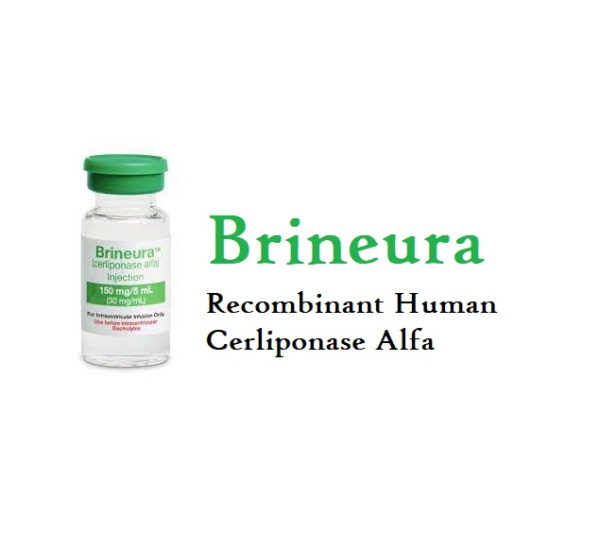
Recombinant Human Cerliponase Alfa (Brineura) is a recombinant human TPP1 (tripeptidyl peptidase 1 indicated in children with a rare neurodegenerative condition called infantile neuronal ceroid lipofuscinosis type 2 caused by the deficiency of TPP1 enzyme.
Recombinant Human Cerliponase Alfa (Brineura) Uses:
-
Neuronal ceroid lipofuscinosis type 2:
- The loss of ambulation is delayed in symptomatic pediatric patients ≥3 years of age with late infantile neuronal ceroid lipofuscinosis type 2 (CLN2)
Recombinant Human Cerliponase Alfa (Brineura) Dose in Adults
Not recommended.
Recombinant Human Cerliponase Alfa (Brineura) Dose in Childrens
Note: Pretreatment should be done with antihistamines +/- antipyretics or corticosteroids 30minutes or 1-hour before the start of infusion.
Recombinant Human Cerliponase Alfa (Brineura) Dose in the treatment of Neuronal ceroid lipofuscinosis type 2:
-
Children ≥3 years and Adolescents:
- Intraventricular: 300 mg (10 mL) once on alternate week infused using implanted reservoir and infusion device-specific for cerliponase alfa; the therapy should be started (first dose) 5 to 7 days after device implantation.
- 2 mL intraventricular electrolytes should be given after cerliponase alfa infusion. This is included in the administration kit.
Pregnancy Risk Category: X
- Cerliponase alfa has not been used in animal reproduction studies.
Use during breastfeeding:
- It is unknown if breast milk contains cerliponase Alfa.
- According to the manufacturer, breastfeeding should be considered during therapy.
- This includes the risks of infant exposure and the benefits to the infant from breastfeeding.
Dose in Kidney Disease:
- Children ≥3 years and Adolescents:
- No dosage adjustments provided in the manufacturer's labeling.
Dose in Liver disease:
- Children ≥3 years and Adolescents:
- No dosage adjustments provided in the manufacturer's labeling.
Common Side Effects of Recombinant Human Cerliponase Alfa (Brineura):
-
Cardiovascular:
- ECG Abnormality
-
Central Nervous System:
- Abnormal Proteins In Cerebrospinal Fluid
- Seizure
- Abnormal Cerebrospinal Fluid
- Headache
- Irritability
-
Gastrointestinal:
- Vomiting
-
Hematologic & Oncologic:
- Hematoma
-
Hypersensitivity:
- Hypersensitivity Reaction
-
Immunologic:
- Antibody Development
-
Miscellaneous:
- Fever
Less Common Side Effects of Recombinant Human Cerliponase Alfa (Brineura):
-
Cardiovascular:
- Bradycardia
- Hypotension
-
Central Nervous System:
- Jitteriness
-
Local:
- Catheter Infection
Contraindications to Recombinant Human Cerliponase Alfa (Brineura):
- Acute, unresolved localized infection at or near the device insertion site (eg cellulitis, abscess).
- Meningitis, CNS infection suspected or confirmed (eg, meningitis or cloudy CSF)
- Device-related acute intraventricular complications (eg leakage, extravasation fluid, device failure)
- Shunts for the ventriculoperitoneal system
Canadian labeling: Additional contraindications not in US labeling
- Severe hypersensitivity to cerliponase and any component of the formulation
Warnings and precautions
-
Cardiovascular adverse reactions
- After cerliponase-alfa infusion, hypotension can occur for up to 8 hours. You should monitor your vital signs.
- If a patient has had a history of conduction disorder, bradycardia or structural heart disease, you should be cautious and closely monitor EKG during infusion.
-
Complications relating to devices:
- Device-related complications can include device failure and leakage, extravasation CSF fluid and bulging of scalp near intraventricular access devices.
- You should monitor the device for any signs of leakage, or failure.
- Cerliponase Alfa should be stopped and referred to the labeling of the manufacturer of the device in case of any device-related complications.
- Long-term intraventricular access device use can cause material degradation.
- Replace the device before 4 years (approximately, 105 perforations) of single-puncture administrations.
-
Device-related infections
- Device-related infections can be caused by Cerliponase Alfa, which can lead to bacterial meningitis or other infections that need treatment with antibiotics.
- Patients were able to resume their treatment after receiving antibiotics, and the removal and replacement of the intraventricular accessibility device.
- A CSF sample should always be taken before each infusion, and when indicated by a physician.
- Patients with CLN2 disease may not experience symptoms or signs of infection.
- You should monitor the site of device insertion for signs and symptoms.
- It is not recommended to use the device if there are signs of infection, such as tenderness, erythema, and discharge, near the insertion site.
-
Hypersensitivity reactions
- Hypersensitivity reactions can occur, such as pyrexia and vomiting. These reactions can occur up to one day after the completion of cerliponase-alfa infusion.
- Pretreatment should take place with antihistamines, with or without antipyretics and corticosteroids, 30 minutes to 1 hour before infusion.
Monitoring parameters:
- Vital signs should be monitored (blood pressure, heart rate)before infusion, periodically during infusion, and post-infusion
- Skin integrity
- Signs of infection,
- Device leakage or failure (before infusion)
- Routine CSF samples before each infusion and when clinically indicated (to detect subclinical device infections)
- 12-lead EKG every 6 months or during infusion with cardiac abnormalities.
How to administer Recombinant Human Cerliponase Alfa (Brineura)?
Intraventricular:
- For intraventricular administration only; should be administered to the intraventricular space by infusion pump via a surgically implanted reservoir and catheter.
- The scalp should be inspected before each infusion for leakage or failure of intraventricular access device or signs of infection.
- A 0.2-micron inline filter (provided in the kit) should be used and infusion should be done at 2.5 mL per hour (4 hours total).
- After dose completion, intraventricular electrolytes (included in the administration kit) should be given at 2.5 mL/hour.
Mechanism of action of Recombinant Human Cerliponase Alfa (Brineura):
- Cerliponase Alfa is a proenzyme which needs activation.
- Once activated, it cleaves tripeptides at the N-terminus proteins.
- This leads to the destruction of lysosomal stored materials that may otherwise accumulate in patients suffering from late infantile neuronal cereroid lipofuscinosis type 2. (CLN2), leading to a gradual decline in motor function.
- You can use intraventricular electrolytes (included with the administration kit), to flush the port needle, infusion line and intraventricular access devices in order to administer cerliponase Alfa fully and to maintain the patency of your intraventricular access system.
Distribution
- Children aged 3 years and older: V: CSF: Median range: 245 to 186 mL; repeat doses decrease the volume
Metabolism:
- Degraded by peptide hydrolysis
Half-life elimination
- CSF: 6.2 to 7.7 Hours
Time to reach peak
- Children >=3 Years:
- CSF: Median range 4.3-4.5 hours after infusion.
- Plasma: Median range 12-12.3 hours after infusion.
International Brand Names of Recombinant human cerliponase alfa:
- Brineura
Recombinant human cerliponase alfa Brand Names in Pakistan:
No Brands Available in Pakistan.
.png)


