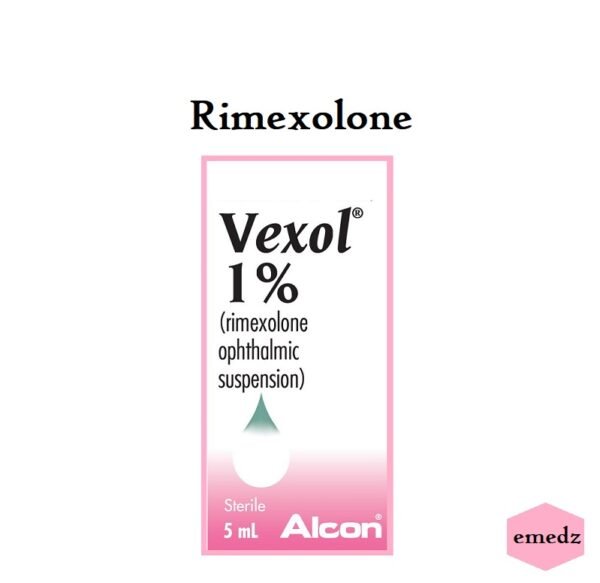
Rimexel (Rimexolone) is used as a topical ophthalmic corticosteroid that inhibits inflammation associated with uveitis and ocular surgery.
Rimexolone Uses:
-
Ophthalmic inflammatory conditions:
- It is indicated for the treatment of postoperative inflammation following ocular surgery.
- It is also used as an adjunctive treatment in patients with anterior uveitis.
Rimexel (Rimexolone) Dose in Adults
Note: Vexol has been discontinued in the United States for more than 1 year.
Rimexel (Rimexolone) Dose in the treatment of Anterior uveitis:
- Ophthalmic:
- Instill 1 to 2 drops in the conjunctival sac of the affected eye hourly during the waking hours for the first week, then one drop every two hours during waking hours of the second week, and then taper until uveitis is resolved.
Rimexel (Rimexolone) Dose in the treatment of Postoperative ocular inflammation:
- Ophthalmic:
- Instill 1 to 2 drops in the conjunctival sac of the affected eye every six hours (4 times a day) beginning 24 hours after ocular surgery. The treatment should be continued through the first 2 weeks of the postoperative period.
Use in Children:
Not indicated.
Pregnancy Risk Factor C
- Subcutaneous injections can cause adverse pregnancy outcomes in animals.
- After ophthalmic usage, the drug enters the systemic circulation in very small amounts (80-470 pg/mL).
Use during breastfeeding:
- It is unknown if the drug will be excreted into breastmilk.
- Due to the potential for serious side effects, the manufacturer suggests that you stop breastfeeding.
Dose in Kidney Disease:
There are no dosage adjustments provided in the manufacturer’s labeling.
Dose in Liver disease:
There are no dosage adjustments provided in the manufacturer’s labeling.
Common Side Effects of Rimexel (Rimexolone):
-
Central Nervous System:
- Foreign Body Sensation Of Eye
-
Ophthalmic:
- Blurred Vision
- Eye Discharge
- Eye Discomfort
- Eye Pain
- Eye Pruritus
- Increased Intraocular Pressure
- Ocular Hyperemia
Less Common Side Effects of Rimexel (Rimexolone):
-
Cardiovascular:
- Hypotension
-
Central Nervous System:
- Headache
-
Gastrointestinal:
- Dysgeusia
-
Respiratory:
- Pharyngitis
- Rhinitis
Side effects with unknown frequency:
-
Infection:
- Secondary Ocular Infection
-
Ophthalmic:
- Cataract
- Eye Disease (Defects In Visual Activity)
- Eye Perforation
- Optic Nerve Damage
Contraindication to Rimexel (Rimexolone):
- Allergy to rimexolone and any component of the formulation
- Untreated acute purulent ocular infection.
- Viral diseases of eyes include the cornea and conjunctiva like epithelial and dendritic herpes, vaccinia and varicella infections.
- Mycobacterial and fungal infections of the eyes.
Warnings and precautions
-
Cataracts
- Corticosteroid prolonged use has been linked to the development of posterior subcapsular lens formation.
- Corticosteroids may delay healing and increase the likelihood of bleb formation after cataract surgery.
-
Corneal thinning
- Corticosteroid treatment can cause scleral and corneal thinning, especially in patients who have been receiving prolonged treatment. Ocular perforation may occur.
-
Glaucoma:
- Patients receiving prolonged corticosteroid treatment may experience an increase in intraocular pressure or glaucoma.
- This can cause a decrease in visual acuity, and damage to the optic nerve.
- Patients suffering from glaucoma and intraocular hypertension need to be closely monitored, especially if they have been receiving corticosteroid treatment for more than 10 days.
-
Immunosuppression:
- Long-term use of ocular corticosteroids can lead to superinfections, including serious fungal infections.
- It can mask or exacerbate underlying purulent bacteria infections.
- For the prevention of fungal infections, it is important to examine patients who suffer from persistent ocular inflammation or ulcers even if they are taking corticosteroids.
- To prevent permanent damage to the eyes, it is important that these patients receive prompt treatment.
Monitoring parameters:
- Monitor intraocular pressure and periodic examination of the lens when the drug is used for a duration exceeding 10 days.
How to administer Rimexel (Rimexolone)?
- It is intended for ophthalmic use only.
- The tip of the dropper should not be touched to the eyelids or the surrounding surface.
- he solution should be shaken well before using it. In surgical patients, the same bottle should not be used for different eyes.
Mechanism of action of Rimexel (Rimexolone):
It is a corticosteroid which inhibits the suppression inflammatory response by inhibiting the leukocyte migration at the site of inflammation, inhibiting Capillary Dilation that could result in scar formation, and edema.
Absorption:
- It is absorbed by the aqueous humor.
Metabolism:
- If it is absorbed into the body's circulation, it will be metabolized by the liver.
Half-life elimination:
- 1 to 2 hours
Excretion:
- About 80% of the absorbed drug is excreted in urine and feces.
International Brand Names of Rimexolone:
- Vexol
- Baxol
- Rimelon
- Rimexel
- Rixolon
- Vexolon
Rimexolone Brand Names in Pakistan:
No Brands Available in Pakistan.
.png)


