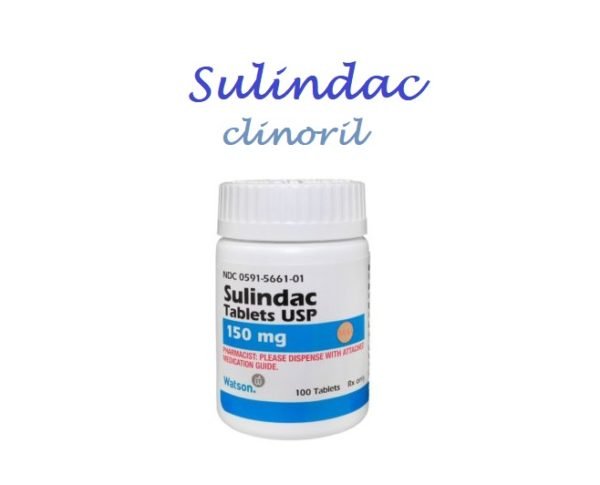
Sulindac is a reversible inhibitor of cyclooxygenase-1 and 2 (COX-1 and 2) enzymes which results in decreased formation of precursors of prostaglandins so it has antipyretic, analgesic, and anti-inflammatory properties.
It is used to treat the following conditions:
-
Acute gouty arthritis:
-
It is used to relieve the symptoms and signs of acute gouty arthritis
-
-
Ankylosing spondylitis:
-
It is used to relieve the symptoms and signs of ankylosing spondylitis.
-
-
Rheumatoid Arthritis and osteoarthritis:
-
It is used to relieve the symptoms and signs of Rheumatoid arthritis and Osteoarthritis.
-
-
Tendinitis or Bursitis of the shoulder:
-
It is used to relieve the symptoms and signs of the painful acute shoulder (supraspinatus tendinitis or acute subacromial bursitis)
-
Sulindac Dose in Adults
The dose required for Acute gouty Arthritis
- The peroral dose of 200 mg twice daily for 7 days (maximum daily dose of 400 mg/day)
The dose required for Ankylosing spondylitis:
- The peroral dose of 150 mg twice daily (maximum daily dose: 400 mg/day)
The dose required for Tendinitis/Bursitis of the shoulder:
- The peroral dose of 200 mg twice daily for 7 to 14 days (maximum daily dose: 400 mg/day)
The dose required for rheumatoid arthritis/ arthritis:
- The peroral dose of 150 mg twice daily (maximum daily dose: 400 mg/day)
Sulindac Dose in Childrens
Dose required for the treatment of Juvenile idiopathic arthritis (JIA):
-
Children and Adults:
- Per oral dose of 2 to 6 mg/kg/day in 2 divided doses (maximum daily dose is 400 mg/day).
Pregnancy Risk factor C
- Sulindac crosses the placental barrier
- While some studies suggest that in utero NSAIDs are linked to birth defects, data is inconsistent.
- Prenatal constriction and necrotizing enterocolitis have been observed in the neonate or fetus following in utero NSAID use.
- Postnatal non-closures of the ductus Arteriosus can also occur, which could be resistant to medical treatment.
- They may cause premature closure of the ductus Arteriosus. Therefore, it is important to avoid using NSAIDs during pregnancy.
- However, NSAIDs may be used in mild rheumatic flares in pregnant women. This should be avoided during early and later pregnancy.
- The chronic use of NSAIDs is linked to infertility among women of reproductive age.
- However, the medication can be stopped at any time to restore fertility.
- The use of NSAIDs near conception can increase the risk of miscarriage.
Sulindac use during breastfeeding:
- It is unknown whether breast milk contains sulindac.
- NSAIDS are generally available to postpartum women who want to breastfeed. However, it is better to use other agents than sulindac.
- Avoid use in infants who are premature, breastfeeding, or have platelets dysfunction.
- Breastfeeding infants could experience serious adverse reactions. According to the manufacturer, discontinuing breastfeeding is recommended or stopping the drug.
Renal Dose:
No renal dose adjustments provided in manufacturers label therefore use with caution. Use must be avoided in patients of advanced renal disease. Renal functions must be closely monitored if therapy is initiated.
Hemodialysis: Not removed.
-
Recommendations of NSAIDs in KDIGO 2012 guidelines:
-
If eGFR is 30 to less than 60 mL/minute/1.73 m2:
- Discontinue temporarily in patients with intercurrent diseases increasing the risk of acute kidney injury.
-
If eGFR is <30 mL/minute/1.73 m2:
- Use should be avoided.
-
The dose of sulindac in Liver Disease:
The manufacturer's label provides no dose adjustments. However extensive hepatic metabolism is present so use with caution and close monitoring.
Less Common Side Effects of Sulindac Include:
-
Cardiovascular:
- Edema
-
Central Nervous System:
- Dizziness
- Headache
- Nervousness
-
Dermatologic:
- Skin Rash
- Pruritus
-
Gastrointestinal:
- Gastrointestinal Pain
- Constipation
- Diarrhea
- Dyspepsia
- Nausea
- Abdominal Cramps
- Anorexia
- Flatulence
- Vomiting
-
Otic:
- Tinnitus
Contraindication to Sulindac Include:
- Hypersensitivity to any ingredient of a formulation
- Coronary artery bypass surgery graft surgery
- Asthma
- urticaria and allergic reactions to aspirin or other NSAIDs
Warnings and precautions
-
Anaphylactoid reactions
- Anaphylactoid reactions may occur even in patients without prior exposure; Those with "aspirin triad" (aspirin intolerance, bronchial asthma, rhinitis) are at increased risk.
- Patients with asthma, bronchospasm or rhinitis should not be given aspirin or NSAIDs.
-
Cardiovascular events: [US Boxed Warn]
- NSAIDs can increase the risk of stroke and myocardial damage.
- The duration of use may affect the risk, or it may occur earlier.
- The relative risk of developing cardiovascular disease is similar for those without or with cardiovascular disease, as well as those who have risk factors for it.
- Patients with known cardiovascular disease and risk factors, as well as those who received higher doses of treatment had a higher absolute rate of serious cardiovascular events.
- Hypertension can be exacerbated or new-onset hypertension.
- Possible side effects include impaired response to ACE inhibitors, thiazide diuretics or loop diuretics.
- Hypertensive patients should be cautious
- Fluid retention and sodium can occur, so it is important to be cautious with edematous patients.
- Avoid heart failure
- Patients with MI recent should not be treated unless the benefits are greater than the risks of developing cardiovascular thrombotic complications.
- To reduce cardiovascular events, the lowest effective dose should only be used for a short time. Patients at high risk should consider alternate treatments.
-
CNS effects
- You may experience blurred vision, dizziness, drowsiness, or other neurologic effects.
- Patients should be aware that tasks that require mental alertness (eg driving or machine operating) are not recommended for them.
- If blurred or reduced vision occurs, stop using the product and have an ophthalmologic exam performed.
- Patients undergoing long-term therapy should have their vision evaluated periodically.
-
GI effects: [US Boxed Warning]
- An increased risk of severe GI inflammation, bleeding, ulceration and perforation can lead to serious GI problems that may prove fatal.
- Patients who have had a history or GI bleeding, and those over 65 are more at risk.
- These events can occur without warning and at any time during therapy.
- It should be avoided in patients suffering from active GI bleeding.
- Patients with a history or tendency to have acute lower GI bleeding, especially if it is due to angioectasias or diverticulosis, should be advised not use non-aspirin NSAIDs. (Strate 2016).
- Concurrent therapy that increases the risk for GI bleeding, such as anticoagulants and/or steroids, selective serotonin reuptake inhibits, and aspirin may increase the likelihood of GI events.
- Smoking, coagulopathy and advanced hepatic diseases, as well as elderly and disabled patients, may increase the likelihood of using NSAIDs.
- To reduce cardiovascular events, the lowest effective dose should only be used for a short time. Patients at high risk should consider alternate treatments.
- Aspirin can cause GI complications such as ulcers. Therefore, it is recommended to use concomitant gastroprotective therapy, such as proton pump inhibitors.
-
Hematologic effects
- Patients with coagulation disorders and those taking anticoagulants need to be closely monitored as platelet adhesion may decrease and bleeding time may increase.
- Anemia should be monitored closely in patients receiving prolonged NSAID therapy.
- Recent research has shown that NSAIDs can be associated with severe blood disorders (eg, thrombocytopenia and agranulocytosis).
-
Hepatic effects
- Patients with abnormal LFTs have been observed to experience elevated transaminases.
- Rarely, sometimes fatal hepatic reactions (fulminant hepatitis and hepatic necrosis) can occur with the use NSAIDs. If hepatic disease develops or if there are other systemic manifestations, discontinue immediately.
-
Hyperkalemia:
- Hyperkalemia can be more common in the elderly and those with renal disease.
- The risk of hyperkalemia may be increased by the concurrent use of ACE-inhibitors and other agents that can induce hyperkalemia.
- Keep an eye on potassium levels.
-
Pancreatitis
- If you suspect Pancreatitis, stop using the medication
-
Effects on the renal system:
- It is possible for existing renal functions to be compromised
- Prostaglandin synthesis may be affected by dosing. This can lead to reduced renal blood flow, which in turn causes renal decompensation.
- Patients with impaired renal function, heart failure, hypovolemia, heart disease, hepatic impairment, diuretics, ACE inhibitors, or the elderly are at greater risk for renal toxicity.
- Before starting treatment, it is important to hydrate and monitor your renal function.
- Long-term use can cause renal papillary necrosis or other injuries.
-
Reactions to skin:
- NSAIDs can cause severe skin adverse reactions that could prove fatal, including exfoliative dermatitis (SJS), Stevens-Johnson syndrome and toxic epidermal necrolysis.
- These reactions can occur suddenly.
- If you notice a skin rash or other allergic reactions, discontinue using it.
-
Aseptic meningitis
- Aseptic meningitis may increase in patients with systemic Lupus Erythematosus (SLE), and mixed connective tissue disorders.
-
Asthma
- Patients with asthma that is aspirin-sensitive should not use this product.
- Bronchospasm can be severe and possibly fatal.
- Patients with other forms or asthma should be cautious.
-
Bariatric surgery
- Gastric ulceration: It is important to avoid the use of non-selective oral NSAIDs for long periods of time after bariatric surgery.
- It is recommended that you use IV ketorolac or celecoxib as part of a multimodal pain management plan for postoperative pain.
-
Coronary bypass surgery for coronary artery bypass: [US Boxed Warn]
- Contraindicated for coronary bypass graft surgery (CABG).
- After CABG surgery, there is an increased chance of stroke and MI.
-
Hepatic impairment
- Patients with hepatic impairment should exercise caution as plasma concentrations can increase, requiring dosage reductions. Close monitoring is required.
- Patients with advanced liver disease are at greater risk for GI bleeding due to the use of NSAIDs.
-
Renal impairment
-
Patients with impaired renal function should exercise caution.
-
Patients with advanced renal disease should avoid use. If therapy is required, it must be closely monitored.
-
Sulindac: Drug Interaction
|
5-Aminosalicylic Acid Derivatives |
Nonsteroidal Anti-Inflammatory Agents may enhance the nephrotoxic effect of 5-Aminosalicylic Acid Derivatives. |
|
Agents with Antiplatelet Properties (e.g., P2Y12 inhibitors, NSAIDs, SSRIs, etc.) |
May enhance the antiplatelet effect of other Agents with Antiplatelet Properties. |
|
Alcohol (Ethyl |
May enhance the adverse/toxic effect of Nonsteroidal Anti-Inflammatory Agents. Specifically, the risk of GI bleeding may be increased with this combination. |
|
Aliskiren: |
Nonsteroidal Anti-Inflammatory Agents may diminish the antihypertensive effect of Aliskiren. Nonsteroidal Anti-Inflammatory Agents may enhance the nephrotoxic effect of Aliskiren. Management: Monitor renal function periodically in patients receiving aliskiren and any nonsteroidal anti-inflammatory agent. Patients at elevated risk of renal dysfunction include those who are elderly, are volume depleted, or have pre-existing renal dysfunction. |
|
Aminoglycosides |
Nonsteroidal Anti-Inflammatory Agents may decrease the excretion of Aminoglycosides. Data only in premature infants. |
|
Aminolevulinic Acid (Topical) |
Photosensitizing Agents may enhance the photosensitizing effect of Aminolevulinic Acid (Topical). |
|
Angiotensin II Receptor Blockers |
May enhance the adverse/toxic effect of Nonsteroidal AntiInflammatory Agents. Specifically, the combination may result in a significant decrease in renal function. Nonsteroidal Anti-Inflammatory Agents may diminish the therapeutic effect of Angiotensin II Receptor Blockers. The combination of these two agents may also significantly decrease glomerular filtration and renal function. |
|
Angiotensin-Converting Enzyme Inhibitors |
May enhance the adverse/toxic effect of Nonsteroidal Anti-Inflammatory Agents. Specifically, the combination may result in a significant decrease in renal function. Nonsteroidal Anti-Inflammatory Agents may diminish the antihypertensive effect of Angiotensin-Converting Enzyme Inhibitors. |
|
Anticoagulants |
Agents with Antiplatelet Properties may enhance the anticoagulant effect of Anticoagulants. Exceptions: Bemiparin; Enoxaparin; Heparin. |
|
Anticoagulants |
Nonsteroidal Anti-Inflammatory Agents may enhance the anticoagulant effect of Anticoagulants. Exceptions: Bemiparin; Enoxaparin; Heparin. |
|
Beta-Blockers |
Nonsteroidal Anti-Inflammatory Agents may diminish the antihypertensive effect of Beta-Blockers. Exceptions: Levobunolol; Metipranolol. |
|
Bisphosphonate Derivatives |
Nonsteroidal Anti-Inflammatory Agents may enhance the adverse/toxic effect of Bisphosphonate Derivatives. Both an increased risk of gastrointestinal ulceration and an increased risk of nephrotoxicity are of concern. |
|
Cephalothin |
Agents with Antiplatelet Properties may enhance the adverse/toxic effect of Cephalothin. Specifically, the risk for bleeding may be increased. |
|
Collagenase (Systemic) |
Agents with Antiplatelet Properties may enhance the adverse/toxic effect of Collagenase (Systemic). Specifically, the risk of injection site bruising and/or bleeding may be increased. |
|
Corticosteroids (Systemic) |
May enhance the adverse/toxic effect of Nonsteroidal AntiInflammatory Agents (Nonselective). |
|
Dasatinib |
May enhance the anticoagulant effect of Agents with Antiplatelet Properties. Management: Drugs listed as exceptions to this monograph are discussed in further detail in separate drug interaction monographs. |
|
Deferasirox |
Nonsteroidal Anti-Inflammatory Agents may enhance the adverse/toxic effect of Deferasirox. Specifically, the risk for GI ulceration/irritation or GI bleeding may be increased. |
|
Deoxycholic Acid |
Agents with Antiplatelet Properties may enhance the adverse/toxic effect of Deoxycholic Acid. Specifically, the risk for bleeding or bruising in the treatment area may be increased. |
|
Desmopressin |
Nonsteroidal Anti-Inflammatory Agents may enhance the adverse/toxic effect of Desmopressin. |
|
Digoxin |
Nonsteroidal Anti-Inflammatory Agents may increase the serum concentration of Digoxin. |
|
Dimethyl Sulfoxide |
May decrease the metabolism of Sulindac. Specifically, the concentrations of the active sulfide metabolite are decreased. |
|
Drospirenone |
Nonsteroidal Anti-Inflammatory Agents may enhance the hyperkalemic effect of Drospirenone. |
|
Eplerenone |
Nonsteroidal Anti-Inflammatory Agents may diminish the antihypertensive effect of Eplerenone. Nonsteroidal Anti-Inflammatory Agents may enhance the hyperkalemic effect of Eplerenone. |
|
Fat Emulsion (Fish Oil Based) |
May enhance the adverse/toxic effect of Agents with Antiplatelet Properties. |
|
Felbinac |
May enhance the adverse/toxic effect of Nonsteroidal Anti-Inflammatory Agents. |
|
Glucosamine |
May enhance the antiplatelet effect of Agents with Antiplatelet Properties. |
|
Haloperidol |
Nonsteroidal Anti-Inflammatory Agents may enhance the adverse/toxic effect of Haloperidol. Specifically including drowsiness and confusion. |
|
HydrALAZINE |
Nonsteroidal Anti-Inflammatory Agents may diminish the antihypertensive effect of HydrALAZINE. |
|
Ibritumomab Tiuxetan |
Agents with Antiplatelet Properties may enhance the adverse/toxic effect of Ibritumomab Tiuxetan. Both agents may contribute to impaired platelet function and an increased risk of bleeding. |
|
Ibrutinib |
May enhance the adverse/toxic effect of Agents with Antiplatelet Properties. |
|
Inotersen |
May enhance the antiplatelet effect of Agents with Antiplatelet Properties. |
|
Limaprost |
May enhance the antiplatelet effect of Agents with Antiplatelet Properties. |
|
Multivitamins/Fluoride (with ADE) |
May enhance the antiplatelet effect of Agents with Antiplatelet Properties. |
|
Multivitamins/Minerals (with ADEK, Folate, Iron) |
May enhance the antiplatelet effect of Agents with Antiplatelet Properties. |
|
Multivitamins/Minerals (with AE, No Iron) |
May enhance the antiplatelet effect of Agents with Antiplatelet Properties. |
|
Naftazone |
May enhance the antiplatelet effect of Nonsteroidal Anti-Inflammatory Agents. |
|
Obinutuzumab |
Agents with Antiplatelet Properties may enhance the adverse/toxic effect of Obinutuzumab. Specifically, the risk of serious bleeding-related events may be increased. |
|
Omega-3 Fatty Acids |
May enhance the antiplatelet effect of Agents with Antiplatelet Properties. |
|
Pentosan Polysulfate Sodium |
May enhance the adverse/toxic effect of Agents with Antiplatelet Properties. Specifically, the risk of bleeding may be increased by concurrent use of these agents. |
|
Pentoxifylline |
May enhance the antiplatelet effect of Agents with Antiplatelet Properties. |
|
Porfimer |
Photosensitizing Agents may enhance the photosensitizing effect of Porfimer. |
|
Potassium-Sparing Diuretics |
Nonsteroidal Anti-Inflammatory Agents may diminish the antihypertensive effect of Potassium-Sparing Diuretics. Nonsteroidal Anti-Inflammatory Agents may enhance the hyperkalemic effect of Potassium-Sparing Diuretics. |
|
PRALAtrexate |
Nonsteroidal Anti-Inflammatory Agents may increase the serum concentration of PRALAtrexate. More specifically, NSAIDS may decrease the renal excretion of pralatrexate. Management: Closely monitor for increased pralatrexate serum levels and/or toxicity if used concomitantly with an NSAID. Monitor for decreased pralatrexate serum levels with NSAID discontinuation. |
|
Probenecid |
May increase the serum concentration of Nonsteroidal Anti-Inflammatory Agents. |
|
Prostacyclin Analogues |
May enhance the antiplatelet effect of Agents with Antiplatelet Properties. |
|
Prostaglandins (Ophthalmic) |
Nonsteroidal Anti-Inflammatory Agents may diminish the therapeutic effect of Prostaglandins (Ophthalmic). Nonsteroidal Anti-Inflammatory Agents may also enhance the therapeutic effects of Prostaglandins (Ophthalmic). |
|
Quinolones |
Nonsteroidal Anti-Inflammatory Agents may enhance the neuroexcitatory and/or seizure-potentiating effect of Quinolones. Nonsteroidal Anti-Inflammatory Agents may increase the serum concentration of Quinolones. |
|
Salicylates |
Agents with Antiplatelet Properties may enhance the adverse/toxic effect of Salicylates. Increased risk of bleeding may result. |
|
Serotonin/Norepinephrine Reuptake Inhibitors |
May enhance the antiplatelet effect of Nonsteroidal Anti-Inflammatory Agents (Nonselective). |
|
Tacrolimus (Systemic) |
Nonsteroidal Anti-Inflammatory Agents may enhance the nephrotoxic effect of Tacrolimus (Systemic). |
|
Thiazide and Thiazide-Like Diuretics |
May enhance the nephrotoxic effect of Nonsteroidal AntiInflammatory Agents. Nonsteroidal Anti-Inflammatory Agents may diminish the therapeutic effect of Thiazide and Thiazide-Like Diuretics. |
|
Thrombolytic Agents |
Agents with Antiplatelet Properties may enhance the anticoagulant effect of Thrombolytic Agents. |
|
Tipranavir |
May enhance the antiplatelet effect of Agents with Antiplatelet Properties. |
|
Tolperisone |
Nonsteroidal Anti-Inflammatory Agents may enhance the adverse/toxic effect of Tolperisone. Specifically, the risk of hypersensitivity reactions may be increased. Tolperisone may enhance the therapeutic effect of Nonsteroidal Anti-Inflammatory Agents. |
|
Tricyclic Antidepressants (Tertiary Amine) |
May enhance the antiplatelet effect of Nonsteroidal Anti-Inflammatory Agents (Nonselective). |
|
Vancomycin |
Nonsteroidal Anti-Inflammatory Agents may increase the serum concentration of Vancomycin. |
|
Verteporfin |
Photosensitizing Agents may enhance the photosensitizing effect of Verteporfin. |
|
Vitamin E (Systemic) |
May enhance the antiplatelet effect of Agents with Antiplatelet Properties. |
|
Apixaban |
Nonsteroidal Anti-Inflammatory Agents (Nonselective) may enhance the adverse/toxic effect of Apixaban. Specifically, the risk of bleeding may be increased. Management: A comprehensive risk to benefit assessment should be done for all patients before any concurrent use of apixaban and nonsteroidal anti-inflammatory drugs (NSAIDs). If combined, monitor patients extra closely for signs and symptoms of bleeding. |
|
Bemiparin |
Nonsteroidal Anti-Inflammatory Agents may enhance the anticoagulant effect of Bemiparin. Management: Avoid concomitant use of bemiparin and nonsteroidal anti-inflammatory agents (NSAIDs) due to the increased risk of bleeding. If concomitant use is unavoidable, monitor closely for signs and symptoms of bleeding. |
|
Bemiparin |
Agents with Antiplatelet Properties may enhance the anticoagulant effect of Bemiparin. Management: Avoid concomitant use of bemiparin with antiplatelet agents. If concomitant use is unavoidable, monitor closely for signs and symptoms of bleeding. |
|
Bile Acid Sequestrants |
May decrease the absorption of Nonsteroidal Anti-Inflammatory Agents. |
|
Cladribine |
Inhibitors of Equilibrative Nucleoside (ENT1) and Concentrative Nucleoside (CNT3) Transport Proteins may increase the serum concentration of Cladribine. Management: Avoid concomitant use of ENT1 or CNT3 inhibitors during the 4 to 5 day oral cladribine treatment cycles whenever possible. If combined, consider an ENT1 or CNT3 inhibitor dose reduction and separation in the timing of administration. |
|
CycloSPORINE (Systemic) |
Nonsteroidal Anti-Inflammatory Agents may enhance the nephrotoxic effect of CycloSPORINE (Systemic). Nonsteroidal Anti-Inflammatory Agents may increase the serum concentration of CycloSPORINE (Systemic). CycloSPORINE (Systemic) may increase the serum concentration of Nonsteroidal Anti-Inflammatory Agents. Management: Consider alternatives to nonsteroidal anti-inflammatory agents (NSAIDs). Monitor for evidence of nephrotoxicity, as well as increased serum cyclosporine concentrations and systemic effects (eg, hypertension) during concomitant therapy with NSAIDs. |
|
Dabigatran Etexilate |
Nonsteroidal Anti-Inflammatory Agents (Nonselective) may enhance the adverse/toxic effect of Dabigatran Etexilate. Specifically, the risk of bleeding may be increased. Management: A comprehensive risk to benefit assessment should be done for all patients before any concurrent use of dabigatran and nonsteroidal anti-inflammatory drugs (NSAIDs). If combined, monitor patients extra closely for signs and symptoms of bleeding. |
|
Diclofenac (Systemic) |
May enhance the adverse/toxic effect of Nonsteroidal Anti-Inflammatory Agents. Management: Seek alternatives to the combined use of diclofenac with other nonsteroidal anti-inflammatory agents (NSAIDs). Avoid the use of diclofenac/misoprostol with other NSAIDs. |
|
Edoxaban |
Nonsteroidal Anti-Inflammatory Agents (Nonselective) may enhance the adverse/toxic effect of Edoxaban. Specifically, the risk of bleeding may be increased. Management: A comprehensive risk to benefit assessment should be done for all patients before any concurrent use of edoxaban and nonsteroidal anti-inflammatory drugs (NSAIDs). If combined, monitor patients extra closely for signs and symptoms of bleeding. |
|
Enoxaparin |
Nonsteroidal Anti-Inflammatory Agents may enhance the anticoagulant effect of Enoxaparin. Management: Discontinue nonsteroidal anti-inflammatory agents (NSAIDs) prior to initiating enoxaparin whenever possible. If concomitant administration is unavoidable, monitor closely for signs and symptoms of bleeding. |
|
Enoxaparin |
Agents with Antiplatelet Properties may enhance the anticoagulant effect of Enoxaparin. Management: Discontinue antiplatelet agents prior to initiating enoxaparin whenever possible. If concomitant administration is unavoidable, monitor closely for signs and symptoms of bleeding. |
|
Heparin |
Nonsteroidal Anti-Inflammatory Agents may enhance the anticoagulant effect of Heparin. Management: Decrease the dose of heparin or nonsteroidal anti-inflammatory agents (NSAIDs) if coadministration is required. |
|
Heparin |
Agents with Antiplatelet Properties may enhance the anticoagulant effect of Heparin. Management: Decrease the dose of heparin or agents with antiplatelet properties if coadministration is required. |
|
Herbs (Anticoagulant/Antiplatelet Properties) (eg, Alfalfa, Anise, Bilberry) |
May enhance the adverse/toxic effect of Agents with Antiplatelet Properties. Bleeding may occur. Management: Avoid combination when possible. If used, monitor more closely for evidence of bleeding. Discontinue herbal products with anticoagulant or antiplatelet actions 2 weeks prior to surgical, dental, or invasive procedures. |
|
Herbs (Anticoagulant/Antiplatelet Properties) (eg, Alfalfa, Anise, Bilberry) |
May enhance the adverse/toxic effect of Nonsteroidal Anti-Inflammatory Agents. Bleeding may occur. Management: Concomitant treatment with these agents should generally be avoided. If used concomitantly, increased diligence in monitoring for adverse effects (eg, bleeding, bruising, altered mental status due to CNS bleeds) must be employed. |
|
Loop Diuretics |
Nonsteroidal Anti-Inflammatory Agents may diminish the diuretic effect of Loop Diuretics. Loop Diuretics may enhance the nephrotoxic effect of Nonsteroidal Anti-Inflammatory Agents. Management: Monitor for evidence of kidney injury or decreased therapeutic effects of loop diuretics with concurrent use of an NSAID. Consider avoiding concurrent use in CHF or cirrhosis. Concomitant use of bumetanide with indomethacin is not recommended. |
|
Methotrexate |
Nonsteroidal Anti-Inflammatory Agents may increase the serum concentration of Methotrexate. Management: Alternative anti-inflammatory therapy should be considered whenever possible, especially if the patient is receiving higher, antineoplastic doses of methotrexate. |
|
Rivaroxaban |
Nonsteroidal Anti-Inflammatory Agents (Nonselective) may enhance the adverse/toxic effect of Rivaroxaban. Specifically, the risk of bleeding may be increased. Management: A comprehensive risk to benefit assessment should be done for all patients before any concurrent use of rivaroxaban and nonsteroidal anti-inflammatory drugs (NSAIDs). If combined, monitor patients extra closely for signs and symptoms of bleeding. |
|
Salicylates |
Nonsteroidal Anti-Inflammatory Agents (Nonselective) may enhance the adverse/toxic effect of Salicylates. An increased risk of bleeding may be associated with use of this combination. Nonsteroidal Anti-Inflammatory Agents (Nonselective) may diminish the cardioprotective effect of Salicylates. Salicylates may decrease the serum concentration of Nonsteroidal Anti-Inflammatory Agents (Nonselective). Exceptions: Choline Magnesium Trisalicylate. |
|
Selective Serotonin Reuptake Inhibitors |
May enhance the antiplatelet effect of Nonsteroidal AntiInflammatory Agents (Nonselective). Nonsteroidal Anti-Inflammatory Agents (Nonselective) may diminish the therapeutic effect of Selective Serotonin Reuptake Inhibitors. Management: Consider alternatives to NSAIDs. Monitor for evidence of bleeding and diminished antidepressant effects. It is unclear whether COX-2-selective NSAIDs reduce risk. |
|
Sincalide |
Drugs that Affect Gallbladder Function may diminish the therapeutic effect of Sincalide. Management: Consider discontinuing drugs that may affect gallbladder motility prior to the use of sincalide to stimulate gallbladder contraction. |
|
Sodium Phosphates |
May enhance the nephrotoxic effect of Nonsteroidal Anti-Inflammatory Agents. Specifically, the risk of acute phosphate nephropathy may be enhanced. Management: Consider avoiding this combination by temporarily suspending treatment with NSAIDs, or seeking alternatives to oral sodium phosphate bowel preparation. If the combination cannot be avoided, maintain adequate hydration and monitor renal function closely. |
|
Tenofovir Products |
Nonsteroidal Anti-Inflammatory Agents may enhance the nephrotoxic effect of Tenofovir Products. Management: Seek alternatives to these combinations whenever possible. Avoid use of tenofovir with multiple NSAIDs or any NSAID given at a high dose. |
|
Vitamin K Antagonists (eg, warfarin) |
Nonsteroidal Anti-Inflammatory Agents (Nonselective) may enhance the anticoagulant effect of Vitamin K Antagonists. |
|
Risk Factor X (Avoid combination) |
|
|
Acemetacin |
May enhance the adverse/toxic effect of Nonsteroidal Anti-Inflammatory Agents. |
|
Aminolevulinic Acid (Systemic) |
Photosensitizing Agents may enhance the photosensitizing effect of Aminolevulinic Acid (Systemic). |
|
Dexibuprofen |
Nonsteroidal Anti-Inflammatory Agents may enhance the adverse/toxic effect of Dexibuprofen. |
|
Dexketoprofen |
May enhance the adverse/toxic effect of Nonsteroidal Anti-Inflammatory Agents. |
|
Floctafenine |
May enhance the adverse/toxic effect of Nonsteroidal Anti-Inflammatory Agents. |
|
Ketorolac (Nasal) |
May enhance the adverse/toxic effect of Nonsteroidal Anti-Inflammatory Agents. |
|
Ketorolac (Systemic) |
May enhance the adverse/toxic effect of Nonsteroidal Anti-Inflammatory Agents. |
|
Macimorelin |
Nonsteroidal Anti-Inflammatory Agents may diminish the diagnostic effect of Macimorelin. |
|
Mifamurtide |
Nonsteroidal Anti-Inflammatory Agents may diminish the therapeutic effect of Mifamurtide. |
|
Morniflumate |
May enhance the adverse/toxic effect of Nonsteroidal Anti-Inflammatory Agents. |
|
Nonsteroidal Anti-Inflammatory Agents (COX-2 Selective) |
Nonsteroidal Anti-Inflammatory Agents may enhance the adverse/toxic effect of Nonsteroidal Anti-Inflammatory Agents (COX-2 Selective). |
|
Omacetaxine |
Nonsteroidal Anti-Inflammatory Agents may enhance the adverse/toxic effect of Omacetaxine. Specifically, the risk for bleeding-related events may be increased. Management: Avoid concurrent use of nonsteroidal antiinflammatory drugs (NSAIDs) with omacetaxine in patients with a platelet count of less than 50,000/uL. |
|
Pelubiprofen |
May enhance the adverse/toxic effect of Nonsteroidal Anti-Inflammatory Agents. |
|
Phenylbutazone |
May enhance the adverse/toxic effect of Nonsteroidal Anti-Inflammatory Agents. |
|
Talniflumate |
May enhance the adverse/toxic effect of Nonsteroidal Anti-Inflammatory Agents. |
|
Tenoxicam |
May enhance the adverse/toxic effect of Nonsteroidal Anti-Inflammatory Agents. |
|
Urokinase |
Agents with Antiplatelet Properties may enhance the anticoagulant effect of Urokinase. |
|
Zaltoprofen |
May enhance the adverse/toxic effect of Nonsteroidal Anti-Inflammatory Agents. |
Monitoring Parameters
- CBC
- Blood chemistry
- Occult blood loss
- Periodic liver function tests
- Renal functions (urine output, serum BUN and creatinine)
- Blood pressure
- Signs and symptoms of GI bleeding
- Ophthalmic exam (if ocular complaints develop during treatment)
Sulindac Administration:
Sulindac must be administrated with food and milk to minimize GI side effects.
Mechanism of action of Sulindac:
- It is a reversible inhibitor for cyclooxygenase-1 (COX-1) and 2 enzymes.
- This results in decreased production of prostaglandin precursors, so it has antipyretic and analgesic properties.
- Other mechanisms that have been proposed include inhibition of chemotaxis and alteration of lymphocyte activity, inhibition or activation of neutrophil aggregation, and a decrease in pro-inflammatory cytokine concentrations.
The beginning of action:
- Within 1 week, a therapeutic response is observed
Distribution
- Sulindac (brain Concentration4% of Plasma Concentration) crosses the blood-brain barrier
Protein binding:
- Sulindac binds 93.1% to albumin
- sulfone metabolite 95.4% to albumin
- sulfide metabolite 97.9% to albumin
Metabolism: Hepatic metabolism:
- prodrug metabolized to sulfide metabolite (active) for therapeutic effects and then to sulfone metabolites (inactive)
- Extensive enterohepatic recirculation of parent and inactive sulfone metabolite.
Half-life elimination
- Sulindac eliminated in 7.8 hours
- Sulfide metabolite eliminated in 16.4 hours
Time to peak:
- Sulindac peaks in approximately 3 to 4 hours
- Sulfide and sulfone metabolites peaks in approximately 5 to 6 hours
Excretion
- Urine
- ~50%, primarily as inactive metabolites, <1% as active metabolite)
- feces
- ~25%, primarily as metabolites
Note: Metabolites appear principally as conjugates of glucuronide in urine and bile.
International Brands of Sulindac:
- ALTI-Sulindac
- APO-Sulin
- TEVA-Sulindac
- Aclin
- Adco-Sulindac
- Algocetil
- Antribid
- Arthodac
- Arthrocine
- Brurem
- Cenlidac
- Clidol
- Clindac
- Clinorel
- Clinoril
- Clison
- Hi-Dac
- Imbaron
- Jolindac
- Kenalin
- Renidac
- Rudac
- Sudac
- Sulinda
- Sulindec
- Suloril
- Sunil
- Vindacin
- Weisu
- Zulida
Sulindac Brands in Pakistan:
No Brands Available in Pakistan.
.png)


