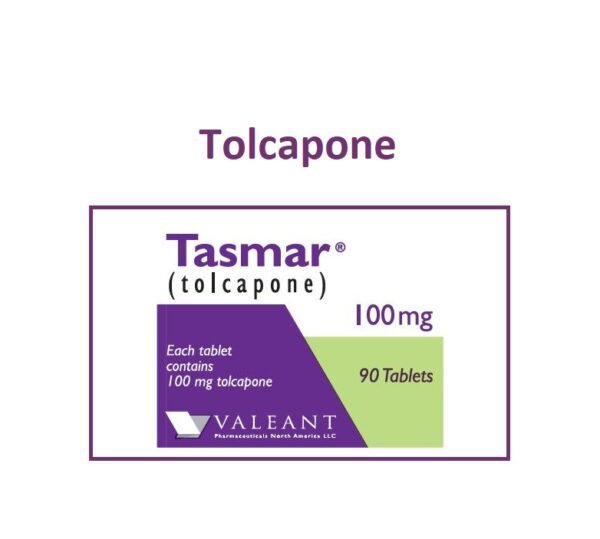
Tolcapone is a potent and reversible inhibitor of the COMT enzyme inhibiting the degradation of levodopa. It is used in conjunction with levodopa and carbidopa for the treatment of Parkinson's disease.
Tolcapone Uses:
- It is used in Parkinson's disease, when motor symptoms are resistant to other therapy.
- It is used in combination with levodopa and carbidopa.
Tolcapone Dose in Adults
Note:
- Tolcapone can potentially cause life-threatening acute fulminant hepatic failure, hence used carefully and reserved only for patients with fluctuating symptoms and resistant to other therapy.
- If no clinical improvement is noted after 3 weeks of therapy use of tolcapone should be abandoned.
Tolcapone Dose in the treatment of Parkinson disease:
- Oral: Initial: 100 mg thrice a day must use with levodopa/carbidopa; dose can be doubled, 200mg thrice a day according to clinical response however larger doses have a higher risk of hepatotoxicity
Note: When tolcapone is started dose of levodopa may need to be reduced (average reduction in clinical trials was 30% in 70% of patients).
Use in Children:
Not indicated.
Tolcapone Pregnancy Category: C
- In animal reproduction studies, adverse events were noted.
Use of Tolcapone while breastfeeding
- Do not use in pregnant women. It is unknown if breast milk contains it.
Tolcapone Dose in Kidney Disease:
-
Mild to moderate impairment (CrCl ≥25 mL/minute):
- No dosage adjustment is required.
-
Severe impairment (CrCl <25 mL/minute):
- No dose adjustment specified by the manufacturer but use carefully.
Dose in Liver disease:
Contraindicated in hepatic disease. Stop use immediately if any signs or symptoms of liver injury develop.
Common Side Effects of Tolcapone:
-
Cardiovascular:
- Orthostatic Hypotension
-
Central Nervous System:
- Drowsiness
- Sleep Disorder
- Hallucination
- Dystonia
- Increased Dream Activity
- Dizziness
- Confusion
- Headache
-
Gastrointestinal:
- Nausea
- Diarrhea
- Anorexia
-
Neuromuscular & Skeletal:
- Dyskinesia
- Muscle Cramps
Less Common Side Effects of Tolcapone:
-
Cardiovascular:
- Syncope
- Chest Pain
- Hypotension
- Palpitations
-
Central Nervous System:
- Fatigue
- Loss Of Balance
- Paresthesia
- Burning Sensation
- Agitation
- Euphoria
- Hyperactivity
- Malaise
- Panic
- Irritability
- Mental Deficiency
- Depression
- Emotional Lability
- Flank Pain
- Hypoesthesia
- Speech Disturbance
- Vertigo
-
Dermatologic:
- Diaphoresis
- Alopecia
- Skin Rash
-
Gastrointestinal:
- Vomiting
- Constipation
- Abdominal Pain
- Xerostomia
- Dyspepsia
- Flatulence
-
Genitourinary:
- Urinary Tract Infection
- Hematuria
- Urine Discoloration
- Urination Disorder
- Impotence
- Urinary Incontinence
-
Hematologic & Oncologic:
- Hemorrhage
- Skin Neoplasm
- Uterine Neoplasm
-
Hepatic:
- Increased Serum Transaminases
-
Infection:
- Influenza
- Infection
-
Neuromuscular & Skeletal:
- Hyperkinesia
- Hypokinesia
- Muscle Rigidity
- Neck Pain
- Arthritis
- Myalgia
- Rhabdomyolysis
- Tremor
-
Ophthalmic:
- Cataract
- Ophthalmic Inflammation
-
Otic:
- Tinnitus
-
Respiratory:
- Upper Respiratory Tract Infection
- Dyspnea
- Sinus Congestion
- Bronchitis
- Pharyngitis
-
Miscellaneous:
- Fever
- Accidental Injury
Contraindications to Tolcapone:
- Hypersensitivity to tolcapone and any component of the formulation
- Hepatic disease, history of tolcapone-induced liver injury or other hepatic problems
- Previous history of hyperpyrexia or nontraumatic rhabdomyolysis, which could be related to the medication.
Warnings and precautions
-
Abnormal thinking and behavior changes:
- Paranoid thought and behavior changes such as paranoid ideastion, confusion, delusions and disorientation, psychotic-like behaviour, aggressive behavior and agitation have been observed.
-
Depression in the CNS:
- Patients who experience excessive daytime somnolence have been reported to falling asleep while performing certain tasks without any warning signs or symptoms.
- Take care when you are taking CNS depressants, sedating drugs, psychoactive drugs, and ethanol.
- Discuss with patients the importance of mental alertness when performing tasks.
-
Diarrhea
- There have been reports of delayed-onset diarrhea, which can occur after 2-12 weeks.
- Use with caution if you have a lower gastrointestinal condition or are more susceptible to dehydration.
-
Hallucinations
- Hallucinations can occur (onset in 2 weeks). They improve when the dose of hallucinogens is decreased.
-
Hematuria
- Malls are at risk for developing hematuria.
-
Hepatotoxicity: [US Boxed Warning]
- Tolcapone may cause severe acute fulminant liver failure.
- This is why it should be used with caution and only in patients who have fluctuating symptoms or are resistant to other therapies.
- Hepatic injury is a reason for caution. If the ALT and AST are more than twice the ULN, or if you have any clinical signs or symptoms that indicate liver disease, stop using the product.
- If you sustain a hepatic injury, do not use it again.
-
Disorders of impulse control:
- Dopaminergic drugs used to treat Parkinson's disease and restless legs syndrome have been linked with compulsive behavior and/or loss impulse control.
- This can lead to pathological gambling, increased libido (hypersexuality) and/or binge-eating. But, it isn't certain that there is a definitive association.
- Sometimes, behavior changes can be made after therapy ends.
-
Melanoma
- Potentially increased risk of melanoma through an unknown mechanism. Follow closely for any symptoms or signs and a skin exam.
-
Orthostatic hypotension
- Syncope and orthostatic hypotension can occur. Patients taking antihypertensive medications or those at high risk for falling, such as cerebrovascular disease or cardiovascular disease, should be cautious.
-
Pleural/retroperitoneal Fibrosis
- Retroperitoneal Fibrosis, pulmonary Infiltrates, or Effusion, are all known side effects of ergot-class dopaminergic drugs.
- Non-ergot dopaminergic drugs like tolcapone are not covered by data.
-
Rhabdomyolysis
- This could lead to severe rhabdomyolysis.
-
Dyskinesia
- Dyskinesias can worsen. Reduce the doses for mild to moderate dyskinesias.
-
Hepatic impairment
- Hepatic impairment is a contraindication to its use. If liver enzymes rise to twice the maximum level or if you develop signs or symptoms related to liver injury, stop using immediately.
-
Psychotic disorders
- Do not use in psychotic disorders. It can worsen psychosis
-
Renal impairment
- In severe renal impairment, use caution
Tolcapone: Drug Interaction
|
Alcohol (Ethyl) |
CNS Depressants may enhance the CNS depressant effect of Alcohol (Ethyl). |
|
Alfuzosin |
May enhance the hypotensive effect of Blood Pressure Lowering Agents. |
|
Alizapride |
May enhance the CNS depressant effect of CNS Depressants. |
|
Antipsychotic Agents (Second Generation [Atypical]) |
Blood Pressure Lowering Agents may enhance the hypotensive effect of Antipsychotic Agents (Second Generation [Atypical]). |
|
Barbiturates |
May enhance the hypotensive effect of Blood Pressure Lowering Agents. |
|
Benperidol |
May enhance the hypotensive effect of Blood Pressure Lowering Agents. |
|
Blood Pressure Lowering Agents |
May enhance the hypotensive effect of HypotensionAssociated Agents. |
|
Brexanolone |
CNS Depressants may enhance the CNS depressant effect of Brexanolone. |
|
Brimonidine (Topical) |
May enhance the CNS depressant effect of CNS Depressants. |
|
Brimonidine (Topical) |
May enhance the hypotensive effect of Blood Pressure Lowering Agents. |
|
Bromopride |
May enhance the CNS depressant effect of CNS Depressants. |
|
Cannabidiol |
May enhance the CNS depressant effect of CNS Depressants. |
|
Cannabis |
May enhance the CNS depressant effect of CNS Depressants. |
|
Chlorphenesin Carbamate |
May enhance the adverse/toxic effect of CNS Depressants. |
|
CNS Depressants |
May enhance the adverse/toxic effect of other CNS Depressants. |
|
COMT Substrates |
COMT Inhibitors may decrease the metabolism of COMT Substrates. |
|
Diazoxide |
May enhance the hypotensive effect of Blood Pressure Lowering Agents. |
|
Dimethindene (Topical) |
May enhance the CNS depressant effect of CNS Depressants. |
|
Doxylamine |
May enhance the CNS depressant effect of CNS Depressants. Management: The manufacturer of Diclegis (doxylamine/pyridoxine), intended for use in pregnancy, specifically states that use with other CNS depressants is not recommended. |
|
Dronabinol |
May enhance the CNS depressant effect of CNS Depressants. |
|
DULoxetine |
Blood Pressure Lowering Agents may enhance the hypotensive effect of DULoxetine. |
|
Esketamine |
May enhance the CNS depressant effect of CNS Depressants. |
|
Herbs (Hypotensive Properties) |
May enhance the hypotensive effect of Blood Pressure Lowering Agents. |
|
HydrOXYzine |
May enhance the CNS depressant effect of CNS Depressants. |
|
Hypotension-Associated Agents |
Blood Pressure Lowering Agents may enhance the hypotensive effect of Hypotension-Associated Agents. |
|
Kava Kava |
May enhance the adverse/toxic effect of CNS Depressants. |
|
Levodopa-Containing Products |
Blood Pressure Lowering Agents may enhance the hypotensive effect of Levodopa-Containing Products. |
|
Lofexidine |
May enhance the CNS depressant effect of CNS Depressants. Management: Drugs listed as exceptions to this monograph are discussed in further detail in separate drug interaction monographs. |
|
Lormetazepam |
May enhance the hypotensive effect of Blood Pressure Lowering Agents. |
|
Magnesium Sulfate |
May enhance the CNS depressant effect of CNS Depressants. |
|
MetyroSINE |
CNS Depressants may enhance the sedative effect of MetyroSINE. |
|
Minocycline |
May enhance the CNS depressant effect of CNS Depressants. |
|
Mirtazapine |
CNS Depressants may enhance the CNS depressant effect of Mirtazapine. |
|
Molsidomine |
May enhance the hypotensive effect of Blood Pressure Lowering Agents. |
|
Nabilone |
May enhance the CNS depressant effect of CNS Depressants. |
|
Naftopidil |
May enhance the hypotensive effect of Blood Pressure Lowering Agents. |
|
Nicergoline |
May enhance the hypotensive effect of Blood Pressure Lowering Agents. |
|
Nicorandil |
May enhance the hypotensive effect of Blood Pressure Lowering Agents. |
|
Nitroprusside |
Blood Pressure Lowering Agents may enhance the hypotensive effect of Nitroprusside. |
|
Pentoxifylline |
May enhance the hypotensive effect of Blood Pressure Lowering Agents. |
|
Pholcodine |
Blood Pressure Lowering Agents may enhance the hypotensive effect of Pholcodine. |
|
Phosphodiesterase 5 Inhibitors |
May enhance the hypotensive effect of Blood Pressure Lowering Agents. |
|
Pipamperone [INT] |
COMT Inhibitors may diminish the therapeutic effect of Pipamperone [INT]. Pipamperone [INT] may diminish the therapeutic effect of COMT Inhibitors. |
|
Piribedil |
CNS Depressants may enhance the CNS depressant effect of Piribedil. |
|
Pramipexole |
CNS Depressants may enhance the sedative effect of Pramipexole. |
|
Prostacyclin Analogues |
May enhance the hypotensive effect of Blood Pressure Lowering Agents. |
|
Quinagolide |
May enhance the hypotensive effect of Blood Pressure Lowering Agents. |
|
ROPINIRole |
CNS Depressants may enhance the sedative effect of ROPINIRole. |
|
Rotigotine |
CNS Depressants may enhance the sedative effect of Rotigotine. |
|
Rufinamide |
May enhance the adverse/toxic effect of CNS Depressants. Specifically, sleepiness and dizziness may be enhanced. |
|
Selective Serotonin Reuptake Inhibitors |
CNS Depressants may enhance the adverse/toxic effect of Selective Serotonin Reuptake Inhibitors. Specifically, the risk of psychomotor impairment may be enhanced. |
|
Tetrahydrocannabinol |
May enhance the CNS depressant effect of CNS Depressants. |
|
Tetrahydrocannabinol and Cannabidiol |
May enhance the CNS depressant effect of CNS Depressants. |
|
Trimeprazine |
May enhance the CNS depressant effect of CNS Depressants. |
|
Risk Factor D (Consider therapy modification) |
|
|
Amifostine |
Blood Pressure Lowering Agents may enhance the hypotensive effect of Amifostine. Management: When amifostine is used at chemotherapy doses, blood pressure lowering medications should be withheld for 24 hours prior to amifostine administration. If blood pressure lowering therapy cannot be withheld, amifostine should not be administered. |
|
Blonanserin |
CNS Depressants may enhance the CNS depressant effect of Blonanserin. |
|
Buprenorphine |
CNS Depressants may enhance the CNS depressant effect of Buprenorphine. Management: Consider reduced doses of other CNS depressants, and avoiding such drugs in patients at high risk of buprenorphine overuse/self-injection. Initiate buprenorphine at lower doses in patients already receiving CNS depressants. |
|
Chlormethiazole |
May enhance the CNS depressant effect of CNS Depressants. Management: Monitor closely for evidence of excessive CNS depression. The chlormethiazole labeling states that an appropriately reduced dose should be used if such a combination must be used. |
|
Droperidol |
May enhance the CNS depressant effect of CNS Depressants. Management: Consider dose reductions of droperidol or of other CNS agents (eg, opioids, barbiturates) with concomitant use. Exceptions to this monograph are discussed in further detail in separate drug interaction monographs. |
|
Flunitrazepam |
CNS Depressants may enhance the CNS depressant effect of Flunitrazepam. |
|
HYDROcodone |
CNS Depressants may enhance the CNS depressant effect of HYDROcodone. Management: Avoid concomitant use of hydrocodone and benzodiazepines or other CNS depressants when possible. These agents should only be combined if alternative treatment options are inadequate. If combined, limit the dosages and duration of each drug. |
|
Methotrimeprazine |
CNS Depressants may enhance the CNS depressant effect of Methotrimeprazine. Methotrimeprazine may enhance the CNS depressant effect of CNS Depressants. Management: Reduce adult dose of CNS depressant agents by 50% with initiation of concomitant methotrimeprazine therapy. Further CNS depressant dosage adjustments should be initiated only after clinically effective methotrimeprazine dose is established. |
|
Monoamine Oxidase Inhibitors |
COMT Inhibitors may enhance the adverse/toxic effect of Monoamine Oxidase Inhibitors. |
|
Obinutuzumab |
May enhance the hypotensive effect of Blood Pressure Lowering Agents. Management: Consider temporarily withholding blood pressure lowering medications beginning 12 hours prior to obinutuzumab infusion and continuing until 1 hour after the end of the infusion. |
|
Opioid Agonists |
CNS Depressants may enhance the CNS depressant effect of Opioid Agonists. Management: Avoid concomitant use of opioid agonists and benzodiazepines or other CNS depressants when possible. These agents should only be combined if alternative treatment options are inadequate. If combined, limit the dosages and duration of each drug. |
|
OxyCODONE |
CNS Depressants may enhance the CNS depressant effect of OxyCODONE. Management: Avoid concomitant use of oxycodone and benzodiazepines or other CNS depressants when possible. These agents should only be combined if alternative treatment options are inadequate. If combined, limit the dosages and duration of each drug. |
|
Perampanel |
May enhance the CNS depressant effect of CNS Depressants. Management: Patients taking perampanel with any other drug that has CNS depressant activities should avoid complex and high-risk activities, particularly those such as driving that require alertness and coordination, until they have experience using the combination. |
|
Sodium Oxybate |
May enhance the CNS depressant effect of CNS Depressants. Management: Consider alternatives to combined use. When combined use is needed, consider minimizing doses of one or more drugs. Use of sodium oxybate with alcohol or sedative hypnotics is contraindicated. |
|
Suvorexant |
CNS Depressants may enhance the CNS depressant effect of Suvorexant. Management: Dose reduction of suvorexant and/or any other CNS depressant may be necessary. Use of suvorexant with alcohol is not recommended, and the use of suvorexant with any other drug to treat insomnia is not recommended. |
|
Tapentadol |
May enhance the CNS depressant effect of CNS Depressants. Management: Avoid concomitant use of tapentadol and benzodiazepines or other CNS depressants when possible. These agents should only be combined if alternative treatment options are inadequate. If combined, limit the dosages and duration of each drug. |
|
Zolpidem |
CNS Depressants may enhance the CNS depressant effect of Zolpidem. Management: Reduce the Intermezzo brand sublingual zolpidem adult dose to 1.75 mg for men who are also receiving other CNS depressants. No such dose change is recommended for women. Avoid use with other CNS depressants at bedtime; avoid use with alcohol. |
|
Risk Factor X (Avoid combination) |
|
|
Azelastine (Nasal) |
CNS Depressants may enhance the CNS depressant effect of Azelastine (Nasal). |
|
Bromperidol |
Blood Pressure Lowering Agents may enhance the hypotensive effect of Bromperidol. Bromperidol may diminish the hypotensive effect of Blood Pressure Lowering Agents. |
|
Bromperidol |
May enhance the CNS depressant effect of CNS Depressants. |
|
Orphenadrine |
CNS Depressants may enhance the CNS depressant effect of Orphenadrine. |
|
Oxomemazine |
May enhance the CNS depressant effect of CNS Depressants. |
|
Paraldehyde |
CNS Depressants may enhance the CNS depressant effect of Paraldehyde. |
|
Thalidomide |
CNS Depressants may enhance the CNS depressant effect of Thalidomide. |
Monitoring parameters:
- Blood pressure
- Parkinson disease symptoms
- Mental health
- Periodic skin exams for melanoma
- At baseline, liver enzymes are taken and every 2 to 4 week thereafter for the first 6 month of treatment.
- Later, as indicated by the doctor. Before increasing the dose, monitor.
- If the ALT and AST twice ULN are exceeded, or if you have any clinical signs or symptoms that indicate liver disease, stop using the product.
How to administer Tolcapone?
It can be taken with or without food.
Mechanism of action of Tolcapone:
- Tolcapone reversibly inhibits catecholo-methyltransferase.
- The main pathway of levodopa's degradation is COMT, even though carbidopa is used as a decarboxylase inhibitor.
- This blockage results in increased plasma levels of levodopa as well as an increase in central dopaminergic activity.
Absorption:
- Rapid
Protein binding:
- >99.9%
Metabolism:
- Hepatic, via glucuronidation, to inactive metabolite (>99%)
Bioavailability:
- ~65%
Half-life elimination:
- 2 to 3 hours
Time to peak:
- ~2 hours
Excretion:
- Urine (60% as metabolites, 0.5% as unchanged drug);
- feces (40%)
International Brand Names of Tolcapone:
- Caponali
- Tasmar
Tolcapone Brand Names in Pakistan:
It is available in combination with levodopa/ carbidopa by the brand name of Dopacone in the following strengths:
- levodopa/ carbidopa/ entacapone:
- 50/ 12.5/ 200
- 100/ 25/ 200
- 125/ 31.25/ 200
- 150/ 37.5/ 200
- 200/ 50/ 200
.png)


