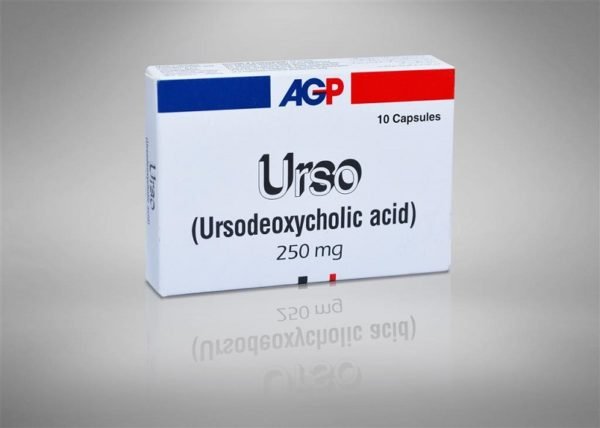
Urso (Ursodiol, Ursodeoxycholic acid) decreases the cholesterol content of bile and bile stones by reducing the secretion of cholesterol from the liver and the fractional reabsorption of cholesterol by the intestines.
It is used in the treatment of the following conditions:
-
Gallstones (capsules only):
-
It is used in the treatment of patients having radiolucent, noncalcified gallbladder stones less than 20 mm in greatest diameter in whom elective cholecystectomy would be done except for the presence of increased surgical risk caused by an idiosyncratic reaction to general anesthesia, systemic disease, advanced age or for those patients who refuse surgery.
-
It is used for the prevention of gallstone formation in obese patients experiencing rapid weight loss.
-
-
Primary biliary cirrhosis (tablets only):
-
It is used for the treatment of patients with primary biliary cirrhosis (PBC).
-
-
Off Label Use of Adults:
-
It is used for gallstone prevention post-bariatric surgery
-
The other medicine used in the treatment and prevention of gall stones is chenodeoxycholic acid (Chenodiol).
Urso (Ursodiol) Dose in Adults
Urso dosage in the treatment of Gallstone dissolution (Actigall):
- 8 to 10 mg/kg/day orally given in 2 to 3 divided doses
Urso dosage in the treatment of Gallstone prevention post-bariatric surgery (off-label):
- 500 to 600 mg orally once daily given or in 2 divided doses for 6 months.
Urso dose in the prevention of Gallstone (Actigall):
- 300 mg orally twice daily given
Urso dose in the treatment of primary biliary cirrhosis (Urso, Urso Forte):
- 13 to 15 mg/kg/day orally given in 2 to 4 divided doses (with food).
Urso (Ursodiol) Dose in Childrens
Dose in the treatment of Biliary atresia, status post-Kasai procedure:
-
Infants and Children:
- 10 to 20 mg/kg/day orally given in 2 to 3 divided doses.
Urso dose in the treatment of Pruritus secondary to cholestasis:
-
Infants, Children, and Adolescents:
- 15 to 20 mg/kg/day orally given once daily or in divided doses twice daily
- doses up to 30 mg/kg/day might be necessary for some patients
Urso dose in the treatment of cystic fibrosis-related liver disease:
-
Infants, Children, and Adolescents:
- Initial: 20 mg/kg/day orally given in 2 divided doses
- The reported range is 10 to 30 mg/kg/day in divided doses
Urso dose in the treatment of Parenteral nutrition-induced cholestasis:
- Infants and Children:
- 30 mg/kg/day orally given in 3 divided doses
Urso pregnancy Risk Factor: B
- Animal reproduction studies have not shown any adverse events.
Urso (Ursodiol) use during breastfeeding:
- It is unknown if ursodiol can be excreted in breastmilk or not.
- The manufacturer suggests that breastfeeding mothers exercise caution when giving ursodiol.
Urso (Ursodiol) Dose in Renal Disease:
- There are no dosage adjustments given in the manufacturer’s labeling.
Urso (Ursodiol) Dose in Liver Disease:
- There are no dosage adjustments given in the manufacturer’s labeling.
Common Side Effects of Ursodiol (Urso) Include:
-
Central Nervous System:
- Headache
- Dizziness
-
Gastrointestinal:
- Diarrhea
- Constipation
- Dyspepsia
- Nausea
-
Neuromuscular & Skeletal:
- Back Pain
-
Respiratory:
- Upper Respiratory Tract Infection
Less Common Side Effects of Urso (Ursodiol) Include:
-
Dermatologic:
- Alopecia
- Skin Rash
-
Endocrine & Metabolic:
- Hyperglycemia
-
Gastrointestinal:
- Vomiting
- Peptic Ulcer
-
Genitourinary:
- Urinary Tract Infection
-
Hematologic & Oncologic:
- Leukopenia
- Thrombocytopenia
-
Hepatic:
- Cholecystitis
-
Hypersensitivity:
- Hypersensitivity Reaction
-
Infection:
- Viral Infection
-
Neuromuscular & Skeletal:
- Arthritis
- Musculoskeletal Pain
-
Renal:
- Increased Serum Creatinine
-
Respiratory:
- Pharyngitis
- Bronchitis
- Cough
- Flu-Like Symptoms
Contraindication to Urso (Ursodiol) Include:
- Hypersensitivity to ursodiol and any component of the formulation
- Not to be used with radiolucent bile pigment stone, radiopaque stones or calcified cholesterol stones
- patients with unremitting acute cholecystitis, cholangitis, biliary obstruction, gallstone pancreatitis, or biliarygastrointestinal fistula
- Allergy to bile acids
- Total biliary obstruction due to extrahepatic cause
- Widespread intrahepatic obstruction
Warnings and precautions
- Obstructive biliary:
- To avoid biliary obstruction, maintain bile flow throughout therapy.
- Hepatic effects
- Patients with chronic liver disease should be cautious
- Monitor liver function tests every month for the first three months and then every six months thereafter, or as required by clinical judgment.
- If liver function tests show significant elevations, stopping therapy could be necessary.
Monitor:
Gallstone disease:
- ALT, AST, sonogram
Primary biliary cirrhosis:
- Monitor liver function tests including ALT, AST, GGT, bilirubin, and alkaline phosphatase) monthly for the first 3 months and every 6 months thereafter or as clinically necessary.
How to administer Urso (Ursodiol)?
- Do not give with aluminum-based antacids or bile acid sequestrants.
- If aluminum-based antacids are required, administer 2 hours after ursodiol
- some physicians recommend administering ursodiol 1 hour prior to or 4 to 5 hours after bile acid sequestrants.
- For appropriate dose administration, Urso Forte can be split into two equal halves.
- do not chew.
- Urso Forte and Urso should be taken with food.
Mechanism of action of Ursodiol:
- Ursodiol reduces cholesterol in bile and stones by decreasing the production of cholesterol and fractional reabsorption cholesterol by the intestines.
- It is unclear what the mechanism of primary biliary dysfunction is.
Absorption:
- 90%
Protein binding:
- ~70%
Metabolism:
- It Undergoes extensive enterohepatic recycling
- Ursodiol is hydrolyzed to active ursodiol, where it is recycled or transformed to lithocholic acid by colonic microbial flora after conjugation in the liver.
- Ursodiol becomes a major biliary and plasma bile acid that constitutes 30% - 50% of biliary and plasma bile acids when chronically administered.
Excretion:
- By Feces; urine (<1%
International Brands of Ursodiol:
- Actigall
- Urso 250
- Urso Forte
- DOM-Ursodiol C
- JAMP-Ursodiol
- PHL-Ursodiol C [DSC]
- PMS-Ursodiol
- PMS-Ursodiol C
- Urso
- Urso DS
- Actigall
- Adursal
- Canlin
- Cholemax
- Destolit
- Deursil
- Dexo
- Dozurso
- Estazor
- Galcholic
- Homan
- Lupible
- Taurolite
- Triptor
- Udihep
- Uldeso
- Urdafalk
- Urdek
- Urosan
- Ursa
- Ursacol
- Ursilon
- Ursimex
- Urso
- Ursobilane
- Ursocel
- Ursochol
- Ursodamor
- Ursodox
- Ursofalk
- Ursolic
- Ursolin
- Ursolit
- Ursoliv
- Ursolvan
- Ursopol
- Ursosan
Ursodiol (Ursodeoxycholic Acid) brands in Pakistan:
|
Ursodeoxycholic Acid [Caps 250 Mg] |
|
| Triptor | Consolidated Chemical Laboratories (Pvt) Ltd. |
| Urso | Agp (Private) Ltd. |
| Ursofalk | Agp (Private) Ltd. |
| Ursogal | Shrooq Pharmaceuticals |
| Ursox | Genome Pharmaceuticals (Pvt) Ltd |
|
Urso (Ursodeoxycholic Acid) [Caps 500 Mg] |
|
| Triptor | Consolidated Chemical Laboratories (Pvt) Ltd. |
| Urso | AGP (Private) Ltd. |
| Ursogal | Shrooq Pharmaceuticals |
.png)


