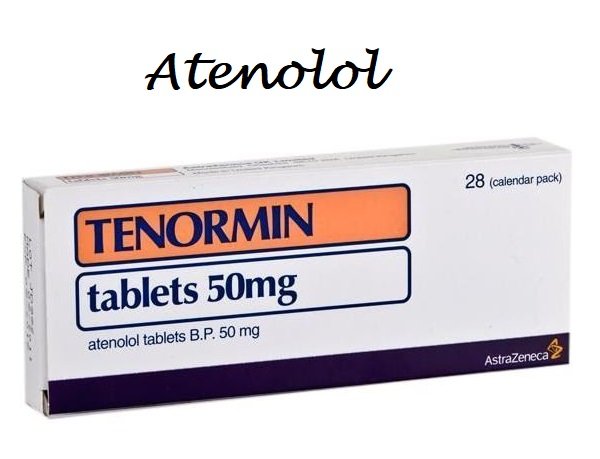
Atenolol is a selective Beta-1 receptor blocking drug with little or no effect on Beta-2 receptors.
It is used to treat the following conditions:
-
For the treatment of patients with acute myocardial infarction to reduce cardiovascular mortality who are hemodynamically stable.
- The ACC/ AHA recommend initiating beta-blocking drugs within the first 24 hours except in the following situations:
- contraindications to beta-blocking drugs exist
- evidence of a low output state
- clinical features of heart failure
- increased risk of cardiogenic shock
- The ACC/ AHA recommend initiating beta-blocking drugs within the first 24 hours except in the following situations:
-
For the chronic management of Angina pectoris
-
For the management of hypertension (Beta-blockers are not considered as first-line therapy)
-
As Off-Label Use in the following conditions:
-
For rate control in Atrial fibrillation
-
Supraventricular tachycardia
-
AV nodal reentrant tachycardia
-
AV re-entrant tachycardia
-
Atrial flutter
-
Focal atrial tachycardia
-
-
Thyrotoxicosis
-
Ventricular Arrhythmias
-
Dose in the treatment of Angina pectoris:
- 50 mg orally once a day
- The dose may be increased to 100 mg once a day.
- Doses of up to 200 mg orally once a day may be used in some patients.
Dose for the treatment of rate control in Atrial fibrillation as off-label use:
- 25 - 100 mg once a day.
Dose as an alternative agent in the treatment of Hypertension:
- 50 mg orally once a day
- The dose should be titrated every week or two to the usual maximum dose of 100 mg per day.
Dose in the treatment of ST-elevation Myocardial infarction or Non-ST-elevation Acute coronary syndrome:
- 50 - 100 mg orally in 1 or 2 divided doses.
- It should be administered within 24 hours after myocardial infarction and continued indefinitely.
Dose in the treatment of Supraventricular tachycardia as off-label use:
- 25 - 50 mg orally once a day to a maximum maintenance dose of 100 mg/day.
Dose in the treatment of Thyrotoxicosis as off-label use:
- 25 - 100 mg orally once or two times a day.
Dose in the treatment of Ventricular arrhythmias as off-label use:
- 25 - 100 mg/day orally
Dose in the treatment of Arrhythmias:
- Infants, Children, and Adolescents:
- Long QT syndrome:
- 0.5 - 1 mg/kg/day orally once a day or in two divided doses.
- Supraventricular tachycardia:
- 0.3 - 1 mg/kg/day orally once a day or in two divided doses.
- Long QT syndrome:
Dose in the treatment of infantile Hemangioma:
- Infants and Children less than 2 years:
- 1 mg/kg/dose orally once a day for 6 months.
Dose in the treatment of Hypertension:
- Children and Adolescents:
- 0.5 - 1 mg/kg/day orally either once a day or divided into doses two times a day
- The dose should be titrated to the usual dosage range of 0.5 - 1.5 mg/kg/day.
- The maximum daily dose is 2 mg/kg/day (not exceeding 100 mg/day).
Dose in the treatment of Thyrotoxicosis:
- Children and Adolescents:
- 1 - 2 mg/kg orally once a day
- The dose may be increased to two times a day if needed
- The maximum dose should not exceed 100 mg/dose.
Pregnancy Risk Factor D
- Atenolol crosses into the placental barrier, and maternal use can cause adverse effects in the fetus such as hypoglycemia, bradycardia and reduced birth weight.
- Although beta-blockers can be used to treat hypertension during pregnancy, it is better to use other agents than atenolol.
Atenolol use during breastfeeding:
- Breast milk contains atenolol.
- Breastfeeding infants may experience hypoglycemia and Bradycardia.
- Lactating mothers should be cautious when using it.
Atenolol Dose in Renal Disease:
- CrCl of more than 35 mL/minute/1.73 m² :
- Adjustment in the dose is not necessary.
- CrCl 15 - 35 mL/minute/1.73 m² :
- The maximum dose should not exceed 50 mg per day.
- CrCl of less than 15 mL/minute/1.73 m²:
- The maximum dose should not exceed 25 mg per day
- Hemodialysis:
- It is moderately dialyzable (20% - 50%)
- Administer the dose after dialysis or administer 25 - 50 mg supplemental dose.
- Peritoneal dialysis:
- The supplemental dose is not necessary after peritoneal dialysis.
Atenolol Dose in Liver Disease:
- Atenolol undergoes minimal hepatic metabolism.
- The manufacturer does not recommend any dose adjustment in patients with liver disease.
Common Side Effects of Atenolol Include:
- Cardiovascular:
- Hypotension
- Cardiac failure
- Bradycardia
- Ventricular tachycardia
- Cold extremities
- Supraventricular tachycardia
- Central nervous system:
- Fatigue
- Dizziness
- Depression
Less Common Side Effects of Atenolol Include:
- Cardiovascular:
- Bundle branch block
- Atrial fibrillation
- Heart block
- Atrial flutter
- Orthostatic hypotension
- Pulmonary embolism
- Central nervous system:
- Abnormal dreams
- Lethargy
- Vertigo
- Drowsiness
- Gastrointestinal:
- Nausea
- Diarrhea
- Neuromuscular & skeletal:
- Limb pain
- Respiratory:
- Bronchospasm
Contraindication to Atenolol Include:
- Severe allergic reactions to atenolol and any component of the formulations
- Inotropic support and intravenous vasopressors are required for decompensated cardiac failure
- Allergy bronchial asthma
- Second- or third-degree block of AV,
- Sick sinus syndrome
- Bradycardia severe
- Cardiogenic shock
- Advanced liver impairment
- Hypotension severe
- Primary obstructive valve heart disease
- Patients suffering from severe Alzheimer disease, addiction, or drug abuse should be closely monitored.
- Cor pulmonale
- Severe peripheral arterial disease
- Pheochromocytoma without alpha-blockade
- Metabolic acidosis
Warnings and Precautions
- Anaphylactic reactions
- Patients with a known allergy to beta-blockers should not use it.
- Patients with a hypersensitivity reaction to medicine should be told to discontinue use and be treated accordingly.
- Furthermore, epinephrine may not be effective in patients with an allergic reaction to a beta-blocker.
- Bronchospastic disease
- Beta-blockers should not be prescribed to patients with asthma or any other disorder that affects the reactive airways.
- Conductive abnormality
- Patients suffering from heart disease and sick sinus syndrome should not take the drug.
- Diabetes:
- It can increase hypoglycemia, mask its clinical symptoms like anxiety, sweating, and tachycardia.
- Patients with heart failure who are diabetics may have hypoglycemia.
- Heart failure:
- Patients with heart failure have not been shown to benefit from Atenolol.
- You should use it with caution. The patient should be closely monitored for signs of heart failure.
- Myasthenia gravis:
- Patients with myasthenia Gravis should use it with caution.
- Raynaud and peripheral vascular disease (PVD).
- Patients with peripheral arterial disease should use caution.
- Untreated Pheochromocytoma
- Beta-blockers should be prescribed to patients with pheochromocytoma after taking alpha-blockers.
- Angina Prinzmetal version:
- Prinzmetal variant of angina patients should be avoided.
- Coronary vasoconstriction can be caused by alpha1-adrenergic cells.
- Avoid beta-blockers that do not block alpha1 receptor activity as they can cause anginal symptoms.
- Psoriasis:
- It can worsen the symptoms of psoriasis.
- Renal impairment
- Patients with kidney disease should use it with caution.
- Dose adjustment is necessary.
- Thyroid disease:
- It can mask hyperthyroidism symptoms. Patients with hyperthyroidism may experience a thyroid crisis or storm if beta-blockers abruptly stop.
Atenolol: Drug Interaction
Note: Drug Interaction Categories:
- Risk Factor C: Monitor When Using Combination
- Risk Factor D: Consider Treatment Modification
- Risk Factor X: Avoid Concomitant Use
Risk Factor C (Monitor therapy). |
|
| Acetylcholinesterase inhibitors | Beta-Blockers may increase the bradycardic effects. |
| Alfuzosin | Might increase the hypotensive effects of Blood Pressure Lowering Agents. |
| Alpha1-Blockers | Beta-Blockers can increase the orthostatic hypotensive effects of Alpha1Blockers. Ophthalmic products are less likely to be a risk than systemic ones. |
| Amiodarone | Beta-Blockers may increase bradycardic effects. Possible to cause cardiac arrest. Amiodarone could increase serum Beta-Blockers. |
| Amphetamines | May decrease the antihypertensive effects of Antihypertensive Drugs. |
| Ampicillin | May reduce the bioavailability and potency of Atenolol. |
| Antipsychotic Agents, Second Generation (Atypical) | Blood Pressure Lowering Agents can increase the hypotensive effects of Antipsychotic Agents (Second Gen [Atypical]). |
| Bacampicillin | May reduce the bioavailability and potency of Atenolol. |
| Barbiturates | Might increase the hypotensive effects of Blood Pressure Lowering Agents. |
| Benperidol | Might increase the hypotensive effects of Blood Pressure Lowering Agents. |
| Beta2-Agonists | Beta-Blockers (Beta1 selective) can reduce the bronchodilatory effects of Beta2-Agonists. Particular concern for nonselective beta blockers and higher doses beta1 selective beta-blockers. |
| Bradycardia-Causing Agents | May increase the bradycardic effects of Bradycardia-Causing agents. |
| Bretylium | May increase the bradycardic effects of Bradycardia Causing Agents. Patients receiving AV blocking drugs may experience a reduction in atrioventricular (AV), blockage due to Bretylium. |
| Brigatinib | May decrease the antihypertensive effects of Antihypertensive Drugs. Brigatinib could increase the bradycardic effects of Antihypertensive Drugs. |
| Brimonidine (Topical) | Might increase the hypotensive effects of Blood Pressure Lowering Agents. |
| Bupivacaine | Beta-Blockers can increase serum Bupivacaine concentrations. |
| Calcium Channel Blockers (Nondihydropyridine) | BetaBlockers may increase the hypotensive effects. Also, signs of heart disease and Bradycardia have been reported. Calcium Channel Blockers (Nondihydropyridine), may increase serum Beta-Blockers. Exceptions: Bepridil. |
| Cardiac Glycosides | Beta-Blockers can increase the bradycardic effects of Cardiac Glycosides. |
| Cholinergic Agonists | Beta-Blockers could increase the toxic/adverse effects of Cholinergic Agonists. Particular concerns are the possibility of cardiac conduction abnormalities or bronchoconstriction. Administration: Use these agents with caution and monitor for conduction problems. Due to the possibility of additive bronchoconstriction, avoid methacholine and any beta-blocker. |
| Dexmethylphenidate | Antihypertensive agents may have a less therapeutic effect. |
| Diazoxide | Might increase the hypotensive effects of Blood Pressure Lowering Agents. |
| Dipyridamole | Beta-Blockers may increase the bradycardic effects. |
| Disopyramide | Beta-Blockers may increase the bradycardic effects. Disopyramide may have a negative inotropic effect that Beta-Blockers can enhance. |
| DULoxetine | DULoxetine may increase hypotensive effects by lowering blood pressure. |
| EPINEPHrine (Nasal) | Beta-Blockers (Beta1 selective) can reduce the therapeutic effects of EPINEPHrine. |
| EPINEPHrine (Oral Inhalation) | Beta-Blockers (Beta1 selective) can reduce the therapeutic effects of EPINEPHrine. |
| Epinephrine (Racemic) | Beta-Blockers (Beta1 selective) can reduce the therapeutic effects of Epinephrine. |
| EPINEPHrine Systemic | Beta-Blockers (Beta1 selective) can reduce the therapeutic effects of EPINEPHrine Systemic. |
| Glycopyrrolate (Systemic) | May increase serum Atenolol concentrations |
| Herbs (Hypertensive Properties) | May decrease the antihypertensive effects of Antihypertensive Drugs. |
| Herbs (Hypotensive properties) | Might increase the hypotensive effects of Blood Pressure Lowering Agents. |
| Hypotension-Associated Agents | Blood Pressure Lowering Agents may enhance the hypotensive effect of Hypotension-Associated Agents. |
| Insulins | Beta-Blockers can increase the hypoglycemic effects of Insulins. |
| Ivabradine | Bradycardia-Causing agents may increase the bradycardic effects of Ivabradine. |
| Lacosamide | Bradycardia-Causing Agents can increase the AV-blocking effects of Lacosamide. |
| Levodopa-Containing Products | Blood Pressure Lowering Agents can increase the hypotensive effects of Levodopa -Containing Products. |
| Lidocaine (Systemic) | Beta-Blockers can increase serum levels of Lidocaine (Systemic). |
| Lidocaine (Topical) | Beta-Blockers can increase serum Lidocaine (Topical) concentrations |
| Lormetazepam | Might increase the hypotensive effects of Blood Pressure Lowering Agents. |
| Mepivacaine | Beta-Blockers can increase serum levels of Mepivacaine. |
| Methoxyflurane | May increase the hypotensive effects of Beta-Blockers. |
| Methylphenidate | May decrease the antihypertensive effects of Antihypertensive Drugs. |
| Midodrine | May increase the bradycardic effects of Bradycardia Causing Agents. |
| Molsidomine | Might increase the hypotensive effects of Blood Pressure Lowering Agents. |
| Naftopidil | Might increase the hypotensive effects of Blood Pressure Lowering Agents. |
| Nicergoline | Might increase the hypotensive effects of Blood Pressure Lowering Agents. |
| Nicorandil | Might increase the hypotensive effects of Blood Pressure Lowering Agents. |
| NIFEdipine | May increase the hypotensive effects of Beta-Blockers. NIFEdipine could increase the negative inotropic effects of Beta-Blockers. |
| Nitroprusside | The hypotensive effects of Nitroprusside may be enhanced by blood pressure lowering agents. |
| Nonsteroidal Anti-Inflammatory Drugs | BetaBlockers may have a lower antihypertensive impact. |
| Opioids (Anilidopiperidine) | Beta-Blockers may increase the bradycardic effects. Anilidopiperidine and other opioids may increase the hypotensive effects of Beta-Blockers. |
| Pentoxifylline | Might increase the hypotensive effects of Blood Pressure Lowering Agents. |
| Pholcodine | Pholcodine may increase hypotension by lowering blood pressure. |
| Phosphodiesterase 5 Inhibitors | Might increase the hypotensive effects of Blood Pressure Lowering Agents. |
| Prostacyclin Analogues | Might increase the hypotensive effects of Blood Pressure Lowering Agents. |
| Quinagolide | Might increase the hypotensive effects of Blood Pressure Lowering Agents. |
| Regorafenib | Beta-Blockers may increase the bradycardic effects. |
| Reserpine | May increase the hypotensive effects of Beta-Blockers. |
| Ruxolitinib | May increase the bradycardic effects of Bradycardia-Causing Agents. Management: Ruxolitinib Canadian product labels recommend that bradycardia-causing agent be avoided to the greatest extent possible. |
| Sulfonylureas | Beta-Blockers can increase the hypoglycemic effects of sulfonylureas. Nonselective beta blockers may be more dangerous than cardioselective betablockers. As an initial sign of hypoglycemia, all beta-blockers seem to be able to mask tachycardia. Ophthalmic beta blockers are likely to be associated with a lower risk than systemic drugs. |
| Terlipressin | May increase the bradycardic effects of Bradycardia Causing Agents. |
| Theophylline Derivatives | Beta-Blockers (Beta1 selective) can reduce the bronchodilatory effects of Theophylline Derivates. Monitoring: Be aware of any reduced theophylline effectiveness when concomitant beta-blocker use is made. Beta-1 selective agents are less likely than nonselective to antagonize beta-phylline, but may lose selectivity at higher doses. |
| Tofacitinib | May increase the bradycardic effects of Bradycardia Causing Agents. |
| Yohimbine | May decrease the antihypertensive effects of Antihypertensive Drugs. |
Risk Factor D (Consider therapy modifications) |
|
| Alpha2-Agonists | Beta-Blockers may have an AV-blocking effect that is greater. It is possible to increase the risk of sinus node dysfunction. Beta-Blockers can increase the rebound hypertensive effect Alpha2Agonists. This can happen if the Alpha2-Agonist abruptly withdraws. Treatment: Monitor your heart rate closely while you are taking clonidine and beta blockers. When possible, stop taking beta blockers a few days before you begin clonidine withdrawal. Also, monitor your blood pressure carefully. We do not have any recommendations for alpha2-agonists. Apraclonidine is an exception. |
| Amifostine | Amifostine's hypotensive effects may be enhanced by blood pressure lowering agents. Treatment: Blood pressure lowering drugs should be stopped 24 hours before amifostine is administered to chemotherapy patients. Amifostine should be avoided if blood pressure lowering medication cannot be withheld. |
| Ceritinib | Bradycardia-Causing agents may increase Ceritinib's bradycardic effects. Management: If the combination is not possible, monitor patients for signs of bradycardia and closely track blood pressure and heart beat during therapy. Separate monographs will discuss exceptions. |
| Dronedarone | Beta-Blockers may increase bradycardic effects. Dronedarone could increase Beta-Blockers' serum levels. This is likely to be true only for agents that are metabolized via CYP2D6. Management: Lower initial beta-blocker doses are recommended. ECG findings should confirm that the patient is able to tolerate the combination. |
| Ergot Derivatives | Beta-Blockers can increase the vasoconstricting effects of Ergot Derivatives. Nicergoline is an exception. |
| Fingolimod | Fingolimod may increase the bradycardic effects of beta-blockers. If possible, avoid the use of beta-blockers and fingolimod together. Patients who require coadministration should be monitored for ECG changes overnight. Patients should be monitored for bradycardia. |
| Grass Pollen Allergen Extract (5 Grass Extract) | Beta-Blockers could increase the toxic/adverse effects of Grass Pollen Extract (5 Grass) More specifically, Beta-Blockers may inhibit the ability to effectively treat severe allergic reactions to Grass Pollen Allergen Extract (5 Grass Extract) with epinephrine. Other effects of epinephrine might not be affected or even increased by Beta-Blockers. |
| Obinutuzumab | This may increase the hypotensive effects of Blood Pressure Lowering Agents. Management: You may temporarily withhold blood pressure lowering medication beginning 12 hours before obinutuzumab injection and continuing for 1 hour after infusion. |
| Siponimod | Bradycardia-Causing Drugs can increase Siponimod's bradycardic effects. Management: Siponimod should not be taken with bradycardia-causing drugs. |
Risk Factor X (Avoid Combination) |
|
| Bromperidol | Bromperidol's hypotensive effects may be enhanced by Blood Pressure Lowering agents. Bromperidol could decrease the hypotensive effects of Blood Pressure Lowering agents. |
| Floctafenine | Beta-Blockers may have an adverse/toxic effect that can be increased. |
| Methacholine | Beta-Blockers can increase the toxic/adverse effects of Methacholine. |
| Rivastigmine | Beta-Blockers may increase the bradycardic effects. |
Monitoring Parameters:
- Patients receiving acute cardiac treatment:
- Monitor Blood pressure and ECG.
- Patients receiving atenolol for hypertension, monitor:
- Blood pressure
- Heart rate
- Plasma glucose
- Target Blood Pressure in patients with confirmed hypertension and known CVD or 10-year ASCVD risk of greater than 10%:
- Less than 130/80 mm Hg is recommended.
- Target Blood pressure in patients with confirmed hypertension without markers of increased ASCVD risk:
- Less than 130/80 mm Hg may be reasonable.
How to administer Atenolol?
It may be administered orally without regard to meals.
Mechanism of action of Atenolol:
It selectively blocks Beta-1 receptors with little or no effect on Beta-2 receptors except at high doses, inhibiting adrenergic stimulation.
It has beenThe beginning of actionThe peak effect lasts for less than an hour, and is visible in between 2 and 4 hours after oral administration. Normal renal function patients have a Beta-blocking effect lasting 12-24 hours. The antihypertensive effect is 24 hours. Half the drug is absorbed by oral administration, and half is absorbed quickly.absorbed. It is not blood-brain-barrier-crossing and minimally protein-bound.
The half-life elimination varies with age:
- Newborns less than 24 hours of age (who are born to mothers receiving atenolol):
- 16 hours (up to 35 hours)
- Children and Adolescents 5 -16 years of age:
- 4.6 hours (ranging from 3.5 - 7 hours)
- Adults:
- Normal renal function: 6 - 7 hours
- End-stage renal disease (ESRD): 15 - 35 hours
The time to peak plasma concentration after oral intake is 2 - 4 hours. Half of it is excreted in the feces while the other half in urine as unchanged drug.
International Brands of Atenolol:
- Ablok
- Alonet
- Altol
- Angipress
- Angiten
- Antipressan
- Apo-Atenol
- Atarox
- Atcord
- Atecard
- Atecor
- AteHexal
- Atehexal
- Atenal
- Atendol
- Atenex
- Ateni
- Atenil
- Ateno
- Atenobene
- Atenocor
- Atenodan
- Atenodeks
- Atenol
- Atenolin
- Atenolol Pharmavit
- Atenolol von ct
- Atestad
- Atinol
- Atoken
- Atonium
- Atormin
- B-Vasc
- Betablok
- Betacar
- Betacard
- Betaday
- Betaten
- Betatop Ge
- Beten
- Betenol
- Biofilen
- Bloket
- Blokium
- Blotex
- Cardioten
- Catenol
- Corotenol
- Durabeta
- Enolol
- Etnol
- Felo-Bits
- Hiblok
- Hipros
- Hypernol
- Internol
- Internolol
- Lorten
- Lotenal
- Myocord
- Normalol
- Normaten
- Normiten
- Normoten
- Nortelol
- Noten
- Oraday
- Ormidol
- Plenacor
- Prenolol
- Pretenol
- Prinorm
- Procor
- Rotelol
- Serten
- Stermin
- Tenamed
- Tendiol
- Tenoblock
- Tenocard
- Tenocor
- Tenol
- Tenoloc
- Tenolol
- Tenopress
- Tenoprin
- Tenoren
- Tenormin
- Tenormin ICN
- Tenormine
- Tenorvas
- Tensig
- Tensinor
- Tensotin
- Ternolol
- Totamol
- Trantalol
- Trebanol
- Tredol
- Urosin
- Vascoten
- Velorin
- Wesipin
Atenolol Brands in Pakistan:
|
Atenolol [Tabs 5 mg] |
|
| Trobel | Zinta Pharmaceuticals Industries |
|
Atenolol [Tabs 10 Mg] |
|
| Trobel | Zinta Pharmaceuticals Industries |
|
Atenolol [Tabs 25 Mg] |
|
| Atelor | Pharmedic (Pvt) Ltd. |
| Atenopharm | Epharm Laboratories |
| Atenoscot | Scotmann Pharmaceuticals |
| Atlin | Bosch Pharmaceuticals (Pvt) Ltd. |
| Atomin | Semos Pharmaceuticals (Pvt) Ltd. |
| Betafix | Johnson & Johnson Pakistan (Pvt) Ltd |
| Blokium | Highnoon Laboratories Ltd. |
| Cardaxen | Platinum Pharmaceuticals (Pvt.) Ltd. |
| Cardi | Benson Pharamceuticals. |
| Cardiolite | Continental Chemical Company (Pvt) Ltd. |
| Cardiwin | Wns Field Pharmaceuticals |
| Careeb | Shaheen Pharmaceuticals |
| Caten | Atco Laboratories Limited |
| Controbeat | Pfizer Laboratories Ltd. |
| Diolit | Medicaids Pakistan (Pvt) Ltd. |
| Ezilife | Davis Pharmaceutical Laboratories |
| Harten | Pharmatec Pakistan (Pvt) Ltd. |
| Jingle | Scotmann Pharmaceuticals |
| K-Nol | Akson Pharmaceuticals (Pvt) Ltd. |
| Kvik | Webros Pharmaceuticals |
| Normitab | Nabiqasim Industries (Pvt) Ltd. |
| Qunoten | Novartis Pharma (Pak) Ltd |
| Tenormin | Ici Pakistan Ltd. |
| Totamol | Bio Pharma |
|
Atenolol [Tabs 50 Mg] |
|
| Adonax | Evron (Pvt) Ltd. |
| Anglolol | Euro Pharma International |
| Atecard | Medizan Labs (Pvt) Ltd |
| Atelor | Pharmedic (Pvt) Ltd. |
| Atenblock | Everest Pharmaceuticals |
| Ateno-Heart | Friends Pharma (Pvt) Ltd |
| Atenocard | Mediate Pharmaceuticals (Pvt) Ltd |
| Atenolol | Ideal Pharmaceutical Industries |
| Atenolol | Batala Pharmaceuticals. |
| Atenopharm | Epharm Laboratories |
| Atenorm | Ferozsons Laboratoies Ltd. |
| Atenosaf | Saaaf Pharmaceuticals |
| Atenoscot | Scotmann Pharmaceuticals |
| Atl | Mega Pharmaceuticals (Pvt) Ltd |
| Atlin | Bosch Pharmaceuticals (Pvt) Ltd. |
| Atn | Flow Pharmaceuticals (Pvt) Ltd. |
| Atril | Star Laboratories (Pvt) Ltd. |
| Atromin | Noa Hemis Pharmaceuticals |
| B-Loc | Nova Med Pharmaceuticals |
| Bekolol | Hygeia Pharmaceuticals |
| Betafix | Johnson & Johnson Pakistan (Pvt) Ltd |
| Blocker | Dosaco Laboratories |
| Blokium | Highnoon Laboratories Ltd. |
| Cardat | Jawa Pharmaceuticals(Pvt) Ltd. |
| Cardaxen | Platinum Pharmaceuticals (Pvt.) Ltd. |
| Cardexol | Syntex Pharmaceuticals |
| Cardi | Benson Pharamceuticals. |
| Cardilol | Ipram International |
| Cardiolite | Continental Chemical Company (Pvt) Ltd. |
| Cardiwin | Wns Field Pharmaceuticals |
| Careeb | Shaheen Pharmaceuticals |
| Caricard | Bryon Pharmaceuticals (Pvt) Ltd. |
| Carilif | Friends Pharma (Pvt) Ltd |
| Cartac | English Pharmaceuticals Industries |
| Cartac | English Pharmaceuticals Industries |
| Caten | Atco Laboratories Limited |
| Co-Pulse | Werrick Pharmaceuticals |
| Controbeat | Pfizer Laboratories Ltd. |
| Coxalol | Searle Pakistan (Pvt.) Ltd. |
| Diolit | Medicaids Pakistan (Pvt) Ltd. |
| Eourmin | Unexo Labs (Pvt) Ltd. |
| Eplacard-50 | Epla Laboratories (Pvt) Ltd. |
| Ethinolol | Ethical Laboratories (Pvt) Ltd. |
| Eurocard | Euro Pharma International |
| Ezilife | Davis Pharmaceutical Laboratories |
| Harten | Pharmatec Pakistan (Pvt) Ltd. |
| Hetolol | Healers Laboratories |
| Hypernol | Geofman Pharmaceuticals |
| Iqanol | Karachi Chemical Industries |
| Jeotol | Pulse Pharmaceuticals |
| Jingle | Scotmann Pharmaceuticals |
| K-Nol-50 | Akson Pharmaceuticals (Pvt) Ltd. |
| Kantrol | Helicon Pharmaceutek Pakistan (Pvt) Ltd. |
| Konduct | Fynk Pharmaceuticals |
| Kvik | Webros Pharmaceuticals |
| Maklol | Makson Pharmaceuticals |
| Medi-Heart | Medicon Pharmaceuticals Industries (Pvt) Ltd |
| Minocard | Pearl Pharmaceuticals |
| Nomin | Efroze Chemical Industries (Pvt) Ltd. |
| Normitab | Nabiqasim Industries (Pvt) Ltd. |
| Nortenalol | A.J. & Company. |
| Plinol | Pliva Pakistan (Pvt) Limited |
| Pulsbit-50 | Epoch Pharmaceutical |
| Pulse | Werrick Pharmaceuticals |
| Qunoten | Novartis Pharma (Pak) Ltd |
| Rocard | Rock Pharmaceuticals |
| Safecard | Irza Pharma (Pvt) Ltd. |
| Sydlol | Saydon Pharmaceutical Industries (Pvt) Ltd. |
| Tenif | Gray`S Pharmaceuticals |
| Tenormin | Ici Pakistan Ltd. |
| Tinocard-50 | Caylex Pharmaceuticals (Pvt) Ltd. |
| Totamol | Bio Pharma |
| Tynotin | Selmore Agencies |
| Wilnormin | Wilshire Laboratories (Pvt) Ltd. |
| Wnsol | Welmark Pharmaceuticals |
| Zafnol | Zafa Pharmaceutical Laboratories (Pvt) Ltd. |
|
Atenolol [Tabs 100 Mg] |
|
| Adonax | Evron (Pvt) Ltd. |
| Alt | Xenon Pharmaceuticals (Pvt) Ltd. |
| Anglolol | Euro Pharma International |
| Atecard | Medizan Labs (Pvt) Ltd |
| Atelor | Pharmedic (Pvt) Ltd. |
| Atenblock | Everest Pharmaceuticals |
| Ateno-Heart | Friends Pharma (Pvt) Ltd |
| Atenolol | Pliva Pakistan (Pvt) Limited |
| Atenolol | Zafa Pharmaceutical Laboratories (Pvt) Ltd. |
| Atenolol | Ideal Pharmaceutical Industries |
| Atenopharm | Epharm Laboratories |
| Atenorm | Ferozsons Laboratoies Ltd. |
| Atenosaf | Saaaf Pharmaceuticals |
| Atenoscot | Scotmann Pharmaceuticals |
| Atl | Mega Pharmaceuticals (Pvt) Ltd |
| Atlin | Bosch Pharmaceuticals (Pvt) Ltd. |
| Atn | Flow Pharmaceuticals (Pvt) Ltd. |
| Atril | Star Laboratories (Pvt) Ltd. |
| Atromin | Noa Hemis Pharmaceuticals |
| B-Loc | Nova Med Pharmaceuticals |
| Bekolol | Hygeia Pharmaceuticals |
| Blocker | Dosaco Laboratories |
| Blokium | Highnoon Laboratories Ltd. |
| Cardat | Jawa Pharmaceuticals(Pvt) Ltd. |
| Cardaxen | Platinum Pharmaceuticals (Pvt.) Ltd. |
| Cardi | Benson Pharamceuticals. |
| Cardilol | Ipram International |
| Cardiolite | Continental Chemical Company (Pvt) Ltd. |
| Cardiwin | Wns Field Pharmaceuticals |
| Caricard | Bryon Pharmaceuticals (Pvt) Ltd. |
| Cartac | English Pharmaceuticals Industries |
| Cartac | English Pharmaceuticals Industries |
| Caten | Atco Laboratories Limited |
| Controbeat | Pfizer Laboratories Ltd. |
| Coxalol | Searle Pakistan (Pvt.) Ltd. |
| Diolit | Medicaids Pakistan (Pvt) Ltd. |
| Eourmin | Unexo Labs (Pvt) Ltd. |
| Eplacard-100 | Epla Laboratories (Pvt) Ltd. |
| Ethinolol | Ethical Laboratories (Pvt) Ltd. |
| Eurocard | Euro Pharma International |
| Ezilife | Davis Pharmaceutical Laboratories |
| Harten | Pharmatec Pakistan (Pvt) Ltd. |
| Hypernol | Geofman Pharmaceuticals |
| Iqanol | Karachi Chemical Industries |
| Jingle | Scotmann Pharmaceuticals |
| K-Nol Plus | Akson Pharmaceuticals (Pvt) Ltd. |
| Konduct | Fynk Pharmaceuticals |
| Kvik | Webros Pharmaceuticals |
| Medi-Heart | Medicon Pharmaceuticals Industries (Pvt) Ltd |
| Minocard | Pearl Pharmaceuticals |
| Nomin | Efroze Chemical Industries (Pvt) Ltd. |
| Normitab | Nabiqasim Industries (Pvt) Ltd. |
| Nortenalol | A.J. & Company. |
| Plinol | Pliva Pakistan (Pvt) Limited |
| Pulse | Werrick Pharmaceuticals |
| Qunoten | Novartis Pharma (Pak) Ltd |
| Rocard | Rock Pharmaceuticals |
| Safecard | Irza Pharma (Pvt) Ltd. |
| Sydlol | Saydon Pharmaceutical Industries (Pvt) Ltd. |
| Tenif | Gray`S Pharmaceuticals |
| Tenormin | Ici Pakistan Ltd. |
| Tinocard-100 | Caylex Pharmaceuticals (Pvt) Ltd. |
| Totamol | Bio Pharma |
| Tynotin | Selmore Agencies |
| Wilnormin | Wilshire Laboratories (Pvt) Ltd. |
.png)