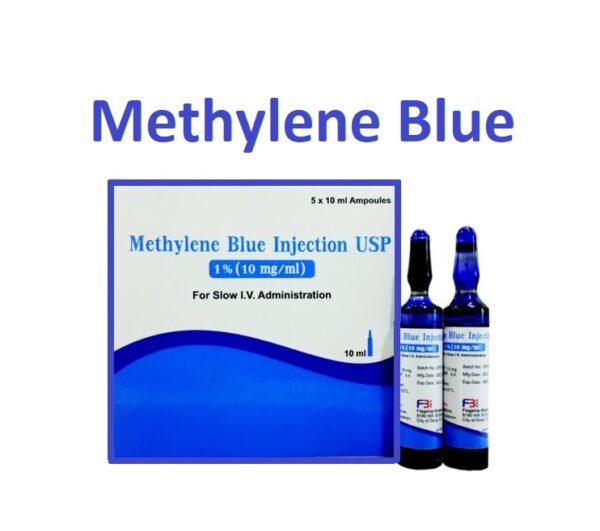
Methylene Blue Dye inhibits nitric oxide and guanylate cyclase. It is used in the treatment of methemoglobinemia. It is also used as a staining dye used in mapping sentinel node in females with breast cancer and as a diagnostic aid in chromoendoscopy.
Methylene blue Uses:
-
Acquired Methemoglobinemia (Provayblue only):
- Used in the treatment of pediatric and adult patients with acquired methemoglobinemia
-
Drug-induced Methemoglobinemia (generic only):
- Used in the treatment of drug-induced methemoglobinemia
-
Off Label Use of Methylene blue in Adults:
- Used in chromoendoscopy (diagnostic aid);
- Used in ifosfamide-induced encephalopathy (treatment and prevention)
- Used in sentinel lymph node mapping in breast cancer surgery
- Used in toenail onychomycosis
- Used in vasoplegia syndrome associated with cardiac surgery
Methylene Blue Dose in Adults:
Methylene Blue Dose in the treatment of Acquired Methemoglobinemia:
- IV: 1 mg per kg over 5 to 30 minutes, may repeat dose 1 hour later if methemoglobin level remains above 30 percent or signs persist;
- Consider alternative therapy if resolution does not occur after 2 doses
Methylene Blue Dose in the treatment of Drug-induced Methemoglobinemia:
- IV: 1 to 2 mg per kg or 25 to 50 mg per m² over several minutes; may be repeated in 1 hour if required.
Methylene Blue Dose in the treatment of Chromoendoscopy (off label):
- Topical: 0.1 percent to 1 percent solution sprayed via a catheter or directly applied onto gastrointestinal mucosa during the procedure.
Methylene Blue Dose in the of Ifosfamide-induced encephalopathy (off-label): Oral, IV:
Note: Treatment may not be required; encephalopathy may improve spontaneously.
-
Prevention:
- 50 mg every 6 to 8 hours.
- Additional data may be required to further define the role of methylene blue in this condition.
-
Treatment:
- 50 mg as a single dose or every 4 to 8 hours until signs resolve.
Methylene Blue Dose in the treatment of Toenails Onychomycosis (off-label):
- Topical: 2 percent solution applied to the affected area(s) at 15-day intervals for 6 months;
- It should be used in conjunction with photodynamic therapy.
Methylene Blue Dose in the treatment of Sentinel node mapping in breast cancer surgery (off-label):
- Intraparenchymal: 5 mL of a 1 percent solution considered once during the procedure.
Methylene Blue Dose in the treatment of Vasoplegia syndrome associated with cardiac surgery (off-label):
- IV: 1.5 to 2 mg per kg over 20 to 60 minutes considered once.
Note:
- Improvement of vasoplegia (eg, increased systemic vascular resistance, reduced vasopressor dosage) has been observed within 1 to 2 hours following methylene blue administration.
- Some have employed the use of continuous infusion (0.5 to 1 mg/kg/hour) after administration of the bolus dose; however, prospective clinical trials are necessary to validate this dosing schema.
Methylene Blue Dose in Childrens:
Note: Products are available in multiple concentrations (0.5% and 1%); use extra precaution when calculating dose volumes.
Methylene Blue Dose in the treatment of acquired Methemoglobinemia (including drug-induced) :
-
Infants, Children, and Adolescents:
- O., IV: 1 to 2 mg/kg may be repeated every 30 to 60 minutes if necessary (e.g., methemoglobin level >30% or signs and symptoms persist).
- Consider alternative treatment if no resolution after 2 doses.
- Intraosseous administration has been reported.
Pregnancy Risk Factor: X
- Some products might not be suitable for pregnant women.
- Antidotes used in general should be considered with the mother's health and prognosis.
- The use of amniocentesis during pregnancy has shown evidence of fetal abnormalities (atresia and jejunum, ileal obstructions).
- However, it has been administered orally with no similar adverse effects.
- Near term intra-amniotic injections can cause adverse events in newborns, including hyperbilirubinemia and skin staining.
- Additionally, neonates exposed in utero to intoxicating substances have experienced hemolytic anemia, phototoxicity, and methemoglobinemia.
- Studies in women who are not pregnant have shown that the potential for exposure to the fetus is lower when methyleneblue is used in lymphatic mapping in breast carcinoma.
- If administered close to term, monitor the newborn for any adverse reactions.
Methylene blue use during breastfeeding:
- It is unknown if breast milk contains methylene blue.
- One manufacturer suggests that you stop breastfeeding during treatment, and continue to breastfeed for up to eight days after the therapy has ended.
Dose in Kidney Disease:
There are no dosage adjustments provided in the manufacturer’s labeling. However, use with caution in severe renal impairment.
Dose in Liver disease:
There are no dosage adjustments provided in the manufacturer’s labeling.
Common Side Effects of Methylene blue:
-
Central nervous system:
- Feeling hot
- Dizziness
-
Dermatologic:
- Hyperhidrosis
- Skin discoloration
-
Gastrointestinal:
- Dysgeusia
- Nausea
-
Genitourinary:
- Urine discoloration
-
Neuromuscular & skeletal:
- Limb pain
Less Common Side Effects of Methylene blue:
-
Cardiovascular:
- Chest Discomfort
- Syncope
- Presyncope
-
Central Nervous System:
- Headache
- Paresthesia
- Infusion-Site Pain
- Sensation Of Cold
- Anxiety
- Chills
- Discomfort At Injection Site
- Local Discomfort
- Malaise
- Orthostatic Dizziness
-
Dermatologic:
- Contact Dermatitis
- Pallor
- Pruritus
- Diaphoresis
- Ecchymosis
- Erythema
-
Gastrointestinal:
- Oral Paresthesia
- Decreased Appetite
- Diarrhea
- Oral Hypoesthesia
- Vomiting
-
Local:
- Catheter Pain
-
Neuromuscular & Skeletal:
- Musculoskeletal Pain
- Arthralgia
- Back Pain
- Muscle Spasm
- Oral Discomfort
-
Respiratory:
- Flu-Like Symptoms
- Dyspnea
Frequency of Side effects Not Defined:
-
Cardiovascular:
- Hypertension
- Palpitations
- Peripheral Edema
- Tachycardia
-
Central Nervous System:
- Confusion
-
Dermatologic:
- Papule
- Phototoxicity
- Skin Discoloration
-
Endocrine & Metabolic:
- Increased Thirst
-
Gastrointestinal:
- Abdominal Pain
- Fecal Discoloration (Blue-Green)
- Flatulence
- Glossalgia
- Lower Abdominal Pain
- Tongue Rash
- Xerostomia
-
Genitourinary:
- Dysuria
-
Hematologic & Oncologic:
- Hemolysis
- Hemolytic Anemia
- Methemoglobinemia
-
Hepatic:
- Hyperbilirubinemia
- Increased Liver Enzymes
-
Local:
- Extravasation
- Infusion Site Reaction (Pruritus, Urticaria, Swelling, And Induration)
-
Neuromuscular & Skeletal:
- Myalgia
-
Ophthalmic:
- Blurred Vision
- Eye Pruritus
- Ocular Hyperemia
-
Respiratory:
- Nasal Congestion
- Oropharyngeal Pain
- Rhinorrhea
- Sneezing
-
Miscellaneous:
- Ulcer (Necrotic)
Contraindications to Methylene blue:
- Hypersensitivity to methyleneblue or any other component of the formulation
- Methylene blue (generic):
- Pregnancy;
- Women who may or are pregnant
- SubQ injection and intraspinal injection
- Provayblue
- Hypersensitivity to any other dye containing thiazine
- Patients with glucose-6-phosphate oxidase deficiency (G6PD)
Warnings and precautions
-
CNS depression:
- CNS depression can lead to mental or physical impairments.
- Patients should be cautious about driving or operating machinery that requires mental alertness.
-
Extravasation:
- It is a vesicant. When administering continuous infusions, make sure that the needle or catheter is properly placed before and during infusion.
- Avoid extravasation. Infuse via central line if possible; monitor IV site closely.
-
Hypersensitivity
- If severe anaphylaxis or hypersensitivity occurs, discontinue use.
-
Methemoglobinemia:
- Methylene blue can cause iron deficiency in infants and patients with G6PD.
- If severe hemolysis occurs, discontinue treatment and seek alternative treatment.
- During administration, monitor methemoglobin levels regularly.
-
Serotonin Syndrome: [US Boxed Warning]
- May cause serious or fatal serotonergic syndrome when used in combination with serotonergic drugs; avoid concomitant use of methylene blue with selective serotonin reuptake inhibitors (SSRIs), serotonin and norepinephrine reuptake inhibitors (SNRIs), and monoamine oxidase inhibitors (MAOI).
- Pay attention to signs of SS in patients.
- Mental status changes (eg: agitation, hallucinations and delirium, coma).
- autonomic instability (eg tachycardia or labile blood pressure; dizziness, diaphoresis; flushing; hyperthermia)
- neuromuscular changes (eg, tremor, rigidity, myoclonus, hyperreflexia, incoordination);
- GI symptoms (eg, nausea, vomiting, diarrhea); and/or
- seizures.
- If symptoms or signs persist, discontinue treatment and start supportive treatment.
-
Hepatic impairment
- Patients with hepatic impairment should be cautious; keep an eye out for drug toxicity.
-
Renal impairment
- Patients with severe impairment should be treated with caution; keep an eye out for drug toxicity.
Methylene blue: Drug Interaction
Note: Drug Interaction Categories:
- Risk Factor C: Monitor When Using Combination
- Risk Factor D: Consider Treatment Modification
- Risk Factor X: Avoid Concomitant Use
Risk Factor C (Monitor therapy) |
|
| Acetylcholinesterase Inhibitors | May diminish the therapeutic effect of Anticholinergic Agents. Anticholinergic Agents may diminish the therapeutic effect of Acetylcholinesterase Inhibitors. |
| Alosetron | May enhance the serotonergic effect of Serotonergic Agents (High Risk). This could result in serotonin syndrome. Management: Monitor for signs and symptoms of serotonin syndrome/serotonin toxicity (eg, hyperreflexia, clonus, hyperthermia, diaphoresis, tremor, autonomic instability, mental status changes) when these agents are combined. |
| Amantadine | May enhance the anticholinergic effect of Anticholinergic Agents. |
| Amifampridine | Agents With Seizure Threshold Lowering Potential may enhance the neuroexcitatory and/or seizure-potentiating effect of Amifampridine. |
| Anticholinergic Agents | May enhance the adverse/toxic effect of other Anticholinergic Agents. |
| Antiemetics (5HT3 Antagonists) | May enhance the serotonergic effect of Serotonergic Agents (High Risk). This could result in serotonin syndrome. Management: Monitor for signs and symptoms of serotonin syndrome/serotonin toxicity (eg, hyperreflexia, clonus, hyperthermia, diaphoresis, tremor, autonomic instability, mental status changes) when these agents are combined. Exceptions: Alosetron; Ondansetron; Ramosetron. |
| Antipsychotic Agents | Serotonergic Agents (High Risk) may enhance the adverse/toxic effect of Antipsychotic Agents. Specifically, serotonergic agents may enhance dopamine blockade, possibly increasing the risk for neuroleptic malignant syndrome. Antipsychotic Agents may enhance the serotonergic effect of Serotonergic Agents (High Risk). This could result in serotonin syndrome. |
| Beta2-Agonists | Monoamine Oxidase Inhibitors may enhance the adverse/toxic effect of Beta2Agonists. |
| Betahistine | Monoamine Oxidase Inhibitors may increase the serum concentration of Betahistine. |
| Blood Glucose Lowering Agents | Monoamine Oxidase Inhibitors may enhance the hypoglycemic effect of Blood Glucose Lowering Agents. |
| Botulinum Toxin-Containing Products | May enhance the anticholinergic effect of Anticholinergic Agents. |
| Brimonidine (Ophthalmic) | Monoamine Oxidase Inhibitors may enhance the adverse/toxic effect of Brimonidine (Ophthalmic). Monoamine Oxidase Inhibitors may increase the serum concentration of Brimonidine (Ophthalmic). |
| Brimonidine (Topical) | Monoamine Oxidase Inhibitors may enhance the adverse/toxic effect of Brimonidine (Topical). Monoamine Oxidase Inhibitors may increase the serum concentration of Brimonidine (Topical). |
| Cannabinoid-Containing Products | Anticholinergic Agents may enhance the tachycardic effect of Cannabinoid-Containing Products. Exceptions: Cannabidiol. |
| Cerebrolysin | May enhance the adverse/toxic effect of Monoamine Oxidase Inhibitors. |
| Chloral Betaine | May enhance the adverse/toxic effect of Anticholinergic Agents. |
| Chlorphenesin Carbamate | May enhance the adverse/toxic effect of Monoamine Oxidase Inhibitors. |
| Clemastine | Monoamine Oxidase Inhibitors may enhance the anticholinergic effect of Clemastine. |
| Dihydrocodeine | May enhance the serotonergic effect of Monoamine Oxidase Inhibitors. This could result in serotonin syndrome. |
| Domperidone | Monoamine Oxidase Inhibitors may enhance the adverse/toxic effect of Domperidone. Monoamine Oxidase Inhibitors may diminish the therapeutic effect of Domperidone. Domperidone may diminish the therapeutic effect of Monoamine Oxidase Inhibitors. |
| Doxapram | Monoamine Oxidase Inhibitors may enhance the hypertensive effect of Doxapram. |
| Doxylamine | Monoamine Oxidase Inhibitors may enhance the anticholinergic effect of Doxylamine. Management: The US manufacturer of Diclegis (doxylamine/pyridoxine) and the manufacturers of Canadian doxylamine products specifically lists use with monoamine oxidase inhibitors as contraindicated. |
| EPINEPHrine (Nasal) | Monoamine Oxidase Inhibitors may enhance the hypertensive effect of EPINEPHrine (Nasal). |
| Epinephrine (Racemic) | Monoamine Oxidase Inhibitors may enhance the hypertensive effect of Epinephrine (Racemic). |
| EPINEPHrine (Systemic) | Monoamine Oxidase Inhibitors may enhance the hypertensive effect of EPINEPHrine (Systemic). |
| Ergot Derivatives | May enhance the serotonergic effect of Serotonergic Agents (High Risk). This could result in serotonin syndrome. Management: Monitor for signs and symptoms of serotonin syndrome/serotonin toxicity (eg, hyperreflexia, clonus, hyperthermia, diaphoresis, tremor, autonomic instability, mental status changes) when these agents are combined. Exceptions: Nicergoline. |
| Esketamine | May enhance the hypertensive effect of Monoamine Oxidase Inhibitors. |
| Gastrointestinal Agents (Prokinetic | Anticholinergic Agents may diminish the therapeutic effect of Gastrointestinal Agents (Prokinetic). |
| Glucagon | Anticholinergic Agents may enhance the adverse/toxic effect of Glucagon. Specifically, the risk of gastrointestinal adverse effects may be increased. |
| Itopride | Anticholinergic Agents may diminish the therapeutic effect of Itopride. |
| Lasmiditan | May enhance the serotonergic effect of Serotonergic Agents (High Risk). This could result in serotonin syndrome. Management: Monitor for signs and symptoms of serotonin syndrome/serotonin toxicity (eg, hyperreflexia, clonus, hyperthermia, diaphoresis, tremor, autonomic instability, mental status changes) when these agents are combined. |
| Lorcaserin | May enhance the serotonergic effect of Serotonergic Agents (High Risk). This could result in serotonin syndrome. Management: Monitor for signs and symptoms of serotonin syndrome/serotonin toxicity (eg, hyperreflexia, clonus, hyperthermia, diaphoresis, tremor, autonomic instability, mental status changes) when these agents are combined. |
| Metaraminol | Monoamine Oxidase Inhibitors may enhance the hypertensive effect of Metaraminol. |
| Metaxalone | May enhance the serotonergic effect of Serotonergic Agents (High Risk). This could result in serotonin syndrome. Management: Monitor for signs and symptoms of serotonin syndrome/serotonin toxicity (eg, hyperreflexia, clonus, hyperthermia, diaphoresis, tremor, autonomic instability, mental status changes) when these agents are combined. |
| Mirabegron | Anticholinergic Agents may enhance the adverse/toxic effect of Mirabegron. |
| Nitroglycerin | Anticholinergic Agents may decrease the absorption of Nitroglycerin. Specifically, anticholinergic agents may decrease the dissolution of sublingual nitroglycerin tablets, possibly impairing or slowing nitroglycerin absorption. |
| Norepinephrine | Monoamine Oxidase Inhibitors may enhance the hypertensive effect of Norepinephrine. |
| Ondansetron | May enhance the serotonergic effect of Serotonergic Agents (High Risk). This could result in serotonin syndrome. Management: Monitor for signs and symptoms of serotonin syndrome/serotonin toxicity (eg, hyperreflexia, clonus, hyperthermia, diaphoresis, tremor, autonomic instability, mental status changes) when these agents are combined. |
| Opioid Agonists | Anticholinergic Agents may enhance the adverse/toxic effect of Opioid Agonists. Specifically, the risk for constipation and urinary retention may be increased with this combination. |
| Opioid Agonists | May enhance the serotonergic effect of Serotonergic Agents (High Risk). This could result in serotonin syndrome. Management: Monitor for signs and symptoms of serotonin syndrome/serotonin toxicity (eg, hyperreflexia, clonus, hyperthermia, diaphoresis, tremor, autonomic instability, mental status changes) when these agents are combined. Exceptions: FentaNYL; Meperidine; TraMADol. |
| Oxitriptan | Serotonergic Agents (High Risk) may enhance the serotonergic effect of Oxitriptan. This could result in serotonin syndrome. Management: Monitor for signs and symptoms of serotonin syndrome/serotonin toxicity (eg, hyperreflexia, clonus, hyperthermia, diaphoresis, tremor, autonomic instability, mental status changes) when these agents are combined. |
| Ramosetron | Anticholinergic Agents may enhance the constipating effect of Ramosetron. |
| Ramosetron | May enhance the serotonergic effect of Serotonergic Agents (High Risk). This could result in serotonin syndrome. Management: Monitor for signs and symptoms of serotonin syndrome/serotonin toxicity (eg, hyperreflexia, clonus, hyperthermia, diaphoresis, tremor, autonomic instability, mental status changes) when these agents are combined. |
| St John's Wort | May enhance the serotonergic effect of Serotonergic Agents (High Risk). This could result in serotonin syndrome. St John's Wort may decrease the serum concentration of Serotonergic Agents (High Risk). Management: Monitor for signs and symptoms of serotonin syndrome/serotonin toxicity (eg, hyperreflexia, clonus, hyperthermia, diaphoresis, tremor, autonomic instability, mental status changes) when these agents are combined. |
| Syrian Rue | May enhance the serotonergic effect of Serotonergic Agents (High Risk). This could result in serotonin syndrome. Management: Monitor for signs and symptoms of serotonin syndrome/serotonin toxicity (eg, hyperreflexia, clonus, hyperthermia, diaphoresis, tremor, autonomic instability, mental status changes) when these agents are combined. |
| Thiazide and Thiazide-Like Diuretics | Anticholinergic Agents may increase the serum concentration of Thiazide and Thiazide-Like Diuretics. |
| Topiramate | Anticholinergic Agents may enhance the adverse/toxic effect of Topiramate. |
Risk Factor D (Consider therapy modification) |
|
| Benzhydrocodone | May enhance the serotonergic effect of Monoamine Oxidase Inhibitors. This could result in serotonin syndrome. Management: The use of benzhydrocodone is not recommended for patients taking monoamine oxidase inhibitors (MAOIs) or within 14 days of MAOI discontinuation. |
| COMT Inhibitors | May enhance the adverse/toxic effect of Monoamine Oxidase Inhibitors. |
| DOPamine | Monoamine Oxidase Inhibitors may enhance the hypertensive effect of DOPamine. Management: Initiate dopamine at no greater than one-tenth (1/10) of the usual dose in patients who are taking (or have taken within the last 2 to 3 weeks) monoamine oxidase inhibitors. Monitor for an exaggerated hypertensive response to dopamine. |
| HYDROcodone | Monoamine Oxidase Inhibitors may enhance the adverse/toxic effect of HYDROcodone. Management: Consider alternatives to this combination when possible. |
| Iohexol | Agents With Seizure Threshold Lowering Potential may enhance the adverse/toxic effect of Iohexol. Specifically, the risk for seizures may be increased. Management: Discontinue agents that may lower the seizure threshold 48 hours prior to intrathecal use of iohexol. Wait at least 24 hours after the procedure to resume such agents. In nonelective procedures, consider use of prophylactic anticonvulsants. |
| Iomeprol | Agents With Seizure Threshold Lowering Potential may enhance the adverse/toxic effect of Iomeprol. Specifically, the risk for seizures may be increased. Management: Discontinue agents that may lower the seizure threshold 48 hours prior to intrathecal use of iomeprol. Wait at least 24 hours after the procedure to resume such agents. In nonelective procedures, consider use of prophylactic anticonvulsants. |
| Iopamidol | Agents With Seizure Threshold Lowering Potential may enhance the adverse/toxic effect of Iopamidol. Specifically, the risk for seizures may be increased. Management: Discontinue agents that may lower the seizure threshold 48 hours prior to intrathecal use of iopamidol. Wait at least 24 hours after the procedure to resume such agents. In nonelective procedures, consider use of prophylactic anticonvulsants. |
| Lithium | Methylene Blue may enhance the serotonergic effect of Lithium. This could result in serotonin syndrome. Management: Consider alternatives to this drug combination. If combined, monitor for signs and symptoms of serotonin syndrome/serotonin toxicity (eg, hyperreflexia, clonus, hyperthermia, diaphoresis, tremor, autonomic instability, mental status changes). |
| Pramlintide | May enhance the anticholinergic effect of Anticholinergic Agents. These effects are specific to the GI tract. |
| Remifentanil | Monoamine Oxidase Inhibitors may enhance the adverse/toxic effect of Remifentanil. Specifically, the risk for opioid toxicity (eg, respiratory depression) may be increased. Remifentanil may enhance the serotonergic effect of Monoamine Oxidase Inhibitors. This could result in serotonin syndrome. Management: The use of remifentanil is not recommended for patients taking monoamine oxidase inhibitors (MAOIs) or within 14 days of MAOI discontinuation. |
| Reserpine | Monoamine Oxidase Inhibitors may enhance the adverse/toxic effect of Reserpine. Existing MAOI therapy can result in paradoxical effects of added reserpine (e.g., excitation, hypertension). Management: Monoamine oxidase inhibitors (MAOIs) should be avoided or used with great caution in patients who are also receiving reserpine. |
| Secretin | Anticholinergic Agents may diminish the therapeutic effect of Secretin. Management: Avoid concomitant use of anticholinergic agents and secretin. Discontinue anticholinergic agents at least 5 half-lives prior to administration of secretin. |
| Serotonergic Opioids (High Risk) | Methylene Blue may enhance the serotonergic effect of Serotonergic Opioids (High Risk). This could result in serotonin syndrome. Management: Consider alternatives to this drug combination. If combined, monitor for signs and symptoms of serotonin syndrome/serotonin toxicity (eg, hyperreflexia, clonus, hyperthermia, diaphoresis, tremor, autonomic instability, mental status changes). |
Risk Factor X (Avoid combination) |
|
| Aclidinium | May enhance the anticholinergic effect of Anticholinergic Agents. |
| Alcohol (Ethyl | May enhance the adverse/toxic effect of Monoamine Oxidase Inhibitors. |
| Alpha-/Beta-Agonists (Indirect-Acting | Monoamine Oxidase Inhibitors may enhance the hypertensive effect of Alpha-/Beta-Agonists (Indirect-Acting). While linezolid is expected to interact via this mechanism, management recommendations differ from other monoamine oxidase inhibitors. Refer to linezolid specific monographs for details. |
| Alpha1-Agonists | Monoamine Oxidase Inhibitors may enhance the hypertensive effect of Alpha1Agonists. While linezolid is expected to interact via this mechanism, management recommendations differ from other monoamine oxidase inhibitors. Refer to linezolid specific monographs for details. |
| Amphetamines | Monoamine Oxidase Inhibitors may enhance the hypertensive effect of Amphetamines. While linezolid and tedizolid may interact via this mechanism, management recommendations differ from other monoamine oxidase inhibitors. Refer to monographs specific to those agents for details. |
| Apraclonidine | Monoamine Oxidase Inhibitors may enhance the adverse/toxic effect of Apraclonidine. Monoamine Oxidase Inhibitors may increase the serum concentration of Apraclonidine. |
| AtoMOXetine | Monoamine Oxidase Inhibitors may enhance the neurotoxic (central) effect of AtoMOXetine. |
| Atropine (Ophthalmic) | Monoamine Oxidase Inhibitors may enhance the hypertensive effect of Atropine (Ophthalmic). |
| Bezafibrate | Monoamine Oxidase Inhibitors may enhance the adverse/toxic effect of Bezafibrate. |
| Buprenorphine | May enhance the adverse/toxic effect of Monoamine Oxidase Inhibitors. |
| BuPROPion | Monoamine Oxidase Inhibitors may enhance the hypertensive effect of BuPROPion. |
| BusPIRone | May enhance the serotonergic effect of Methylene Blue. This could result in serotonin syndrome. |
| CarBAMazepine | May enhance the adverse/toxic effect of Monoamine Oxidase Inhibitors. Management: Avoid concurrent use of carbamazepine during, or within 14 days of discontinuing, treatment with a monoamine oxidase inhibitor. |
| Cimetropium | Anticholinergic Agents may enhance the anticholinergic effect of Cimetropium. |
| Codeine | Monoamine Oxidase Inhibitors may enhance the adverse/toxic effect of Codeine. |
| Cyclobenzaprine | May enhance the serotonergic effect of Monoamine Oxidase Inhibitors. This could result in serotonin syndrome. |
| Cyproheptadine | Monoamine Oxidase Inhibitors may enhance the anticholinergic effect of Cyproheptadine. Cyproheptadine may diminish the serotonergic effect of Monoamine Oxidase Inhibitors. |
| Dapoxetine | May enhance the serotonergic effect of Serotonergic Agents (High Risk). This could result in serotonin syndrome. Management: Do not use serotonergic agents (high risk) with dapoxetine or within 7 days of serotonergic agent discontinuation. Do not use dapoxetine within 14 days of monoamine oxidase inhibitor use. Dapoxetine labeling lists this combination as contraindicated. |
| Deutetrabenazine | Monoamine Oxidase Inhibitors may enhance the adverse/toxic effect of Deutetrabenazine. |
| Dexmethylphenidate | Monoamine Oxidase Inhibitors may enhance the hypertensive effect of Dexmethylphenidate. |
| Dextromethorphan | Monoamine Oxidase Inhibitors may enhance the serotonergic effect of Dextromethorphan. This may cause serotonin syndrome. |
| Diethylpropion | Monoamine Oxidase Inhibitors may enhance the hypertensive effect of Diethylpropion. |
| Diphenoxylate | May enhance the hypertensive effect of Monoamine Oxidase Inhibitors. |
| Droxidopa | Monoamine Oxidase Inhibitors may enhance the hypertensive effect of Droxidopa. |
| Eluxadoline | Anticholinergic Agents may enhance the constipating effect of Eluxadoline. |
| EPINEPHrine (Oral Inhalation | Monoamine Oxidase Inhibitors may enhance the hypertensive effect of EPINEPHrine (Oral Inhalation). |
| Glycopyrrolate (Oral Inhalation | Anticholinergic Agents may enhance the anticholinergic effect of Glycopyrrolate (Oral Inhalation). |
| Glycopyrronium (Topical | May enhance the anticholinergic effect of Anticholinergic Agents. |
| Guanethidine | May enhance the adverse/toxic effect of Monoamine Oxidase Inhibitors. |
| Heroin | Monoamine Oxidase Inhibitors may enhance the adverse/toxic effect of Heroin. |
| HYDROmorphone | Monoamine Oxidase Inhibitors may enhance the adverse/toxic effect of HYDROmorphone. |
| Indoramin | Monoamine Oxidase Inhibitors may enhance the hypotensive effect of Indoramin. |
| Iobenguane Radiopharmaceutical Products | Monoamine Oxidase Inhibitors may diminish the therapeutic effect of Iobenguane Radiopharmaceutical Products. Management: Discontinue all drugs that may inhibit or interfere with catecholamine transport or uptake for at least 5 biological half-lives before iobenguane administration. Do not administer these drugs until at least 7 days after each iobenguane dose. |
| Ipratropium (Oral Inhalation | May enhance the anticholinergic effect of Anticholinergic Agents. |
| Isometheptene | Monoamine Oxidase Inhibitors may enhance the adverse/toxic effect of Isometheptene. |
| Levodopa-Containing Products | May enhance the adverse/toxic effect of Monoamine Oxidase Inhibitors. Of particular concern is the development of hypertensive reactions when levodopa is used with nonselective MAOI. |
| Levomethadone | May enhance the adverse/toxic effect of Monoamine Oxidase Inhibitors. |
| Levonordefrin | Monoamine Oxidase Inhibitors may enhance the hypertensive effect of Levonordefrin. |
| Levosulpiride | Anticholinergic Agents may diminish the therapeutic effect of Levosulpiride. |
| Linezolid | Methylene Blue may enhance the serotonergic effect of Linezolid. This could result in serotonin syndrome. |
| Maprotiline | May enhance the adverse/toxic effect of Monoamine Oxidase Inhibitors. |
| Meptazinol | Monoamine Oxidase Inhibitors may enhance the adverse/toxic effect of Meptazinol. |
| Mequitazine | Monoamine Oxidase Inhibitors may enhance the anticholinergic effect of Mequitazine. |
| Methadone | May enhance the serotonergic effect of Monoamine Oxidase Inhibitors. This could result in serotonin syndrome. |
| Methyldopa | Monoamine Oxidase Inhibitors may enhance the adverse/toxic effect of Methyldopa. |
| Methylphenidate | Monoamine Oxidase Inhibitors may enhance the hypertensive effect of Methylphenidate. |
| Metoclopramide | May enhance the hypertensive effect of Monoamine Oxidase Inhibitors. |
| Mianserin | Monoamine Oxidase Inhibitors may enhance the neurotoxic effect of Mianserin. |
| Monoamine Oxidase Inhibitors (Antidepressant) | May enhance the serotonergic effect of Methylene Blue. This could result in serotonin syndrome. |
| Monoamine Oxidase Inhibitors (Type B) | May enhance the serotonergic effect of Methylene Blue. This could result in serotonin syndrome. |
| Morphine (Systemic) | Monoamine Oxidase Inhibitors may enhance the adverse/toxic effect of Morphine (Systemic). |
| Nefazodone | May enhance the serotonergic effect of Methylene Blue. This could result in serotonin syndrome. |
| Nefopam | Monoamine Oxidase Inhibitors may enhance the adverse/toxic effect of Nefopam. |
| Normethadone | Monoamine Oxidase Inhibitors may enhance the adverse/toxic effect of Normethadone. |
| Opium | Monoamine Oxidase Inhibitors may enhance the adverse/toxic effect of Opium. |
| Oxatomide | May enhance the anticholinergic effect of Anticholinergic Agents. |
| OxyCODONE | May enhance the serotonergic effect of Monoamine Oxidase Inhibitors. This could result in serotonin syndrome. |
| OxyMORphone | May enhance the adverse/toxic effect of Monoamine Oxidase Inhibitors. |
| Pheniramine | May enhance the anticholinergic effect of Monoamine Oxidase Inhibitors. |
| Pholcodine | May enhance the serotonergic effect of Monoamine Oxidase Inhibitors. This could result in serotonin syndrome. |
| Pizotifen | Monoamine Oxidase Inhibitors may enhance the anticholinergic effect of Pizotifen. |
| Potassium Chloride | Anticholinergic Agents may enhance the ulcerogenic effect of Potassium Chloride. Management: Patients on drugs with substantial anticholinergic effects should avoid using any solid oral dosage form of potassium chloride. |
| Potassium Citrate | Anticholinergic Agents may enhance the ulcerogenic effect of Potassium Citrate. |
| Reboxetine | Monoamine Oxidase Inhibitors may enhance the adverse/toxic effect of Reboxetine. |
| Revefenacin | Anticholinergic Agents may enhance the anticholinergic effect of Revefenacin. |
| Selective Serotonin Reuptake Inhibitors | May enhance the serotonergic effect of Methylene Blue. This could result in serotonin syndrome. Exceptions: Dapoxetine. |
| Serotonergic Non-Opioid CNS Depressants | May enhance the serotonergic effect of Methylene Blue. This could result in serotonin syndrome. |
| Serotonin 5-HT1D Receptor Agonists (Triptans | May enhance the serotonergic effect of Monoamine Oxidase Inhibitors. This could result in serotonin syndrome. Monoamine Oxidase Inhibitors may increase the serum concentration of Serotonin 5-HT1D Receptor Agonists (Triptans). |
| Serotonin/Norepinephrine Reuptake Inhibitors | May enhance the serotonergic effect of Methylene Blue. This could result in serotonin syndrome. |
| Solriamfetol | Monoamine Oxidase Inhibitors may enhance the hypertensive effect of Solriamfetol. |
| SUFentanil | May enhance the adverse/toxic effect of Monoamine Oxidase Inhibitors. Specifically, the risk for serotonin syndrome or opioid toxicities (eg, respiratory depression, coma) may be increased. Management: Sufentanil should not be used with monoamine oxidase (MAO) inhibitors (or within 14 days of stopping an MAO inhibitor) due to the potential for serotonin syndrome and/or excessive CNS depression. |
| Tapentadol | May enhance the adverse/toxic effect of Monoamine Oxidase Inhibitors. Specifically, the additive effects of norepinephrine may lead to adverse cardiovascular effects. Tapentadol may enhance the serotonergic effect of Monoamine Oxidase Inhibitors. This could result in serotonin syndrome. |
| Tetrabenazine | May enhance the adverse/toxic effect of Monoamine Oxidase Inhibitors. |
| Tetrahydrozoline (Nasal | Monoamine Oxidase Inhibitors may enhance the hypertensive effect of Tetrahydrozoline (Nasal). |
| Tianeptine | May enhance the adverse/toxic effect of Monoamine Oxidase Inhibitors. |
| Tiotropium | Anticholinergic Agents may enhance the anticholinergic effect of Tiotropium. |
| Tricyclic Antidepressants | May enhance the serotonergic effect of Methylene Blue. This could result in serotonin syndrome. |
| Tryptophan | May enhance the serotonergic effect of Methylene Blue. This could result in serotonin syndrome. |
| Umeclidinium | May enhance the anticholinergic effect of Anticholinergic Agents. |
| Valbenazine | May enhance the adverse/toxic effect of Monoamine Oxidase Inhibitors. |
Monitoring parameters:
- Arterial blood gases;
- cardiac monitoring (patients with pre-existing pulmonary and/or cardiac disease);
- CBC;
- methemoglobin levels (co-oximetry yields a direct and accurate measure of methemoglobin levels); pulse oximeter (will not provide accurate measurement of oxygenation when methemoglobin levels are >35% or following methylene blue administration);
- renal function;
- signs and symptoms of methemoglobinemia such as pallor, cyanosis, nausea, muscle weakness, dizziness, confusion, agitation, dyspnea, and tachycardia;
- transcutaneous Oxygen saturation;
- monitor infusion site for vesication.
How to administer Methylene blue?
IV:
- Generic:
- Considered undiluted by direct IV injection slowly over several minutes.
- ProvayBlue:
- Considered IV over 5 to 30 minutes;
- do not administer subcutaneously.
- It may be diluted (in D5W only) prior to consideration to reduce the pain at the site of the injection.
It is a vesicant. Use a proper needle or catheter placement prior to and during infusion to restrict extravasation.
Extravasation management:
- If extravasation occurs, stop infusion immediately and disconnect (leave cannula/needle in place);
- Gently aspirate extravasated solution (do NOT flush the line);
- Remove needle/cannula and elevate extremity.
- Use dry warm compresses (based on mechanism of extravasation injury) proximal to the injection site.
Nitroglycerin 2% ointment (based on mechanism of extravasation injury):
- Apply a 1inch strip of topical nitroglycerin 2% ointment to the site of ischemia (may repeat every 8 hours as necessary).
- If a prolonged or continuous infusion is employed, administration via the central line is recommended due to the risk of extravasation injury.
Ifosfamide-induced encephalopathy (off-label use):
IV:
- Methylene blue may be administered either undiluted as a slow IV push over at least 5 minutes or diluted and infused over 5 to 30 minutes.
- Consider the concomitant dextrose consideration, rarely in patients who are hypoglycemic, to ensure the efficacy of methylene blue.
Oral:
- Administer mixed in fruit juice to mask the taste.
Topical:
- When used as a diagnostic aid (off-label), spray or directly apply the solution to the affected mucosa; methylene blue is used in conjunction with other preparatory methods (procedure-dependent).
- When used for the treatment of onychomycosis (off-label), apply to the affected area and wait 3 minutes for the solution to soak in followed by photodynamic therapy.
Intraparenchymal (off-label route):
- Consider as an injection directly into nodal tissue.
- Do NOT administer subcutaneously or intrathecally.
Mechanism of action of Methylene Blue:
- Low concentrations of Methylene blue accelerate the conversion from methemoglobin into hemoglobin Cyanide toxicity is when it reacts with cyanide to create cyanmethemoglobin.
- This prevents cyanide from interfering with the cytochrome systems. It can have opposite effects in high concentrations.
- It converts ferrous ion reduced hemoglobin into ferric ion, forming methemoglobin
- Methylene blue might be used to treat vasoplegia by having a direct inhibitory action on endothelial Nitric Ox Synthesise (eNOS) and possibly inducible NOS(iNOS) by oxidation enzyme-bound ferrous Iron.
- Methylene blue blocks the formation cyclic-guanosine monophosphate cGMP by inhibiting the Guanylate cyclase enzyme by binding to iron within the heme complex, and consequently reducing vasorelaxation.
The onset of action:
- Reduction of methemoglobin: IV: 30 to 60 minutes
Absorption:
- Oral: 53% to 97%
Protein binding:
- 94%
Metabolism:
- Likely undergoes first-pass metabolism or distribution; peripheral reduction to leukomethylene blue.
Half-life elimination:
- Not well-defined: 5 to 6.5 hours
- ProvayBlue: ~24 hours
Time to peak:
- Oral: 1 to 2 hours
- IV: 30 minutes
Excretion:
- Generic: In feces, urine, and bile (~33 percent as leukomethylene blue).
- ProvayBlue: Urine (~40 percent unchanged)
International Brands of Methylene blue:
- ProvayBlue
- Blumet
- Proveblue
Methylene blue Brand Names in Pakistan:
There is no brand available in pakistan.
.png)


