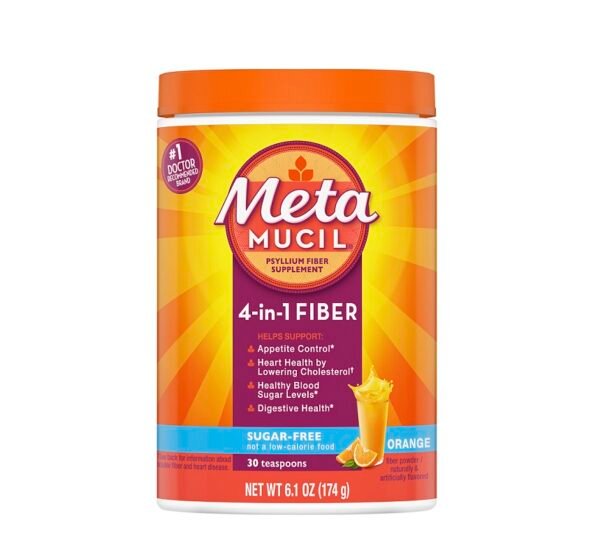
Psyllium Husk Powder is used to treat patients with occasional constipation, diabetes mellitus as an adjunct to diet and exercise, and coronary heart disease. It increases stool content and reduces transit time. It is also used as an adjunct to diet and medications for the treatment of patients with dyslipidemias.
Psyllium Uses:
-
Constipation:
- It is indicated for the treatment of occasional constipation
-
Reduce the risk of coronary heart disease:
- It is added to a regular diet to reduce the risk of coronary heart disease (CHD)
-
Dietary fiber supplement:
- It is used as a dietary fiber supplement
-
Off Label Use of Psyllium in Adults:
- It is used in the management of diabetes mellitus as an adjunct to diet and medications.
- It is also used in the management of patients with irritable bowel syndrome.
Psyllium Dose in Adults
Dosing guidelines vary, however the dose should be adjusted gradually until effects are observed.
Psyllium Husk Powder Dose in the treatment of Constipation:
- 2.5 to 30 g orally in two to four divided doses per day.
Dose in the Reduce risk of CHD:
- Soluble fiber 7 g or more equivalent to psyllium seed husk of 10.2 g or more orally per day.
Dose in the treatment of type 2 Diabetes mellitus (adjunctive therapy) (off-label):
- 6.8 to 13.6 g/day orally in two divided doses.
Dose in the treatment of Irritable bowel syndrome (off-label):
- 10 g/day orally in 1 or 2 divided doses.
Psyllium Dose in Childrens
Psyllium Husk Powder Dose as Adequate intake for total fiber: Oral:
Note: The dosing of daily fiber intake varies. When assessing the total daily intake of fiber, the fiber in other food items should also be considered.
AAP/NHLBI recommendation: Minimum intake:
-
Children 2 to 10 years:
- Daily dietary intake in g/day = Age in years + 5 g
IOM recommendation:
-
Children 1 to 3 years:
- 19 g/day
-
Children 4 to 8 years:
- 25 g/day
-
Children and Adolescents 9 to 13 years:
- Male: 31 g/day;
- Female: 26 g/day
-
Adolescents: 14 to 18 years:
- Male: 38 g/day;
- Female: 26 g/day
Dose in the Bowel movement regularity: Oral:
-
Children 6 to <12 years:
- 25 to 15 g/day in one to three divided doses per day.
-
Children ≥12 years and Adolescents:
- 5 to 30 g/day in one to three divided doses per day.
Dose in the treatment of Hypercholesterolemia; adjunct treatment with dietary management:
-
Children 2 to <12 years:
- 6 g/day in 1 to 3 divided doses
-
Children ≥12 years and Adolescents:
- 12 g/day in 1 to 3 divided doses
Pregnancy Risk Category:
- It can be used during pregnancy to treat occasional constipation.
- It cannot be absorbed into the systemic circulation so it should be taken with fluids.
Dose in Kidney disease:
There are no dosage adjustments provided in the manufacturer's labeling.
Dose in Liver disease:
There are no dosage adjustments provided in the manufacturer's labeling.
Side effects of Psyllium Husk Powder:
-
Gastrointestinal:
- Abdominal Cramps
- Constipation
- Diarrhea
- Esophageal Obstruction
- Intestinal Obstruction
-
Hypersensitivity:
- Anaphylaxis (upon inhalation in susceptible individuals)
-
Ophthalmic:
- Allergic conjunctivitis (rhinoconjunctivitis)
-
Respiratory:
- Bronchospasm
Contraindications to Psyllium Husk Powder:
- Allergy to psyllium, or any component of this formulation
- fecal impaction
- Obstructive GI
Warnings and precautions
-
Hypersensitivity reactions
- Hypersensitive individuals may experience allergic reactions after inhaling or eating psyllium.
-
Coronary heart disease (CHD).
- Patients with coronary heart disease should only take the drug with a low-fat diet.
-
Gastrointestinal Disease:
- Patients with esophageal strictures or stenosis, as well as ulcers, who have difficulty swallowing, or have intestinal adhesion, should be cautious.
Monitoring Parameters:
None mentioned.
How to administer Psyllium Husk Powder?
- It is taken orally followed by at least a glass of milk, water, or juice.
- The fiber is mixed with a glass of liquid and swallowed.
- The capsules should be taken as one capsule at a time.
- Patients who require more than one dose should take it in two or three divided doses.
- If concomitant medications are to be taken, they should be spaced at least two hours between the dose.
Use in patients with diabetes mellitus, type 2 as adjunctive therapy (off-label use):
- Administer the dose just before meals.
Irritable bowel syndrome (off-label use):
- Administer the dose with meals by mixing with food, preferably in yogurt.
Mechanism of action of Psyllium Husk Powder:
It is a soluble fibre that absorbs water from your intestine.
The beginning of action:
- It can relieve constipation within 12 to 72 hours.
Absorption:
- It is not absorbed by the GIT.
International Brand Names of Psyllium Husk Powder:
- Evac
- Fiber Therapy
- Geri-Mucil
- Konsyl Daily Fiber
- Konsyl Original Formula
- Konsyl
- Konsyl-D
- Metamucil MultiHealth Fiber
- Metamucil
- Mucilin SF
- Mucilin
- Natural Fiber Therapy
- Natural Fiber
- Natural Psyllium Seed
- Natural Vegetable Fiber
- Reguloid
- Sorbulax
- Colofiber
- Defenorm
- Euromucil
- Fiberad
- Fibermate
- Fibral
- Fibrocol
- Fibrolax
- Fybogel
- Konsyl
- Laxamucil
- Lunelax
- Metamucil
- Mucofalk
- Mucofalk Orange
- Mulax
- Mutacil
- Pal Mucil Polvo Vegetal Fino
- Plenum
- Regulan
- Transilane
Psyllium Brand Names in Pakistan:
Fibo sachet and Jar.
.png)


