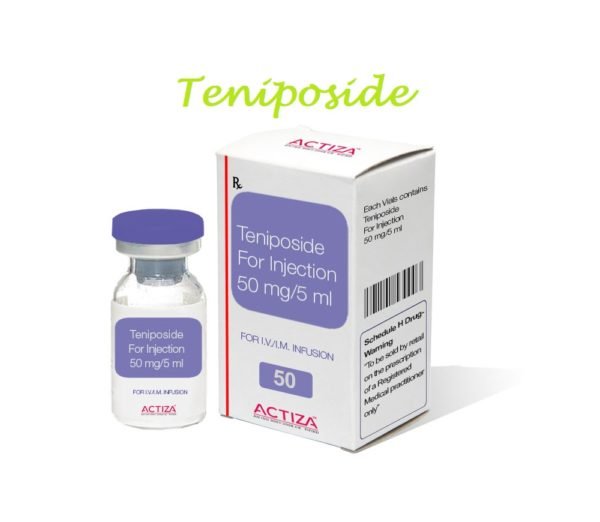
Teniposide is a chemotherapeutic medicine (anti-cancer medicine) that is classified as "Topoisomerase inhibitor".
Indications of Teniposide:
-
Refractory Acute lymphoblastic leukemia:
- It is used for the treatment of refractory childhood acute lymphoblastic leukemia in combination with other chemotherapy.
-
Off Label Use of Teniposide in Adults:
- Acute lymphoblastic leukemia
Teniposide Dose in Adults
Note: First cycle should be given at half the actual dose to patients with Down syndrome and leukemia due to more incidence of myelosuppression.
Teniposide dose in the treatment of Acute lymphoblastic leukemia (consolidation treatment in combination chemotherapy):
- 165 mg/m² intravenous on days 1, 4, 8, and 11 of alternating consolidation cycle
Teniposide Dose in Childrens
Teniposide dose in the treatment of Acute lymphoblastic leukemia (combination therapy):
-
Infants ≥6 months, Children, and Adolescents:
- Regimens may vary: 165 mg/m² intravenous twice weekly for 8 to 9 doses or 250 mg/m weekly for 4 to 8 weeks
Teniposide dose in the treatment of high-risk Neuroblastoma:
-
Children and Adolescents:
- 100 mg/m² intravenous administered 48 hours after completion of a 6 hour cisplatin infusion dose every 3 weeks.
Pregnancy Risk Category: D
- Studies on animal reproduction revealed that there were adverse effects.
- Teniposide can cause harm to the fetus so it is best to avoid it during pregnancy.
Use while breastfeeding
- It is not known if breast milk contains teniposide.
- The importance of the mother's treatment will determine whether or not to stop breastfeeding.
Teniposide Dose adjustment in renal disease:
- There are no specific dosage adjustments provided in the manufacturer’s labeling.
- However, dosage adjustment is required with significant renal impairment.
Dose adjustment in liver disease:
- There are no specific dosage adjustments provided in the manufacturer’s labeling.
- However, dosage adjustment is required with significant hepatic impairment.
Common Side Effects of Teniposide:
-
Gastrointestinal:
- Mucositis
- Diarrhea
- Nausea And Vomiting
-
Hematologic & Oncologic:
- Neutropenia
- Leukopenia
- Anemia
- Thrombocytopenia
- Bone Marrow Depression
-
Infection:
- Infection
Less Common Side Effects of Teniposide Include:
-
Cardiovascular:
- Hypotension
-
Dermatologic:
- Alopecia
- Skin Rash
-
Hematologic & Oncologic:
- Hemorrhage
-
Hypersensitivity:
- Hypersensitivity Reaction
-
Miscellaneous:
- Fever
Contraindication to Teniposide:
Hypersensitivity to teniposide, polyoxyl35/polyoxyethylated casting oil (Cremophor EL) or any other component of the formulation
Warnings and precautions
-
Suppression of bone marrow: [US Boxed Warning]
- It can lead to severe myelosuppression, which can result in fatal infections or bleeding. Therefore, it is important to monitor blood counts.
-
Extravasation
- It is an irritant. It is important to position the catheter/needle correctly as it can cause tissue necrosis or thrombophlebitis (if extravasation occurs).
-
Hypersensitivity [US Boxed Warning]
- Hypersensitivity reactions include anaphylaxis and bronchospasm as well as dyspnea.
- It is important to stop the infusion immediately and give treatment with Epinephrine with or without antihistamines and corticosteroids.
- If there is a history of hypersensitivity in the past, recurrences are common. Premedication with antihistamines and corticosteroids is advised.
-
Hypotension
- Hypotension can result. Slow infusion for at least 30-60 minutes should be avoided.
-
High doses can cause toxicities
- CNS depression and metabolic acidosis are more common when the drug is administered in high doses or combined with antiemetics.
Teniposide: Drug Interaction
|
Aprepitant |
May increase the serum concentration of CYP3A4 Substrates (High risk with Inhibitors). |
|
Bosentan |
May decrease the serum concentration of CYP3A4 Substrates (High risk with Inducers). |
|
Chloramphenicol (Ophthalmic) |
May enhance the adverse/toxic effect of Myelosuppressive Agents. |
|
Clofazimine |
May increase the serum concentration of CYP3A4 Substrates (High risk with Inhibitors). |
|
CloZAPine |
Myelosuppressive Agents may enhance the adverse/toxic effect of CloZAPine. Specifically, the risk for neutropenia may be increased. |
|
Coccidioides immitis Skin Test |
Immunosuppressants may diminish the diagnostic effect of Coccidioides immitis Skin Test. |
|
CYP3A4 Inducers (Moderate) |
May decrease the serum concentration of CYP3A4 Substrates (High risk with Inducers). |
|
CYP3A4 Inhibitors (Moderate) |
May decrease the metabolism of CYP3A4 Substrates (High risk with Inhibitors). |
|
Deferasirox |
May decrease the serum concentration of CYP3A4 Substrates (High risk with Inducers). |
|
Denosumab |
May enhance the adverse/toxic effect of Immunosuppressants. Specifically, the risk for serious infections may be increased. |
|
Duvelisib |
May increase the serum concentration of CYP3A4 Substrates (High risk with Inhibitors). |
|
Erdafitinib |
May decrease the serum concentration of CYP3A4 Substrates (High risk with Inducers). |
|
Erdafitinib |
May increase the serum concentration of CYP3A4 Substrates (High risk with Inhibitors). |
|
Erdafitinib |
May increase the serum concentration of P-glycoprotein/ABCB1 Substrates. |
|
Fosaprepitant |
May increase the serum concentration of CYP3A4 Substrates (High risk with Inhibitors). |
|
Fosnetupitant |
May increase the serum concentration of CYP3A4 Substrates (High risk with Inhibitors). |
|
Ivosidenib |
May decrease the serum concentration of CYP3A4 Substrates (High risk with Inducers). |
|
Larotrectinib |
May increase the serum concentration of CYP3A4 Substrates (High risk with Inhibitors). |
|
Mesalamine |
May enhance the myelosuppressive effect of Myelosuppressive Agents. |
|
Netupitant |
May increase the serum concentration of CYP3A4 Substrates (High risk with Inhibitors). |
|
Ocrelizumab |
May enhance the immunosuppressive effect of Immunosuppressants. |
|
Palbociclib |
May increase the serum concentration of CYP3A4 Substrates (High risk with Inhibitors). |
|
P-glycoprotein/ABCB1 Inhibitors |
May increase the serum concentration of Pglycoprotein/ABCB1 Substrates. P-glycoprotein inhibitors may also enhance the distribution of pglycoprotein substrates to specific cells/tissues/organs where p-glycoprotein is present in large amounts (e.g., brain, T-lymphocytes, testes, etc.). |
|
Pidotimod |
Immunosuppressants may diminish the therapeutic effect of Pidotimod. |
|
Promazine |
May enhance the myelosuppressive effect of Myelosuppressive Agents. |
|
Ranolazine |
May increase the serum concentration of P-glycoprotein/ABCB1 Substrates. |
|
Sarilumab |
May decrease the serum concentration of CYP3A4 Substrates (High risk with Inducers). |
|
Siltuximab |
May decrease the serum concentration of CYP3A4 Substrates (High risk with Inducers). |
|
Simeprevir |
May increase the serum concentration of CYP3A4 Substrates (High risk with Inhibitors). |
|
Siponimod |
Immunosuppressants may enhance the immunosuppressive effect of Siponimod. |
|
Tertomotide |
Immunosuppressants may diminish the therapeutic effect of Tertomotide. |
|
Tocilizumab |
May decrease the serum concentration of CYP3A4 Substrates (High risk with Inducers). |
|
Trastuzumab |
May enhance the neutropenic effect of Immunosuppressants. |
|
VinCRIStine |
Teniposide may enhance the neurotoxic effect of VinCRIStine. |
|
VinCRIStine (Liposomal) |
Teniposide may enhance the neurotoxic effect of VinCRIStine (Liposomal). |
|
Risk Factor D (Consider therapy modification) |
|
|
Barbiturates |
May decrease the serum concentration of Teniposide. Management: Consider alternatives to combined treatment with barbiturates and teniposide due to the potential for decreased teniposide concentrations. If the combination cannot be avoided, monitor teniposide response closely. |
|
Baricitinib |
Immunosuppressants may enhance the immunosuppressive effect of Baricitinib. Management: Use of baricitinib in combination with potent immunosuppressants such as azathioprine or cyclosporine is not recommended. Concurrent use with antirheumatic doses of methotrexate or nonbiologic disease modifying antirheumatic drugs (DMARDs) is permitted. |
|
CYP3A4 Inducers (Strong) |
|
|
CYP3A4 Inhibitors (Strong) |
May decrease the metabolism of CYP3A4 Substrates (High risk with Inhibitors). |
|
Dabrafenib |
May decrease the serum concentration of CYP3A4 Substrates (High risk with Inducers). Management: Seek alternatives to the CYP3A4 substrate when possible. If concomitant therapy cannot be avoided, monitor clinical effects of the substrate closely (particularly therapeutic effects). |
|
Deferiprone |
Myelosuppressive Agents may enhance the neutropenic effect of Deferiprone. Management: Avoid the concomitant use of deferiprone and myelosuppressive agents whenever possible. If this combination cannot be avoided, monitor the absolute neutrophil count more closely. |
|
Echinacea |
May diminish the therapeutic effect of Immunosuppressants. |
|
Enzalutamide |
May decrease the serum concentration of CYP3A4 Substrates (High risk with Inducers). Management: Concurrent use of enzalutamide with CYP3A4 substrates that have a narrow therapeutic index should be avoided. Use of enzalutamide and any other CYP3A4 substrate should be performed with caution and close monitoring. |
|
Fingolimod |
Immunosuppressants may enhance the immunosuppressive effect of Fingolimod. Management: Avoid the concomitant use of fingolimod and other immunosuppressants when possible. If combined, monitor patients closely for additive immunosuppressant effects (eg, infections). |
|
Fosphenytoin |
May decrease the serum concentration of Teniposide. Management: Consider alternatives to combined treatment with phenytoin and teniposide due to the potential for decreased teniposide concentrations. If the combination cannot be avoided, monitor teniposide response closely. |
|
Leflunomide |
Immunosuppressants may enhance the adverse/toxic effect of Leflunomide. Specifically, the risk for hematologic toxicity such as pancytopenia, agranulocytosis, and/or thrombocytopenia may be increased. Management: Consider not using a leflunomide loading dose in patients receiving other immunosuppressants. Patients receiving both leflunomide and another immunosuppressant should be monitored for bone marrow suppression at least monthly. |
|
Lenograstim |
Antineoplastic Agents may diminish the therapeutic effect of Lenograstim. Management: Avoid the use of lenograstim 24 hours before until 24 hours after the completion of myelosuppressive cytotoxic chemotherapy. |
|
Lipegfilgrastim |
Antineoplastic Agents may diminish the therapeutic effect of Lipegfilgrastim. Management: Avoid concomitant use of lipegfilgrastim and myelosuppressive cytotoxic chemotherapy. Lipegfilgrastim should be administered at least 24 hours after the completion of myelosuppressive cytotoxic chemotherapy. |
|
Lorlatinib |
May decrease the serum concentration of CYP3A4 Substrates (High risk with Inducers). Management: Avoid concurrent use of lorlatinib with any CYP3A4 substrates for which a minimal decrease in serum concentrations of the CYP3A4 substrate could lead to therapeutic failure and serious clinical consequences. |
|
MiFEPRIStone |
May increase the serum concentration of CYP3A4 Substrates (High risk with Inhibitors). Management: Minimize doses of CYP3A4 substrates, and monitor for increased concentrations/toxicity, during and 2 weeks following treatment with mifepristone. Avoid cyclosporine, dihydroergotamine, ergotamine, fentanyl, pimozide, quinidine, sirolimus, and tacrolimus. |
|
Mitotane |
May decrease the serum concentration of CYP3A4 Substrates (High risk with Inducers). Management: Doses of CYP3A4 substrates may need to be adjusted substantially when used in patients being treated with mitotane. |
|
Nivolumab |
Immunosuppressants may diminish the therapeutic effect of Nivolumab. |
|
Palifermin |
May enhance the adverse/toxic effect of Antineoplastic Agents. Specifically, the duration and severity of oral mucositis may be increased. Management: Do not administer palifermin within 24 hours before, during infusion of, or within 24 hours after administration of myelotoxic chemotherapy. |
|
Phenytoin |
May decrease the serum concentration of Teniposide. Management: Consider alternatives to combined treatment with phenytoin and teniposide due to the potential for decreased teniposide concentrations. If the combination cannot be avoided, monitor teniposide response closely. |
|
Roflumilast |
May enhance the immunosuppressive effect of Immunosuppressants. |
|
Sipuleucel-T |
Immunosuppressants may diminish the therapeutic effect of Sipuleucel-T. Management: Evaluate patients to see if it is medically appropriate to reduce or discontinue therapy with immunosuppressants prior to initiating sipuleucel-T therapy. |
|
St John's Wort |
May decrease the serum concentration of CYP3A4 Substrates (High risk with Inducers). Management: Consider an alternative for one of the interacting drugs. Some combinations may be specifically contraindicated. Consult appropriate manufacturer labeling. |
|
Stiripentol |
May increase the serum concentration of CYP3A4 Substrates (High risk with Inhibitors). Management: Use of stiripentol with CYP3A4 substrates that are considered to have a narrow therapeutic index should be avoided due to the increased risk for adverse effects and toxicity. Any CYP3A4 substrate used with stiripentol requires closer monitoring. |
|
Tofacitinib |
Immunosuppressants may enhance the immunosuppressive effect of Tofacitinib. Management: Concurrent use with antirheumatic doses of methotrexate or nonbiologic disease modifying antirheumatic drugs (DMARDs) is permitted, and this warning seems particularly focused on more potent immunosuppressants. |
|
Vaccines (Inactivated) |
Immunosuppressants may diminish the therapeutic effect of Vaccines (Inactivated). Management: Vaccine efficacy may be reduced. Complete all age-appropriate vaccinations at least 2 weeks prior to starting an immunosuppressant. If vaccinated during immunosuppressant therapy, revaccinate at least 3 months after immunosuppressant discontinuation. |
|
Risk Factor X (Avoid combination) |
|
|
BCG (Intravesical) |
Immunosuppressants may diminish the therapeutic effect of BCG (Intravesical). |
|
BCG (Intravesical) |
Myelosuppressive Agents may diminish the therapeutic effect of BCG (Intravesical). |
|
Cladribine |
May enhance the immunosuppressive effect of Immunosuppressants. |
|
Cladribine |
May enhance the myelosuppressive effect of Myelosuppressive Agents. |
|
Conivaptan |
May increase the serum concentration of CYP3A4 Substrates (High risk with Inhibitors). |
|
Dipyrone |
May enhance the adverse/toxic effect of Myelosuppressive Agents. Specifically, the risk for agranulocytosis and pancytopenia may be increased |
|
Fusidic Acid (Systemic) |
May increase the serum concentration of CYP3A4 Substrates (High risk with Inhibitors). |
|
Idelalisib |
May increase the serum concentration of CYP3A4 Substrates (High risk with Inhibitors). |
|
Natalizumab |
Immunosuppressants may enhance the adverse/toxic effect of Natalizumab. Specifically, the risk of concurrent infection may be increased. |
|
Pimecrolimus |
May enhance the adverse/toxic effect of Immunosuppressants. |
|
Tacrolimus (Topical) |
May enhance the adverse/toxic effect of Immunosuppressants. |
|
Vaccines (Live) |
Immunosuppressants may enhance the adverse/toxic effect of Vaccines (Live). Immunosuppressants may diminish the therapeutic effect of Vaccines (Live). Management: Avoid use of live organism vaccines with immunosuppressants; live-attenuated vaccines should not be given for at least 3 months after immunosuppressants. |
Monitoring parameters:
- Blood pressure
- CBC
- Renal function tests
- Hepatic function tests
- Monitor for hypersensitivity reaction
How to administer Teniposide?
- Before and after each infusion, the infusion line should always be cleaned with normal saline.
- You should administer it by slow intravenous injection over half an hour to one hour using non-DEHP-containing sets.
- Close monitoring for hypotension should be performed. To prevent precipitation, it should be administered immediately after preparation.
- In case of anaphylaxis, the infusion should be stopped immediately and treated with Epinephrine or corticosteroids.
- It contains N, N–dimethylacetamide.
- This may make it incompatible with closed-system transfer devices whose plastic content may dissolve, resulting in leakage or possible infusion of dissolved material into the patient.
Mechanism of action of Teniposide:
- It acts as a topoisomerase-2 inhibitor.
- It delays the transit of cells through S phase and arrests cells in late S/early G phase to prevent them from entering mitosis.
- It prevents DNA ligase and strand passing, resulting in DNA strand breakage.
Protein binding: is greater than 99% (primarily to albumin)
Metabolism: Extensively occurs in the liver.
Half-life elimination: Children: 5 hours
Excretion: Urine (44%, 4% to 12% as unchanged drug); feces (≤10%)
International Brands of Teniposide:
- VM 26-Bristol
- Vumon
Teniposide Brand Names in Pakistan:
No Brands Available in Pakistan.
.png)


